When Are Winter Tyres Required in Sweden?
Ah, the Swedish winter. It’s a beautiful, crisp wonderland, isn't it? But for those of us behind the wheel, it also brings a very specific set of challenges and, let's be honest, a fair bit of anxiety about staying safe on those often icy or snow-covered roads. One of the first things you'll learn as an expat driving here, right after figuring out how to actually find a place to live in this competitive housing market (I remember those days, searching tirelessly on platforms like Spotahome), is the critical importance of winter tyres. This guide is going to break down everything you need to know about when winter tyres are required in Sweden, helping you navigate the rules, make the right choices, and ultimately, drive safely through the darker months.
The Swedish Winter Tyre Law: When and Why it Matters
Driving in Sweden during winter isn't just about personal preference; it's about adhering to specific legal requirements designed to keep everyone safe. The transition from autumn leaves to icy roads can be deceptively quick, and the law reflects this reality.
The Calendar Dates and Their Flexibility
The core of the Swedish winter tyre law is anchored to a set period: winter tyres are mandatory from December 1st to March 31st. This is a non-negotiable timeframe, meaning that if you're caught driving a car, light truck, or bus during these months and the road conditions are wintry (i.e., snow, ice, slush, or frost on any part of the road), your vehicle must be equipped with approved winter tyres. It's a clear-cut rule, which, honestly, is a relief after deciphering so many other Swedish regulations!
However, Sweden being Sweden, there’s a little nuance. The dates for using studded tyres are slightly different. You're generally allowed to use studded tyres between October 1st and April 15th. What's crucial to understand is that even outside of the mandatory December 1st – March 31st period, if wintry road conditions occur or are expected, winter tyres are still required, even if it's technically November or April. Imagine a sudden cold snap in late October, bringing an unexpected snowfall – if you're on summer tyres, you're not only risking an accident but also breaking the law. It’s always best to be proactive and change them before the first snow hits, giving yourself a buffer.
Defining "Winter Tyre": What the Law Demands
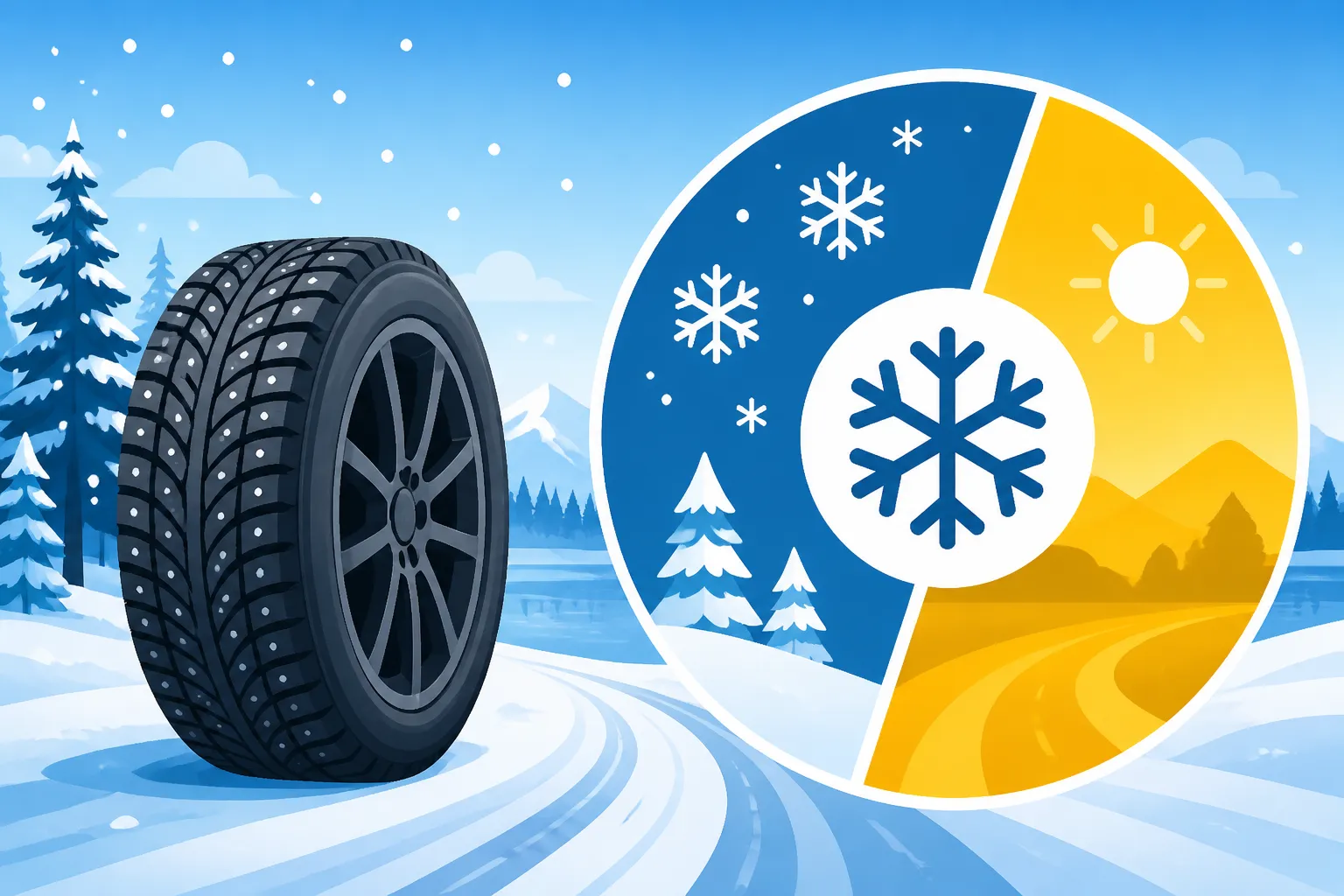
Now, what exactly constitutes a "winter tyre" in the eyes of Swedish law? It’s not just about having a thick tread. The Swedish Transport Agency (Transportstyrelsen) has clear criteria. For a tyre to be considered a winter tyre, it must be specifically marked with either M+S (Mud and Snow), M.S., M&S, MS, or the alpine symbol (a snowflake within a three-peaked mountain). Critically, since December 1, 2017, new winter tyres must have the alpine symbol (often called the 3PMSF – Three-Peak Mountain Snowflake symbol) to be legally approved as non-studded winter tyres. M+S marked tyres that don't have the alpine symbol are generally only accepted if they were manufactured before a certain date or if they are specifically studded winter tyres. This is an important distinction that can catch newcomers out.
Beyond the markings, there’s also a tread depth requirement. For cars up to 3.5 tonnes, winter tyres must have a minimum tread depth of 3 millimetres. While 3mm is the legal minimum, most Swedish mechanics and experienced drivers will tell you that for optimal safety in harsh conditions, you should aim for at least 4-5mm. Remember, these tyres are your only point of contact with a potentially treacherous road surface, so you don't want to cut corners.
Why the Law Exists: Safety First on Icy Roads
The mandatory winter tyre law is a direct response to Sweden's often brutal winter conditions. Unlike countries with milder winters where all-season tyres might suffice, Sweden's roads can turn into skating rinks overnight. The law isn't there to inconvenience you; it's a fundamental safety measure. Think about it: roads can be cleared of snow, but black ice, forming invisibly on cold, damp asphalt, is a silent killer. Winter tyres, especially studded ones, offer significantly better grip and braking performance on ice and snow compared to summer tyres.
This national focus on road safety extends to every aspect of driving, from vehicle inspections to public transport regulations. The aim is to minimise accidents and ensure that drivers are as well-equipped as possible for whatever the weather throws at them. Without this law, accident rates would undoubtedly skyrocket, putting immense strain on emergency services and, more importantly, causing preventable injuries and fatalities. It’s a collective responsibility, and as a driver, you become part of that system when you register your car here.
Choosing Your Winter Warriors: Studded vs. Non-Studded Tyres
Once you understand when winter tyres are required, the next big question for many expats is which type to choose. This often sparks a lively debate among drivers, and there are valid arguments for both studded and non-studded (often called friction) tyres.
The Grip of Studs: Best for Ice and Rural Routes
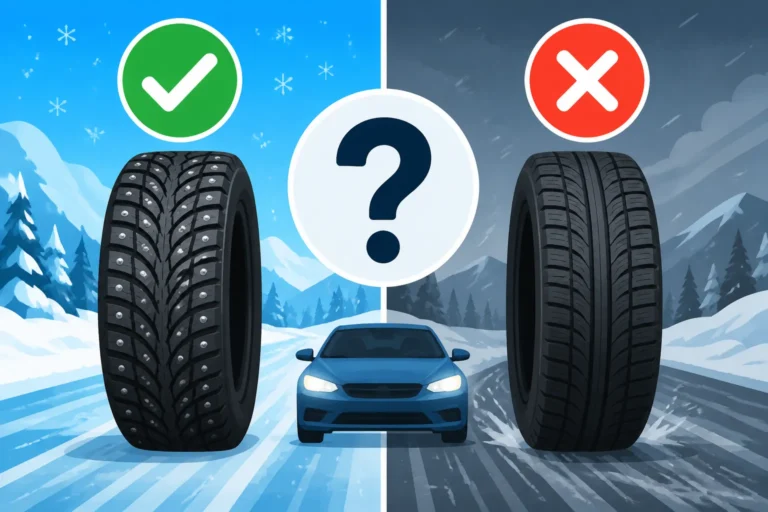
Studded tyres, or dubbdäck in Swedish, are what many immediately picture when they think of winter driving in Scandinavia. These tyres have tiny metal studs embedded in the tread, designed to dig into ice and packed snow, providing superior grip. If you live in a rural area, commute on untreated roads, or frequently encounter significant black ice, studded tyres can feel like a lifesaver. Their braking performance on icy surfaces is generally unmatched by non-studded alternatives.
However, this enhanced grip comes with a few trade-offs. Firstly, studded tyres are noisier and contribute more to road wear and particulate pollution on dry asphalt. Because of this environmental impact, there are restrictions. As mentioned, the general period for studded tyre use is from October 1st to April 15th. Driving with them outside these dates can result in a fine unless winter road conditions prevail. Secondly, some cities and municipalities in Sweden, like Stockholm, Gothenburg, and Uppsala, have specific rules about where and when studded tyres are allowed within city limits to reduce air pollution and road damage. For example, some central streets or bridges might prohibit studded tyres, meaning you might have to plan your routes carefully if you use them. It's a good idea to check your specific municipality's rules, especially if you live in a larger urban area.
Friction Tyres: A Smoother Ride for Urban and Milder Conditions
Non-studded winter tyres, or friktionsdäck (sometimes referred to as all-weather or Nordic winter tyres), are an increasingly popular choice. These tyres rely on a softer rubber compound and a specific tread pattern to provide grip on snow and ice without the metal studs. They are generally quieter, more comfortable on dry asphalt, and don't contribute to road wear or particulate emissions. This makes them a more environmentally friendly option and avoids any city-specific restrictions on studded tyres.
For those living in larger cities with well-maintained, frequently plowed, and salted roads, or for individuals who experience milder winters, friction tyres can be an excellent choice. They perform very well on snow and slush and offer good grip on cold, wet asphalt. However, it's widely accepted that they do not offer the same level of supreme grip on sheer black ice as studded tyres. If your daily commute involves navigating particularly icy country roads or steep, untreated hills, you might find yourself wishing for the extra bite of studs. It’s a balance between comfort, environmental impact, and the specific conditions you’ll encounter most often. Many expats opt for friction tyres if they predominantly drive in Stockholm or Malmö, for instance, where roads are usually cleared quickly.
Navigating the Rules for Studded Tyres in Cities
As touched upon, some Swedish cities have taken action to reduce the negative effects of studded tyres, particularly road wear and the release of fine particles that can impact air quality. Stockholm, Gothenburg, and Uppsala, for instance, have specific streets or zones where studded tyres are prohibited during the studded tyre season. The most well-known example is Hornsgatan in Stockholm, which has been a no-go zone for studded tyres for years.
These restrictions are usually clearly signposted. If you live in one of these cities and opt for studded tyres, you must be aware of these zones and plan alternative routes. Ignoring these prohibitions can lead to fines. It's yet another layer of "Swedish efficiency" that initially feels complex but is designed for public good. Before you commit to studded tyres, take a moment to look up your city's specific regulations on the municipality's website or Transportstyrelsen's information pages. It could save you a headache and a fine down the line.
Getting Your Vehicle Ready: Practical Advice for Expats
Beyond just knowing the law, there are practical steps you need to take to ensure your car is truly winter-ready. It’s about more than just swapping rubber; it’s about a holistic approach to car care when temperatures drop.
The Tyre Change: Timing is Everything
While the law states December 1st, many seasoned Swedish drivers will tell you that the actual tyre change should happen as soon as the average daily temperature consistently drops below 7°C (45°F). Why? Because below this temperature, the rubber compound in summer tyres hardens, significantly reducing their grip, even on dry asphalt. Waiting until December 1st might mean driving on unsafe tyres for weeks if there's an early cold snap or unexpected frost. It's much better to be safe than sorry.
Most car service centres and tyre shops (däckverkstad) offer seasonal tyre changes. It’s highly recommended to book your appointment well in advance, as slots fill up quickly in October and November when everyone is scrambling to get their däckbyte done. You can choose to have your tyres changed by a professional, or if you're handy and have the space, many people change their own. If you have a separate set of rims for your winter tyres, it's a relatively straightforward process. If your winter and summer tyres share the same rims, they'll need to be mounted and balanced each season, a job best left to the experts. You'll find many reputable chains like Mekonomen, Vianor, or Däckia, all of whom can help you.
All-Season Tyres: Are They Ever Enough in Sweden?
This is a question I hear a lot from new arrivals, especially those from countries where "all-season" truly means "all-season." In Sweden, the simple answer is usually no. While technically some all-season tyres might carry the M+S marking, if they don't also have the crucial 3PMSF (alpine symbol) or are not specifically designed and approved as Nordic winter tyres, they will not meet the legal requirements for non-studded winter tyres in Sweden during the mandatory period. Furthermore, even if they technically meet the legal definition, their performance in deep snow or severe ice conditions is significantly inferior to dedicated winter tyres.
Think of it this way: all-season tyres are a compromise. In Sweden's extreme conditions, compromise can lead to dangerous situations. They struggle in genuinely cold temperatures, and their tread patterns are not optimised for evacuating slush or biting into ice. My advice, and the general consensus here, is to invest in two dedicated sets of tyres – one for summer and one for winter. It’s an upfront cost, but it's an investment in your safety and compliance with the law.
Beyond Tyres: Essential Winter Car Care and Road Preparedness
Getting the right tyres on your car is paramount, but a safe Swedish winter driver does more. Here's a quick checklist of other essentials:
- Antifreeze: Ensure your radiator and windshield washer fluid contain sufficient antifreeze. You don't want your washer jets freezing when road salt is blinding your view.
- Battery Check: Cold weather saps battery power. Get your battery checked before winter, especially if it's an older one. Nothing worse than being stranded on a cold morning.
- Wiper Blades: Worn wiper blades won't clear snow and ice effectively. Replace them if they're streaky.
- Emergency Kit: Keep a shovel, jump leads, a tow rope, a high-visibility vest, a first-aid kit, and a warm blanket in your car. A fully charged mobile phone (and perhaps even a backup battery pack if you're planning a longer journey, just like you might use an Airalo eSIM for seamless connectivity on the go) is crucial.
- Lights: Check all your lights are working and clean them regularly. The dark winters mean you'll be using them a lot.
- Fuel: Try to keep your fuel tank at least half full to prevent condensation and freezing in the fuel lines, and to ensure you have enough to keep the heater running if you get stuck.
- Patience: Finally, and perhaps most importantly, adopt a Swedish driving mindset for winter: slow down, increase your following distance, and be prepared for changing conditions. Aggressive driving in winter is simply asking for trouble.
For more in-depth advice on navigating your way through the colder months, consider reading up on how to prepare for winter driving in Sweden, or even how to handle your car if you need to exchange your driving licence with Transportstyrelsen.
Consequences and Considerations: What Happens if You Don't Comply
Ignoring the winter tyre regulations in Sweden is not just risky; it has tangible legal and financial consequences. It's a common mistake for new arrivals to underestimate the strictness of these rules.
Fines, Inspections, and the Legal Repercussions
If you are caught driving without approved winter tyres during the mandatory period when winter road conditions prevail, you face a fine of 1,200 SEK. It might not seem like a fortune, but it's an unnecessary expense that can be easily avoided. More importantly, it's a clear signal that you are operating your vehicle unsafely and outside the law.
Police in Sweden are vigilant, especially during periods of challenging weather. They can stop you for routine checks, and if your tyres don't meet the requirements (incorrect type, insufficient tread depth), you'll be ticketed. While a single fine might be the extent of it for a first offence, repeated infringements could lead to more serious consequences, including a potential impact on your driving record. It's not worth the risk, especially when driving conditions are already inherently more dangerous.
Insurance Coverage and Accident Liability
This is where it gets really serious. While your standard car insurance policy might cover damages in an accident, a key clause often comes into play: if you were found to be driving without legal and appropriate winter tyres during the mandatory period, your insurance company can reduce the payout or even deny your claim entirely. This means that if you cause an accident, you could be held personally liable for significant costs, including repairs to your own vehicle, damage to other vehicles, and potentially medical expenses for injured parties.
Imagine hitting black ice and colliding with another car. If the investigation reveals you were on summer tyres in January, your insurance company could argue that your negligence contributed to the accident. This could leave you with a massive bill that would make the cost of a new set of winter tyres seem utterly insignificant. The peace of mind that comes from knowing you're fully covered and compliant is invaluable.
Staying Safe and Informed on the Road
Ultimately, the entire system surrounding winter tyres in Sweden is built on the principle of safety. The Swedish Transport Agency (Transportstyrelsen) and local authorities invest heavily in road maintenance, but even the best infrastructure can't eliminate the dangers of winter driving. As a driver, you are expected to take responsibility for your vehicle and adapt your driving to the conditions.
Always keep an eye on weather forecasts, especially if you're planning a longer journey. Websites like SMHI (the Swedish Meteorological and Hydrological Institute) or Trafikverket (the Swedish Transport Administration) provide up-to-date road and weather information. Remember that conditions can vary drastically across different regions of Sweden. A sunny, clear day in Malmö could be a blizzard in Kiruna. Staying informed and preparing proactively is the best way to ensure you and your passengers have a safe winter experience on Swedish roads.
Here’s a quick overview to help you decide between studded and non-studded tyres:
| Feature | Studded Winter Tyres (Dubbdäck) | Non-Studded Winter Tyres (Friktionsdäck) |
|---|---|---|
| Primary Advantage | Superior grip on ice and packed snow | Good performance on snow, slush, and cold wet asphalt |
| Best For | Rural roads, untreated surfaces, frequent icy conditions | Urban driving, milder winters, less noise concern |
| Legal Use Period | Oct 1 – Apr 15 (or if winter conditions prevail) | Dec 1 – Mar 31 (or if winter conditions prevail) |
| City Restrictions | May be prohibited on certain streets in larger cities (e.g., Stockholm, Gothenburg) | Generally no city restrictions |
| Noise Level | Louder on dry asphalt | Quieter, more comfortable ride |
| Environmental Impact | Causes road wear, releases fine particulate matter | Lower environmental impact on roads and air quality |
| Tread Depth Minimum | 3mm | 3mm |
| Required Markings | M+S (older tyres) / M+S with Alpine Symbol | M+S with Alpine Symbol (3PMSF) |
| Braking on Dry/Wet | Can be slightly longer braking distance on dry/wet roads | Generally shorter braking distance on dry/wet roads |
Remember, staying prepared is part of the expat journey in Sweden, just like learning How to Register with a Vårdcentral After Getting Your Personnummer or understanding the nuances of Renting a Home in Sweden: How the First- and Second-Hand System Works. Each step makes you feel more settled and secure in your new home.
Disclaimer
The information provided in this guide is intended for general informational purposes only and does not constitute legal advice. While we strive to ensure the information is accurate and up-to-date, laws and regulations in Sweden, particularly those related to traffic and vehicles, can change. Always consult official sources like Transportstyrelsen (Swedish Transport Agency) or a legal professional for the most current and specific advice pertaining to your situation. Driving safely and legally is your responsibility.