Driving in Sweden: Exchanging Your Licence with Transportstyrelsen
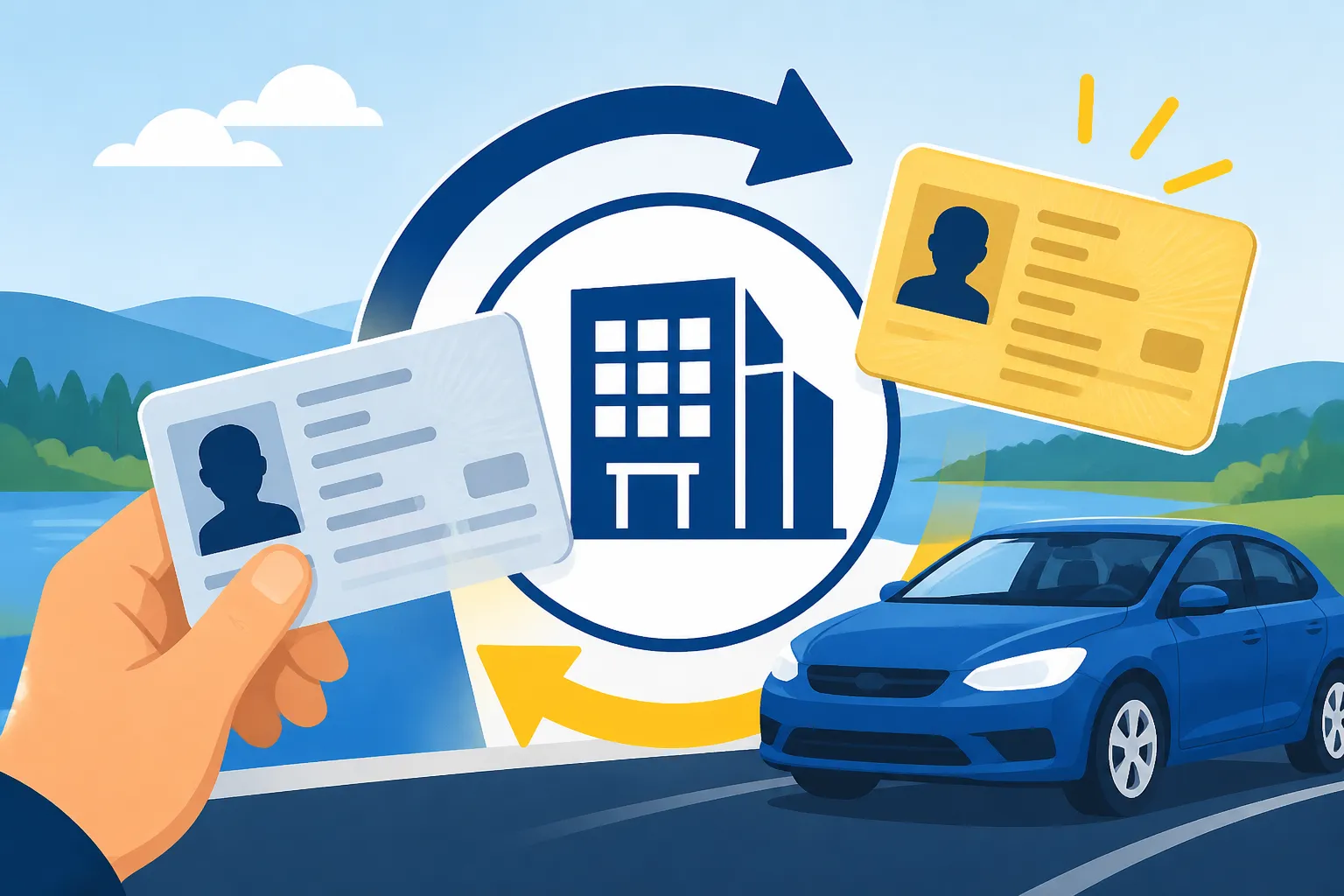
One of the trickiest parts of settling into life here in Sweden, beyond the legendary bureaucracy, is often figuring out how to get around. You might arrive with dreams of hitting the open road, exploring the vast forests and charming towns, only to be met with a labyrinth of rules about your foreign driving licence. This guide is going to cut through all that confusion, walking you step-by-step through the process of exchanging your driving licence with Transportstyrelsen, making your transition to driving like a local as smooth as possible.
The Initial Reality: Driving on Your Foreign Licence in Sweden
When you first land in Sweden, clutching your foreign driving licence, there's a good chance you can hit the road straight away. But this isn't a permanent solution, and there are strict rules depending on where your licence was issued and how long you plan to stay. Trust me, you don't want to get caught out by these regulations; a simple misunderstanding can lead to fines or worse. It's best to sort this out sooner rather than later, especially if you plan to stay long-term.
Who Can Drive with a Foreign Licence, and For How Long?
For most foreign licence holders, you're generally allowed to drive in Sweden for a maximum of one year from the date you officially registered your residence in Sweden (your folkbokföringsdatum). This is a hard and fast rule, and it's absolutely crucial to remember that this one-year clock starts ticking from your registration date, not from the day you first drive a car here. If you're just visiting or haven't registered your residence, different rules apply, typically aligning with Schengen visa limits. For those planning to stay longer, understanding this initial grace period is key, as it dictates when you absolutely must start the exchange process or prepare to take a Swedish driving test. This is also linked to your overall legal status here, as getting a Personnummer, the gateway to Swedish society, often precedes driving registration. If you haven't yet, make sure you look into Getting Your Personnummer: The Gateway to Swedish Healthcare.
Now, there's a subtle but vital distinction. If you acquired your foreign driving licence in a country outside the EU/EEA, and you've been a resident in Sweden for more than one year, your foreign licence is no longer valid for driving here. This is a point where many expats get tripped up. It means that if you've been living here for, say, 14 months, and you’re still using your non-EU licence, you are, technically, driving without a valid licence in Sweden, and that's a serious offence. You might find yourself in a bind with insurance, too, should anything happen.
The Crucial Difference: EU/EEA vs. Non-EU/EEA Licences
This is where the process diverges significantly. Sweden, being part of the European Union and European Economic Area, has agreements with other member states that simplify life for citizens moving between them.
If your driving licence was issued in an EU or EEA country (like Germany, France, Italy, Norway, Iceland, etc.), you’re in luck! Your licence is generally valid in Sweden as long as it is valid in the country it was issued, and you can exchange it for a Swedish one without having to retake any tests. This is a massive relief for many. However, there are still procedures you need to follow, and you can’t just keep your EU licence forever if you become a permanent resident here. The ease of exchange for EU/EEA licences means that the process is largely administrative, focusing on verifying your identity and the validity of your existing licence.
For those holding licences from countries outside the EU/EEA, things get a bit more complicated. Most non-EU/EEA licences cannot simply be exchanged. With very few exceptions (we'll get to those!), you will almost certainly be required to take both the theoretical and practical driving tests in Sweden, just like a brand-new driver. This is often a source of great frustration for experienced drivers from countries like the US, Canada, Australia, India, or South Africa, who have been driving for decades. It's a significant investment of time, effort, and money, but it's the Swedish way to ensure everyone on their roads meets their safety and knowledge standards.
Understanding the "Normal Residence" Rule
The concept of "normal residence" is incredibly important when it comes to your driving licence validity and exchange options. Transportstyrelsen, the Swedish Transport Agency, defines "normal residence" as the country where you habitually live for at least 185 days per calendar year due to personal and occupational ties.
Why does this matter? Well, if you were living in Sweden when you obtained your non-EU/EEA driving licence, Transportstyrelsen won't allow you to exchange it. The rule is designed to prevent people from temporarily moving abroad to obtain a licence in a country with less stringent requirements, only to return to Sweden and bypass the Swedish testing process. For instance, if you lived in Sweden for five years, then went to a non-EU country for six months, got a licence there, and immediately came back to Sweden, your licence would not be eligible for exchange because your "normal residence" was still considered Sweden when you obtained it. This means you’d have to go through the full Swedish driving test process anyway. This rule is diligently applied, so it's not something you can easily circumvent. It’s a key piece of information often overlooked, causing unexpected hurdles for some new residents.
Exchanging Your EU/EEA Driving Licence: The Smooth Path
If you're coming from an EU or EEA country, consider yourself one of the lucky ones. The process to get your Swedish licence is significantly less stressful, although it still requires a bit of administrative legwork. No driving tests, no theory exams – just forms and patience.
Eligibility and Basic Requirements for EU/EEA Licences
To exchange your EU/EEA driving licence for a Swedish one, you must meet a few straightforward criteria:
- Valid Licence: Your foreign licence must be currently valid and not expired. This might sound obvious, but people sometimes forget to check!
- Valid in Home Country: It must be issued in an EU/EEA country and valid for the vehicle categories you wish to have on your Swedish licence.
- Normal Residence: You must have your normal residence in Sweden. As mentioned, this generally means you live here for at least 185 days a year. This is proven by your folkbokföring (population registration) with Skatteverket. If you haven't sorted this out, check out Registering Your Move (Flyttanmälan) with Skatteverket.
- No Previous Suspension: Your licence must not have been suspended, revoked, or restricted in Sweden or in the country where it was issued.
- You Haven't Been Denied: You must not have been issued an older Swedish driving licence that has since been revoked.
You also need to have reached the minimum age for driving the respective vehicle categories in Sweden. For example, if you have a motorcycle licence from another EU country but are only 17, you won't get a Swedish motorcycle licence until you're 18. These requirements are in place to ensure a level playing field and uphold safety standards across the union.
The Step-by-Step Application Process with Transportstyrelsen
The actual application process for an EU/EEA licence exchange is quite streamlined:
- Application Form: You'll need to fill out a specific application form (Ansökan om utbyte av utländskt körkort) from Transportstyrelsen. You can usually download this from their website or order it.
- Health Declaration: Along with the form, you'll need to submit a health declaration (Hälsodeklaration). This is a self-assessment where you declare any medical conditions that might affect your ability to drive. For certain categories of licences (e.g., heavy vehicles), a medical certificate from a doctor might be required.
- Eye Test: You'll need to have an eye test performed by an authorised optician. Many opticians offer this service, and they'll usually send the results directly to Transportstyrelsen or provide you with a certificate. It's often a quick check of your vision, nothing too strenuous.
- Send Your Documents: Gather your completed application form, health declaration, and any other required attachments (like a medical certificate if applicable). Crucially, you must also send your original foreign driving licence. Yes, you read that right – you send your actual licence in the post. This can feel a bit unnerving, but it's standard procedure. Transportstyrelsen will keep your foreign licence until they issue your Swedish one.
- Identification: You'll need to verify your identity. If you have a Swedish ID card, this is straightforward. If not, you might need to prove your identity at a Transportstyrelsen service point or a police station, or send in certified copies of your passport. Having a Swedish ID card makes life so much easier for almost all administrative tasks, including this one. You might want to explore how to get one here: Getting a Swedish ID Card After Your Personnummer.
- Pay the Fee: There's an application fee that needs to be paid. You'll typically receive instructions on how to pay this after your application has been received and registered. You can often pay via bank transfer or Swish.
What to Expect After Applying: Processing Times and Temporary Permits
Once you've submitted your application and your original licence, the waiting game begins. Transportstyrelsen processing times can vary, so it's always a good idea to check their website for current estimates. It could be anywhere from a few weeks to a couple of months.
During this waiting period, you generally cannot drive without a valid licence. However, if your EU/EEA licence was valid when you sent it in, and you've submitted a complete application, Transportstyrelsen can issue a temporary driving permit (interim körkort) for use within Sweden while your application is being processed. This temporary permit is usually valid for a limited period and is a physical document you must carry. Make sure to inquire about this when you send in your application or contact Transportstyrelsen, as it’s essential if you rely on driving for work or daily life. Without it, you might need to rely on public transport, which is generally excellent in Swedish cities; learn more about it here: Public Transport in Sweden: SL, Regional Cards, and Apps.
Once your application is approved, Transportstyrelsen will issue your new Swedish driving licence. It will be sent to your registered address. You'll then have a shiny new Swedish licence, valid for the categories your original licence covered, and you can finally drive without worrying about expiry dates or confusing rules.
The Non-EU/EEA Licence Holder's Challenge: Often More Than Just an Exchange
Alright, for those of you with a driving licence from outside the EU/EEA, let's be blunt: the path to a Swedish driving licence is usually much more involved. I remember the despair some of my friends felt when they realised their decades of driving experience in their home countries meant little to Transportstyrelsen. It's a rite of passage for many expats, but don't worry, it's totally achievable with the right preparation.
Countries with Exchange Agreements: A Rare But Welcome Exception
First, let's address the slim glimmer of hope for some non-EU/EEA licence holders. Sweden does have special agreements with a very limited number of countries that allow for a direct exchange of licences without needing to retake the full driving test. As of my last check, these countries typically include Japan and Switzerland. If your licence is from one of these countries, you're in the same boat as EU/EEA licence holders and can follow the "smooth path" described above.
It's absolutely critical to double-check the current list directly on Transportstyrelsen's website. These agreements can change, and the list is very short. Do not assume your country is on it unless you see it explicitly stated by the official authority. For everyone else, prepare for the full Swedish driving test experience.
The Standard Requirement: Retaking the Driving Test
For the vast majority of non-EU/EEA licence holders, the reality is that you will need to retake both the theoretical (knowledge) test and the practical (driving) test to obtain a Swedish driving licence. This applies to citizens from countries like the United States, Canada, Australia, New Zealand, India, China, the UK (post-Brexit, unfortunately), and almost every other country in the world.
This isn't just a formality; it's a comprehensive process designed to ensure you understand Sweden's specific traffic laws, road signs, and driving culture, which can differ quite a bit from what you're used to. For instance, the emphasis on pedestrian and cyclist safety, the specific rules for winter driving, and even the general etiquette on Swedish roads might surprise you. Remember, Sweden is a stickler for rules, and road safety is taken very seriously. This means your previous driving experience, while valuable for your skill, doesn't negate the need to prove your knowledge of Swedish regulations.
Preparing for the Swedish Driving Theory and Practical Exams
Okay, so you need to take the tests. Don't panic! Thousands of people do it every year. Here’s how you can prepare:
1. The Theory Test (Kunskapsprov):
This is a computer-based test conducted by Trafikverket (the Swedish Transport Administration). It consists of multiple-choice questions covering traffic rules, road signs, environmental awareness, and risk assessment.
- Study Materials: The official handbook, "Körkortsboken," is your bible. It's available in Swedish and often in English. You can also find numerous online platforms and apps that offer practice tests, which are invaluable for getting a feel for the types of questions asked and the format of the exam. Many driving schools also offer theory courses.
- Language: While the test is typically offered in Swedish, you can often request to take it in English or other common languages. However, some terms might still be a bit tricky, so it’s good to familiarise yourself with the Swedish equivalents of common traffic terms.
- Booking: You book your theory test through Trafikverket's website. You often need to get an approval from Transportstyrelsen for a "driving permit" (körkortstillstånd) before you can take the tests, so ensure you have that first.
2. The Practical Driving Test (Körprov):
This is the moment of truth where you demonstrate your ability to drive safely and according to Swedish rules.
- Driving Schools: While not strictly mandatory for adults, enrolling in a driving school (trafikskola) is highly recommended, even if you're an experienced driver. They will teach you the nuances of Swedish driving, identify any bad habits you might have picked up over the years, and ensure you're familiar with the specific expectations of the test examiners. They can also rent you a car for the test, which is usually equipped with dual controls, a requirement for many examiners.
- Private Practice: You can practice privately with a supervisor (handledare) who has a valid Swedish driving licence and has completed a special supervisor course. Both you and your supervisor need to attend an introductory course (handledarkurs/introduktionsutbildning). This can be a cost-effective way to get more practice hours.
- The Test Itself: The practical test typically lasts around 45-60 minutes and involves a variety of driving situations: urban driving, highway driving, parking, turning, and following instructions from the examiner. They'll be looking not just for technical skill but also for your ability to drive safely, independently, and in an environmentally conscious manner.
- Booking: Like the theory test, the practical test is booked through Trafikverket. It’s important that you feel fully prepared before booking, as retaking tests costs money and time.
Many new arrivals underestimate the challenge of the Swedish driving test, especially the theory. Don't fall into that trap. Dedicate proper time to studying the rules, even if you feel like a seasoned driver.
The Application Process for Licence Exchange (General Steps)
Regardless of whether you're from an EU/EEA country or one of the few non-EU countries with an exchange agreement, there's a foundational application process you must navigate with Transportstyrelsen. This is separate from the tests themselves but is a prerequisite to getting your Swedish licence.
Gathering Your Essential Documents
Before you even think about submitting anything, make sure you have all your ducks in a row. Missing even one document can cause significant delays – and believe me, you don't want to add to the waiting game.
Here’s a general checklist of what you'll typically need:
- Application Form: The specific form for exchanging a foreign driving licence (Ansökan om utbyte av utländskt körkort).
- Your Original Foreign Driving Licence: As mentioned, you will likely need to send this in. Make sure it's valid and not expired.
- Health Declaration (Hälsodeklaration): A form where you declare your health status. Be honest and thorough.
- Eye Test Certificate: Proof from an authorised optician that your vision meets the standards for driving.
- Proof of Identity: A copy of your passport or, ideally, your Swedish ID card. If you haven't got one yet, now is a good time to get on it, as it unlocks so many aspects of Swedish life.
- Proof of Normal Residence: This is usually handled by Transportstyrelsen checking your folkbokföring with Skatteverket. If you've been in Sweden for less than a year and haven't fully established residence, this can sometimes be more complex.
- Medical Certificate (if required): For certain licence categories (e.g., C, D, E for heavy vehicles) or if your health declaration indicates potential issues, you’ll need a specific medical examination and certificate from a doctor.
It’s always a smart move to keep photocopies or scanned versions of all documents you submit, especially your original driving licence, before sending them off. You never know when you might need them.
Submitting Your Application to Transportstyrelsen
Once you’ve got everything compiled, submitting your application is the next step.
- Mail or Online Portal: Most applications for licence exchange are still submitted via postal mail to Transportstyrelsen. Their website will provide the exact address. However, it's worth checking if there's an online portal option for parts of the process, especially for the initial application for a driving permit (körkortstillstånd) which is a prerequisite for taking tests if you're a non-EU licence holder.
- Completeness is Key: Seriously, double-check everything. Is every field filled out? Are all required signatures present? Is your eye test recent enough? An incomplete application is the number one reason for delays. Transportstyrelsen will send it back, and you’ll be back to square one, losing precious weeks or even months.
- Payment of Fees: Ensure you understand how and when to pay the application fee. Sometimes you pay upfront; sometimes you receive an invoice after they've processed your initial application. Using services like Swish, which is ubiquitous here, often makes these payments seamless. Find out more about Using Swish: How Sweden Pays Instantly.
Common Pitfalls and How to Avoid Delays
Dealing with government agencies can sometimes feel like navigating a minefield, but with a bit of foresight, you can avoid common issues.
- Waiting Too Long: For non-EU licences, the one-year rule from folkbokföring is non-negotiable. Don't wait until day 364 to start the process! Begin well in advance to give yourself time for studies, lessons, and waiting for test slots. Even if you're coming from a country where direct exchange is possible, it's wise to start the process as soon as you're settled in.
- The "Normal Residence" Trap: As discussed, if you obtained your licence while having your normal residence in Sweden, it won't be eligible for exchange, even if it's from an EU/EEA country or one with an agreement. This is a common misconception.
- Unclear Identification: Make sure your identity documents are clear and valid. If your passport is about to expire, renew it before starting the process.
- Not Communicating with Transportstyrelsen: If you have questions or concerns, don't hesitate to call their customer service. While language can sometimes be a barrier, many agents speak English, and it’s better to get clarification than to make a mistake.
- Assuming English is an Option: While many official forms and tests are available in English, not all information on their website or all services will be. Be prepared for some parts of the process to be primarily in Swedish.
By being proactive, meticulously checking requirements, and understanding the rules, you can significantly smooth out the process. Remember, the goal is to get you safely and legally on the Swedish roads.
| Licence Type (Origin) | Can Be Exchanged? | Required Tests | Maximum Driving Period (Foreign Licence) |
|---|---|---|---|
| EU/EEA | Yes | None | As long as valid in home country (but recommended to exchange if resident) |
| Japan/Switzerland | Yes | None | 1 year from population registration |
| Other Non-EU/EEA | No | Theory & Practical | 1 year from population registration |
Note: Always verify current regulations on Transportstyrelsen's official website as rules can change.
Understanding Swedish Driving Rules and Road Culture
Driving in Sweden isn't just about passing a test; it's about integrating into a very specific road culture. Even if you're a seasoned driver, you'll find nuances here that might differ significantly from your home country. Getting a car is often secondary to settling in, which usually involves finding your footing in your new city – whether that’s in Stockholm, Gothenburg, or Malmö. If you’re just getting started, you might find articles like Choosing Where to Live in Stockholm: Neighbourhoods for Newcomers helpful.
Key Differences in Road Signs and Traffic Laws
Swedish road signs are generally intuitive, following European standards, but there are a few things that might catch you off guard:
- Priority Rules: The "right before left" (högerregeln) rule is strictly enforced, meaning vehicles approaching from the right at an unmarked intersection have priority. This is one of the most common reasons for test failures among foreign drivers.
- Roundabouts: You typically yield to traffic already in the roundabout.
- Pedestrian Crossings: Pedestrians almost always have priority at marked crossings, and you must slow down and prepare to stop. This is enforced very strictly, and failing to yield is a serious offence.
- Lights On: You must drive with your headlights (or daytime running lights) on 24/7, year-round, even in bright sunshine.
- Speed Limits: Speed limits are rigorously enforced, often by automated cameras. Fines are steep. Speed limits are typically 30, 50, 70, 90, 110, or 120 km/h. Don't assume anything; always look for signs.
- Alcohol Limits: Sweden has a very low blood alcohol limit (0.02%), significantly stricter than many other countries. Any alcohol consumption before driving is effectively a no-go. Don't risk it.
- Parking: Parking rules can be complex and are often indicated by a multitude of signs. Pay close attention to parking times, zones, and fees. Parking fines are frequent and costly.
Beyond the specific rules, there's a general expectation of courtesy and predictability on Swedish roads. Aggressive driving, tailgating, and excessive horn-honking are rare and frowned upon.
Winter Driving Essentials: Tyres, Visibility, and Caution
Ah, Swedish winters! They are beautiful, but they bring their own set of driving challenges. Adapting to winter driving is not optional; it’s a matter of safety and legal compliance. You can delve deeper into this topic in Winter Driving in Sweden: Studded Tyres and the Rules.
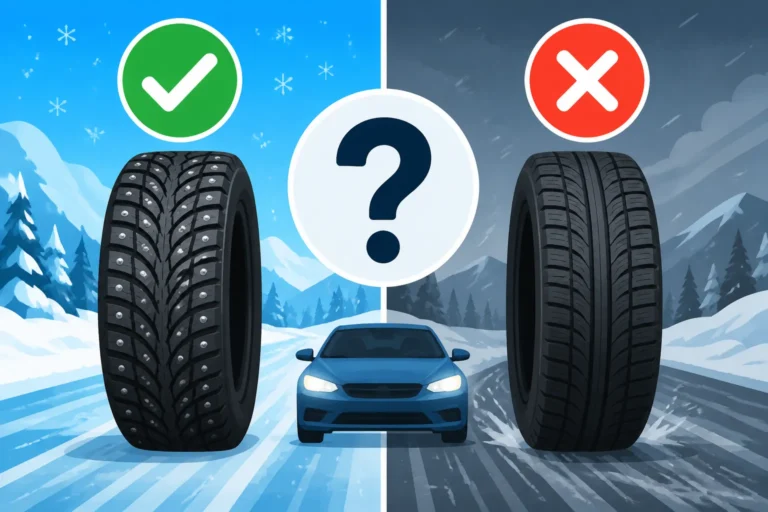
- Winter Tyres (Vinterdäck): This is the most crucial aspect. By law, you must use winter tyres (either studded or friction/non-studded) between December 1 and March 31 if there are winter road conditions (ice, snow, slush, or frost on any part of the road). Many Swedes switch their tyres even earlier. Failure to do so can result in fines and insurance issues.
- Visibility: Keep your car clear of snow and ice, not just your windshield but all windows, mirrors, and headlights/taillights. Visibility is paramount.
- Driving Technique: Smooth acceleration, gentle braking, and increased following distances are critical on slippery surfaces. Avoid sudden movements. Four-wheel drive helps, but it doesn't make you invincible.
- Black Ice: Be acutely aware of "black ice," especially on shaded roads, bridges, and underpasses, even when the air temperature seems above freezing.
- Emergency Kit: Consider carrying a small shovel, jumper cables, a reflective vest, and a blanket in your car during winter.
The Swedish Approach to Speed, Alcohol, and Road Safety
Sweden takes road safety incredibly seriously, with a long-standing "Vision Zero" strategy aimed at eliminating road deaths and serious injuries. This commitment is deeply ingrained in the driving culture and law enforcement.
- Speed: Speed limits are seen as maximums, not targets. You'll often find drivers adhering strictly to the limits, especially in urban areas. Automated speed cameras (fartkameror) are common and are there for a reason. Don't try to outsmart them.
- Alcohol: As mentioned, the 0.02% limit means you cannot drink and drive. Period. Police regularly conduct roadside checks, and penalties for drunk driving are severe, including hefty fines, licence revocation, and even imprisonment.
- Seatbelts: Mandatory for all occupants, front and back seats.
- Child Seats: Strict rules apply to child restraints based on age, height, and weight.
- Pedestrians and Cyclists: Always expect them, especially in cities. Give them ample space and priority.
In essence, driving in Sweden requires a mindset of caution, respect for the rules, and consideration for other road users. Embrace this, and you’ll find it a surprisingly pleasant driving experience. When you're out exploring, having reliable mobile data for navigation, perhaps with an eSIM from a provider like Airalo, can really enhance your trips and ensure you don't get lost on those charming but sometimes confusing country roads.
Life After Exchange: Your New Swedish Driving Licence
Congratulations! You’ve navigated the bureaucratic maze and/or conquered the driving tests, and now you hold that precious Swedish driving licence in your hand. This is more than just a piece of plastic; it's a key to greater independence and another step towards fully integrating into your new life here.
Validity Periods and Renewal Procedures
Your new Swedish driving licence will have a validity period, typically 10 years for ordinary passenger car licences (Category B). Unlike some countries where you might keep your licence indefinitely, here you will need to renew it when it expires.
The renewal process is generally straightforward:
- Notification: Transportstyrelsen will usually send you a renewal form (Ansökan om förlängning av körkort) in the mail well in advance of your licence's expiry date. Make sure your registered address with Skatteverket is up-to-date to receive this important communication.
- Health and Eye Test: You'll typically need to complete a new health declaration and might need a new eye test from an authorised optician, especially as you get older or for certain licence categories.
- Photo: You'll often need a new passport-style photo.
- Submission and Fee: Send in your completed forms, photo, and pay the renewal fee.
- New Card: A new licence card will be issued and sent to your home address.
For heavy vehicle categories (C, D, E), the renewal periods are shorter (often 5 years), and a more comprehensive medical examination is usually required each time. Keeping track of expiry dates is crucial to avoid any lapse in your driving privileges.
The Benefits of a Swedish Licence Beyond Driving
A Swedish driving licence is incredibly useful for reasons that extend far beyond simply driving a car. In Sweden's highly digital and identification-reliant society, it often doubles as your primary form of photographic ID.
- Official Identification: Many places, from Systembolaget (the state-run alcohol monopoly) to banks and even for picking up parcels at a Postombud, will ask for valid photo ID. A Swedish driving licence is universally accepted and often more convenient to carry than a passport. This is especially true when setting up essential services or accounts. You'll find that much of your financial life, including opening a bank account and managing finances, becomes much simpler with local ID. If you're still navigating Swedish banking, articles like Money and Finance in Sweden: A Complete Guide for Foreigners or Opening a Bank Account in Sweden: A Step-by-Step Guide can be very useful.
- BankID: While your driving licence isn't directly used to get BankID (that comes from your bank), having a recognised Swedish ID is a prerequisite for most banks to issue it. BankID is essential for almost all digital interactions in Sweden, from signing contracts to logging into government services like Skatteverket for your Filing Your Swedish Tax Return (Deklaration): What You Need to Know.
- Car Rentals and Insurance: Renting a car becomes seamless, and some insurance companies might offer slightly better rates if you have a Swedish licence, as it signals full compliance with local driving standards.
- Sense of Belonging: Honestly, sometimes it’s the little things. Having a Swedish driving licence feels like another step in truly establishing your life here. You've conquered a part of the Swedish system, and that's something to be proud of!
What to Do with Your Old Foreign Licence
Once you receive your Swedish driving licence, what happens to your old one?
- EU/EEA Licences: If you exchanged an EU/EEA licence, Transportstyrelsen will typically keep your original foreign licence. They are not returned to you. This prevents you from holding two valid EU/EEA licences simultaneously.
- Non-EU/EEA Licences: If you passed the Swedish tests (having not exchanged but effectively re-qualified), you usually get to keep your non-EU/EEA licence. However, remember that after one year of residence, it's no longer valid for driving in Sweden. You can, of course, use it if you travel back to your home country or other countries where it's recognised.
It's a big step, getting that Swedish licence. It means you’re ready to fully embrace exploring this beautiful country on its own terms, safely and legally. Remember that this process, while sometimes challenging, is a common one for expats, and there's plenty of support out there, from driving schools to expat communities, to help you along the way. Whether you found your initial accommodation through services like Spotahome or relied on public transport while waiting for your licence, you've made it through an important hurdle in Swedish expat life.
Disclaimer
The information provided in this guide is intended for general informational purposes only and does not constitute legal advice. While we strive to keep the content up-to-date and accurate, regulations and procedures can change. It is essential to always consult the official websites of Transportstyrelsen (Swedish Transport Agency) and Trafikverket (Swedish Transport Administration), or seek professional legal advice, for the most current and specific information pertaining to your individual situation. We accept no liability for any loss or damage arising from the use of this information.