Does My Child Get Free School Lunches in Sweden?
One of the many delightful surprises you discover as an expat parent in Sweden – amidst all the paperwork, the language barriers, and the quest for the perfect fika – is the absolute certainty of school meals. Forget packing lunchboxes or stressing about what your child will eat; Sweden has a deeply ingrained system that takes this worry off your plate entirely. This guide will walk you through the ins and outs of free school lunches in Sweden, why they exist, what your kids can expect, and how this truly simplifies daily life for families like ours.
The Core Answer: Yes, Absolutely!
Let's cut right to the chase, because I remember the sheer relief when I first learned this myself: yes, children attending public schools in Sweden are absolutely entitled to free school lunches. This isn't a perk or a means-tested benefit; it's a fundamental right embedded in the Swedish education system, a cornerstone of its welfare model. From förskoleklass (preschool class, typically for 6-year-olds) all the way through grundskola (compulsory school, ages 7-16) and gymnasieskola (upper secondary or high school, ages 16-19), your child will receive a nutritious, warm meal every school day, completely free of charge. It’s truly one of those aspects of Swedish life that feels incredibly progressive and, frankly, makes a huge difference to a family's budget and daily routine.
The concept of free school meals isn't new here; it has roots stretching back to the 1940s, evolving from a measure to ensure basic nutrition for all children during challenging times into a universal right promoting health, equality, and learning. It's not just about filling hungry bellies; it's about providing a wholesome meal that fuels concentration, encourages healthy eating habits, and creates a social, inclusive break in the middle of the school day. For us expat parents, it’s one less daily hurdle to navigate, giving you peace of mind that your child is well-fed and cared for, even as you're grappling with other aspects of settling into your new life in Sweden.
A Universal Right: Who Qualifies for Free School Meals?
The beauty of the Swedish system is its universality. If your child is enrolled in a kommunal (municipal or public) school, they qualify. There are no income checks, no forms to fill out to prove eligibility – it's simply a given. This applies to:
- Förskoleklass (Preschool Class): The year before compulsory schooling starts, typically for 6-year-olds.
- Grundskola (Compulsory School): All nine years of compulsory education, from age 7 to 16.
- Gymnasieskola (Upper Secondary School): The three years of post-compulsory education, generally for 16-19 year olds.
This comprehensive coverage means that no child needs to feel stigmatized or different because of their family's financial situation. Everyone eats together, fostering a sense of community and equality that is characteristic of Swedish society. As you're looking into schools for your children, it's reassuring to know that this significant cost is already taken care of. For more on navigating the enrollment process, you might find our guide on Starting Grundskola: The Swedish School System for Families helpful.
While the vast majority of schools follow this rule, there can be exceptions. If your child attends a friskola (independent school) or an international school that operates outside the direct municipal system, you'll need to verify their policy. Many friskolor also offer free meals, as they receive public funding, but some niche international schools might have different arrangements, sometimes incorporating the cost into tuition fees. However, the standard expectation for publicly funded education is free, nutritious school lunches for all.
What's on the Menu? Understanding Swedish School Food Culture
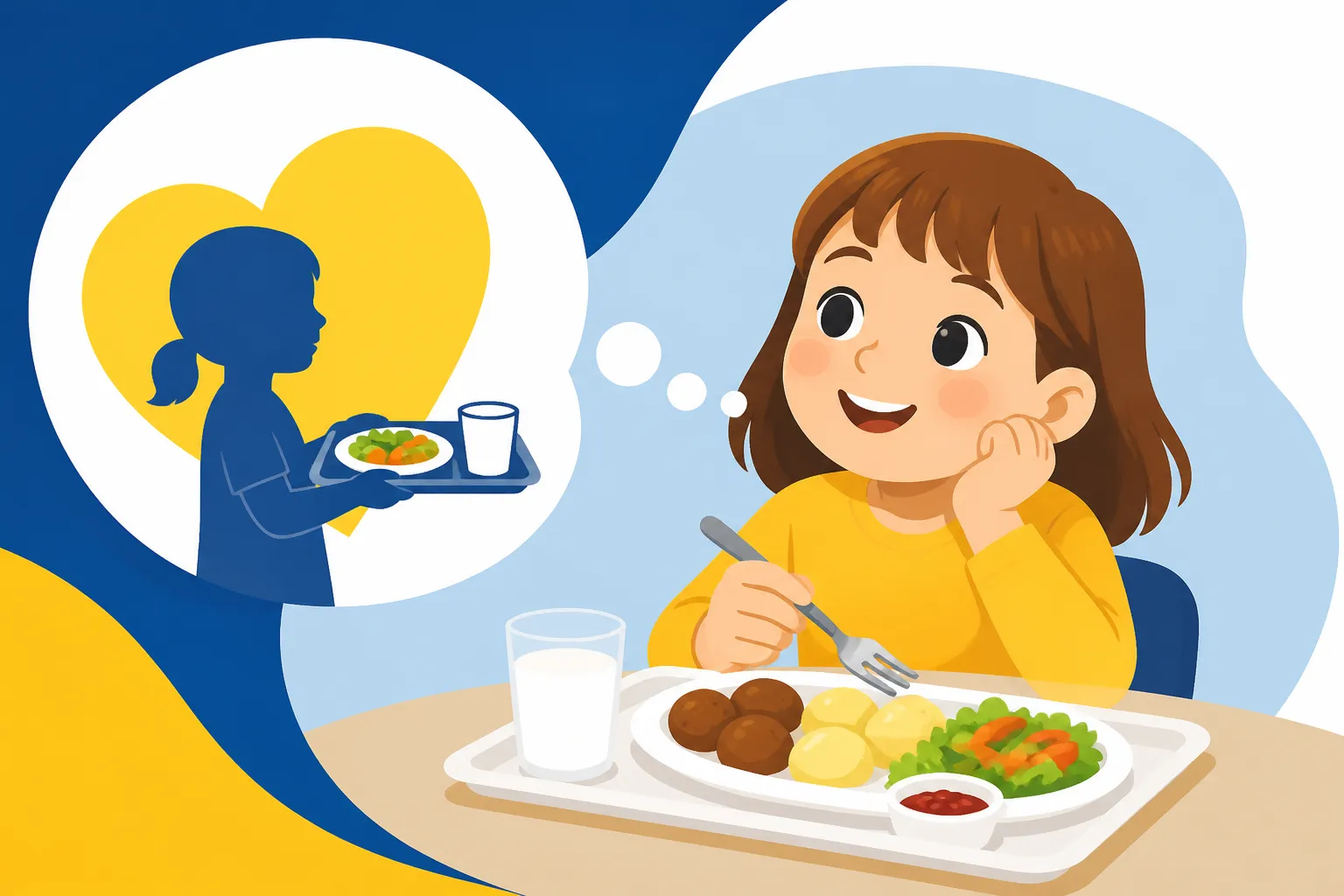
So, what can your child expect to be served? Swedish school lunches are far from the drab, unappetizing meals sometimes depicted in media. The focus is on nutritious, well-balanced food, often with a commitment to organic ingredients and sustainability.
A typical school lunch often includes:
- A Main Course: This could be anything from traditional Swedish meatballs (köttbullar) to pasta dishes, fish, chicken, or various stews. There's a strong emphasis on variety throughout the week and month.
- A Vegetarian Option: A dedicated vegetarian meal is always available, often prepared with legumes, vegetables, or plant-based proteins. This is not an afterthought but a standard offering.
- A Generous Salad Buffet: Children are encouraged to help themselves to a variety of fresh vegetables, shredded carrots, cabbage, cucumbers, tomatoes, and other seasonal greens. This is a crucial part of ensuring a balanced intake.
- Bread and Spreads: Usually knäckebröd (crispbread) or a soft bread, often with butter or a vegetable spread.
- Water: Milk is typically offered as well, but water is always available. Sugary drinks are almost universally absent.
The food served in schools adheres to national dietary guidelines, ensuring that children receive enough energy and nutrients for their day. Many schools actively involve students in menu planning and feedback, fostering a sense of ownership and making them more likely to eat what's served. It’s a holistic approach to food education. When you're just arriving, and maybe trying to get your phone sorted with an eSIM from a provider like Airalo so you can stay connected and look up local eateries, it's reassuring to know your kids' main meal is taken care of by the school.
Beyond the Basics: Practicalities and Parental Perspectives
From a parent's perspective, the system is designed to be as seamless as possible. Schools take responsibility for everything from sourcing ingredients to preparing and serving the meals, and then, of course, the monumental task of cleaning up after hundreds of children! This means you don't need to worry about meal prep, buying specific ingredients, or even the dreaded "what to pack today" question that plagues parents in other countries.
Communication between schools and parents regarding meals is generally good. Most schools have their weekly menus published online, often through the school's digital platform or website, so you can see what's planned. This transparency is great for anticipating what your child might eat and discussing new foods with them.
Handling Dietary Restrictions and Allergies
This is where the Swedish system truly shines for many expat families, especially those with children who have allergies or specific dietary needs. Schools take these requirements very seriously. It’s not just a suggestion; it's a legal and ethical obligation to ensure all children can eat safely.
If your child has an allergy or requires a special diet (e.g., gluten-free, lactose-free, nut-free, or specific religious dietary requirements like halal), the process is usually as follows:
- Inform the School: As soon as your child is enrolled, or even during the initial registration phase, you should inform the school administration and your child’s teacher about any dietary needs.
- Provide Documentation: For allergies or medical conditions, you might be asked to provide a medical certificate from a doctor. This helps the school understand the severity and specific requirements.
- Meet with Kitchen Staff/Nurse: In many cases, you'll have a meeting with the school nurse or the head of the kitchen staff to discuss your child's needs in detail. They'll explain how they manage cross-contamination and ensure the correct meal is served.
- Special Preparations: The kitchen staff will then make special preparations. This could mean a completely separate meal, or careful modification of the standard meal. They are highly trained in handling various dietary restrictions.
Many expat parents are amazed by the level of care and attention given to children with allergies. It’s a huge relief to know that your child won't be excluded or put at risk during meal times. This robust system is part of why Healthcare in Sweden for Foreign Residents: The Complete System Guide (2027) is so vital for understanding all the support available to your family.
Packed Lunches: When Are They Necessary (or Desired)?
Given the comprehensive free meal system, packed lunches are generally not a part of daily school life in Swedish public schools. Kids don't bring them from home for their main meal, and there's no social pressure to do so. Everyone eats the school-provided meal.
However, there are a few scenarios where a packed lunch (or mellanmål, a snack) might come into play:
- Field Trips (Utflykter): For longer excursions outside the school, especially if the school kitchen can't easily cater to the location, children might be asked to bring a simple packed lunch or a snack. The school will inform you well in advance if this is the case.
- After-School Activities (Fritids): For children attending fritidshem (after-school care) beyond the main school day, a mellanmål (afternoon snack) is usually provided by the school, often consisting of fruit, a sandwich, or yogurt. Sometimes, for a very late pickup, a more substantial snack might be needed, but again, the school usually handles this.
- Personal Preference (Rare for Main Meal): While you could technically send a packed lunch, it's extremely uncommon and would likely make your child feel a bit out of place, as it goes against the communal eating culture. The only time there are reports of parents doing this is for extremely restrictive diets that even the school finds challenging to cater for, but this is truly exceptional.
The communal aspect of lunch is highly valued. It's a time for students and often teachers to sit together, chat, and relax. It promotes social skills and reinforces the idea of shared experience.
The Broader Impact: More Than Just a Meal
The provision of free school meals in Sweden is more than just a logistical convenience; it reflects deeper societal values and has significant positive impacts on children, families, and the community.
Nutritional Benefits for Children
Ensuring that every child receives at least one balanced, warm meal five days a week has profound health implications. It helps combat childhood obesity by promoting healthier choices than many packed lunches might offer. It also addresses nutritional deficiencies, which can impact a child's energy levels, concentration, and overall academic performance. A well-fed child is better equipped to learn and thrive in the classroom. This commitment to children's well-being is also evident in systems like Child Health in Sweden: How Barnavårdscentralen (BVC) Supports Families, which focuses on early health interventions.
Social Equality and Inclusion
This is perhaps one of the most powerful aspects. By providing free meals to everyone, regardless of their family's income, the system actively promotes social equality. Children from different backgrounds eat the same food, sit at the same tables, and participate in the same routine. This prevents social stratification and embarrassment that can arise when some children receive free meals while others pay, or when some have elaborate packed lunches and others do not. For many expat families who might be navigating economic shifts or initial job searches, knowing this basic need is met for their children offers tremendous peace of mind. As you're settling in and perhaps using services like Spotahome to find an apartment that places your family close to good schools, this benefit becomes even more significant.
Financial Relief for Families
Let's be real: living in Sweden can be expensive. While salaries can be good, the cost of groceries, housing, and other daily expenses adds up quickly. Eliminating the cost of school lunches from the family budget is a considerable financial relief. Over a school year, this can amount to substantial savings, freeing up funds for other necessities, extracurricular activities, or simply enhancing the family's quality of life. This is especially impactful for larger families, where the cost of daily lunches for multiple children would quickly become a significant monthly outlay.
Here's a quick comparison of potential annual savings:
| Item | Cost per meal (approx.) | Meals per year (approx.) | Annual Cost (without free lunch) |
|---|---|---|---|
| Packed Lunch Supplies | 30-50 SEK | 180 | 5,400 – 9,000 SEK per child |
| School Lunch (paid) | 60-80 SEK | 180 | 10,800 – 14,400 SEK per child |
| Swedish Public School Lunch | 0 SEK | 180 | 0 SEK |
Note: These are approximations for comparison. Actual costs for packed lunches can vary widely depending on ingredients and complexity.
As you can see, the savings are significant. For a family with two children, this could mean saving anywhere from 10,800 to 28,800 SEK annually – money that can be put towards everything from clothes and hobbies to contributing to a family holiday fund. This financial cushion is invaluable, particularly for newcomers who are still finding their feet financially and figuring out Budgeting for the Real Cost of Living in Sweden.
Navigating the System as a New Arrival
For new arrivals, the process of getting your child into school and benefiting from free lunches is straightforward once you've secured your place in Sweden.
- Personnummer First (Ideally): While not strictly required for school enrollment itself, having your Getting Your Personnummer: The Gateway to Swedish Healthcare and that of your child makes everything smoother, including registration with the kommun (municipality) for school placement.
- Contact Your Municipality: The first step is to contact the education department (barn- och utbildningsförvaltningen or similar) in your local municipality. They will guide you on how to enroll your child in school. Your residential address is key, as it determines which school district your child will likely attend.
- School Placement: Once your child is assigned to a public school, the free lunch system automatically kicks in. There's nothing extra you need to apply for or fill out specifically for meals.
- Communicate Dietary Needs: As mentioned, be proactive about communicating any allergies or special dietary requirements directly with the school as soon as possible after enrollment.
Don't be afraid to ask questions. Most schools in diverse areas are accustomed to new international families and will often have staff who can communicate in English, or they can arrange for interpretation. The goal is to make the transition as smooth as possible for your child.
In summary, free school lunches in Sweden are a fantastic benefit, a cornerstone of the welfare state that significantly eases the burden on families and promotes equality. It’s one less thing for you to worry about as you build your new life here, allowing you to focus on all the other exciting (and sometimes challenging!) aspects of expat living.
Disclaimer
The information provided in this guide is intended for general informational purposes only and does not constitute legal, financial, or medical advice. While we strive to keep the content up-to-date and accurate, policies and regulations in Sweden can change. Always consult official sources such as Skatteverket, Migrationsverket, your local municipality, or a qualified professional for the most current and specific information pertaining to your individual situation.