The EU Blue Card in Sweden: Eligibility and Benefits
Navigating the Swedish immigration system often feels like trying to assemble a 2,000-piece IKEA wardrobe without the instruction manual or the hex key. I remember sitting in my first temporary apartment, staring at the Migrationsverket website until the Swedish words blurred into a mess of "attestera" and "avgift," terrified that one wrong click would end my dream. This guide demystifies the EU Blue Card in Sweden, explaining exactly who qualifies and how to use it as a powerful tool for your long-term European career.
What is the EU Blue Card and Why Does It Matter in Sweden
The EU Blue Card is a specialized residence and work permit designed for highly qualified non-EU/EEA citizens. Unlike a standard work permit, which covers a broad range of occupations, the Blue Card is specifically tailored for those with significant professional experience or advanced academic backgrounds. If you are entering the Swedish market as a specialist, engineer, or IT professional, this permit serves as a "gold standard" that signals your high-value status to authorities across the entire European Union.
The fundamental goal of this permit is to attract talent to Europe by making it easier for experts to live and work across member states. In Sweden, the Blue Card is often overlooked because the Work Permits in Sweden: Categories, Salary Rules, and How to Apply system is already quite robust. However, for those looking to build a life that might eventually include moving to Germany, France, or the Netherlands, the Blue Card offers a level of flexibility and prestige that a local permit simply cannot match. It validates your expertise on a continental level rather than just a national one.
Many expats choose the Blue Card because of the accelerated path it provides toward certain long-term rights. While the day-to-day experience of living in Stockholm or Gothenburg might feel the same regardless of your permit type, the underlying legal framework of the Blue Card offers unique protections. For instance, it provides a structured way to accumulate years of residence across different EU countries to eventually qualify for Long-Term Resident Status in Sweden for Non-EU Nationals, a status that is far more portable than standard Swedish permanent residency.
Eligibility Criteria Do You Qualify for a Swedish Blue Card
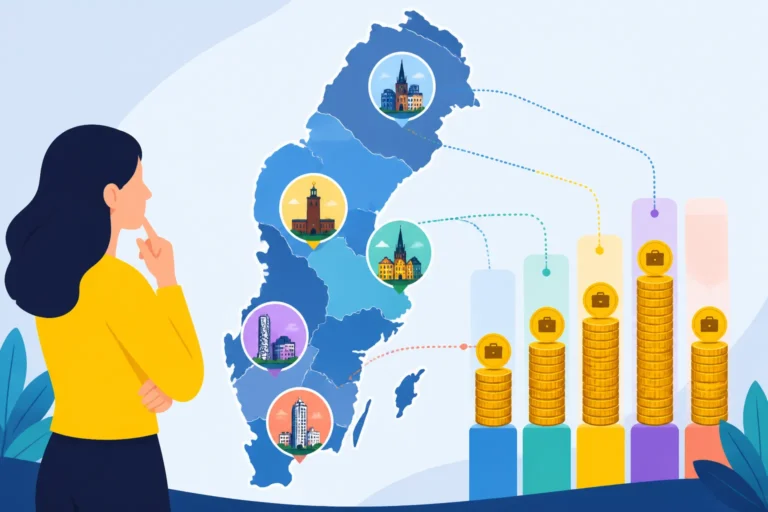
The first and most significant hurdle for the EU Blue Card is the salary threshold. In Sweden, this isn't just a recommendation; it is a strict legal requirement. The salary must be at least 1.5 times the average gross annual salary in Sweden. As of 2026, this threshold is adjusted annually based on data from Statistics Sweden. Many talented professionals miss out on the Blue Card simply because their initial offer was a few thousand kronor short of this mark. It is vital to negotiate your contract with this specific threshold in mind if the Blue Card is your goal.
In addition to the high salary, you must prove your professional standing through education or experience. Specifically, you need to have completed a university education of at least 180 credits (equivalent to a three-year bachelor's degree) or have five years of professional experience in your field. If your degree was earned outside the EU, you may need to look into Recognising Foreign Qualifications in Sweden Through UHR to ensure Migrationsverket accepts your credentials. This validation process can take time, so don’t wait until the last minute to gather your transcripts and diplomas.
Your job offer must also meet specific Swedish standards. The employment contract must be for a period of at least one year. While many Swedish tech companies offer "tillsvidareanställning" (permanent contracts), the Blue Card requires that the initial offer clearly covers at least 12 months. Furthermore, the terms of employment—including insurance, vacation time, and pension contributions—must be at least on par with Swedish collective agreements or what is customary for the industry. This is where a veteran's tip comes in: always check if your employer has insurance policies that cover "tjänstepension" (occupational pension), as this is a common sticking point during the permit review process.
The Application Process Navigating Migrationsverket
Applying for the Blue Card is a dual effort between you and your employer. Generally, the employer initiates the process by creating an offer of employment through the Migrationsverket web portal. Once they have completed their section, you will receive an email to finish your part of the application. This involves uploading your degree certificates, passport copies, and various forms. I cannot stress this enough: double-check every single PDF for clarity. I’ve known people whose applications were delayed by months simply because a scanned page was slightly blurry.
After the online submission, you will eventually be asked to visit an embassy or a local Migrationsverket office for Biometrics and the Residence Permit Card (UT-kort) in Sweden. This is where they take your photo and fingerprints. If you are already in Sweden on another valid permit, you can do this at one of the regional offices in cities like Malmö, Gothenburg, or Stockholm. If you are applying from abroad, you must wait for the card to be delivered before you can enter the country to start work.
One of the most stressful parts of the process is the wait. While the Blue Card is supposed to be processed relatively quickly, the reality can vary. You can track your progress via the portal, but often the status won't change for weeks. For a realistic look at how long you might be waiting, it is helpful to check Understanding Migrationsverket Processing Times and Delays to set your expectations. If you are waiting on a decision, this is the perfect time to start learning the language. Many expats find that using a platform like iTalki to practice Swedish with a tutor helps ease the transition and makes the eventual job start much smoother.
Benefits of Holding an EU Blue Card in Sweden
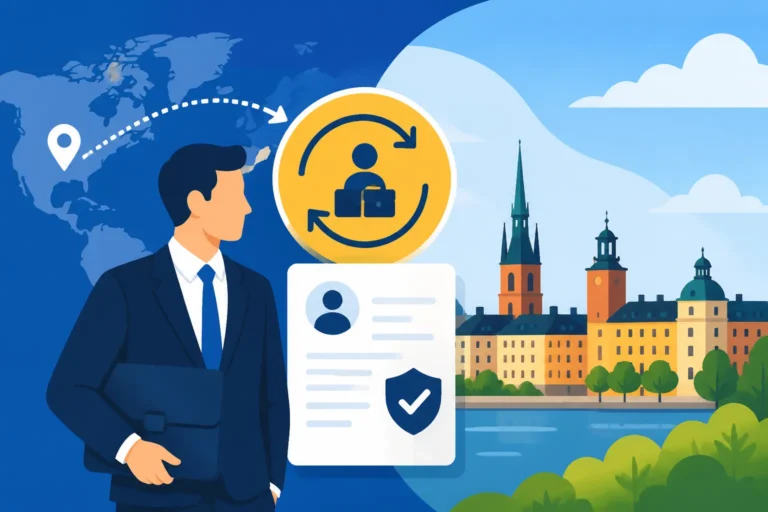
The standout benefit of the EU Blue Card is intra-EU mobility. After you have lived in Sweden for 12 months (or 18 months depending on the specific directive version in play), you have the right to move to another EU country for highly qualified work. This is a massive advantage over the standard Swedish work permit, which essentially ties your residency to your Swedish employer. If a better opportunity arises in Berlin or Amsterdam, the Blue Card framework makes the transition significantly easier than starting a fresh visa application from scratch.
Family rights are another major perk. When you apply for a Blue Card, your family members—spouse, registered partner, and children under 21—are eligible for residence permits that allow them to work or study in Sweden from day one. I've spoken to many families who found this "package deal" to be the deciding factor. While standard work permits also allow family members to join, the Blue Card often provides a more streamlined path for Family Reunification in Sweden: Bringing Your Loved Ones, especially when moving between different EU member states.
Finally, the Blue Card counts toward the five-year requirement for EU Long-Term Resident status. This is different from Swedish permanent residency because it gives you nearly the same rights as an EU citizen in most member states. If you have spent two years in Germany and then three years in Sweden on Blue Cards, you can often combine that time to apply for this status. This is a crucial strategy if your career path is likely to take you across borders. Understanding The Path to Permanent Residence in Sweden: Rules and Timeline is essential for anyone planning a future that extends beyond their first contract.
Practical Considerations for Blue Card Holders in Sweden
Living in Sweden on a high salary means you will be interacting heavily with the tax system. Sweden uses a progressive tax model, and as a Blue Card holder, you will likely fall into the higher brackets. It is vital to understand Income Tax in Sweden: Municipal, State, and the SINK Regime so you aren't surprised by your take-home pay. For Americans specifically, managing taxes can be a nightmare because the US taxes on global income. Using a service like Taxes for Expats can be a lifesaver in ensuring you are compliant with both Swedish and US regulations without overpaying.
Cultural and linguistic integration is the "hidden" requirement for a successful life in Sweden. Even if your office is 100% English-speaking, the life you live outside those walls—the "fika" breaks, the parent-teacher meetings, the neighborhood associations—happens in Swedish. I highly recommend signing up for Learning Swedish: SFI, Courses, and Language Paths for Newcomers as soon as you get your personnummer. To supplement formal classes, I personally found that booking conversation sessions on iTalki helped me move past the "beginner plateau" much faster than classroom learning alone.
Lastly, you must be aware of the rules regarding employment changes. If you lose your job or decide to switch employers within the first two years, you must notify Migrationsverket. The Blue Card is tied to a specific type of highly qualified work. If you move to a role that doesn't meet the salary threshold or the "highly qualified" definition, you may risk losing your status. Always review the regulations for Changing Employers on a Swedish Work Permit: The Rules before signing a new contract to ensure your path to residency remains secure.
Comparison Between EU Blue Card and Standard Work Permit
| Feature | EU Blue Card | Standard Work Permit |
|---|---|---|
| Salary Requirement | High (1.5x Swedish average) | Moderate (Industry standard) |
| Education/Experience | Degree or 5 years experience | No specific academic requirement |
| EU Mobility | Move to other EU states after 12-18 months | Restricted to Sweden |
| Job Market Test | Required (Ad must be posted for 10 days) | Required (Ad must be posted for 10 days) |
| Family Rights | Immediate right to work for spouse | Immediate right to work for spouse |
| Path to PR | Counts toward EU Long-Term status | Counts toward Swedish Permanent Residence |
Managing Your Finances and Career in Sweden
Once the permit is in hand and you’ve moved into your apartment, the real work of being an expat begins. You will need to navigate the banking system, set up your BankID, and figure out how to maximize your high salary. Because the Blue Card requires such a high income, you are in a great position to save and invest, but the cost of living in cities like Stockholm can eat into those gains quickly. It is often advised that newcomers spend their first few months tracking every krona until they understand the rhythm of Swedish life.
Your career growth doesn't stop with the permit. Networking in Sweden is often more horizontal than vertical; it’s about who you know and how well you fit into the local work culture. Participating in industry meetups and continuing to refine your skills is expected. If you find your professional Swedish is lacking, don't be afraid to invest in specific business Swedish coaching on iTalki. Being able to contribute to a meeting in the local tongue, even if your grammar isn't perfect, earns a massive amount of respect from Swedish colleagues.
Finally, keep an eye on your tax obligations. High earners in Sweden are subject to state income tax on top of municipal tax. If you have assets abroad or are dealing with the complexities of being an "accidental American" or a long-term expat, specialized advice from Taxes for Expats can help you navigate the nuances of the Swedish-US tax treaty. Staying on top of these administrative tasks is the boring but necessary part of ensuring that your life as a high-flying Blue Card holder remains as stress-free as possible.
General Disclaimer
This guide is for informational purposes only and does not constitute legal or immigration advice. Immigration laws in Sweden, including salary thresholds and processing times, are subject to frequent change by the Swedish government and Migrationsverket. Always verify current requirements on official government websites or consult with a qualified immigration lawyer before making major life decisions or submitting applications. The author is a lifestyle blogger, not a licensed immigration official.