How Do Salaries Compare Across Swedish Cities?
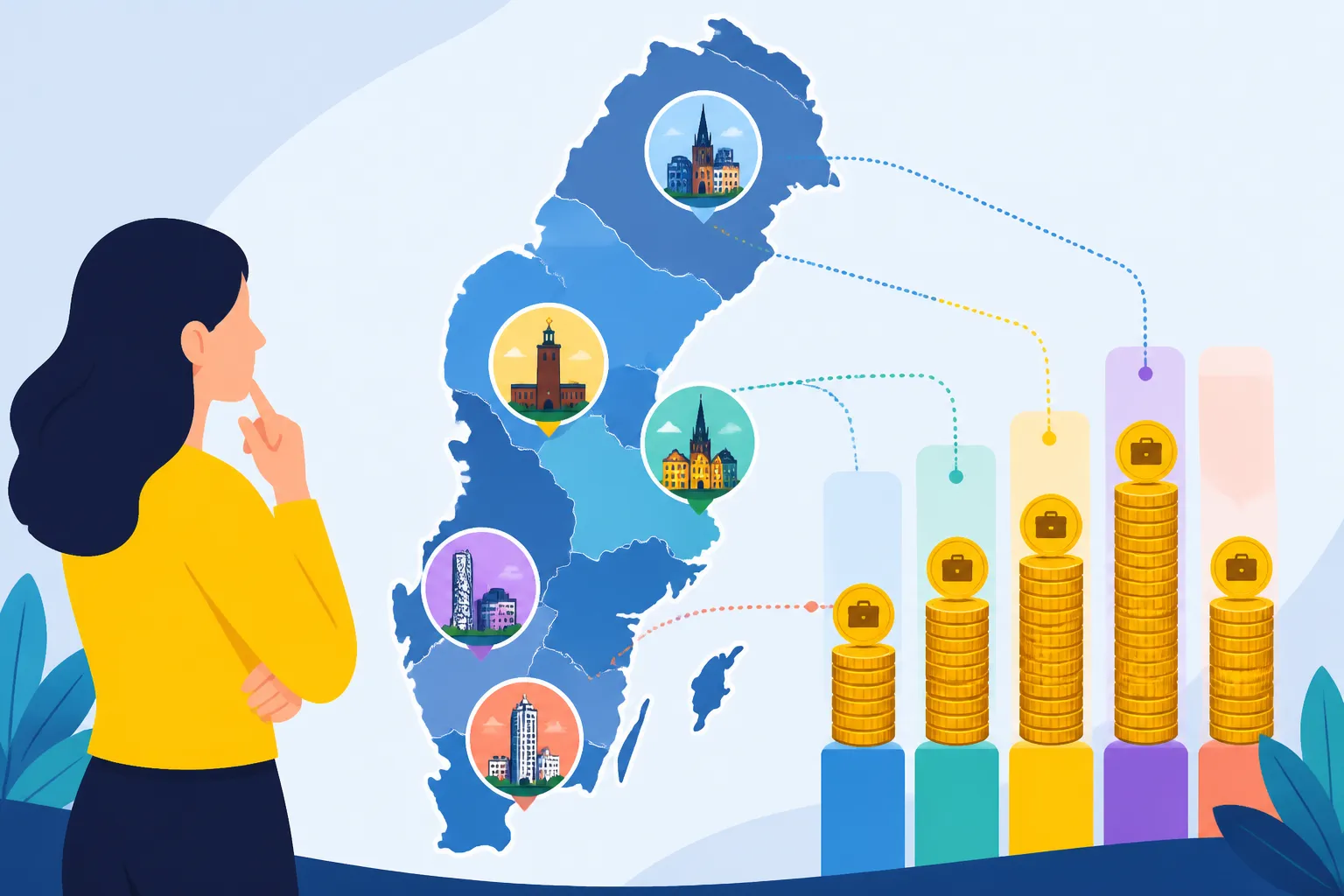
One of the biggest head-scratchers for any expat considering a move to Sweden is trying to figure out if that shiny job offer actually makes financial sense once you land. It's not just about the numbers on your payslip; the city you choose to call home plays a massive role in how far your kronor will actually stretch. This guide will walk you through the nuances of salaries across different Swedish cities, helping you understand the real financial picture and prepare for your new life in this beautiful, yet sometimes perplexing, country.
The Swedish Salary Landscape: Why Location Matters More Than You Think
Sweden is often painted with a broad brush when it comes to salaries and cost of living, but the reality on the ground is far more granular. Just like in any other country, the major metropolitan areas tend to offer higher salaries, primarily due to higher demand for specialized skills, a greater concentration of large companies, and, naturally, a steeper cost of living. But it’s not always a linear relationship, and the trade-offs are significant.
Stockholm: The High-Stakes, High-Reward Capital
Let's be honest, Stockholm is often where the highest salaries are found. As Sweden's economic and technological hub, it boasts a vibrant job market, especially in IT, finance, media, and tech startups. Companies here often compete for international talent, leading to more competitive remuneration packages. You'll find a higher concentration of multinational corporations, innovative startups, and a thriving consulting sector that naturally pushes salaries upwards. For instance, an experienced software engineer might see offers in Stockholm that are notably higher than in other cities, reflecting the intensity of the market. This also ties into the general advice of checking out what salary you need for a Swedish work permit in 2026, as the thresholds are often set with the higher-paying regions in mind.
However, this higher earning potential comes with a significant caveat: the cost of living in Stockholm is notoriously high. Housing, whether renting or buying, will eat up a substantial portion of your income, dwarfing expenses you might encounter elsewhere. Transport, while excellent, also adds up. When looking at potential salaries, it's crucial to consider the net income after taxes and then juxtapose that against the local cost of living. Many expats find themselves earning what looks like a great salary on paper, only to realise that Stockholm's expenses make saving or enjoying discretionary income a real challenge.
Gothenburg and Malmö: Strong Regional Hubs with Different Vibes
Beyond the capital, Gothenburg and Malmö stand out as Sweden's second and third largest cities, respectively, each with its unique economic landscape and salary profile.
Gothenburg, on Sweden's west coast, is a major industrial and logistics centre. Home to giants like Volvo, AstraZeneca, and SKF, it has a strong focus on automotive, manufacturing, life sciences, and port-related industries. Salaries here are generally competitive, often just a notch below Stockholm, particularly for engineers, researchers, and those in specialized industrial roles. The city offers a robust job market, and while the cost of living, especially for housing, is still high, it's typically more manageable than in Stockholm. Many expats find a good balance here, enjoying solid career opportunities without the absolute peak of Stockholm's expenses. The vibe is also a bit more laid-back, yet still offers plenty of urban amenities. If you're pondering what it's like living in Gothenburg and Malmö as a newcomer, you'll quickly notice these distinctions.
Malmö, in the south, connected to Copenhagen via the Öresund Bridge, has a slightly different economic character. It's a significant logistics hub due to its proximity to Denmark and mainland Europe, but also has growing sectors in IT, media, and creative industries, often fostering a vibrant startup scene. Salaries in Malmö are generally a bit lower than in Gothenburg, and certainly lower than Stockholm, but so is the cost of living. Housing is often more affordable, making a decent salary go further. This can be an attractive option for those who prefer a more European feel, access to another major capital city (Copenhagen is a quick train ride away), and a slightly less intense pace of life. For many, the slightly lower salary is compensated by a higher quality of life and less financial pressure on housing.
University Towns and Smaller Cities: Quality of Life vs. Earning Potential
Sweden is dotted with fantastic university towns like Uppsala, Lund, Linköping, and Umeå, and numerous smaller cities that offer a very different proposition. Salaries in these areas are typically lower than in the big three cities. The job market might be more niche, often centred around the university itself, local government, specific industries, or regional services. For example, Lund is a strong research and development hub thanks to Lund University and MAX IV Laboratory, attracting highly skilled individuals in specific fields, but the overall salary range might be lower than a comparable role in Stockholm.
However, the significant advantage here is the dramatically lower cost of living. Housing is considerably more affordable, and everyday expenses often feel lighter. This means that a seemingly lower salary can actually translate into a higher disposable income and a greater ability to save or enjoy leisure activities. Many expats who prioritise a quieter life, shorter commutes, and a strong sense of community find these cities incredibly appealing. The quality of life can be exceptional, with easy access to nature, a relaxed atmosphere, and excellent public services. When you consider the real cost of living in Sweden, these factors become incredibly important.
Unpacking the Cost of Living: Your Real Income Equation
Understanding how salaries compare across Swedish cities isn't just about looking at the gross figures. It's a complex equation where your potential earnings are heavily influenced by the local cost of living, particularly housing, and how that impacts your net disposable income. Your actual purchasing power is what truly matters, and it can vary wildly from one city to another.
Housing: The Biggest Variable
Housing is, without a doubt, the single largest determinant of your financial well-being in Sweden. The cost difference between cities can be astronomical, making a seemingly high salary in Stockholm feel quite modest compared to a lower salary in, say, Linköping.
In Stockholm, finding affordable housing, especially a first-hand contract, is a monumental challenge. The housing queue (bostadskö) can take years, even decades, to yield results for desirable areas. This forces many newcomers into the second-hand market, where rents are often significantly higher and contracts less secure. A modest two-room apartment in central Stockholm can easily cost upwards of 15,000-20,000 SEK per month, if not more, for a second-hand rental. Buying property in Stockholm is also among the most expensive in Europe, demanding substantial down payments and higher mortgage costs. This is why knowing how the first- and second-hand rental system works is absolutely crucial.
Contrast this with a city like Uppsala or Malmö, where you might find a similar-sized apartment for 10,000-14,000 SEK. In even smaller towns, the rent could drop to 7,000-9,000 SEK. This difference of several thousand kronor each month directly impacts your financial freedom. A detailed exploration of housing and living in Sweden will quickly show you just how much of a difference location makes.
| City | Indicative Monthly Rent (1-bed apt, city-centre) | Indicative Monthly Transport Pass | Avg. Monthly Grocery Bill | Overall Cost of Living Index (vs. Stockholm=100) |
|---|---|---|---|---|
| Stockholm | 15,000 – 20,000 SEK | 970 SEK | 3,500 – 4,500 SEK | 100 |
| Gothenburg | 12,000 – 17,000 SEK | 840 SEK | 3,000 – 4,000 SEK | 85-90 |
| Malmö | 10,000 – 14,000 SEK | 770 SEK | 3,000 – 3,800 SEK | 75-80 |
| Uppsala | 9,000 – 13,000 SEK | 900 SEK | 2,800 – 3,500 SEK | 70-75 |
| Linköping | 8,000 – 12,000 SEK | 790 SEK | 2,700 – 3,500 SEK | 65-70 |
Note: These figures are indicative and can vary greatly based on apartment size, specific location within the city, lifestyle, and market fluctuations.
Everyday Expenses: Beyond Rent and Mortgage
While housing dominates the cost-of-living discussion, other expenses also factor into your actual financial standing. Public transport, for instance, is excellent across Sweden but comes with a cost. Stockholm's SL card, for example, is priced higher than equivalent monthly passes in Gothenburg (Västtrafik) or Malmö (Skånetrafiken), though all offer efficient services. The amount you budget for groceries in Sweden will also have a slight regional variation, though this is less dramatic than housing costs. Utilities, internet, and home insurance will be fairly consistent across cities, though electricity costs can fluctuate based on consumption and energy contracts.
Furthermore, leisure activities, dining out, and entertainment can be notably pricier in major cities. A simple dinner out in central Stockholm will likely cost more than a similar meal in a smaller town. This affects your discretionary spending and, ultimately, your perceived wealth. It's not just about the numbers; it's about the lifestyle you can afford within those numbers. Budgeting for the real cost of living in Sweden is a crucial exercise for any newcomer.
Industry, Experience, and Your Negotiating Power Across Sweden
Beyond the geographical differences, your salary potential in Sweden is heavily influenced by your specific industry, your level of experience, and your ability to negotiate effectively. This is true everywhere, but Sweden has its own cultural nuances that are worth understanding.
Sectoral Concentrations and Demand
Certain industries are heavily concentrated in specific regions, creating pockets of higher demand and, consequently, better salaries for those skills.
- IT and Tech: Stockholm is the undisputed leader, with a thriving startup ecosystem and global tech companies. Gothenburg and Malmö also have strong tech scenes, particularly in software development and gaming, but Stockholm generally offers the highest pay for senior roles.
- Engineering and Manufacturing: Gothenburg is a powerhouse, driven by the automotive (Volvo), aerospace, and heavy industry sectors. Linköping also has a strong engineering presence, particularly in defence and aviation.
- Life Sciences and Pharma: Both Stockholm (Karolinska Institutet) and Gothenburg (AstraZeneca, Sahlgrenska University Hospital) are major hubs, offering competitive salaries for researchers, scientists, and medical professionals.
- Finance: Stockholm is the financial capital, offering the highest salaries for banking, investment, and financial analysis roles.
- Public Sector/Healthcare: While vital everywhere, salaries in the public sector are more standardized and less prone to major city-specific fluctuations compared to the private sector. However, the cost of living still makes a public sector salary in Stockholm feel significantly different than one in a smaller town.
If your profession aligns with a city's dominant industry, your earning potential will likely be higher due to increased competition for talent. This is something to research thoroughly when considering your job hunt in Sweden. If you're looking for help with your Swedish taxes, especially with varying incomes, "Taxes for Expats" can be a valuable resource to ensure you're compliant and optimizing your financial situation.
The Importance of Experience and Language Skills
In Sweden, as elsewhere, your years of experience and specialized skills play a crucial role. Entry-level salaries are often quite similar across cities within the same industry, but the disparity grows with seniority. Highly experienced professionals, especially in high-demand fields like IT or specialized engineering, will command the highest salaries, particularly in Stockholm and Gothenburg.
While many international companies in Sweden operate in English, having at least basic Swedish language skills can significantly enhance your career prospects and, consequently, your earning potential. It opens up more job opportunities, particularly in roles that require client interaction or working with local teams, and demonstrates a commitment to integrating into Swedish society. Many expats choose to learn Swedish, and platforms like iTalki can be a great way to start taking lessons from native speakers, which can pay dividends in your professional life. Learning Swedish: SFI, Courses, and Language Paths for Newcomers provides a great overview of your options.
Negotiating salary in Sweden can feel different from other cultures. It's generally more subtle, and collective agreements (kollektivavtal) often set benchmarks for many professions. However, for specialized roles, especially in the private sector, there is always room for negotiation, particularly if you bring unique skills and experience to the table. Don't be afraid to discuss your expectations, but do so with an understanding of the local market and the company's culture.
Making an Informed Decision: Beyond the Paycheck
Ultimately, deciding where to work and live in Sweden is about more than just comparing salary numbers on a spreadsheet. It’s about finding the right balance between your career aspirations, financial goals, and desired lifestyle. The "best" city for you will depend entirely on your personal priorities.
For some, the allure of a higher potential salary and cutting-edge opportunities in Stockholm is worth the trade-off of higher living costs and a faster pace. They might thrive on the energy and international atmosphere. For others, the slightly lower salaries in Gothenburg or Malmö offer a better overall quality of life, with a strong professional scene but a more balanced lifestyle and somewhat more accessible housing. Then there are those who find immense value in the more relaxed pace, closer communities, and significantly lower costs of living in university towns or smaller cities, even if it means a more niche job market. The ability to save more or have a larger disposable income, even on a numerically lower salary, can be a huge draw.
Before making your move or accepting an offer, thoroughly research the local housing market, public transport costs, and typical grocery expenses for your target city. Use online tools and expat forums to get a realistic picture. Consider what truly matters to you: is it maximum earning potential, a comfortable savings rate, a short commute, access to nature, or a specific type of cultural scene? Each city in Sweden offers a unique blend, and understanding your own priorities will guide you to the place where your salary – and your life – will truly flourish. Make sure you also understand your Swedish payslip and preliminärskatt to accurately calculate your net income.
Disclaimer
The information provided in this guide is for general informational purposes only and does not constitute financial, legal, or immigration advice. While we strive to keep the information up-to-date and accurate, salary figures, cost of living estimates, and regulations in Sweden can change rapidly. Always consult with official sources, financial advisors, or legal professionals for advice tailored to your specific situation.