Intra-Company Transfer (ICT) Permits for Sweden Explained
Facing the labyrinth of Swedish immigration can feel like a full-time job before you’ve even earned your first krona. I still remember the sheer panic of waiting for my first residence permit card, checking the mailbox every afternoon as if my whole future depended on a piece of plastic. This guide breaks down the Intra-Company Transfer (ICT) permit to help you navigate the process without the stress.
Understanding the Foundation of the ICT Permit in Sweden
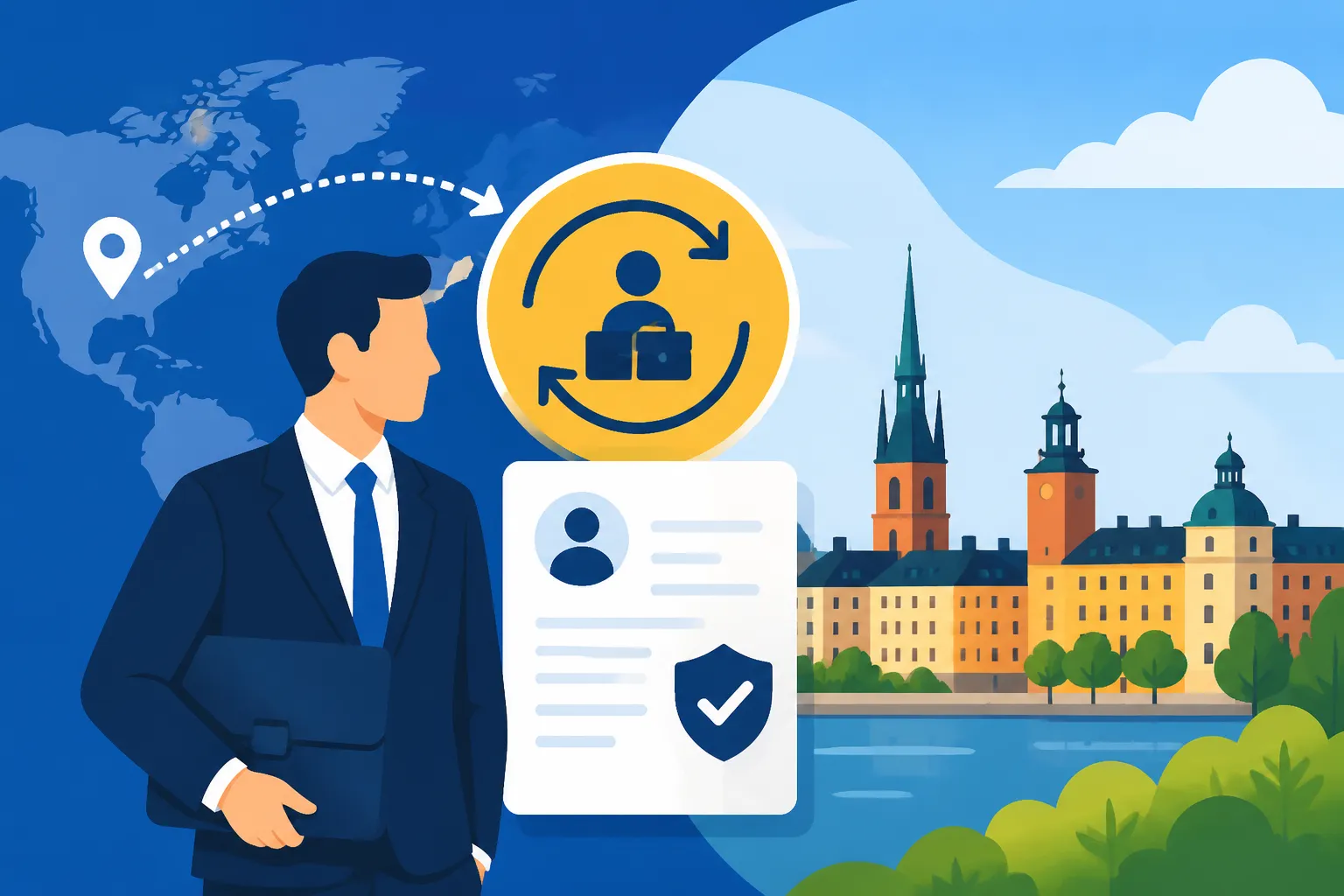
The Intra-Company Transfer (ICT) permit is a specific type of residence and work authorization designed for individuals who are employed by a company based outside the European Union and are being temporarily transferred to a branch, subsidiary, or head office within Sweden. Unlike a standard work permit, which is often tied to a specific local job offer, the ICT permit is rooted in a 2014 European Union directive. Its primary goal is to facilitate the movement of high-level talent—managers, specialists, and graduate trainees—across international borders within the same corporate group.
When I first arrived, I assumed every work-related move followed the same bureaucratic path. However, the ICT permit exists in its own lane. It is fundamentally different from Applying for a Swedish Work Permit: The Step-by-Step Process because it emphasizes your existing relationship with your global employer. This is particularly useful for multinational corporations that need to deploy their "A-team" to Sweden to launch a new product, oversee a merger, or transfer technical knowledge to the local workforce. It is important to note that this permit is only for non-EU/EEA citizens; if you hold a passport from an EU country, your path is significantly easier through right of residence.
One of the most complex parts of the ICT permit is the "mobility" clause. Because this is an EU-wide directive, an ICT permit granted in Sweden can sometimes allow you to work in other EU member states under specific conditions. This "Long-term Mobility" or "Short-term Mobility" is a major selling point for career-driven professionals, but it requires a deep understanding of how Sweden’s Migrationsverket (Migration Agency) interacts with the rest of the continent.
Eligibility Criteria for Managers and Specialists
The Swedish Migration Agency is very particular about who qualifies for an ICT permit. You cannot simply be "an employee"; you must fall into one of three specific categories: Manager, Specialist, or Graduate Trainee. Each category has its own set of requirements that your company must prove through extensive documentation. In my experience, the "Specialist" category is often where the most confusion happens. A specialist must possess "knowledge essential to the host entity's areas of operation, techniques, or management." This isn't just about having a degree; it’s about having niche expertise that the Swedish office currently lacks.
Managers, on the other hand, must be in a position where they primarily direct the host entity. This involves supervising other professional or managerial staff and having the authority to hire or fire. If you are a middle manager without these specific authorities, you might find your application scrutinized more heavily. Graduate Trainees are individuals with a higher education degree who are being transferred for career development or to gain experience in business techniques or methods. For all these roles, you must have been employed by the sending company for at least three to six months continuously prior to the transfer.
Beyond your job title, the salary and terms of employment are critical. Sweden is famous for its "Collective Agreements," and even if your company doesn't have one, your offer must match the Swedish industry standard for your specific role. This is where many expats get caught out. If your salary is even a few hundred kronor below the threshold, Migrationsverket will reject the application. You should also be aware of The Swedish Workplace: Culture, Contracts, and Your Rights to ensure your contract includes the mandatory insurances—health, life, and pension—that Swedish law requires for all foreign workers.
The Role of the Sending and Receiving Entities
The ICT permit application is a collaborative effort between three parties: you, your current employer abroad (the sending entity), and the branch in Sweden (the receiving entity). The Swedish branch must be part of the same "group" of companies as your home office. This relationship must be legally verifiable. There are cases where complex corporate structures or franchise models led to permit denials because the "group" connection wasn't clear to the Swedish authorities.
The receiving entity in Sweden takes on a significant administrative burden. They must provide an "Information about the employment" form and a statement from the relevant Swedish trade union. While the union doesn't have the power to veto your permit, Migrationsverket takes their "opinion" very seriously. They check if the salary, insurance, and working conditions align with Swedish norms. If you are coming from a culture with less emphasis on labor unions, this can feel like an unnecessary hurdle, but it is a fundamental part of the Swedish model designed to prevent "wage dumping."
Documentation is king here. Your home company must provide a letter of assignment that clearly states the duration of the transfer, the position you will hold, and a guarantee that you will be able to return to a position within the company group at the end of your Swedish stint. Since the ICT permit is strictly temporary—limited to three years for managers and specialists and one year for trainees—showing this "path back home" is essential for approval.
Navigating the Application Timeline and Biometrics
Once the paperwork is in order, the application is usually submitted online. The waiting game in Sweden can be agonizing. Newcomers are often told that patience is the first Swedish word they need to master. Migrationsverket has a legal obligation to make a decision on ICT permits within 90 days, which is theoretically faster than some other permit types. However, if your application is incomplete or if there is a sudden surge in applicants, that 90-day window can feel very optimistic.
During the process, you will need to visit a Swedish embassy or consulate to provide biometrics—your fingerprints and a photograph. This data is used to produce your residence permit card (UT-kort). If you are already in Sweden on a different, valid permit, you might be able to do this at one of the Migrationsverket service centers locally. However, most ICT applicants must have their permit approved before they even set foot in Sweden. Do not make the mistake of traveling to Sweden as a tourist while your application is pending; this can lead to an immediate rejection of your permit.
While waiting, it is a great time to start preparing for the cultural shift. Even though most Swedish offices operate in English, the social fabric of the country is woven in Swedish. I personally found that using a platform like iTalki to connect with a native Swedish tutor for just an hour a week made a world of difference. Being able to say more than just "hej" when you walk into your new Swedish office shows a level of respect that goes a long way in building rapport with your new colleagues. It’s about more than just vocabulary; it’s about understanding the "fika" culture and the subtle social cues that define the Swedish workplace.
Managing Taxes and the SINK Regime
One of the biggest shocks for ICT transferees is the Swedish tax system. Because you are often still technically employed by your home country but working in Sweden, your tax residency can become a nightmare of "ifs" and "buts." Generally, if you stay in Sweden for more than six months, you are considered a tax resident and are liable for tax on your global income. However, for many ICT workers, the "SINK" tax (Special Income Tax for Non-Residents) might be an option if your stay is very short.
The SINK tax is a flat rate (currently 25%) that is applied to your income without any deductions. It’s simpler, but not always cheaper. Navigating this requires professional help, especially if you are a US citizen or from another country that taxes based on citizenship. This is exactly where a service like Taxes for Expats becomes invaluable. They specialize in the unique intersection of Swedish tax obligations and your home country’s requirements, ensuring you don't get hit with double taxation. Expats can lose thousands of kronor simply because they didn't realize they had to file specific forms in both jurisdictions.
Furthermore, you must ensure your employer is paying into the correct social security systems. Sweden has bilateral social security agreements with many countries. Under an ICT transfer, you might remain in your home country’s social security system for a limited period (usually using an A1 or CoC certificate). This means you won't be paying into the Swedish pension system, but you also won't lose progress on your pension back home. It is a delicate balance that needs to be settled before your first Swedish paycheck arrives. To understand the broader context, you should read The Swedish Tax System Explained: Rates, Returns, and Filing.
Setting Up Your Life: Personnummer and Healthcare
The holy grail of Swedish life is the personnummer—the 10- or 12-digit personal identity number. Without it, you are a ghost in the system. You cannot easily get a gym membership, a library card, or a high-speed internet contract. To get one, you must visit Skatteverket (the Tax Agency) and prove that you intend to live in Sweden for at least one year. For ICT permit holders on a two- or three-year assignment, this is usually straightforward.
Once you have your personnummer, you can access the healthcare system. Sweden's healthcare is world-class but can be confusing for newcomers used to private insurance models. You will need to learn about Getting Your Personnummer: The Gateway to Swedish Healthcare to understand how to register at a local clinic (vårdcentral). For ICT workers, having a personnummer also means your employer must register you with Försäkringskassan (the Social Insurance Agency). I highly recommend Registering with Försäkringskassan: When and Why You Need To because this agency handles everything from sick pay to parental leave benefits.
If your assignment is less than a year, you won't get a personnummer; instead, you’ll get a samordningsnummer (coordination number). This is a "lite" version that allows you to pay taxes and receive a salary but doesn't grant you the same social benefits. In this case, you must ensure your employer provides comprehensive private health insurance, as you won't be fully covered by the Swedish public system.
| Feature | ICT Permit | Standard Work Permit |
|---|---|---|
| Max Duration | 3 years (Managers/Spec), 1 year (Trainees) | 2 years (Extendable to Permanent) |
| Employer Requirement | Same corporate group globally | Any Swedish-registered company |
| Prior Employment | 3–6 months at home office required | Not required |
| EU Mobility | Yes (can work in other EU branches) | No (restricted to Sweden) |
| Path to Permanent | Very difficult/Uncommon | Standard path after 4 years |
| Union Opinion | Required | Required |
Bringing the Family Along: Reunification Rights
One of the great things about the ICT permit is that it acknowledges you are a human being with a family, not just a "unit of labor." Your spouse or registered partner and your children under 21 are entitled to join you in Sweden. They receive residence permits for the same duration as yours. Unlike in some other countries, your spouse is granted full work rights in Sweden immediately. They don't need a separate job offer or a sponsor; their permit allows them to work for any employer or even start their own business.
However, the "maintenance requirement" is a hurdle you must clear. You must prove that your salary is high enough to support your entire family after paying for housing. In cities like Stockholm or Gothenburg, where rents are sky-high, this can be a challenge. You should investigate Family Reunification in Sweden: Bringing Your Loved Ones to see the specific square-footage requirements and income thresholds. I remember one colleague whose permit was delayed because their apartment didn't have enough bedrooms for their three children—the Swedish state takes "living standards" very seriously.
For the kids, Sweden is a paradise. Once you have your personnummer, your children are entitled to free schooling and heavily subsidized childcare (förskola). The transition can be tough on little ones, but Swedish schools are very experienced with international students. Many municipalities offer "introductory classes" where kids can learn basic Swedish before joining a regular classroom. Again, using a platform like iTalki to find a tutor who specializes in teaching children can give your kids a head start and a sense of agency in their new environment.
Housing and the Practicalities of Living in Sweden
Finding a place to live will likely be your biggest headache. Sweden's housing market is notoriously dysfunctional, especially in the major cities. Most ICT workers end up in "second-hand" rentals (andrahand), which are sublets from people who own their apartments or have a first-hand lease. These contracts are often short-term—six months to a year—which can feel precarious when you are trying to settle into a new country.
Newcomers should look for housing as early as possible. Your company might provide a relocation service, which is worth its weight in gold. If not, you’ll be spending a lot of time on sites like Blocket or Qasa. Be extremely wary of scams; never pay a deposit before you or a trusted representative has physically seen the apartment. You also need to make sure you have Home Insurance (Hemförsäkring): Why It's Essential in Sweden. In Sweden, your landlord's insurance only covers the building; if your washing machine leaks and ruins the floor, or if you are robbed, you are 100% liable without your own policy.
Banking is another hurdle. To open a full bank account with BankID (the digital ID that runs Sweden), you absolutely need that personnummer and a Swedish ID card. It can take several weeks after arrival to get these documents. In the meantime, you’ll need to rely on your home country’s cards or a digital bank. For a smoother transition, check out Opening a Bank Account in Sweden: A Step-by-Step Guide. Once you have BankID and the "Swish" payment app, you will finally feel like a local.
The ICT Permit and the Path to Permanent Residency
It is crucial to understand that the ICT permit is designed to be temporary. It is capped at a maximum of three years for managers and specialists. Unlike a standard work permit, where you can apply for permanent residency (PR) after four years, the time spent on an ICT permit does not always count towards the requirements for PR in the same straightforward way. If your goal is to settle in Sweden long-term, the ICT permit might actually be a bit of a "trap."
Many expats who fall in love with the Swedish lifestyle (and the fika!) realize halfway through their ICT term that they want to stay. At that point, you usually have to "switch" to a local Swedish work permit. This often involves the Swedish branch of your company hiring you on a local contract rather than a transfer contract. This switch can be complicated and sometimes requires you to apply from outside the country, depending on current Migrationsverket policies.
If you do decide to stay, you’ll need to get serious about Learning Swedish: SFI, Courses, and Language Paths for Newcomers. While you can survive in English, you cannot truly integrate or reach permanent residency without a basic command of the language. Using iTalki for personalized, professional Swedish lessons is a great way to prepare for the TISUS or Swedex exams, which are often required for certain professional certifications or university entrance if you ever decide to pivot your career while in Sweden.
Common Pitfalls and How to Avoid Them
The most common reason for ICT permit denials isn't a lack of talent; it's a lack of attention to detail. Migrationsverket is legendary for its "strictness." If a single insurance policy was missing for one month of your previous employment, or if your vacation pay wasn't calculated exactly according to Swedish law, they can reject your extension or your initial application. This is why it is vital that both your home office and the Swedish entity work with an experienced relocation or legal firm.
Another pitfall is the "return guarantee." If the contract doesn't explicitly state that you have a job to go back to, or if the "return" is to a different company outside the group, the permit will be denied. The ICT directive is about transferring knowledge, not about permanent immigration. If the authorities suspect you are using the ICT permit to bypass the stricter requirements of a standard work permit, they will flag your file.
Finally, keep an eye on your passport's expiration date. Sweden will never grant a permit that lasts longer than your passport. If your passport expires in 18 months, you will only get an 18-month permit, even if your assignment is for three years. Renew your passport before you start the application to ensure you get the maximum time allowed.
Preparing for the Swedish Winter and Office Culture
Beyond the paperwork, there is the "human" side of an ICT transfer. You are moving to a country that is dark and cold for half the year. This sounds like a cliché until you are waking up in the dark and leaving the office in the dark in November. Taking Vitamin D and investing in high-quality outdoor gear is just as important as having the right visa. Swedes have a saying: "There is no bad weather, only bad clothing."
In the office, prepare for a very flat hierarchy. Your "Manager" title might not carry the same weight it does back home. In Sweden, decisions are often made through consensus, and even the most junior intern is expected to voice their opinion. This "Lagom" approach—not too much, not too little, just right—permeates everything. You will find that The Swedish Workplace: Culture, Contracts, and Your Rights involves a lot of meetings and a very strong focus on work-life balance. Leaving the office at 4:00 PM to pick up your kids from förskola is not just accepted; it’s expected.
Embracing these cultural quirks will make your ICT assignment a success. Whether it's mastering the art of the 15-minute fika or finally understanding why everyone takes their shoes off at the front door, these small details are what turn a temporary assignment into a life-changing experience. Use your time here to learn a new way of working and living—one that prioritizes well-being as much as productivity.
Disclaimer
The information provided in this guide is for general informational purposes only and does not constitute legal, financial, or professional immigration advice. Swedish immigration laws and Migrationsverket regulations are subject to frequent changes. Always consult with an official government source or a certified legal professional regarding your specific situation before making any decisions.