Is There Inheritance Tax in Sweden?
Stepping into the world of Swedish bureaucracy and finance as a newcomer can often feel like navigating a dense, fog-laden forest. You hear whispers and rumors about high taxes and complex systems, and naturally, when it comes to something as sensitive as inheritance, your mind jumps to the worst-case scenario. This guide is here to clear the air and tell you precisely how inheritance works in Sweden, specifically addressing the big question: is there an inheritance tax?
The Surprising Swedish Truth: No Direct Inheritance Tax Here
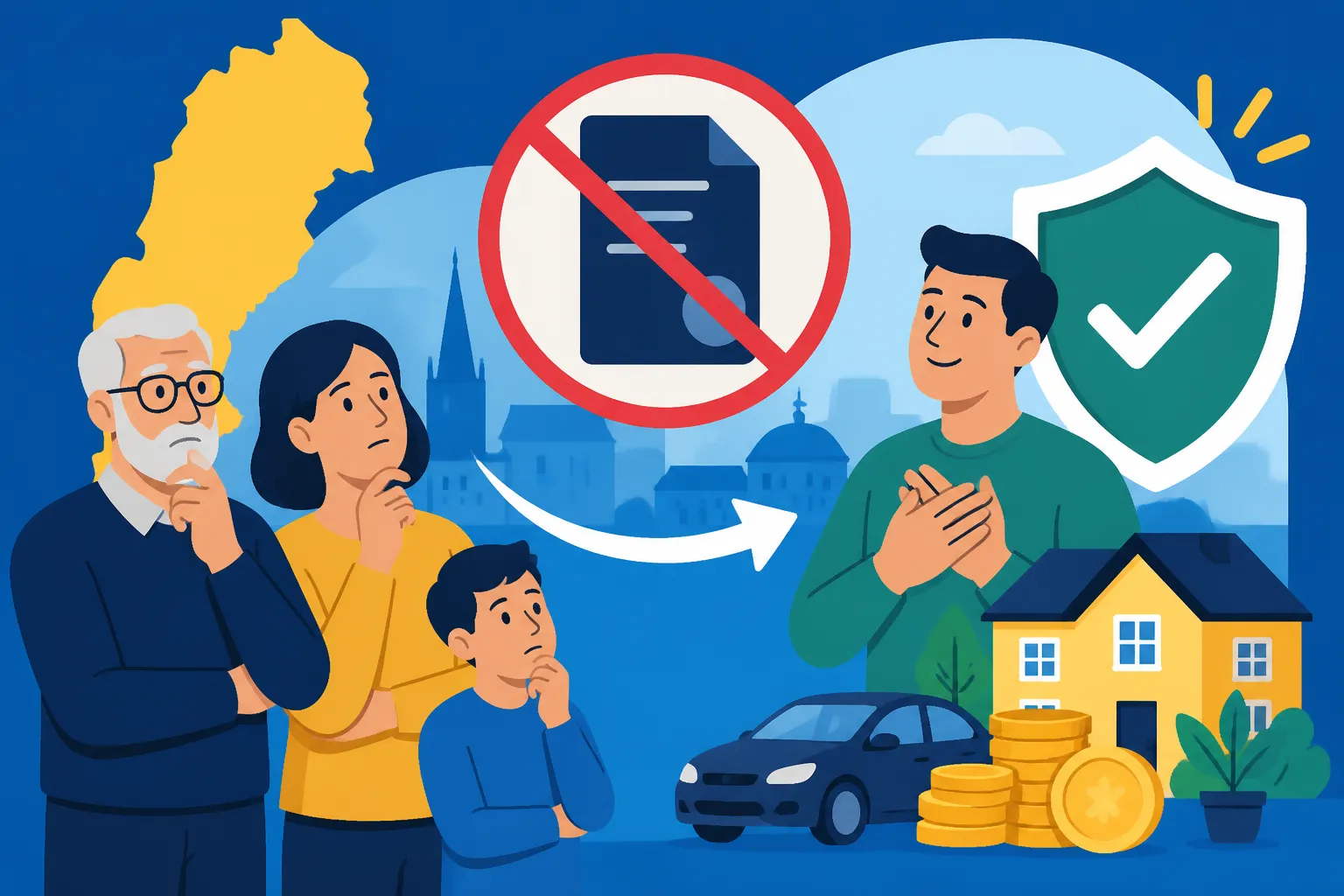
Let's cut right to the chase, because this is often a huge relief for many expats who are already grappling with so many new regulations. The answer to whether there is inheritance tax in Sweden is a resounding no. Sweden abolished both inheritance tax (arvsskatt) and gift tax (gåvoskatt) back in 2004. This means that if you inherit money or assets from someone who passed away in Sweden, you, as the beneficiary, will not pay a direct tax on the value of that inheritance. For many, this comes as a pleasant surprise, especially if you come from a country where such taxes can significantly diminish what you receive.
Dispelling the Common Misconception About Swedish Inheritance
It's understandable why this might be confusing. Sweden is known for its comprehensive welfare state, funded by what are often perceived as high taxes on income, consumption, and even capital. So, the idea that something as significant as an inheritance could go untaxed might seem counterintuitive. I've had countless conversations with fellow expats who've moved here from places like the UK, the US, or Germany, where inheritance tax is a very real and sometimes substantial part of their financial planning. They arrive in Sweden, hear about our overall tax system, and automatically assume inheritance must be included.
However, the Swedish approach is fundamentally different. The focus shifted away from taxing the transfer of wealth upon death or through gifts. Instead, the philosophy is to tax income and capital gains, and trust me, they do that very efficiently! But when it comes to the act of receiving an inheritance, Sweden takes a hands-off approach from a direct taxation perspective. This abolition was part of a broader economic and political discussion aiming to simplify the tax system and reduce what some saw as double taxation on already taxed wealth.
When the Inheritance Tax Disappeared and Why It Matters Now
The decision to abolish inheritance and gift tax in Sweden came into effect on January 1, 2005. Before this, Sweden did indeed have an inheritance tax system, similar to many other countries, with varying rates depending on the relationship between the deceased and the beneficiary, and the value of the inheritance. The government's motivation for removing it was multi-faceted. Arguments often cited included reducing administrative burdens, discouraging capital flight, and promoting entrepreneurship by making it easier for family businesses to be passed down without incurring significant tax liabilities that could force sales or restructuring.
For you, as an expat in Sweden today, this historical context means that you don't need to factor in a specific inheritance tax when planning your own estate or when you are a beneficiary of a Swedish estate. This simplifies things greatly, as you won't face percentages being shaved off the top of what you inherit before it even reaches you. However, and this is a crucial "however," this doesn't mean that dealing with an estate in Sweden is entirely free of financial considerations or administrative work. Oh no, Sweden loves its paperwork, and there are other taxes and processes to be aware of. You might find a deeper dive into the overall The Swedish Tax System Explained: Rates, Returns, and Filing helpful to understand the broader context of how things are taxed here.
Navigating the Swedish Estate: Beyond Inheritance Tax, Other Financial Realities
While the good news is that there's no direct inheritance tax, the reality of managing an estate (ett dödsbo) in Sweden still involves a number of administrative steps and potential financial obligations. These aren't "inheritance taxes" in the traditional sense, but they are taxes and costs that arise because of the death and the subsequent transfer of assets. This is where many expats can still feel the weight of Swedish bureaucracy.
The Mandatory Bouppteckning: Inventorying the Estate
One of the first and most critical steps after someone passes away in Sweden is the bouppteckning, or estate inventory. This is a mandatory legal document that meticulously lists all of the deceased's assets and debts as they stood on the day of death. It also details who the heirs (arvingar) and legatees (testamentstagare) are. This isn't just a suggestion; it's a legal requirement that must be completed within three months of the death and then submitted to the Swedish Tax Agency (Skatteverket) within one month thereafter.
The process of creating a bouppteckning often involves:
- Gathering Information: This means collecting bank statements, property deeds, investment portfolio summaries, loan documents, and any wills or marriage contracts. For foreigners, especially if the deceased had assets or family abroad, this can be a truly daunting task. You're trying to figure out a new country's legal system while dealing with grief and potentially language barriers.
- Appointing an Estate Administrator: Often, one of the heirs will take the lead, or a neutral party (such as a lawyer or an experienced estate administrator, known as a boutredningsman) might be appointed, especially if there are complexities or disagreements among heirs.
- Recording Details: Every single item of value, from bank accounts and shares to real estate, cars, and even significant household items, must be listed, along with their market value. Debts like mortgages, loans, and unpaid bills also need to be included.
Once completed, the bouppteckning serves as the official record of the estate and acts as the legal basis for the division of assets among the heirs. It's a foundational document for everything that follows. This entire process can be time-consuming and requires careful attention to detail. It’s also often the point where you realise that while there's no inheritance tax, there are very real costs associated with legal assistance, valuations, and the administration itself.
Capital Gains Tax on Estate Assets: The Real Tax Burden
Here's where many people trip up, mistakenly thinking it's an inheritance tax. If the deceased owned assets that have increased in value since they were acquired, and these assets are sold by the estate or by the heirs after the distribution, then capital gains tax will be applied to that increase in value. This applies to things like:
- Real Estate (Fastighet): If the deceased owned a house or apartment (bostadsrätt) that is sold after their death, any profit made on that sale (the difference between the selling price and the original purchase price, minus allowable deductions) will be subject to capital gains tax. The rate for property sales can be quite substantial, often 22/30ths of the gain taxed at 30%, effectively around 22% of the profit. This is paid by the estate itself before the remaining funds are distributed to heirs, or by the heirs if they take ownership of the property and then sell it.
- Shares and Funds (Aktier och fonder): Similarly, if the deceased had an investment portfolio, and the shares or funds within it are sold for a profit after their death, that profit is subject to capital gains tax, typically at a rate of 30%. This would be settled by the estate. You can learn more about how profits from investments are taxed in Sweden by looking at topics like Saving and Investing in Sweden: ISK, Funds, and the Stock Market.
It’s crucial to understand that this isn't a tax on the inheritance itself, but rather a tax on the realized gain from the sale of an asset, which is a standard part of The Swedish Tax System Explained: Rates, Returns, and Filing. It would have been taxed whether the deceased sold it themselves during their lifetime or if their estate sells it after their passing. The key difference is when the tax event occurs. So, while you don't pay tax for receiving the asset, the asset itself might have a latent tax liability that becomes active upon sale.
Other Potential Costs and Administrative Hurdles
Beyond capital gains, other costs and administrative fees can arise:
- Legal and Administrative Fees: If the estate is complex, or if there are disputes, hiring a lawyer or a professional boutredningsman can incur significant costs. These are usually paid from the estate's assets before distribution.
- Transfer Fees: When real estate is transferred to an heir, there might be stamp duty or registration fees (lagfartskostnader) associated with updating the property registry. This isn't a tax on inheritance, but a fee for a change of ownership.
- Income from the Estate: Very occasionally, an estate might generate income (e.g., rental income from a property) between the date of death and the final distribution. This income might be subject to income tax within the estate.
- Debts of the Deceased: It's important to remember that debts are also part of the estate. These must be paid off using the estate's assets before any distribution to heirs. Heirs are generally not personally liable for the deceased's debts beyond the value of the assets in the estate.
The complexity of these processes can be a real headache, especially if you're not fluent in Swedish or familiar with local legal practices. This is where having access to good advice, or leveraging services like those offered by Taxes for Expats who specialize in cross-border financial situations, can be incredibly valuable. They can help navigate the intricacies that standard tax advice might miss.
International Considerations: When Your Home Country Still Matters
For expats, the question of inheritance tax in Sweden is only half the picture. Your country of origin, your citizenship, and where you are considered "domiciled" or "tax resident" can all play a significant role in determining whether any inheritance tax applies to you or the assets you inherit, regardless of Sweden's rules. This is where things get truly complicated.
Residency, Domicile, and Dual Taxation Traps
Even though Sweden doesn't impose an inheritance tax, your home country might. This is a common point of confusion and potential financial risk for many international residents.
- Your Citizenship/Former Residency: Some countries, like the United States, tax their citizens on worldwide income and assets, regardless of where they live. So, if you're a US citizen inheriting from a Swedish relative, you might not pay Swedish inheritance tax, but you might still have reporting requirements or even tax liabilities in the US, depending on the thresholds.
- Domicile Rules: Many countries base their inheritance tax rules not just on citizenship, but on "domicile" – which is often a more complex concept than mere residency. Domicile usually refers to the country where you have your permanent home, intend to live indefinitely, and whose law you consider your personal law. You might be a tax resident in Sweden but still considered domiciled in your home country for inheritance tax purposes for many years after moving. This is particularly relevant for those coming from common law countries.
Understanding your status in both countries is paramount. This can be directly influenced by your Tax Residency in Sweden: The 183-Day Rule and Essential Connection and how other nations perceive your connection to them. It's not uncommon for expats to face a situation where, despite Sweden's lack of inheritance tax, they or their beneficiaries could still be liable for taxes in another jurisdiction. Tax treaties exist to prevent Double Taxation: How Sweden's Tax Treaties Protect You, but these usually apply to income and capital gains, not always specifically to inheritance or estate duties, though they can sometimes mitigate the impact.
Moving Money Across Borders: Foreign Assets and Beneficiaries
What if the deceased had assets outside of Sweden, or if the beneficiaries live in different countries?
- Foreign Assets in a Swedish Estate: If the deceased had property, bank accounts, or investments in other countries, those foreign assets would typically still be included in the Swedish bouppteckning (estate inventory). However, how those assets are handled for tax purposes will depend on the laws of the country where they are located. That country might have its own inheritance or estate taxes, or specific rules for transferring ownership. This adds another layer of complexity.
- Swedish Assets for Foreign Beneficiaries: Conversely, if you live outside Sweden and inherit assets from a Swedish estate, you won't pay inheritance tax in Sweden. But you might be liable for inheritance tax in your own country of residence on what you receive from Sweden, according to your country's laws. For example, if you're a German citizen living in Germany and inherit from a Swedish relative, Germany's inheritance tax laws would apply to you as the recipient.
Navigating these international waters often requires specialized advice. It's not just about understanding Sweden's rules, but also the rules of every other country involved. When it comes to actually receiving and moving inherited funds across borders, services like Wise can be incredibly useful. They offer transparent exchange rates and lower fees than traditional banks when transferring substantial amounts between different currencies, which can save you a pretty penny when dealing with a foreign inheritance. Knowing how to efficiently manage Sending Money To and From Sweden Without Losing on Fees is key here.
The Importance of Cross-Border Financial Planning
For any expat with assets or family spread across different countries, proactive financial and estate planning is non-negotiable. Don't wait until it's too late.
- Wills and Testaments: Ensure you have a valid will that clearly outlines your wishes and is legally recognized in both Sweden and any other relevant countries. A Swedish will (testamente) is critical for assets located here.
- Professional Advice: Seek advice from professionals who specialize in international tax and estate planning. A lawyer or a financial advisor experienced in cross-border situations can help you understand the implications of different jurisdictions. Firms like Taxes for Expats are specifically designed to help people in international situations unravel these complex threads.
- Asset Location: Consider where your assets are held. Sometimes, restructuring your holdings or beneficiaries can simplify matters or minimize tax exposure in certain jurisdictions.
- Personal Documents: Keep all vital documents updated and accessible, especially your Personnummer, Folkbokföring, and Your Legal Status in Sweden as these define your official connection to Sweden for administrative purposes.
Thinking about these issues now, even if it feels morbid or complex, can save your loved ones immense stress and financial burden down the line. Remember, the Swedish system is just one piece of a potentially larger, international puzzle.
Practical Steps and Seeking Guidance
Dealing with the death of a loved one is always challenging, and doing so in a foreign country with unfamiliar legal systems only adds to the stress. Knowing the practical steps can at least demystify the process somewhat.
What to Do When a Loved One Passes Away in Sweden
If you find yourself in the unfortunate position of handling the estate of someone who has passed away in Sweden, here are the general steps:
- Report the Death: The death will typically be registered by the hospital or doctor, and then automatically recorded by Skatteverket (the Swedish Tax Agency) if the person had a personnummer. If the death occurred abroad but the person was registered in Sweden, you'll need to report it to Skatteverket.
- Contact Banks and Other Institutions: Notify banks, insurance companies, pension providers, and any other relevant institutions about the death. They will freeze accounts and provide information on assets and debts.
- Appoint an Estate Administrator: As mentioned, one or more of the heirs (called dödsbodelägare) typically manage the estate together. If there are no heirs or a will, or if the heirs can't agree, the district court can appoint a special estate administrator (boutredningsman).
- Conduct the Bouppteckning (Estate Inventory): This is the critical step. Within three months of the death, an inventory meeting must be held, and the bouppteckning document prepared. Two independent people, not heirs, must witness this process.
- Submit to Skatteverket: The completed bouppteckning must be submitted to Skatteverket within one month of the inventory meeting. Skatteverket then registers it.
- Settle Debts and Administer Assets: Once the bouppteckning is approved, the estate can begin to settle all outstanding debts. If there are capital gains tax liabilities from the sale of assets, these must be paid. This is also when utility contracts are ended, homes are cleared, and so on. If the deceased owned property, you might want to review resources like Buying Property in Sweden as a Foreigner: A Complete Guide to understand the implications of selling or transferring it.
- Divide the Estate (Arvskifte): Finally, once all debts are paid and taxes settled, the remaining assets are divided among the heirs according to the will or the Swedish Inheritance Code. A written arvskifteshandling (division of estate agreement) is drawn up and signed by all heirs, which then serves as the legal proof of distribution.
This sequence ensures a clear and legally sound transfer of assets. It's a structured, albeit sometimes lengthy, process.
Finding Professional Help for Estate Administration
Given the complexities, especially for those not familiar with Swedish law or if international elements are involved, seeking professional help is often a wise investment.
- Estate Administrators (Boutredningsmän): Many law firms specialize in family law and estate administration. They can help with everything from preparing the bouppteckning to handling the division of assets and dealing with Skatteverket.
- International Tax Advisors: For cross-border situations, an advisor specializing in international taxation is invaluable. They can help you understand your obligations in both Sweden and your home country, and navigate any potential pitfalls. This is precisely the kind of expertise that services like Taxes for Expats provide, offering tailored advice for individuals with complex international financial lives.
- Skatteverket (Swedish Tax Agency): While they are the authority you submit documents to, Skatteverket also offers information and guidance on their website and through their customer service. However, they cannot provide legal advice or act on your behalf.
- Embassy/Consulate: Your own country's embassy or consulate in Sweden might be able to offer a list of English-speaking lawyers specializing in estate law, which can be a good starting point.
While Sweden may have eliminated inheritance tax, the journey through estate administration is still one that requires careful navigation, especially for those of us who weren't born into this system. Arming yourself with information and knowing when to call in the professionals will make all the difference. To gain a full picture of personal finance in Sweden, I highly recommend checking out our comprehensive Money and Finance in Sweden: A Complete Guide for Foreigners (2027).
Disclaimer
The information provided in this guide is for general informational purposes only and does not constitute legal, financial, or tax advice. While we strive to keep the information up-to-date and correct, rules and regulations can change. Always consult with a qualified professional, such as a lawyer or tax advisor specializing in Swedish and international law, for advice tailored to your specific situation.