What Happens to My Tjänstepension If I Change Jobs in Sweden?
Changing jobs in Sweden is often a cause for celebration, but for many expats, it triggers a quiet panic regarding their hard-earned retirement savings. You might find yourself staring at a pile of envelopes from insurance companies you don't recognize, wondering if your previous contributions have simply vanished into the Swedish ether. This guide explains exactly what happens to your occupational pension—the tjänstepension—when you sign a new contract, ensuring your future remains secure as you climb the professional ladder.
The Three Pillars of the Swedish Pension System
To understand what happens when you switch employers, we first need to look at where tjänstepension fits into your overall financial picture. Most foreigners arriving in Sweden are familiar with the idea of a state pension, but the Swedish system is more like a three-layered cake. The bottom layer is the national public pension (allmän pension), which is managed by the state and based on your taxed income. The top layer is private savings, which is entirely optional.
The middle layer, and arguably the most important for your long-term comfort, is the occupational pension or tjänstepension. This is a contribution made by your employer on top of your salary. Unlike the public pension, which is relatively standardized, the tjänstepension varies wildly depending on your industry and whether your employer has a collective agreement (kollektivavtal). For a deep dive into how these layers interact, you should review Pensions in Sweden: The Public, Occupational, and Private Layers.
When you change jobs, you aren't just changing your office view; you are effectively ending one savings agreement and starting another. This transition is where most people lose track of their money. Because there is no single "pot" that all employers pay into, you can easily end up with a fragmented trail of pension accounts across different insurance providers like Alecta, AMF, or SEB. Understanding Occupational Pension (Tjänstepension): The Employer Layer Explained is vital for identifying which "agreement area" you fall into, as this dictates the rules of your transition.
What Happens the Moment You Resign
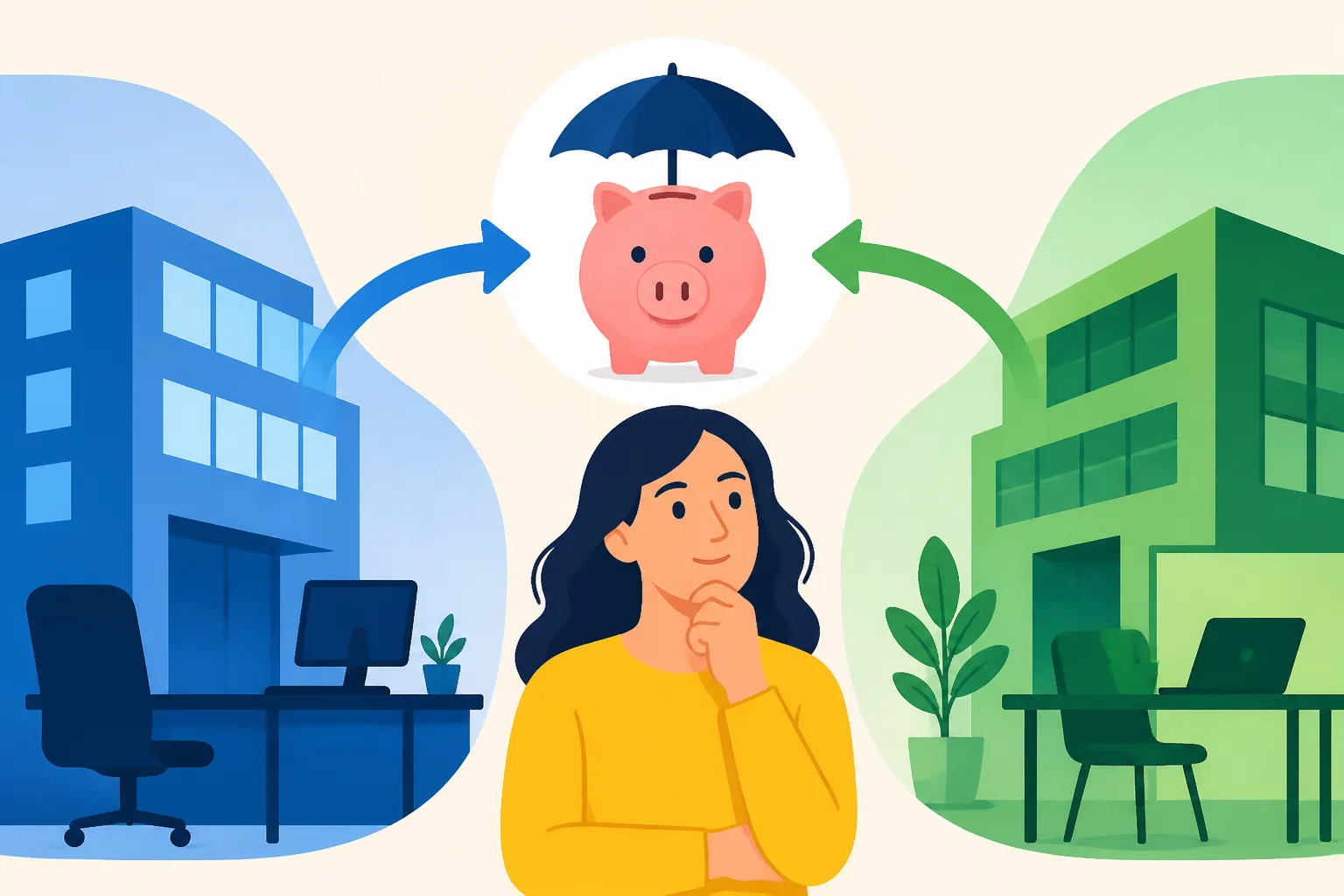
When you hand in your notice and complete your final day of work, your employer’s obligation to pay into your current tjänstepension plan ceases. However, the money that has already been contributed remains yours. It does not go back to the employer, nor is it swallowed by the state. Instead, your policy undergoes a transformation into what is known in Sweden as a "fribrev" or a paid-up policy.
The Concept of Fribrev (Dormant Policy)
A fribrev is essentially a dormant pension account. The funds stay with the insurance company that managed them during your employment, and they continue to be invested according to the choices you made (or the default settings if you never made a choice). However, because no new contributions are being added, the growth of this pot depends entirely on market performance and the impact of administrative fees.
This is a critical pain point for many expats. Over a 20-year career in Sweden, you might hold five or six different jobs, resulting in five or six different fribrev. Each of these accounts carries its own set of annual management fees. If these fees are high and the balance in a particular pot is low, the administrative costs can slowly erode your savings. This is why many veteran expats eventually look into consolidating their pots, a process we will discuss later.
Defined Benefit vs. Defined Contribution
What happens to your money also depends on whether you were in a defined benefit (förmånsbestämd) or a defined contribution (premiebestämd) plan. In a defined contribution plan—which is the most common for younger workers and those in the private sector (like ITP1)—your employer pays a percentage of your salary into an account. When you leave, that specific amount of money is yours.
In a defined benefit plan (like the older ITP2), your pension is calculated as a percentage of your final salary before retirement. If you leave such a plan early, the insurance company calculates a "calculated value" of what your future pension would have been and turns that into a fribrev. These are often much more complex to move or value. If you are unsure which one you have, it is worth checking How Does Occupational Pension (Tjänstepension) Work for Employees? to see the typical structures for different age groups and industries.
Navigating Collective Agreements (Kollektivavtal)
In Sweden, the rules governing your pension are usually determined by the collective agreement your employer follows. If you move from one company with a collective agreement to another within the same sector, the transition might be relatively seamless. For example, if you move between two private-sector companies that both use the ITP plan managed by Collectum, your new employer will simply start paying into your existing profile.
However, if you move from the private sector to the public sector (managed by KPA or SPV), or to a "white-collar" role from a "blue-collar" role, you will be entering a completely different pension ecosystem. Your old pension will become a fribrev, and a brand new account will be opened under the new agreement. This is a common source of confusion for newcomers who expect their "pension" to be one single entity.
If your new employer does not have a collective agreement, they are not legally required to provide a tjänstepension at all, though most reputable Swedish companies do so to remain competitive. In these cases, they might offer a "direct-pension" or a customized plan through a bank. It is your responsibility to negotiate this during the hiring process. If you find yourself in a position where you need to manage your own finances more actively due to a lack of a collective agreement, you might find Money and Finance in Sweden: A Complete Guide for Foreigners (2027) a helpful resource for broader financial planning.
Managing Multiple Pension Pots: To Consolidate or Not?
Once you have accumulated several fribrev from various former employers, you face a choice: leave them where they are or move them into a single account. This process is known as "flytträtt" (the right to move).
The Pros and Cons of Consolidation
The primary advantage of consolidation is the reduction of administrative fees. Instead of paying five different fixed annual fees, you pay one. It also makes it much easier to manage your investment strategy. If you want a high-risk, high-reward equity focus for your retirement, it is easier to set that in one place than in six.
However, moving a pension is not always free or beneficial. Some older policies have "guaranteed interest rates" that are much higher than what is available on the market today. If you move that money, you lose the guarantee. Additionally, some insurance companies charge a "surrender fee" to let you take your money elsewhere. You should always ask for a "flyttblad" (transfer sheet) to see the costs involved before making a decision.
How to Initiate a Transfer
If you decide to move your funds, you usually start by contacting your current pension provider or an independent broker. They will help you identify your old pots and handle the paperwork with the previous insurers. For those who are managing an international lifestyle—perhaps moving money between countries or preparing for a future outside of Sweden—using a service like Wise can be invaluable for handling the practical side of international transfers, though it won't directly move your Swedish pension. Wise is more for the liquidity you need while waiting for these long-term systems to settle.
Digital Tools for Tracking Your Money
The most important thing you can do when changing jobs is to gain visibility. Sweden is highly digitized, and luckily, there is a central portal that tracks almost everything related to your retirement: minPension.se.
Using minPension.se
This website is a collaboration between the state and the private insurance companies. By logging in with your BankID, you can see a comprehensive overview of your public pension and almost all of your tjänstepension accounts. It will show you which insurance companies hold your fribrev, how much is in them, and what your projected monthly payout will be. For instructions on accessing these systems, refer to How Do I Check My Pension Forecast on Pensionsmyndigheten? or How Do I Log Into 1177.se with BankID for general digital identity tips.
The "Orange Envelope" vs. The Rest
Once a year, you will receive the famous "Orange Envelope" (orange kuvertet) from the Swedish Pensions Agency. This only covers your public pension. For your tjänstepension, you will receive separate statements—often in pink, blue, or white envelopes—from each individual insurance company. Do not ignore these. If you have changed jobs, these statements are the only way you will know if your old funds are still performing well. If you are struggling to understand the terminology in these documents, checking Filing Your Swedish Tax Return (Deklaration): What You Need to Know can help familiarize you with Swedish financial vocabulary.
| Aspect | Current Job (Active) | Previous Job (Fribrev) |
|---|---|---|
| Contributions | Paid monthly by the employer | None (Dormant) |
| Investment Control | Usually fully customizable | Still customizable by you |
| Fees | Often subsidized by the employer | Paid entirely by your balance |
| Insurance | Often includes life/disability | Usually covers only the balance |
| Visibility | Visible on minPension.se | Visible on minPension.se |
Tax Implications and Moving Abroad
One concern for many expats is what happens to these pension pots if they leave Sweden before retirement. The good news is that the money in your fribrev belongs to you regardless of where you live. You can generally start drawing your tjänstepension from the age of 55, even if you are residing in another country.
However, the tax situation becomes complex. While you are working in Sweden, your pension contributions are tax-deferred. When you eventually withdraw the money, it is taxed as income. If you live abroad, you may be subject to SINK tax (a special income tax for non-residents). For Americans or those with complex tax residencies, services like Taxes for Expats are essential. Taxes for Expats can help you navigate the reporting requirements of the IRS while your money sits in a Swedish fribrev, ensuring you don't fall foul of "Foreign Grantor Trust" rules or other nasty surprises.
When it comes to the actual day-to-day management of your finances across borders, Wise remains a top choice for receiving payments or moving funds with minimal exchange rate markups. For a broader look at the tax landscape, check out The Swedish Tax System Explained: Rates, Returns, and Filing.
Common Pitfalls to Avoid During a Job Change
The biggest mistake expats make is assuming the "system" will take care of everything. While the Swedish system is efficient, it is not telepathic.
- Losing Track of Old Envelopes: Every time you move house, ensure you update your address with the Swedish Population Register so your pension statements find you. Read more at Registering Your Move (Flyttanmälan) with Skatteverket.
- Neglecting the "No-Agreement" Employers: If your new employer doesn't have a collective agreement, you must be proactive. Ask them specifically: "Which insurance company do you use, and what percentage of my salary are you contributing?"
- High Fees on Small Pots: If you have a small fribrev with a high fixed fee, it can literally disappear over a decade. Monitor these and consider moving them if the rules allow.
- Ignoring the SINK Tax: If you plan to leave Sweden, don't forget that the taxman will still want a piece of your pension later. Consulting The SINK Tax for Non-Residents: Is It Right for You? is a wise move for anyone planning an eventual exit.
Managing your tjänstepension is a marathon, not a sprint. By taking an hour every time you change jobs to log into minPension.se and verify your new employer’s contributions, you ensure that your "Swedish adventure" results in a comfortable retirement, no matter where in the world you end up. If you are also curious about how your income affects other benefits during these transitions, you may want to look into Income Tax in Sweden: Municipal, State, and the SINK Regime.
Disclaimer
This guide is intended for informational purposes only and does not constitute financial or legal advice. Pension rules in Sweden, including tax laws and collective agreements, are subject to change. Always consult with a qualified financial advisor, your union representative, or the Swedish Pensions Agency (Pensionsmyndigheten) before making significant changes to your pension arrangements. Cross-border tax situations, particularly for US citizens, should be reviewed by specialists such as Taxes for Expats. Management of international funds via platforms like Wise should be done in accordance with their specific terms of service.