Money and Finance in Sweden: A Complete Guide for Foreigners (2027)
Moving to Sweden often feels like landing on another planet when it comes to managing your money. You’re suddenly faced with a new currency, a seemingly cashless society, and a tax system that can make even the most financially savvy expat scratch their head. This comprehensive guide will walk you through the labyrinth of Swedish finance, from opening your first bank account to understanding pensions and navigating the intricacies of the tax authorities, ensuring you feel confident and in control of your financial future in your new Nordic home.
Getting Started with Swedish Banking: Your Financial Foundation
One of the first and most critical steps after arriving in Sweden is setting up your banking. It's not just about having a place to store your money; it's the gateway to almost every other financial and administrative service in this highly digital country. Without a Swedish bank account, you'll find everyday tasks surprisingly difficult, from receiving your salary to paying bills and even identifying yourself online.
Opening Your First Swedish Bank Account
The process of opening a bank account in Sweden can sometimes feel like a bureaucratic hurdle race, especially if you haven't yet secured your Swedish personal identity number (personnummer). Many traditional banks strongly prefer, or even require, a personnummer before they'll even consider your application. This can create a frustrating Catch-22 situation where you need a bank account for your job, but you need a personnummer to get the account, and your personnummer application might take a while.
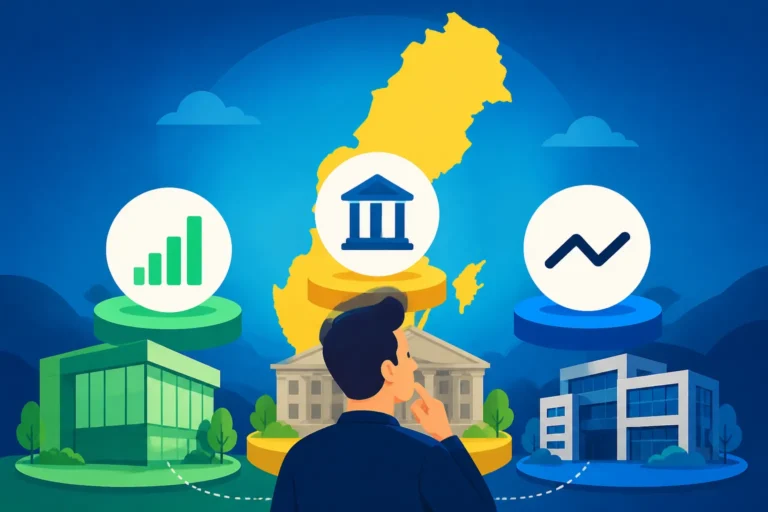
However, don't despair! There are often pathways available for new arrivals. Some banks might allow you to open a basic account with your passport, residence permit, and proof of address, especially if you have an employment contract. You might start with a limited account, sometimes called an 'ID account,' which provides basic services but might not immediately grant you access to all digital tools like BankID. It's often recommended to try the larger banks such as Swedbank, SEB, Handelsbanken, or Nordea, as their policies for foreigners can vary. Remember to bring every single official document you possess – the more proof of identity and residency you have, the better your chances. For a more detailed walkthrough, check out our guide on How to Open Your First Swedish Bank Account Without a Personnummer and later, Opening a Bank Account in Sweden: A Step-by-Step Guide.
The Indispensable Personnummer and BankID
Once you have your personnummer, the banking world opens up considerably. The personnummer is more than just an ID; it's your unique identifier across almost all public and private sectors in Sweden. With it, you can upgrade your basic bank account, gain full access to online banking services, and most importantly, apply for a BankID.
BankID is Sweden's electronic identification system, and it is truly central to daily life. It's not just for logging into your bank; you'll use it to sign documents digitally, access government services like Skatteverket (the Swedish Tax Agency) and Försäkringskassan (the Swedish Social Insurance Agency), book doctor's appointments via 1177 Vårdguiden, and even make payments. Simply put, living in Sweden without a BankID is like trying to drive a car without an engine. It's functionally impossible to participate fully in the digital society. Our article Getting BankID: Sweden's Essential Digital Identity offers comprehensive advice on obtaining this crucial tool.
Navigating the Swedish Tax System: Understanding Your Obligations
The Swedish tax system is famously comprehensive, funding the generous welfare state that Sweden is known for. While it might seem daunting at first glance, it’s remarkably efficient and largely automated, especially once you're integrated with a personnummer and BankID. Understanding the basics will save you a lot of headaches and ensure you meet your obligations.
Income Tax: Municipal, State, and the SINK Regime
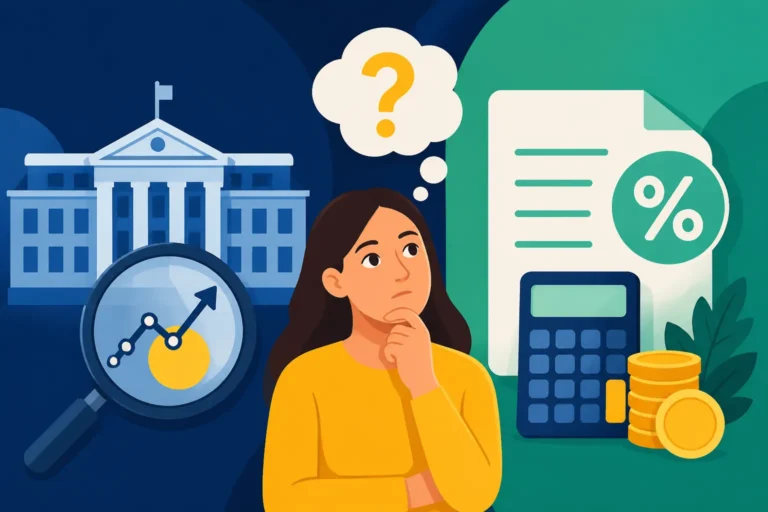
Income tax in Sweden is primarily divided into municipal (kommunalskatt) and, for higher earners, state tax (statlig inkomstskatt). Most people only pay municipal tax, which is a flat rate determined by the municipality you live in and typically ranges from around 29% to 34%. State tax kicks in for annual incomes exceeding a certain threshold (which changes yearly, but for 2026, it's projected to be around 615,000 SEK), adding an extra 20%. There's also a small funeral tax and, for members, a church tax, which you can opt out of if you're not part of the Church of Sweden.
For many newcomers, especially those on temporary assignments or shorter work contracts, the Special Income Tax for Non-Residents (SINK) might be an option. This is a flat 25% tax rate on earned income, which typically means you don't declare deductions in the same way as ordinary taxpayers. However, if you choose SINK, you generally cannot claim common deductions like the jobbskatteavdrag (employment tax credit). It’s a simpler system, but not always the most financially advantageous for everyone, especially if you have significant deductions or plan a long-term stay. Expert services like Taxes for Expats can often provide tailored advice on whether SINK or ordinary taxation is best for your specific situation. You can learn more in our detailed article The SINK Tax for Non-Residents: Is It Right for You?.
Filing Your Swedish Tax Return (Deklaration)
One of the more unique aspects of Swedish taxation is the pre-filled tax return (deklaration). Each spring, Skatteverket sends out a pre-filled form based on information reported by your employer, bank, and other institutions. For many, especially those with straightforward finances, all you need to do is review the information, approve it, and submit it, often with a simple click in your online banking portal or even via SMS using your BankID. This process is surprisingly smooth and reflects the highly digital nature of Swedish administration.
However, if you have deductions to claim, income from abroad, or specific investments, you'll need to amend the pre-filled form. This is where a little more attention is required. Common deductions include travel to and from work (reseavdrag) if your commute is long, and sometimes costs related to working from home. It's crucial to understand what you can and cannot deduct to avoid issues. Even if you're approving a pre-filled form, it's your responsibility to ensure the information is correct. Don't just blindly click "approve" without checking! Our guide on Filing Your Swedish Tax Return (Deklaration): What You Need to Know provides a step-by-step overview.
Digital Payments and the Cashless Society: How Money Moves
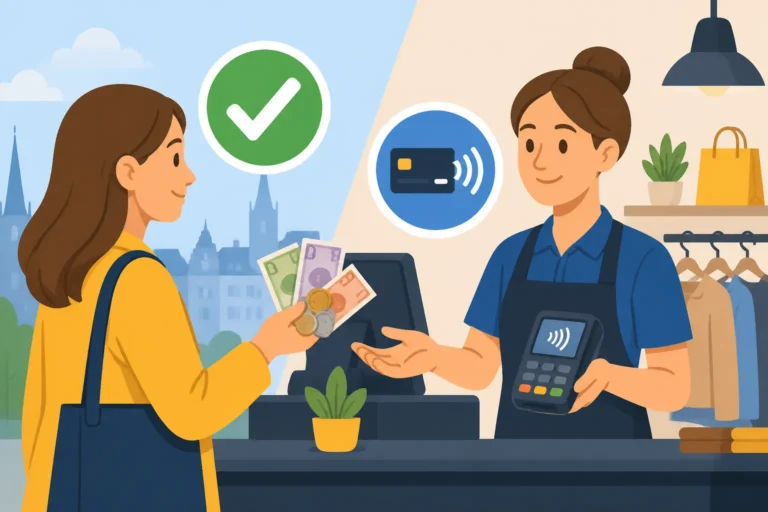
Sweden is at the forefront of the global movement towards a cashless society. While cash isn't entirely extinct, you'll quickly discover that many businesses, from small kiosks to large supermarkets, prefer or even exclusively accept card or digital payments. Carrying cash often feels like carrying a relic from another era. This shift means adapting to new payment methods and understanding the underlying infrastructure that makes it all work.
Swish: Instant Payments at Your Fingertips
The undisputed king of everyday digital payments in Sweden is Swish. This mobile payment service allows instant transfers between bank accounts using only a phone number, linked to your BankID for security. Whether you're splitting a restaurant bill with friends, paying for second-hand goods, or even buying something at a flea market, "Do you have Swish?" is a common question.
Swish is incredibly convenient and has largely replaced cash for many small transactions. To use it, you need a Swedish bank account and a BankID. Once set up, you simply open the app, enter the recipient's Swish number (or scan a QR code), the amount, and authenticate with your BankID. The money is transferred instantly. It's worth noting that while Swish is fantastic for domestic payments, it's not designed for international transfers. For those, you’d typically use your bank's international transfer services or a dedicated provider like Wise, which specializes in cross-border money movement.
The Role of Bank Cards and Contactless Payments
Beyond Swish, card payments are universally accepted. Most Swedish debit and credit cards come with contactless payment functionality, allowing quick taps for purchases. Apple Pay, Google Pay, and other mobile payment services are also widely supported. You'll find that PIN entry is becoming less common for smaller transactions, further streamlining the payment process.
For newcomers, it's good to know that your foreign credit or debit cards might work in Sweden, but you could incur foreign transaction fees. Getting a Swedish bank card linked to your local account is generally the most cost-effective and convenient solution for daily spending. Make sure you understand any fees associated with your new Swedish card, especially for ATM withdrawals if you ever do need cash (which, honestly, is rare).
Saving and Investing in Sweden: Building Your Financial Future
Once you've settled into Sweden and have your finances in order, you might start thinking about saving and investing for the long term. Sweden offers a well-developed and tax-efficient environment for private investments, with various options catering to different risk appetites.
The ISK Account: Sweden's Investment Powerhouse
For most private investors in Sweden, the Investeringssparkonto (ISK), or Investment Savings Account, is the go-to choice. The ISK is a tax-advantaged wrapper for holding stocks, funds, and other securities. Instead of paying capital gains tax on each sale and dividend tax on income, you pay a standardized annual tax based on the estimated value of your assets in the account. This simplifies tax reporting immensely and can be very beneficial for active investors or those with long-term holdings.
The tax rate for an ISK is calculated based on the government bond rate, plus a small addition, making it generally lower and more predictable than the standard 30% capital gains tax. You don't report individual trades to Skatteverket; your bank or broker handles the calculation, making your annual tax declaration much simpler. Major Swedish banks like Nordea and Handelsbanken, as well as specialized online brokers like Avanza and Nordnet, offer ISK accounts. Our article, The ISK Account: Sweden's Tax-Smart Way to Invest, delves deeper into its benefits and how to set one up.
Exploring Funds and the Stock Market
Beyond the ISK wrapper, the underlying investment options are similar to many other developed markets. Index funds are popular for their low fees and broad diversification, while actively managed funds offer the potential for higher returns (though also higher risk and fees). The Swedish stock market (Nasdaq Stockholm) is home to many world-renowned companies, and investing directly in individual stocks is also a common practice.
Many Swedes are avid investors, and there's a strong culture of financial literacy. Online platforms make it easy to research and invest, often with low or no trading fees for small transactions. If you're new to investing, consider starting with broad index funds within an ISK to get acquainted with the market before exploring more complex strategies. It's always wise to understand the fees associated with funds and trading platforms, as these can significantly impact your long-term returns.
Pensions in Sweden: Planning for Your Golden Years
Sweden boasts a robust multi-layered pension system designed to provide financial security in retirement. Understanding these layers is crucial, especially as an expat, because your eligibility and contributions might differ depending on your employment history and residency status.
The Public Pension (Allmän Pension)
The foundation of the Swedish pension system is the public pension (allmän pension), which everyone who lives and works in Sweden contributes to. This system has two main components:
- Income Pension (Inkomstpension): This is the largest part and is based on your total lifetime income. Each year, 16% of your pensionable income (up to a certain ceiling) is allocated to your income pension.
- Premium Pension (Premiepension – PPM): A smaller portion, 2.5% of your pensionable income, is allocated to the premium pension. This part is unique because you have the freedom to invest it in funds of your choice, though many opt for the default AP7 Såfa fund, which is managed by the state.
The beauty of the public pension is that it's largely automatic; your employer deducts contributions directly from your salary. The Pensionsmyndigheten (Swedish Pensions Agency) oversees this system, and you can access your personal pension statement and forecast your future pension payments through their website using your BankID. Even if you only work in Sweden for a few years, you'll still accrue rights to this public pension, which you can claim later, even if you move abroad. Our article How Sweden's Public Pension (Allmän Pension) Is Built provides an in-depth look.
Occupational Pension (Tjänstepension)
For many, the occupational pension (tjänstepension) forms a significant part of their total retirement savings. This is a pension provided by your employer as part of your employment benefits, negotiated through collective agreements (kollektivavtal) between employer organisations and trade unions.
If your workplace has a collective agreement, your employer is legally obliged to pay into an occupational pension for you. The specific terms (e.g., how much is contributed, how it's invested) vary depending on the sector and the collective agreement. If your employer doesn't have a collective agreement, they might still offer an occupational pension, but it's not mandatory. It's always wise to clarify your occupational pension situation with your employer or your union representative. These contributions are tax-advantaged, growing largely tax-free until retirement. It's a hugely valuable benefit that often goes unnoticed by new arrivals but can significantly boost your retirement income.
Family Benefits in Sweden: Support for Parents and Households
Sweden is renowned for its generous social welfare system, and family benefits are a prime example. These benefits aim to provide financial support to families with children and help ensure a good standard of living. As a new resident, understanding what you're entitled to can make a real difference to your household budget.
Child Allowance (Barnbidrag) and Large-Family Supplement
The child allowance (barnbidrag) is a universal benefit paid monthly to all parents for each child under 16 years of age residing in Sweden. As of 2026, the standard amount is around 1,250 SEK per child per month, paid automatically by Försäkringskassan (the Swedish Social Insurance Agency) once your child is registered in the population register. This benefit is tax-free and not means-tested, meaning every family receives it regardless of income.
For larger families, there's also a large-family supplement (flerbarnstillägg), which provides additional support for families with two or more children. The amount of the supplement increases with each additional child. These benefits are a fundamental part of Swedish family policy and significantly contribute to reducing child poverty and supporting parents. Our guide on Child Allowance (Barnbidrag) and the Large-Family Supplement in Sweden explains the specifics.
Housing Allowance (Bostadsbidrag)
Beyond child-specific benefits, some families and individuals may also be eligible for housing allowance (bostadsbidrag). This is a needs-tested benefit designed to help with housing costs for those with lower incomes, primarily families with children, young adults, and pensioners. The amount you can receive depends on several factors, including your income, family size, housing costs, and the size of your dwelling.
Applying for housing allowance involves submitting an application to Försäkringskassan, providing details about your financial situation and housing expenses. It's a complex benefit with many variables, so it's essential to provide accurate and up-to-date information. While not everyone qualifies, it can provide significant relief for those struggling with the high cost of housing in Sweden's major cities.
Borrowing and Credit in Sweden: Mortgages, Loans, and Your UC Score
Eventually, you might want to borrow money in Sweden, whether for a major purchase like a home, a car, or even a smaller consumer loan. The Swedish credit market is well-regulated, but it operates on a system that might be unfamiliar to newcomers. Your creditworthiness, largely determined by your "UC score," plays a crucial role.
Mortgages (Bolån) and the Amortisation Requirement
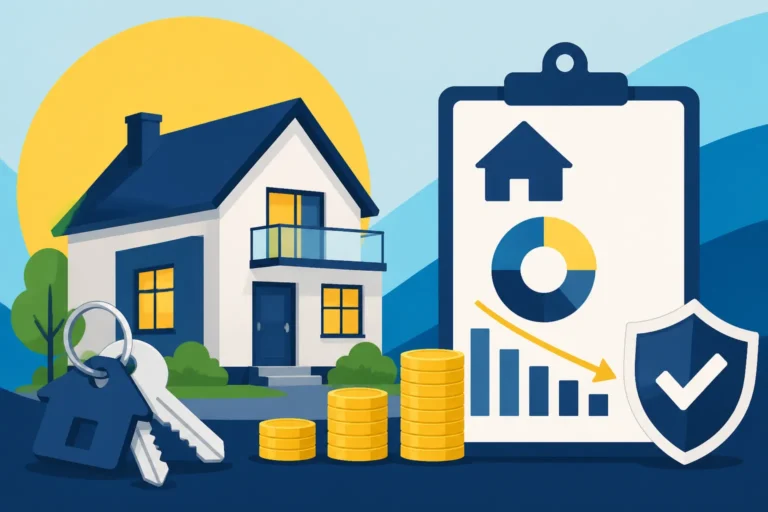
Buying property in Sweden, particularly a "bostadsrätt" (housing cooperative apartment), often requires a substantial mortgage (bolån). Swedish mortgages are typically granted for up to 85% of the property's value, meaning you'll need to provide at least a 15% down payment.
A key feature of Swedish mortgages is the amortisation requirement (amorteringskrav). This regulation mandates that you must pay down a certain percentage of your loan each year, depending on the loan-to-value (LTV) ratio. For instance, if your LTV is over 70%, you might need to amortize 2% of the loan annually. If it's between 50-70%, it might be 1%. This policy is designed to reduce household debt and increase financial stability, but it means your monthly payments include both interest and principal repayment from day one. You can find more comprehensive details in our article, How Mortgages (Bolån) and the Amortisation Requirement Work in Sweden.
Your UC Credit Score: The Invisible Hand
In Sweden, your creditworthiness is largely assessed through a credit score provided by Upplysningscentralen (UC), a major credit reference agency. Your "UC score" is a crucial factor banks and landlords consider when you apply for loans, credit cards, rental contracts, or even certain phone subscriptions.
Your UC score is influenced by several factors, including your income, employment history, existing debts, and any history of payment defaults (betalningsanmärkningar). Building a good credit history takes time and requires responsible financial behaviour – paying bills on time, avoiding excessive borrowing, and generally demonstrating financial stability. As a newcomer, you might start with a low or non-existent UC score, which can make it challenging to access credit initially. This is why establishing your finances, securing a stable income, and managing your existing commitments carefully are so important. Understanding Your UC Credit Score: How It's Calculated and Why It Matters can help you navigate this system effectively.
Managing Your Money Day-to-Day: Practical Tips for Swedish Life
Beyond the formal financial structures, there are practical aspects of managing your money in everyday Swedish life. From budgeting for the cost of living to understanding local customs, these tips will help you integrate smoothly.
Budgeting for the Real Cost of Living in Sweden
Sweden, particularly its major cities like Stockholm, Gothenburg, and Malmö, is often perceived as an expensive country, and for good reason. Housing, alcohol, and certain services can indeed be costly. However, groceries can be reasonably priced if you shop smart at stores like Willys or Lidl, and public transport is efficient, reducing the need for a car.
Creating a realistic budget is paramount. Track your expenses for the first few months to understand where your money is actually going. Factor in essential costs like rent, utilities (electricity can be surprisingly high in winter!), mobile phone, and internet. Don't forget social activities, which can add up, but also remember the concept of "fika" (coffee break with pastries), which is an affordable and cherished social ritual. Remember that budgeting platforms and apps are available, and many Swedish banks offer excellent digital tools to help you track your spending. For a deeper dive into what to expect, read our guide on Budgeting for the Real Cost of Living in Sweden.
Currency, Cash, and International Transfers
While Sweden is largely cashless, the official currency is the Swedish Krona (SEK). Major credit cards (Visa, Mastercard) are accepted almost everywhere. If you need to exchange foreign currency, you can do so at banks or dedicated exchange offices, but it's often more cost-effective to withdraw SEK directly from an ATM with a debit card that has low international fees, or even better, use a service like Wise for your initial transfers.
For sending money to or from Sweden, traditional bank transfers can be slow and incur significant fees. Many expats find online money transfer services to be far more efficient and economical. These services typically offer better exchange rates and lower fees than conventional banks, making them ideal for sending your salary home or bringing over initial funds when you move. Always compare rates and fees before making a transfer to ensure you get the best deal.
Table: Key Financial Accounts and Their Purpose
| Account Type | Primary Purpose | Key Feature/Benefit | Requires Personnummer | Common Providers |
|---|---|---|---|---|
| Bank Current Account | Everyday transactions, salary, bill payments | Essential for daily life, basis for BankID | Often required | Swedbank, SEB, Nordea, Handelsbanken |
| BankID | Digital identification, signing, payments | Access to virtually all digital services in Sweden | Yes | Your Swedish Bank |
| Swish | Instant mobile payments | Quick, easy person-to-person and small business payments | Yes | Your Swedish Bank (integrated) |
| ISK (Investment Savings Account) | Tax-efficient investing in stocks, funds, ETFs | Simplified tax reporting, lower annual tax on holdings | Yes | Avanza, Nordnet, Major Banks |
| Public Pension (Allmän Pension) | State-funded retirement income | Automatically accrued through work/residency | Yes | Pensionsmyndigheten (managed by) |
| Occupational Pension (Tjänstepension) | Employer-provided retirement savings | Often part of collective agreements, tax-advantaged | Yes | Various pension providers (via employer) |
Disclaimer
The information provided in this guide is intended for general informational purposes only and does not constitute financial, legal, or tax advice. While we strive to keep the information accurate and up-to-date, rules and regulations in Sweden, particularly concerning finance and taxation, can change. It is strongly recommended that you consult with a qualified financial advisor, tax consultant, or the relevant authorities (e.g., Skatteverket, Försäkringskassan, Pensionsmyndigheten) for advice tailored to your specific situation. We are not responsible for any actions taken based on the information presented herein.