What Support Exists for Trailing Spouses Seeking Work in Sweden?
Moving to Sweden can be an exhilarating adventure, but for many trailing spouses, the initial dream of a new life quickly bumps up against the harsh reality of finding employment in a new country. It’s incredibly frustrating to feel dependent, especially when you’ve had a thriving career elsewhere, and the Swedish job market often feels like a locked door. This comprehensive guide is here to validate those feelings and offer practical, actionable advice on navigating the unique challenges and leveraging the support systems available to you as you embark on your job search in Sweden.
Understanding the Unique Challenges for Trailing Spouses in Sweden
Let’s be honest, arriving in Sweden as a trailing spouse comes with a very specific set of hurdles that can feel overwhelming. You’re not just looking for a job; you’re building a new life from scratch, often without the immediate social and professional network that your partner might have through their employment. This dual challenge of personal integration and professional re-establishment is significant.
Navigating the Swedish Job Market Without Local Experience
One of the biggest frustrations you’ll quickly encounter is the "Swedish experience" paradox. Many job postings, even those seemingly open to international candidates, often subtly or explicitly prefer someone with "Svensk arbetslivserfarenhet" (Swedish work experience). It’s a classic Catch-22: you can’t get Swedish experience without a Swedish job, and you can’t get a Swedish job without Swedish experience. This isn't necessarily about your skills being inferior, but rather about employers valuing familiarity with local workplace culture, regulations, and networks.
Moreover, informal networks play a colossal role here. A significant portion of jobs in Sweden are filled through connections, what we often call the "hidden job market." If you’ve just arrived, your personal and professional network is likely minimal, leaving you feeling on the outside looking in. This makes traditional online applications feel like shouting into a void, which can be incredibly disheartening. You might have an impressive CV from your home country, but without local references or a foot in the door, it can be tough to even get an interview. For more on navigating the broader employment landscape, consider reading Working in Sweden as a Foreigner: The Complete Guide (2027).
The Language Barrier and Its Impact on Job Search
Even in Sweden’s highly international cities like Stockholm, Gothenburg, or Malmö, where English is widely spoken in many workplaces, the Swedish language barrier remains a significant hurdle. While many tech and international companies operate entirely in English, proficiency in Swedish often becomes a de facto requirement for integration, career progression, and even daily tasks. Imagine being a skilled professional, only to find that your expertise is overlooked because you can’t confidently chat by the coffee machine in Swedish. This isn't just about formal communication; it’s about cultural integration and building trust with colleagues.
Many companies might state that English is sufficient, but for roles that involve significant client interaction, public-facing duties, or require understanding nuanced local regulations, Swedish becomes critical. Furthermore, access to professional development courses, internal communications, and even informal networking events might be primarily in Swedish. This can make a trailing spouse feel isolated and limited in their career choices, even if their professional skills are top-notch. It’s a very real and persistent frustration that many expats experience.
Bureaucracy and Permit Status
The administrative maze of setting up a life in Sweden can feel like a full-time job in itself, and your residence permit status plays a crucial role in your ability to work. As a trailing spouse, your permit is often tied to your partner's primary permit. While most dependent permits grant the right to work, it’s absolutely essential to confirm this with Migrationsverket (the Swedish Migration Agency). You can’t legally work until your permit is approved and, ideally, you have received your residence permit card.
Beyond the permit, obtaining a Personnummer (Swedish personal identity number) is the gateway to almost everything in Sweden, including formal employment, opening a bank account, and accessing healthcare. Without it, you’ll find many doors closed. There's often a delay in getting this number, which means a period of limbo where you're physically in Sweden but administratively not fully "here." This waiting period, sometimes months long, can feel like wasted time when you’re eager to start contributing. For details on this critical step, refer to Getting Your Personnummer: The Gateway to Swedish Healthcare. Also, ensure you understand Can My Spouse Work in Sweden on a Dependent Permit? to clarify your specific rights.
Key Resources and Support Systems for Trailing Spouses
While the challenges are real, Sweden has several resources and communities designed to help newcomers, including trailing spouses, find their footing and secure employment. Knowing where to look and how to utilize these systems effectively can make a significant difference.
Arbetsförmedlingen: The Public Employment Service
Arbetsförmedlingen is Sweden’s public employment service, and while it might not always directly land you a job, it's a vital first step for registration and accessing certain types of support. They offer services like job matching, career guidance, and validation of foreign degrees. For trailing spouses, registering with them can open doors to various programmes, including those focused on language training and job search strategies tailored for new arrivals. It’s less about them finding you a job and more about providing tools and pathways.
You can get help with writing a CV and cover letter that aligns with Swedish standards, understand the local job market, and even get referrals to language courses like SFI (Swedish for Immigrants). While their resources might feel generic at times, for many, it’s the official entry point to receiving state-funded support. They also often collaborate with municipalities and other organizations to offer specialized programs. Make sure to understand How Do I Register with Arbetsförmedlingen as a Jobseeker? as soon as you are eligible.
Language Learning Opportunities
Learning Swedish isn't just a recommendation; it's often a necessity for long-term career success and social integration. The good news is that Sweden offers extensive opportunities for language learning, many of which are free or heavily subsidized.
- SFI (Swedish for Immigrants): This is the most common path. Offered by municipalities, SFI courses are designed to teach you basic to intermediate Swedish, focusing on practical language skills for daily life and work. Eligibility usually requires a Personnummer and registration with the municipality. It's an excellent way to get structured language instruction and meet other new arrivals. To understand if it’s free for you, check out Is SFI (Swedish for Immigrants) Free?.
- Komvux: For those who already have some basic Swedish or wish to continue beyond SFI, Komvux (municipal adult education) offers more advanced courses, sometimes specialized for professional fields.
- University Courses: Many universities offer Swedish as a foreign language courses, which can be more academically focused and often require tuition fees unless you qualify for an exemption.
- Online Platforms & Tutors: Beyond formal education, digital tools and private tutors can accelerate your learning. Platforms like iTalki allow you to connect with native Swedish speakers for personalized lessons, which can be invaluable for practicing conversational skills and getting immediate feedback. This supplemental learning can greatly enhance your progress and confidence, bridging the gap while you wait for or attend formal classes.
- Language Cafés & Tandem Programs: Many libraries and community centers host free language cafés where you can practice speaking Swedish in a relaxed environment. Tandem programs pair you with a native speaker who wants to learn your language, offering a mutual exchange.
Embracing these opportunities will not only boost your job prospects but also significantly improve your daily life and sense of belonging. For a comprehensive overview, explore Learning Swedish: SFI, Courses, and Language Paths for Newcomers.
Networking and Expat Communities
Isolation is a real challenge for many trailing spouses. Building a new social and professional network from scratch can feel daunting. However, Sweden has thriving expat communities and numerous networking opportunities that can be your lifeline.
- Online Groups: Facebook groups for expats in Stockholm, Gothenburg, Malmö, or specific regions are incredibly active. These groups are fantastic for asking questions, finding advice, and discovering local events. They often have dedicated threads for job seeking or professional networking. LinkedIn is also indispensable for professional networking; many companies list openings there, and connecting with recruiters or employees can be fruitful. Job Hunting in Sweden Through Arbetsförmedlingen and LinkedIn provides further details.
- Meetup Groups: Platforms like Meetup.com host groups for various interests, from hiking and board games to professional development and language exchange. Joining these can help you meet like-minded individuals, both Swedes and other expats.
- Professional Associations: Depending on your field, seeking out professional associations or industry-specific events can connect you with people in your sector. Even if you don’t find a job directly, these connections can offer insights, mentorship, and lead to opportunities down the line.
- Volunteer Work: Volunteering is a fantastic way to gain local experience, expand your network, and practice Swedish, all while contributing to your new community. It can be a softer entry point into the Swedish work culture without the pressure of formal employment. Look for opportunities with local charities, cultural organizations, or even sports clubs.
These communities offer not just practical advice but also crucial emotional support, reminding you that you're not alone in your journey.
Practical Steps for a Successful Job Search
Beyond knowing where to look, understanding how to present yourself and approach the job market is paramount. The Swedish approach to job applications and professional interaction can differ significantly from what you’re used to.
Tailoring Your CV and Cover Letter for the Swedish Market
Your CV and cover letter are your first impression, and they need to be adapted to Swedish expectations. Generally, Swedish CVs are concise, fact-based, and focused on relevant skills and experience rather than overly flowery language.
- Length and Format: Aim for a maximum of two pages for your CV. Ensure it’s clearly structured, often with a summary at the top, followed by work experience, education, and skills.
- No Photo: Unlike some countries, including a photo on your CV is uncommon in Sweden and generally not recommended due to anti-discrimination principles.
- Focus on Competencies: Emphasize your key competencies and how they align with the job requirements. Use action verbs and quantifiable achievements where possible.
- The Personal Letter (Personligt Brev): This is crucial. It should be tailored specifically to the job you’re applying for, explaining why you are interested in this specific company and role and how your skills and experience directly benefit them. Avoid generic statements; show genuine enthusiasm and research.
- References: Typically, you state "References available upon request" (Referenser lämnas på begäran) rather than listing them directly on your CV. Ensure your references are prepared to be contacted and can provide positive feedback.
For a detailed walkthrough, you should definitely check out Writing a Swedish CV and Personligt Brev That Get Noticed.
Recognizing Foreign Qualifications
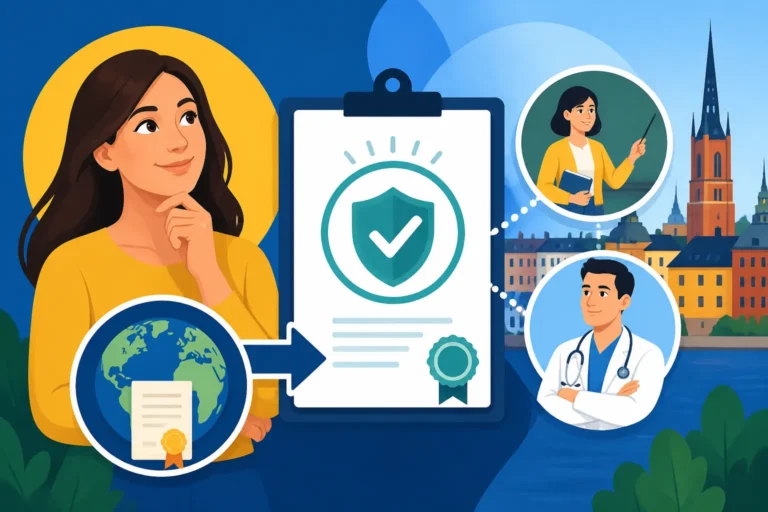
One of the most frustrating aspects for many international professionals is having their qualifications questioned or not fully understood. In Sweden, the Swedish Council for Higher Education (Universitets- och högskolerådet, UHR) is the primary body responsible for assessing foreign qualifications. It’s highly recommended to get your foreign degree evaluated early in your job search.
- UHR Evaluation: UHR can issue a statement of recognition (utlåtande) for your foreign degree, indicating its equivalent level within the Swedish education system. This document can be incredibly helpful in explaining your academic background to potential employers and educational institutions.
- Regulated Professions: If your profession is regulated (e.g., doctor, nurse, teacher, engineer in certain fields), you will need specific authorization from the relevant Swedish authority (e.g., Socialstyrelsen for healthcare, Skolverket for teachers, Boverket for architects). This process can be lengthy and involves proving language proficiency and sometimes additional training or tests. Start this process as soon as possible if it applies to you.
Having your qualifications formally recognized streamlines your application process and prevents misunderstandings about your academic standing. Read more about Recognising Foreign Qualifications in Sweden Through UHR to kickstart this process.
Exploring Different Job Avenues
Don't limit yourself to just applying for advertised positions. A multi-faceted approach is often the most effective for trailing spouses.
- Direct Applications: Regularly check company websites, LinkedIn, and major job boards (e.g., Arbetsförmedlingen Platsbanken, Jobbland, Monster, StepStone).
- Internships and Prakktik: For some, especially those needing "Swedish experience," an internship (praktik) can be an excellent way to get a foot in the door, gain local references, and learn Swedish workplace culture. Many internships can lead to full-time employment.
- Volunteering: As mentioned earlier, volunteering provides valuable local experience and networking opportunities, which can be leveraged in your job search.
- Self-Employment/Freelancing: If you have a marketable skill, consider exploring self-employment or freelancing. Sweden has a relatively straightforward process for registering as a sole trader (enskild firma). This can be a flexible way to generate income and demonstrate your skills while continuing your job search. It also allows you to be an active participant in the economy without waiting for a traditional job offer.
- Temp Agencies (Bemanningsföretag): Registering with temp agencies like Academic Work, Randstad, or Manpower can sometimes lead to temporary assignments that can evolve into permanent roles, offering another pathway to gain local experience.
Financial and Administrative Considerations
As you navigate the job search, it's crucial not to overlook the financial and administrative foundations that underpin your life in Sweden. These aspects are interconnected with your ability to work and settle in successfully.
Understanding Tax Implications
Once you start earning income in Sweden, you'll enter the Swedish tax system, which can seem complex at first glance. Sweden has a progressive income tax system, comprising municipal tax (kommunalskatt) and, for higher earners, state tax (statlig inkomstskatt). As a new resident, you'll need to understand how your salary is taxed, what deductions might apply, and how to manage your financial obligations.
For many trailing spouses, understanding how their income integrates with their partner's earnings and overall household finances is key. It's important to differentiate between temporary tax regimes like SINK (Special Income Tax for Non-Residents) and regular taxation, especially if you plan to stay long-term. Consulting with tax experts who specialize in international situations can be highly beneficial. Companies like Taxes for Expats offer services tailored to foreign residents, helping you navigate the intricacies of Swedish taxation and ensure compliance. Understanding The Swedish Tax System Explained: Rates, Returns, and Filing will be vital once you secure employment.
| Aspect | Arbetsförmedlingen | SFI / Language Schools | Expat Networks / Meetups | Professional Associations | Private Tutors / iTalki |
|---|---|---|---|---|---|
| Primary Focus | Job search support, guidance | Swedish language acquisition | Social & professional connection | Industry-specific networking | Personalized language learning |
| Cost | Free | Free (with Personnummer) | Varies (often free, some events paid) | Membership fees often apply | Paid per lesson |
| Benefit for Spouses | CV/letter help, market insights, referrals, validation of qualifications | Essential for integration & job access | Peer support, informal job leads, cultural exchange | Mentorship, specialized job leads, industry insights | Rapid language progress, pronunciation practice |
| Requirement | Register as job seeker | Personnummer, municipality registration | Varies, usually none | Professional background | Internet access, payment |
| Key Output | Action plan, course referrals | Language proficiency | New contacts, community | Industry knowledge, contacts | Improved Swedish fluency |
The Importance of the Personnummer
We've touched upon this already, but it bears repeating: the Personnummer is your golden ticket in Sweden. While you can start some job searching activities without it, securing formal employment, getting a Swedish ID card, opening a proper bank account, accessing full healthcare benefits, and even getting paid correctly will almost certainly require it. Without a Personnummer, employers might struggle with payroll, tax deductions, and reporting your employment, making it difficult for them to hire you.
The process of obtaining it means registering with Skatteverket (the Swedish Tax Agency) and proving your identity and intention to reside in Sweden for at least one year. Until you have it, you might be issued a Samordningsnummer (coordination number), but this is a temporary identifier and doesn't offer the same administrative benefits. Prioritize getting your Personnummer as soon as you meet the eligibility criteria. Once you have it, you can then proceed to apply for a How Do I Get a Swedish ID Card After Your Personnummer.
Health Insurance and Social Benefits
Even as a trailing spouse, understanding your rights to healthcare and potential social benefits is crucial for your overall well-being and financial security. If you have a valid residence permit and are registered in the population register (folkbokförd), you generally gain access to the publicly funded Swedish healthcare system. This means you’ll pay standard patient fees, which are subject to a high-cost ceiling (högkostnadsskydd) after which care becomes free for the remainder of a 12-month period.
However, during the initial period before you are fully registered or if your permit doesn't grant full social benefits, you might need to rely on private health insurance. Ensure you clarify your coverage immediately upon arrival. Furthermore, understanding benefits like parental leave (föräldrapenning) or allowances for caring for a sick child (VAB) is important, particularly if you have or plan to have children. While these benefits are primarily tied to employment and social security contributions, knowing they exist can inform your long-term planning. Explore Healthcare in Sweden for Foreign Residents: The Complete System Guide (2027) for a deeper dive into Sweden's medical provisions.
A Realistic Look and Encouragement
Finding work as a trailing spouse in Sweden is often a marathon, not a sprint. There will be moments of frustration, self-doubt, and perhaps even loneliness. It’s okay to acknowledge these feelings. The journey requires resilience, proactivity, and a willingness to adapt. Be patient with yourself and with the process.
Celebrate small victories, whether it’s a successful networking coffee, completing a language course level, or simply understanding a complex Swedish form. Leverage every available resource, from official agencies to vibrant expat communities. Remember that your skills and experiences are valuable, and with persistence, strategic effort, and a willingness to embrace new approaches, you absolutely can carve out a fulfilling professional life in Sweden.
Disclaimer
The information provided in this guide is for general informational purposes only and does not constitute legal, financial, or immigration advice. While we strive to provide accurate and up-to-date information, regulations and processes in Sweden can change. Always consult official sources like Migrationsverket, Skatteverket, Arbetsförmedlingen, and relevant professional bodies, or seek advice from qualified legal and financial professionals for your specific situation.