Can Sweden Still Tax Me After I Leave?
You’ve packed your boxes, handed in your keys to your Bostadsrätt, and said your final goodbyes to the Fika culture, believing your financial ties to Scandinavia are severed. However, many expats are blindsided by a letter from Skatteverket months—or even years—after relocating, claiming they still owe tax on their global income. This guide demystifies Sweden's complex "essential connection" rules and explains how to properly break tax residency so you aren't hit with unexpected bills.
Understanding Unlimited vs. Limited Tax Liability
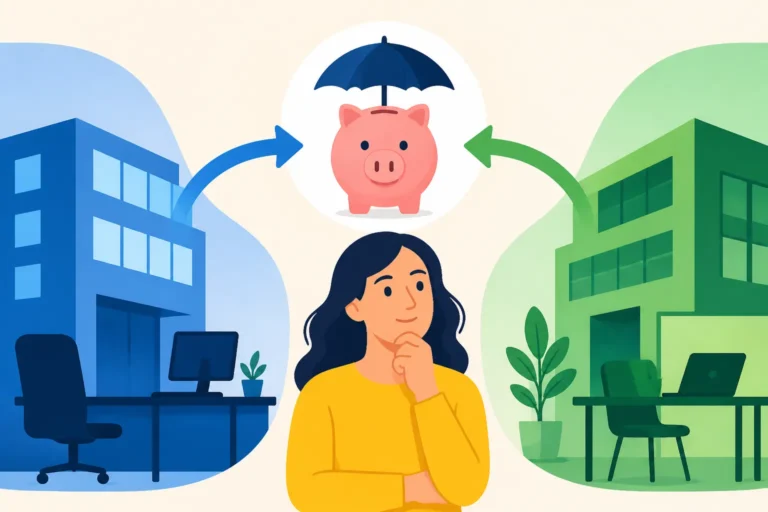
The most jarring realization for many departing expats is that Sweden does not simply stop taxing you because you no longer live within its borders. In the eyes of the Swedish Tax Agency (Skatteverket), there is a significant difference between being physically absent and being "tax-resident." If you are deemed to have unlimited tax liability (obegränsad skattskyldighet), Sweden asserts the right to tax your worldwide income, regardless of where in the world you earned it.
Usually, you fall into this category if you meet one of three criteria: you are resident in Sweden, you stay in Sweden for a "permanent stay" (typically six months or more), or you have previously lived in Sweden and still maintain an essential connection to the country. It is this third category that often trips up foreigners. Even if you haven't stepped foot in Stockholm for twelve months, if you still have "links" to the country, Skatteverket may still view you as one of their own for tax purposes.
Contrast this with limited tax liability (begränsad skattskyldighet), where you are only taxed on specific income sourced directly from Sweden, such as a Swedish pension or rental income from a property located in Gothenburg. Moving from "unlimited" to "limited" is the goal for most people leaving the country, but as we will see, the transition is rarely automatic. To understand the baseline of these rules, it is helpful to review The Swedish Tax System Explained: Rates, Returns, and Filing to see what you are potentially trying to exit.
The Concept of Essential Connection (Väsentlig Anknytning)
The "Essential Connection" rule is arguably the most subjective and frustrating part of the Swedish tax code for expats. It is not a single rule but a collection of factors that Skatteverket uses to determine if you have truly "broken" your ties with Sweden. If you lived in Sweden for a significant period—usually defined as being a resident for at least ten years—the burden of proof is actually on you to show that you do not have an essential connection for the first five years after your departure.
What constitutes a connection? It is a holistic evaluation. Skatteverket looks at whether you have a family remaining in Sweden, if you have a home available for year-round use, or if you hold significant business interests in a Swedish company. Even seemingly small things, like keeping a car registered in Sweden or holding a seat on the board of a Swedish foundation, can be used as evidence that your "center of vital interests" remains in the country.
For those navigating these murky waters, consulting specialized services like Taxes for Expats can be a lifesaver. They understand how these Swedish domestic rules interact with the tax laws of your new home country. Understanding What Is 'Väsentlig Anknytning' and Why Does It Matter? is the first step in building a case that you have truly moved on. If you leave a "door open"—for example, by keeping your apartment and subletting it—Skatteverket may decide that you haven't left at all in a legal sense.
The Five-Year Rule and the Burden of Proof
One of the most persistent myths among the expat community is that once you notify Skatteverket of your move, you are "safe." In reality, if you were a resident in Sweden for ten years or more before leaving, the "Five-Year Rule" applies. During these five years, Sweden assumes you still have an essential connection. If the tax authorities challenge your status, you are the one who must provide documentation proving that your ties are severed.
This can be incredibly invasive. You might need to show that you have a permanent home in your new country, that your children are enrolled in school there, and that you have no intention of returning. If you are moving to a "tax haven" or a country with significantly lower taxes than Sweden, expect Skatteverket to be even more diligent in their investigation. They are naturally suspicious of "paper moves" designed solely to avoid the high Swedish brackets.
If you are within this five-year window, you should be very careful about how much time you spend back in Sweden visiting friends or family. While there isn't a hard "day count" like the 183-day rule for arriving, frequent and lengthy visits can be used as "fuel" for the argument that your connection is still active. Reviewing the details in Tax Residency in Sweden: The 183-Day Rule and Essential Connection can help you understand the thresholds that trigger these investigations.
Managing Real Estate and the Year-Round Home Trap
Perhaps the biggest "anchor" that keeps people tied to the Swedish tax system is real estate. If you own a house or a "bostadsrätt" that is fit for year-round habitation, Skatteverket almost always considers this an essential connection. It doesn’t matter if you aren't living in it; the fact that you could live in it is what matters to them.
Many expats want to keep their Swedish home as an investment or a "safety net" in case the new move doesn't work out. While this is emotionally sensible, it is a tax nightmare. If you keep the property, you will likely remain unlimitedly tax-liable in Sweden on your global income. To break the connection, you usually need to sell the property or, at the very least, prove that it is rented out on a long-term, unbreakable contract that prevents you from using it yourself.
Note that "summer cottages" (sommarstugor) are treated differently. If a property is not fit for year-round use (e.g., no winterized water system), it is generally not considered an essential connection. However, the line between a "summer house" and a "permanent home" is getting thinner as more cottages are modernized. If you are selling up, make sure you understand the implications discussed in Buying Property in Sweden as a Foreigner: A Complete Guide regarding capital gains and final reporting.
How Sweden Taxes You as a Non-Resident
Even if you successfully prove you have no essential connection and move to "limited tax liability," Sweden may still have a claim on specific types of income. This is where the SINK tax (Statlig inkomstskatt för utomlands bosatta) comes into play. SINK is a flat-rate tax (currently 25%) applied to specific Swedish sources of income for people living abroad.
The most common scenarios for SINK tax include:
- Pensions: If you worked in Sweden and earned a pension, that pension is usually taxable in Sweden even if you live in Spain or Thailand.
- Work Performed in Sweden: If you go back to Sweden for a short consultancy gig, that income is taxed under SINK.
- Board Fees: If you remain on a Swedish company board.
The advantage of SINK is that it is a "final" tax—you don't have to file a complex tax return for it, and you don't get the standard deductions. It’s a "clean break" tax. To see if this applies to your situation, read SINK Tax for Non-Residents: Is It Right for You? carefully. When you receive these payments or need to pay final Swedish bills, using a service like Wise can help you manage the currency exchange from SEK to your new local currency without the predatory spreads charged by traditional Swedish banks.
| Tax Status | Scope of Taxation | Common Triggers |
|---|---|---|
| Unlimited (Obegränsad) | Worldwide income (salaries, dividends abroad) | Family in Sweden, year-round home, long stays |
| Limited (Begränsad) | Only Swedish-sourced income | Swedish pension, rental income from SE property |
| SINK Tax | Flat 25% on specific SE income | Work done in SE, Swedish pensions for non-residents |
Capital Gains and the "Ten-Year Rule" for Stocks
Another trap for the departing expat is the "Ten-Year Rule" regarding capital gains on shares and participations. According to Swedish law, Sweden maintains the right to tax capital gains on the sale of shares in Swedish companies (and in some cases, foreign shares if they were bought while you were a resident) for ten years after you leave the country.
This rule is designed to prevent people from building up massive gains in a Swedish company or an ISK account and then moving to a zero-tax country just to sell the shares. Even if you have zero other connections to Sweden, if you sell those shares within ten years of leaving, Skatteverket may come knocking for their 30% cut.
However, this is one area where international law often overrides Swedish domestic law. Sweden has tax treaties with scores of countries that often reduce this ten-year window to something more reasonable, like two or three years, or eliminate it entirely. It is vital to check Double Taxation: How Sweden's Tax Treaties Protect You to see if your new home country has an agreement that protects you from this ten-year reach. If you were using a tax-advantaged account, you should also look into ISK Account: Sweden's Tax-Smart Way to Invest to see how the "exit" from an ISK is handled, as it usually converts to a standard taxable account once you become a non-resident.
Practical Steps to Breaking the Tax Tie
To minimize the chances of a dispute with Skatteverket, you must be methodical in how you exit. The first step is filing a "Flyttanmälan" (Notification of Move) with Skatteverket. This officially registers you as "moved out" in the population register. You can learn more about the logistics of this at Registering Your Move (Flyttanmälan) with Skatteverket.
But don't stop there. You should also:
- Close unnecessary bank accounts: Keeping a bank account isn't usually an "essential connection" on its own, but it’s another data point for Skatteverket.
- Cancel all subscriptions: Gym memberships, magazines, and especially Swedish insurance policies.
- Terminate your "Sambo" registration: If you were living with a partner but aren't married, ensure your records reflect the separation or the joint move.
- Update your address: Use Wise to ensure you have a way to receive any final tax refunds or pay final bills in SEK without needing a full Swedish bank setup.
- Gather evidence: Keep copies of your new lease, your new employment contract, and your new tax residency certificate from your new country.
If you are moving within the EU, the process is sometimes smoother due to shared protocols, but the "essential connection" remains a domestic Swedish concept that can still be applied. Be sure to check Tax Residency in Sweden: The 183-Day Rule and Essential Connection to ensure you aren't accidentally staying long enough during your "move-out year" to be considered a full-year resident.
Dealing with the Final Tax Return (Deklaration)
The year after you leave, you will still have to file one final Swedish tax return. This return covers the period from January 1st until the day you officially moved. This is often the most confusing return you will ever file because you have to declare your income as a resident for part of the year and potentially as a non-resident for the rest.
If you earned income after you left that Sweden still wants to tax (like dividends), you have to be very careful about which forms you use. This is where professional advice from Taxes for Expats is most valuable. Mistakes on this final return can trigger an audit that looks into your "essential connection" status, potentially dragging your global income into the Swedish tax net for the entire year.
Don't forget to report your new address to Skatteverket even after you've left. If they send an inquiry and you don't answer because the letter went to your old apartment in Malmö, they may make a "default judgment" against you, which is much harder to fight later. Keeping the lines of communication open is the best way to ensure that when you say goodbye to Sweden, it is truly a final farewell to their tax system as well.
Disclaimer
This article is for informational purposes only and does not constitute professional tax, legal, or financial advice. Swedish tax laws and international tax treaties are subject to change and are highly dependent on individual circumstances. Always consult with a qualified tax professional or contact Skatteverket directly before making significant financial decisions regarding your relocation.