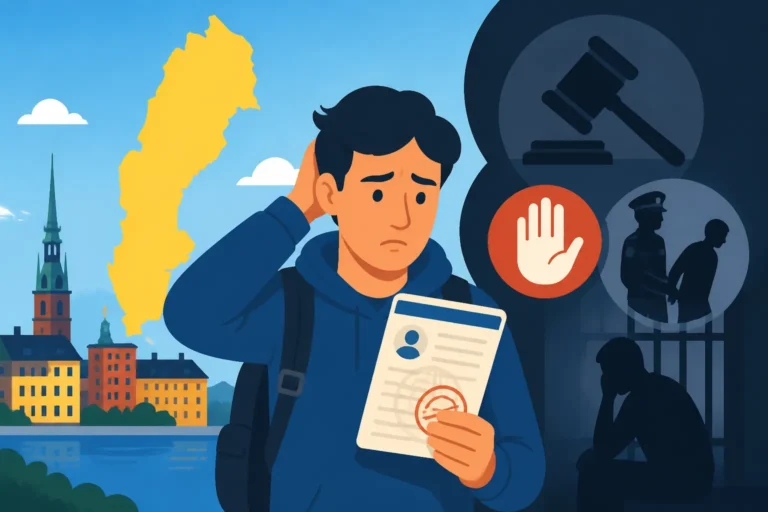
Can I Move to Sweden to Live on My Own Savings?
Ah, Sweden. The land of majestic forests, glittering archipelagos, and that undeniable allure of a balanced, quality life. Many of us, myself included, have dreamt of simply packing up, moving here, and living off our carefully accumulated savings, perhaps enjoying a slower pace or working on a passion project. It's a beautiful vision, isn't it? A fantasy where you can seamlessly transition to lagom living without the immediate pressure of finding a job. But, my friends, the reality of Sweden's immigration system, particularly when it comes to long-term stays based solely on personal wealth, is often a rude awakening that clashes dramatically with this idyllic dream. This guide is here to shed light on the nitty-gritty of why simply moving to Sweden to live on your own savings is incredibly challenging, and what the actual expectations are from the Swedish Migration Agency, Migrationsverket.
The Dream vs. The Reality: Sweden's Approach to Self-Sufficiency Permits
Let's start with a blunt truth: Sweden doesn't really have a specific visa category for individuals who just want to move here and live off their savings, often dubbed a "digital nomad" or "independent means" visa. This is a common point of frustration for many foreigners, especially those from countries like the US, Canada, or Australia, who might be used to more flexible immigration pathways in other parts of the world. Sweden, like many other welfare states, operates on the principle that residents should generally be able to support themselves through work, study, or have a clear family connection. The idea of someone simply existing in the system without contributing economically in a measurable way, or having a direct reason for being there, isn't typically aligned with its immigration philosophy for long-term residency.
The "Means of Support" Requirement for Residence Permits
Every single application for a residence permit in Sweden, regardless of its type, comes with a rather stringent "means of support" requirement. This isn't just about having some money; it's about proving you have sufficient funds for your entire stay or the duration of your permit, and often, that these funds are derived from a legitimate source or tied to a specific purpose. For instance, if you're coming on a Student Residence Permit, you need to demonstrate funds equivalent to SEK 10,000 per month for the duration of your studies, plus tuition fees. For a Work Permit in Sweden, you must meet a specific salary threshold.
The problem arises when your sole purpose for moving is to "live on savings." Migrationsverket isn't looking for applicants who are simply wealthy. They're looking for a reason for you to be here that aligns with one of their established categories. If you don't fit into work, study, family reunification, or specific entrepreneurial pathways, your application, no matter how substantial your bank balance, faces an uphill battle. This is a critical distinction that many hopeful expats overlook, leading to disappointment.
Why Sweden Isn't a Digital Nomad Paradise Yet
While some European countries have embraced the "digital nomad" trend with specific visas, Sweden has, to date, not introduced a dedicated pathway for remote workers or those living solely off passive income or savings. The existing regulations simply don't have a box for "person with money who wants to experience Sweden." This means that if you're planning to move to Sweden to continue working remotely for a foreign employer or manage investments, you're essentially trying to fit a square peg into a round hole within the current immigration framework.
The closest options often require you to actually establish a business here and apply for a Residence Permit to Be Self-Employed in Sweden. Even then, it's not simply about showing funds; it requires a robust business plan, market analysis, and a demonstration that your business will contribute to the Swedish economy and truly sustain you. It’s a very different proposition than just drawing down your retirement fund.
Unpacking the Financial Requirements: What Migrationsverket Looks For
When Migrationsverket assesses financial capacity for any permit, they aren't just looking at the total amount in your account. They want to see consistent, verifiable funds that align with the purpose of your stay. Without a clear purpose, proving financial self-sufficiency becomes a nebulous and often impossible task under their current guidelines.
The Uppenbart Tillräcklig Test for Financial Means
This Swedish phrase, meaning "evidently sufficient," is often used in the context of proving your financial capacity. For student permits or family reunification where the sponsor needs to show support, Migrationsverket looks for bank statements, pay slips, and other documents that clearly demonstrate a consistent income or a lump sum that covers a defined period.
For example, if you were somehow to argue a non-existent "independent means" path, the agency would likely want to see that your savings are clearly substantial enough to cover not just your living expenses, but also potential healthcare costs (more on that later), and for a considerable period – usually at least a year, if not more, for each year you apply for residency. They're not just looking for a snapshot of your current balance; they want to see the stability and accessibility of these funds. And let's not forget, all these financial documents – bank statements, investment portfolio summaries, proof of property ownership if used as collateral – would need to be officially translated into Swedish or English. Services like RushTranslate or Translayte are indispensable for ensuring these critical documents meet official requirements and avoid delays in your application process.
The Challenge of Proving "Future" Self-Sufficiency
One of the trickiest aspects of the "living on savings" idea is proving future self-sufficiency. If your funds are finite and not replenishing through active income (like a job or a robust business generating profit), Migrationsverket might view this as unsustainable in the long term. They want to know you won't become a burden on the state. This means they are unlikely to approve a permit if your plan is to simply deplete a savings pot over several years.
Even if you have substantial savings, say enough for 5-10 years, without a recognized reason for being in Sweden, the application is highly likely to be rejected. The system is designed to facilitate contributions to society, not simply to accommodate individuals seeking a change of scenery based on their personal wealth alone.
What About Investment Income or Passive Income?
Many individuals with substantial savings also have income streams from investments, rental properties, or other passive sources. While this passive income can certainly bolster a financial application for an existing permit category (like a work permit or a permit for a highly qualified person), it generally cannot be the sole basis for a residence permit without fitting into a recognized category.
Let's say you own several rental properties abroad or have a diversified investment portfolio that generates a stable monthly income. You might think this is perfect proof of self-sufficiency. However, Migrationsverket needs this income to be tied to a purpose of stay. If you try to argue that your investment income makes you eligible for an unspecified "independent means" permit, you'll still run into the same problem: the category simply doesn't exist. You'd need to either apply as a self-employed individual and show how your active management of these investments or properties constitutes a business that will generate income in Sweden, or find another permit type. This again emphasizes the necessity of clear, well-translated documentation, potentially involving services like RushTranslate for official confirmation.
Alternative Paths and Considerations for Long-Term Stay
So, if simply living on savings isn't a viable option, what are the realistic pathways for a long-term stay in Sweden? You essentially need to fit into one of the established categories that Sweden has for long-term residency.
The Importance of a Defined Purpose: Work, Study, or Family
The most common and successful routes for gaining a residence permit in Sweden revolve around a clear purpose:
- Work: This is by far the most common path for non-EU/EEA citizens. You need to secure a job offer from a Swedish employer that meets the minimum salary requirements and other conditions. The employer initiates the process, and your permit is tied to that specific employment. If you are serious about moving to Sweden, exploring Finding a Job in Sweden: Where to Look and How to Apply should be a top priority.
- Study: If you're accepted into a program at a Swedish university or college, you can apply for a student residence permit. As mentioned, this requires proof of funds for tuition and living expenses. You can learn more about University Admissions in Sweden: Applications, Tuition, and Scholarships.
- Family Reunification: If you have a close family member (spouse, registered partner, cohabiting partner, or in some cases, a child) who is a Swedish citizen or has a permanent residence permit, you can apply to join them. This path also has its own "maintenance requirement" (showing the family member in Sweden can support you) and housing requirements. More details can be found on Family Reunification in Sweden: Bringing Your Loved Ones.
- Self-Employment: As mentioned, this is a path for entrepreneurs. It's not for passive income or living off existing wealth. You need a solid business plan, demonstrate relevant experience, and show that your business will genuinely contribute to the Swedish economy and support you.
Trying to bypass these structured paths by simply saying "I have money" is not going to work. Migrationsverket has clear criteria for each category, and your application will be evaluated strictly against those. It’s worth checking out the comprehensive guide on Residence Permits in Sweden: Types, Requirements, and How to Apply to understand the full landscape.
The Role of Comprehensive Sickness Insurance
Another critical, often overlooked, aspect for any long-term stay in Sweden is healthcare. If you do not have a work permit that enrolls you in the public healthcare system (typically by getting your Personnummer: The Gateway to Swedish Healthcare), you will need to demonstrate that you have comprehensive sickness insurance. This is particularly relevant for those on student permits or self-employment permits until they get fully established and registered in the population.
Migrationsverket is very clear on this: your insurance must cover emergency care, prescription medication, and other necessary medical treatments for the duration of your permit. This is not a small cost, and it's another layer of financial proof you need to provide. Simply showing a large bank balance doesn't automatically mean you have adequate insurance coverage. For a deeper dive, check out Comprehensive Sickness Insurance and the Maintenance Requirement in Sweden.
Practical Steps and Documentation
If you are determined to find a way to move to Sweden, even if it's not directly "on savings," understanding the documentation requirements is paramount.
Preparing Your Financial Documentation
Regardless of the permit you do apply for, proving your financial stability will be a core component. Here's what Migrationsverket typically expects:
- Bank Statements: Recent statements (usually for the last three to six months) showing transactions and your current balance. These need to be clear and, if in a foreign language, officially translated.
- Proof of Income: If applying for a work permit, pay slips, employment contracts, and tax returns. For self-employment, business plans, financial projections, and proof of capital.
- Investment Portfolios: Statements from brokerage accounts or investment funds. Again, clear, concise, and translated.
- Property Deeds: If you plan to use property as proof of assets, official deeds and valuation reports might be requested.
Every single document not in Swedish or English must be translated by an authorized translator. This is non-negotiable. Don't cut corners here. Companies like Translayte and RushTranslate specialize in certified translations and can save you immense headaches down the line when Dealing with Migrationsverket: Applications, Waiting, and Decisions. Improperly translated documents are a quick way to get your application delayed or rejected.
Navigating Language Barriers for Your Application
While many parts of the Migrationsverket website are available in English, the official application process and any subsequent communication will often lean heavily on Swedish. Even if you're fluent in English, having official documents in the correct language is essential.
Imagine submitting a bank statement from your home country, written in an obscure language, without a certified translation. Migrationsverket simply won't process it. They need clarity and verifiability. This isn't just a suggestion; it's a strict requirement. When you're preparing your application, think like an administrator: make it as easy as possible for them to understand and verify your information. This includes all supporting evidence for What Documents Do I Need for a Swedish Residence Permit.
| Permit Type | Primary "Means of Support" Expectation | Direct "Living on Savings" Option? |
|---|---|---|
| Work Permit | Employment contract meeting collective agreement salary. | No. Savings might cover initial costs but not primary means. |
| Student Permit | Demonstrated funds (e.g., SEK 10,000/month) + tuition. | No. Funds must be specifically for study period and associated costs, not general living. |
| Self-Employment | Business plan, start-up capital, projected income. | No. Funds must be tied to active business operations, not passive consumption. |
| Family Reunification | Sponsor's income and housing (maintenance requirement). | No. Dependent on sponsor, not applicant's independent savings. |
| Independent Means | Does not exist in Sweden. | No. This is the core issue. Sweden does not have this category. |
In conclusion, while the dream of moving to Sweden to live on your savings is understandable and appealing, the current immigration system simply isn't set up to accommodate it. Sweden prioritizes individuals who contribute to its workforce, educational institutions, or are reuniting with close family. If your heart is set on Sweden, the most pragmatic approach is to identify a clear, recognized purpose for your stay and build your application around that, ensuring you meet all financial and documentation requirements, including official translations of your assets.
Disclaimer
Please note that immigration laws and policies in Sweden are subject to change. The information provided in this article is intended for general guidance only and does not constitute legal advice. It is always recommended to consult with Migrationsverket directly or an immigration lawyer for the most accurate and up-to-date information regarding your specific situation before making any decisions.