How Do I Apply for Child Allowance (Barnbidrag) in Sweden?
Moving to Sweden with a family involves a dizzying array of administrative tasks, from finding a school to navigating the local tax system. One of the most common points of confusion for new arrivals is how to access Barnbidrag, the Swedish child allowance. This guide provides a clear, step-by-step roadmap for foreign residents to ensure they receive the financial support they are entitled to without falling into common bureaucratic traps.
Understanding Barnbidrag: What Is It and Who Is It For
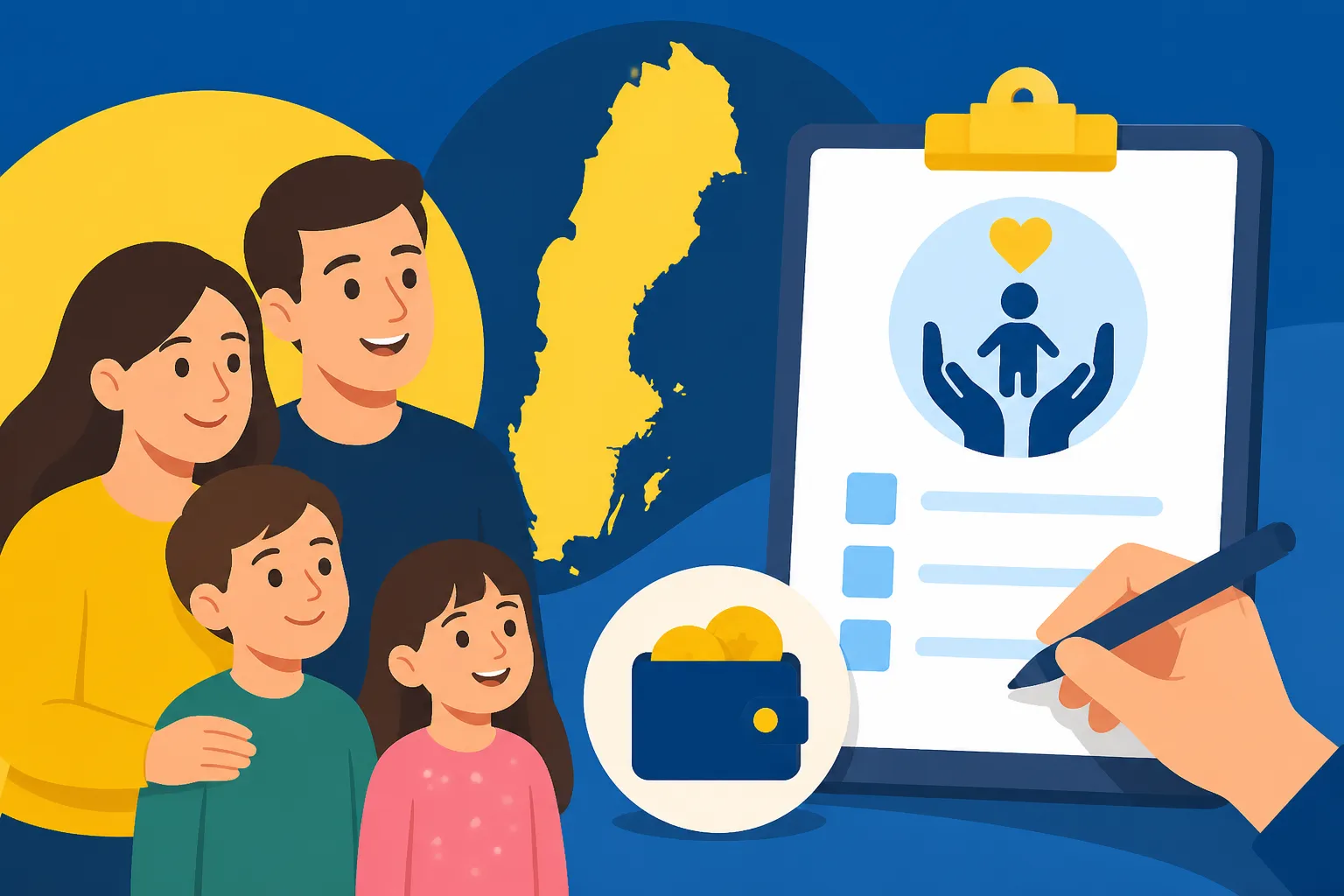
When you first land in Sweden, you'll quickly realize that the state takes a very active role in supporting family life. Barnbidrag is a monthly, tax-free payment intended to help parents with the costs of raising a child. Unlike some other countries where benefits are strictly means-tested, the Swedish child allowance is generally universal, provided you meet the residency requirements. It is a cornerstone of the Swedish welfare model, ensuring that every child starts on a relatively level playing field.
The eligibility for this benefit is tied directly to your legal status in the country. To qualify, you and your child must be considered residents of Sweden. This typically means being registered in the Swedish Population Register, a process known as Folkbokföring. If you are moving here for work or long-term study, understanding the broader landscape of Money and Finance in Sweden: A Complete Guide for Foreigners (2027) is essential, as child benefits are just one piece of the puzzle. The allowance is paid from the month after the child’s birth, or the month after you move to Sweden and meet the criteria, until the child turns 16.
For those of us who moved from outside the EU, the process can feel slightly more rigid than for our European neighbors. You must demonstrate that you have the right to stay in Sweden for at least one year. If you are an American expat, for instance, you might find that while the Swedish government is eager to provide this benefit, the IRS still wants to know about your global financial picture. In these complex cross-border situations, using a service like Taxes for Expats can help you navigate the reporting requirements for foreign-sourced benefits and ensure you remain compliant in both jurisdictions.
The Basic Allowance and Age Limits
The standard child allowance is a fixed monthly amount per child. As of 2024 and 2025, this amount sits at 1,250 SEK per month. This isn't a fortune, but in a country where high taxes are the norm, it serves as a welcome "thank you" from the state for contributing to the future workforce. It is important to note that the payments are automatic for children born in Sweden to parents already in the system, but for those of us arriving with children born abroad, it requires an active application.
Once a child turns 16, the Barnbidrag technically ends, but it is usually replaced by a Studiebidrag (study grant) if the teenager continues their education at a Gymnasium (high school). This transition is generally seamless for those already in the system, but for newcomers with teenagers, it is another administrative hurdle to clear. You’ll want to ensure your child is properly enrolled in the school system to keep the support flowing.
Flerbarnstillägg: The Large Family Supplement
One of the more generous aspects of the Swedish system is the Flerbarnstillägg, or the large family supplement. If you have two or more children, you receive an additional amount on top of the basic allowance for each child. This is designed to recognize that the cost of living increases exponentially with more dependents. The supplement increases significantly with each additional child, making it a vital resource for larger families.
The beauty of this supplement is that you don't typically need a separate application for it once your children are all registered under your name at Försäkringskassan. However, as an expat, ensuring that all your children are linked to your profile in the population register is the critical first step. If there is a delay in processing one child’s residency permit, it can throw off the calculations for the entire family, so keep a close eye on your "Mina Sidor" portal on the Försäkringskassan website.
Eligibility Requirements for Foreign Residents
To receive Barnbidrag, you must be "insured in Sweden." This usually happens automatically once you are working and paying taxes here, but for non-working spouses or students, the rules are more nuanced. You must be able to show that you intend to stay for more than a year. This is why Getting Your Personnummer: The Gateway to Swedish Healthcare is so vital; it serves as the master key for almost every benefit, including child allowance.
If you are an EU/EEA citizen, you have a slightly easier path due to freedom of movement rules, but you still need to prove your right of residence. If you are here on a work permit from a non-EU country, your eligibility is tied to the validity of that permit. It is a common frustration to have to re-verify your status every time you renew your visa, so keep your digital documents organized. For families who are still in the early stages of their move, Family and Children's Healthcare in Sweden: BVC, Mödravård, and Beyond provides a good overview of the other social supports available during this transition period.
The Application Process: Step-by-Step for Newcomers
If your child was born outside of Sweden, the money will not simply start appearing in your bank account. You must initiate the process. The very first thing you must do upon arrival—after finding a place to live—is visit Skatteverket (the Tax Agency) to register your move. This is the foundation for everything. Without being Folkbokförd, you effectively do not exist in the eyes of the social insurance system.
After you have received your decision from Skatteverket, which includes your 10-digit personal identity number, you must then turn your attention to Försäkringskassan (the Social Insurance Agency). You can read more about this in our guide on Registering with Försäkringskassan: When and Why You Need To. Once you are registered as living in Sweden, you can apply for the allowance via their website using BankID, which is the national digital ID system.
Registering with Försäkringskassan
For most expats, the delay between moving and receiving a Personnummer is the biggest pain point. You might be waiting months, during which time you are paying for diapers and school supplies out of pocket. The good news is that Barnbidrag can be paid retroactively for up to 90 days from the date of your application, provided you were eligible during that time. This makes the timing of your application crucial.
When you log into the Försäkringskassan portal, you will look for the "Barnbidrag" section. If your children are already in the population register, they should appear in a list. You will need to confirm who is the primary recipient of the payment. Historically, the money was sent to the mother by default, but today, for parents with shared custody who are both registered in Sweden, the payment is often split 50/50 unless you specify otherwise.
Required Documentation and Timelines
When applying, be prepared to provide copies of your children's birth certificates and your residence permits. If you are an EU citizen, you may need to provide your S1 form or evidence of your health insurance. Because the system is increasingly digital, having high-quality scans of these documents is a must. If your documents are not in English, Swedish, or a Nordic language, you might be asked for a certified translation, though this is less common for standard birth certificates from major nations.
The timeline for approval can vary wildly. Sometimes it takes three weeks; other times, it can take three months if the agency is backlogged or if they need to verify your "Right of Residence" with Migrationsverket. During this waiting period, it is helpful to understand How Long Does It Take to Get a Personnummer After Moving to Sweden? as this frequently dictates the pace of your benefit application. Don't be afraid to call Försäkringskassan’s international line if you feel your case has stalled in the "pending" stage for too long.
| Number of Children | Monthly Basic Allowance | Monthly Supplement | Total Monthly Payment |
|---|---|---|---|
| 1 Child | 1,250 SEK | 0 SEK | 1,250 SEK |
| 2 Children | 2,500 SEK | 150 SEK | 2,650 SEK |
| 3 Children | 3,750 SEK | 730 SEK | 4,480 SEK |
| 4 Children | 5,000 SEK | 1,740 SEK | 6,740 SEK |
| 5 Children | 6,250 SEK | 3,000 SEK | 9,250 SEK |
Shared Custody and Split Payments
If you and your partner are living together, the payment is usually split. However, if you are a single parent or if one parent is still living abroad, the situation changes. If the other parent is not a resident of Sweden, you will likely receive the full amount. This can get complicated if you are an expat who has recently separated or if your family is joining you in stages.
In cases of shared custody where parents live apart but both are in Sweden, the 50/50 split is the default. If you believe you should receive the full amount because you have sole custody, you will need to provide legal documentation to Försäkringskassan. They are very strict about this to prevent fraud and ensure that the funds are actually reaching the child. For more on the early stages of family setup, see Is Barnbidrag Paid Automatically After a Birth in Sweden? for a look at how the process differs for those whose journey starts in a Swedish delivery ward.
Practical Financial Management for Barnbidrag
Once the allowance starts hitting your account, it arrives on the 20th of every month. If the 20th falls on a weekend or holiday, it is usually paid on the Friday before. It is a reliable system, and many parents use this money specifically for child-related expenses like the "avgift" (fee) for preschool or extracurricular activities.
However, a major hurdle for many newcomers is the lack of a local bank account during the first few months. Swedish banks can be notoriously slow to open accounts for foreigners without a long-term contract or a Swedish ID card. While you are waiting, you might need to manage your finances using international platforms. Using a service like Wise can be incredibly helpful for receiving funds or transferring money back home while you wait for your Opening a Bank Account in Sweden: A Step-by-Step Guide to bear fruit.
Connecting Your Bank Account
To receive the payment, you must register your bank account with Försäkringskassan. This is done through a separate "account registry" (Kontoanmälan). Even if you have a Personnummer and BankID, the agency won't automatically know where to send the money. You must log in and manually enter your IBAN or Swedish clearing and account numbers.
If you change banks later on, remember to update this immediately. If a payment bounces, it can take another month to get it re-routed. For those who are working, it’s worth noting that this allowance is completely separate from your salary and does not affect How Much Income Tax Will I Pay on a Swedish Salary?. It is truly "extra" money that isn't chewed up by the high municipal tax rates.
Managing International Tax Obligations
For expats, receiving government benefits in a foreign country can sometimes trigger reporting requirements in their home country. This is particularly true for U.S. citizens, who are taxed on their worldwide income. While Barnbidrag is tax-free in Sweden, you should consult with a specialist like Taxes for Expats to determine if it needs to be declared as part of your foreign financial assets or income on your home-country tax returns.
It’s also important to keep records of your residency and the payments you receive. If you ever decide to move away from Sweden, you are required to notify Försäkringskassan immediately. Continuing to receive benefits after you have left the country is considered a serious offense, and the agency does perform cross-checks with border records and the population register.
Using the 1177 Portal and Digital Tools
While Försäkringskassan handles the money, your child's health and wellness are tracked through other systems. You will likely become very familiar with the health portal. Learning How Do I Log Into 1177.se with BankID is just as important as the financial registration, as it allows you to book appointments and see your child's medical records.
The Swedish bureaucracy is designed to be a "one-stop shop" once you have Getting BankID: Sweden's Essential Digital Identity, but the initial setup requires patience. Many expats find it helpful to keep a dedicated folder—either physical or digital—of every letter received from Skatteverket and Försäkringskassan during those first six months. These letters often contain codes or instructions that you will need much later.
Common Pitfalls and Frequently Asked Questions
One of the most frequent mistakes is assuming the "Right of Residence" (for EU citizens) or a "Residence Permit" (for non-EU) is enough to trigger the payment. You must be physically living in Sweden and registered as such. If you spend significant time abroad—for example, taking a six-month sabbatical back home—you may lose your eligibility for the allowance during that period.
Another pitfall is the "90-day rule." If you wait too long to apply after your Personnummer is issued, you might lose out on several months of back-dated payments. Always apply as soon as you have your ID number, even if you are still waiting for other documents. You can always supplement your application later with more evidence if the agency requests it.
Dealing with Delays and Denials
If your application is denied, it is usually because the agency doesn't believe you meet the residency requirements or because they lack proof of your right to stay. If this happens, you have the right to appeal. The first step is usually a "Begäran om omprövning" (request for reconsideration), where a different officer reviews your case.
Common reasons for denial for expats include:
- Having a residence permit that is valid for less than one year.
- Failing to prove that the child is actually living in Sweden (sometimes a school enrollment letter helps here).
- Conflicts with benefits being received from another country (EU coordination rules).
If you are an EU citizen and you are still receiving child benefits from your home country, Sweden will usually only pay the "top-up" difference if the Swedish rate is higher. This prevents "double-dipping" within the EU social security system.
What to Do If You Don't Have a Personnummer Yet
If you are stuck in the limbo of having a "Coordination Number" instead of a full Personnummer, you generally cannot receive Barnbidrag. You can read more about this in What Is a Samordningsnummer and Can I Get Care With One?. The system is built around the 10-digit Personnummer, and without it, you are essentially a visitor in the eyes of the benefit system.
However, keep your receipts and records. Once your Personnummer is granted, you can attempt to claim retroactively. It’s a bit of a gamble, but as long as you can prove you were living in Sweden and intended to stay, some case officers are sympathetic. Just be prepared for a long, paper-based battle if you don't have BankID yet.
Final Thoughts for New Families
The Swedish system is incredibly supportive, but it isn't proactive for foreigners. You have to be your own advocate. Once the Barnbidrag starts, it's a sign that you are finally "in" the system. It's a small victory in the long journey of integration. For more information on your initial steps in the country, you might also find it useful to check out How Do I Register My Pregnancy with a Barnmorska in Sweden? if you are planning to expand your family further while living in the land of the midnight sun.
Disclaimer
This guide is for informational purposes only and does not constitute legal or financial advice. Regulations regarding Swedish social insurance and residency can change frequently. Always consult the official websites of Försäkringskassan and Skatteverket for the most up-to-date information regarding your specific situation.