Dealing with Kronofogden: Debt Enforcement in Sweden
Finding a distinctive white envelope in your Swedish mailbox with the logo of the Swedish Enforcement Authority—Kronofogden—is enough to make any expat’s heart skip a beat. Whether it is a forgotten 50 SEK parking fine or a disputed invoice from a telecom provider, the Swedish debt enforcement system is remarkably efficient and uncompromising. This guide explains exactly how to navigate a run-in with Kronofogden, how to protect your credit score, and what steps you must take to regain your financial standing in Sweden.
Understanding the Role of Kronofogden in Swedish Society
Kronofogden, officially known as Kronofogdemyndigheten, is a unique government body that combines the powers of a debt collector, a court, and an enforcement agency. Unlike many other countries where debt collection is primarily a private legal matter between two parties until a court judgment is reached, Kronofogden is integrated directly into the administrative fabric of Sweden. Their primary mission is to ensure that people and companies pay their debts, but they are also tasked with helping those who have become over-indebted to find a sustainable path forward.
The Myth of the Scary Debt Collector
When many newcomers hear about an "enforcement authority," they envision bailiffs knocking down doors in the middle of the night. In reality, Kronofogden is a highly bureaucratic and transparent organization. They operate under strict legal frameworks and are generally very helpful if you communicate with them early. The "scary" part of Kronofogden isn't the physical presence of the agency, but rather the digital trail they leave behind. In Sweden’s transparent society, a debt registered with them becomes a matter of public record, which can impact your ability to rent an apartment, get a phone contract, or even secure a job.
How a Debt Reaches the Authority
A debt does not simply land at Kronofogden overnight. Usually, there is a sequence: the original invoice, a reminder (påminnelse) with a late fee, and then a referral to a private debt collection agency (Inkasso). If the Inkasso agency fails to secure payment, the creditor may apply for a "Betalningsföreläggande" (Order to Pay) from Kronofogden. At this stage, the authority acts as a neutral party, notifying you that someone claims you owe them money. It is at this precise moment that your actions—or lack thereof—will determine your financial future for the next several years.
The Principle of Public Transparency
One of the hardest cultural adjustments for expats is realizing that financial records are largely public in Sweden. If you have an active case with Kronofogden, anyone with your personnummer can theoretically find out. This transparency is why Your UC Credit Score: How It's Calculated and Why It Matters is so sensitive to any interaction with the enforcement authority. The system is built on trust, and a referral to Kronofogden is seen as a breach of that societal trust, signaling to other creditors that you may be a high-risk individual.
The Stages of the Debt Collection Process
The Swedish debt cycle is predictable but moves fast. Understanding the timeline is your best defense against long-term financial damage. Many expats fall into the trap of "waiting it out," which is the worst possible strategy in Sweden. If you are struggling to manage your finances or move money across borders to pay bills, using services like Wise can help you handle multi-currency transfers quickly to ensure your Swedish bank account has the funds needed for Autogiro payments.
The Order to Pay and Your Right to Object
When Kronofogden receives a request for an Order to Pay, they send you a letter. You must sign an acknowledgment of receipt (delgivningskvitto) to prove you have seen it. Signing this is not an admission of debt; it is simply a confirmation that you have been notified. Once notified, you usually have 10 to 14 days to either pay the debt or contest it (bestrida). If you truly do not owe the money—for example, if the invoice is for a service you never ordered—you must object in writing. If you do nothing, Kronofogden will issue a "utslag" (judgment), which legally confirms the debt and gives the creditor the right to request enforcement.
Inkasso Companies vs. The Authority
It is vital to distinguish between a private Inkasso (debt collection) company and Kronofogden. An Inkasso company, such as Intrum or Lowell, is a private entity hired by a creditor. While their letters look official and carry high fees, they do not have the legal power to seize your assets or garnish your wages. However, if you ignore them, they will inevitably pass the case to Kronofogden. Most Inkasso companies are willing to set up payment plans (avbetalningsplan). If you reach an agreement with an Inkasso company, they will not send the case to the authority, keeping your record clean.
The Final Warning: The Final Note of Debt
Before a debt turns into a permanent mark on your record, you often receive a final chance to pay. This is the period between the "Order to Pay" and the final "Judgment." If you pay the full amount—including the original debt, interest, the creditor’s costs, and Kronofogden’s application fee—the case is closed. However, if the judgment is issued, the "Betalningsanmärkning" (payment record) is triggered. This mark is managed by private credit bureaus like UC, not by Kronofogden itself, which is a common point of confusion for many foreign residents.
| Stage | Actor | Impact on Credit Score | Action Required |
|---|---|---|---|
| Reminder (Påminnelse) | Creditor | None | Pay immediately |
| Inkasso Letter | Private Agency | Low/None | Negotiate a payment plan |
| Order to Pay | Kronofogden | Moderate Risk | Object or pay within 10 days |
| Judgment (Utslag) | Kronofogden | High (3-year record) | Immediate full payment or restructuring |
| Enforcement (Utmätning) | Kronofogden | Extreme | Full disclosure of assets |
Legal Consequences and the Payment Record
The most significant consequence of dealing with Kronofogden is the "Betalningsanmärkning." In English, this is often called a "payment record" or "credit black mark." It is the primary data point used in Your UC Credit Score: How It's Calculated and Why It Matters to determine your creditworthiness. For an individual, this mark typically lasts for three years from the date it was issued, even if you pay the debt back the very next day.
How the Anmärkning Affects Your Life
Living in Sweden with a payment record is incredibly difficult. Most landlords will not offer a first-hand rental contract to someone with a record. You may find it impossible to take out a loan, get a credit card, or even sign up for a monthly gym membership. In some cases, employers in the finance or security sectors may check for these records during the hiring process. This is why it is so important to understand How Do I Remove a Payment Default (Betalningsanmärkning) in Sweden—though the short answer is that they are rarely removed unless a genuine error was made by the creditor.
The Impact on Permanent Residency and Citizenship
For many expats, the goal is long-term stability. If you are planning on Applying for Permanent Residence in Sweden: Step by Step, your financial history matters. While a single small debt might not disqualify you, a history of non-payment or an active enforcement case can be viewed negatively during the maintenance requirement assessment. Furthermore, if you are looking into Becoming a Swedish Citizen: Requirements and the Application Process, one of the requirements is "redlighet," or having lived an honest life. Large, unpaid debts to the state or private creditors can lead to your citizenship application being rejected or delayed until you have been debt-free for several years.
The UC Score and Financial Recovery
Once a payment record is established, your UC score will drop into the "Weak" or "Very Weak" category. Recovery is a slow process of time and consistency. You will need to ensure that no new debts are registered. It is also a good idea to keep a close eye on your Income Tax in Sweden: Municipal, State, and the SINK Regime filings, as tax debts are considered "public debts" (allmänna mål) and are treated even more strictly than private debts (enskilda mål). Tax debts lead to a record almost immediately without the same grace periods offered for private invoices.
Enforcement: Salary Attachment and Asset Seizure
If a judgment is issued and you still cannot pay, the creditor will likely request "verkställighet" (enforcement). This is the stage where Kronofogden takes active steps to recover the money. They have the legal authority to look into your bank accounts, contact your employer, and visit your home to identify valuable assets.
Salary Attachment (Löneutmätning)
The most common form of enforcement is salary attachment. Kronofogden will contact your employer and order them to deduct a specific amount from your monthly paycheck before it ever reaches your bank account. However, you are not left with nothing. Sweden has a concept called "förbehållsbelopp," which is a protected amount of money meant to cover your "existensminimum" (minimum cost of living). This includes your rent and a standardized amount for food, clothing, and hygiene. If you have children, the protected amount is higher to ensure their needs are met.
Seizure of Personal Property
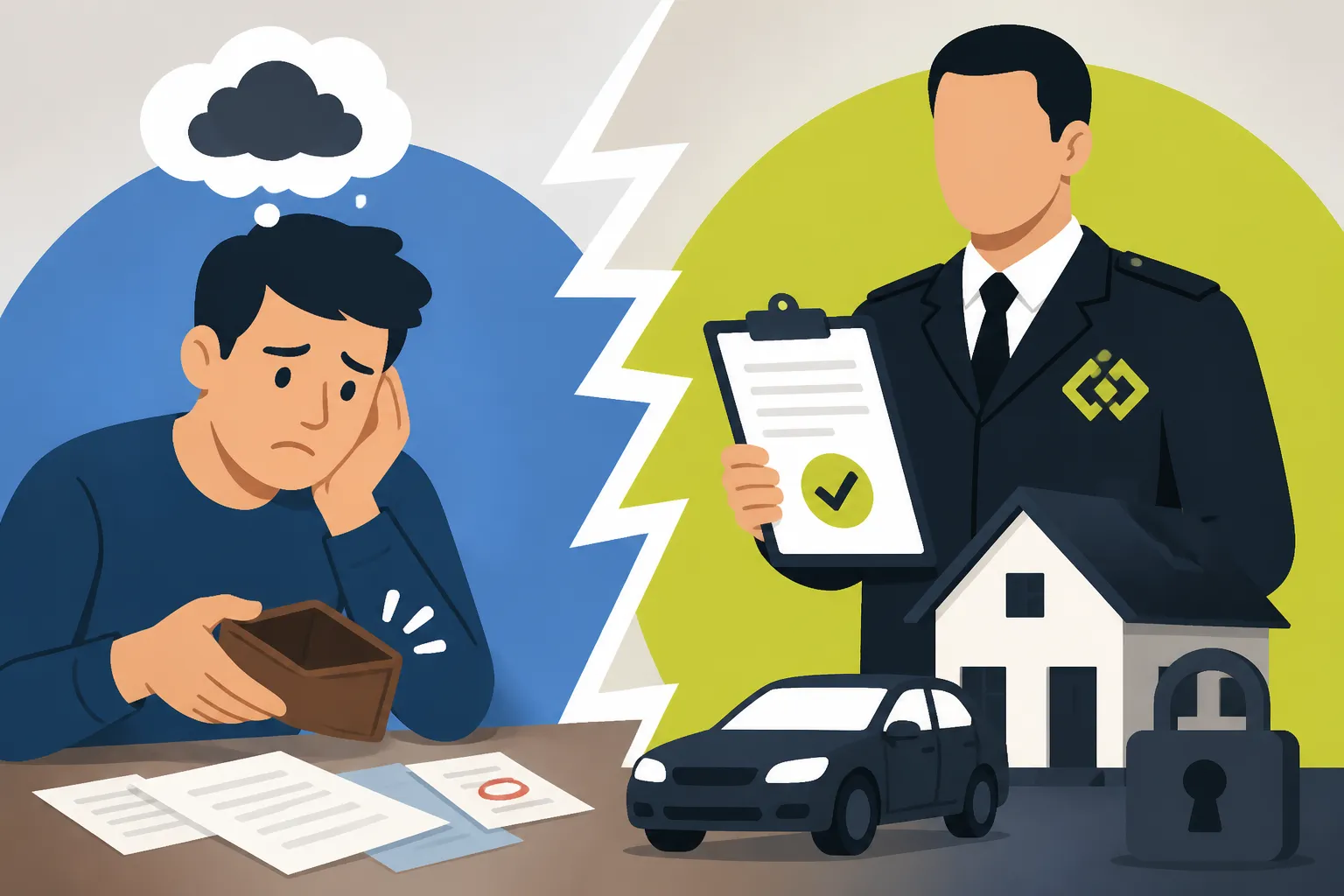
While less common for smaller debts, Kronofogden can seize physical assets. This usually involves items of high value that are not essential for your daily life. They can seize cars, jewelry, or electronics. They generally do not take basic furniture, your primary phone, or tools required for your work. If you own your home, whether it is a house or a Bostadsrättsförening (BRF) and Your Monthly Avgift Explained apartment, they can eventually force a sale to pay off significant debts. This is why proactive communication is essential; they would much rather you pay via salary attachment than through the forced sale of a home.
The Investigation Process
When a case reaches the enforcement stage, you will be required to fill out a "Redogörelse för tillgångar" (Statement of Assets). You must be honest here. Hiding assets can lead to criminal charges. Kronofogden also has digital access to your bank account balances and information from the Swedish Tax Agency (Skatteverket). If you are an expat with complex international financial interests, you might find that Taxes for Expats can provide clarity on how your Swedish debt and reporting obligations interact with your home country's tax requirements.
Finding a Way Out: Debt Restructuring and Negotiation
If you find yourself in a "debt trap" where you are simply unable to pay off your obligations due to high interest and a low salary, Sweden offers a formal process for a fresh start. This is not a "get out of jail free" card, but a grueling five-year commitment to financial rehabilitation.
Debt Sanitization (Skuldsanering)
"Skuldsanering" is a legal process where Kronofogden writes off part or all of your debt. To qualify, you must be "qualitatively insolvent," meaning you cannot pay your debts for the foreseeable future. If granted, you will live on the bare minimum for five years, and all your remaining income will go to your creditors. At the end of those five years, your debts are cleared. This is a life-changing process, but it is very difficult to get approved. You must show that you have tried everything else first, including negotiating with creditors and working with a local "Budget- och skuldrådgivare" (Budget and Debt Counselor) from your municipality.
Working with Municipal Debt Counselors
Every municipality (kommun) in Sweden is required by law to offer free budget and debt counseling. These counselors are experts in dealing with Kronofogden. They can help you create a realistic budget, contact creditors on your behalf to negotiate lower interest rates, and guide you through the application for debt sanitization. If you are struggling, this should be your first stop. They see people in your situation every day and provide an empathetic, non-judgmental environment to help you get back on your feet.
Practical Steps to Stop the Bleeding
If you receive a letter from Kronofogden today, do not panic, but do not wait.
- Call the creditor immediately: Most companies would rather get paid slowly than pay Kronofogden’s fees. Ask for a "fryst ränta" (frozen interest) or a payment plan.
- Verify the debt: Check your records. Is this your debt? If not, object to Kronofogden in writing immediately.
- Prioritize your debts: If you can’t pay everything, pay your rent, electricity, and Home Insurance (Hemförsäkring): Why It's Essential in Sweden first. Then pay any debts to the state (taxes, TV fee), as these escalate the fastest.
- Use Digital Tools: Ensure you are checking your digital mailbox (like Kivra) regularly. Many expats miss Kronofogden letters because they have moved and haven't updated their address or don't check their physical mail often enough.
Managing International Financial Obligations
For expats, the situation is often complicated by debts or income in multiple countries. If you are moving to Sweden and still have bills to pay back home, or vice versa, the delay in international banking can sometimes cause you to miss a Swedish payment deadline.
Using Wise for Timely Payments
Late fees in Sweden can accumulate quickly. If you are relying on a foreign bank account to pay your Swedish bills, the 3-5 day delay in traditional SWIFT transfers can be the difference between a simple reminder and an Inkasso case. Wise allows for near-instant transfers to Swedish IBANs or Bankgiro numbers, ensuring that your funds arrive exactly when they are needed. This is particularly useful for those who haven't yet secured a Personnummer, Folkbokföring, and Your Legal Status in Sweden and are struggling to open a traditional bank account.
Tax Implications for Expats
If your debt involves unpaid taxes, the situation is more complex. Expats often struggle with the transition from their home tax system to the Swedish one. If you are working in Sweden but are still considered a tax resident elsewhere, you must understand Tax Residency in Sweden: The 183-Day Rule and Essential Connection. Failing to report foreign income correctly can lead to massive "skattetillägg" (tax surcharges), which are then handed over to Kronofogden for collection. Consulting with specialists like Taxes for Expats can help you navigate these dual-filing requirements and avoid the administrative errors that lead to enforcement actions.
Staying Informed Through 1177 and Other Portals
While not directly related to debt, your overall integration helps you avoid these pitfalls. Staying on top of all your administrative tasks, from Registering with Försäkringskassan: When and Why You Need To to managing your healthcare through 1177 Vårdguiden: Navigating Sweden's National Health Advice Line and Portal, ensures that you are part of the system. The more "connected" you are to the digital infrastructure of Sweden, the less likely you are to miss a crucial notification from an authority like Kronofogden.
Important Disclaimer
The information provided in this article is for general informational purposes only and does not constitute legal or financial advice. The laws regarding debt enforcement and credit reporting in Sweden are subject to change. Always consult with a qualified legal professional, a municipal debt counselor, or contact the Swedish Enforcement Authority (Kronofogden) directly to discuss your specific situation. Internal links provided are for context and further reading on the Swedish administrative system.