Currency, Cash, and the Krona: Practical Money Tips for Sweden
Arriving in Stockholm or Gothenburg with a wallet full of physical currency can feel like stepping into a future that has forgotten the past. Many newcomers face the immediate frustration of having their cash rejected at coffee shops, buses, and even major retailers. This guide provides the essential roadmap for navigating Sweden’s nearly cashless society, managing the Swedish Krona, and avoiding the common financial pitfalls that catch expats off guard.
Understanding the Swedish Krona SEK: Basics and Denominations
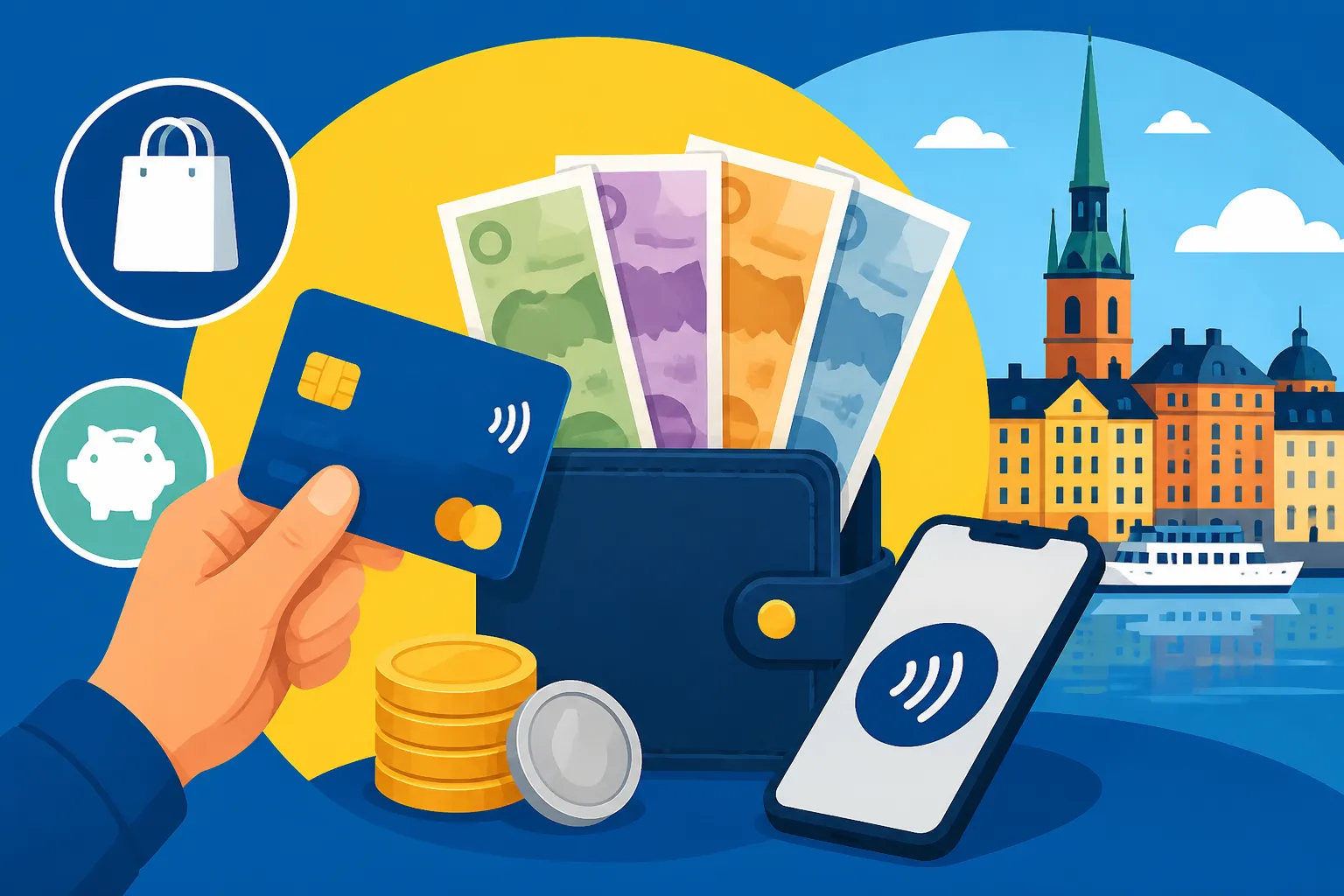
When you first land in Sweden, you will be introduced to the Swedish Krona, abbreviated as SEK or often written as "kr" in stores. While you might be tempted to exchange a large amount of your home currency at the airport, it is vital to understand what the physical money looks like and how little you will actually use it. The currency consists of coins in 1, 2, 5, and 10 kronor denominations, and banknotes for 20, 50, 100, 200, 500, and 1,000 kronor. The 200-krona note is a relatively recent addition to the lineup, and while it is common in ATMs, some smaller kiosks might still look at it with a hint of suspicion if they have low change reserves.
The exchange rate of the SEK has been famously volatile over the last few years, often fluctuating significantly against the Euro and the US Dollar. For expats, this means that Budgeting for the Real Cost of Living in Sweden can be a moving target. If you are receiving a salary in a foreign currency or have savings abroad, you need to keep a close eye on the daily mid-market rates. A sudden dip in the Krona can make your local rent feel cheaper, while a surge can make those weekend trips back home significantly more expensive.
It is also worth noting that Swedish coins have undergone a total redesign recently. If you happen to find an old jar of Swedish coins from a trip a decade ago, they are likely no longer legal tender. The current coins are smaller and lighter, designed to be more "pocket-friendly," though most residents find they simply gather dust in a hallway bowl because digital payments are so dominant. Before you worry too much about the physical aesthetics of the money, remember that your primary goal as a new resident should be to minimize your reliance on it.
The Cashless Reality: Living in a Digital First Society
Sweden is frequently cited as one of the most cashless countries in the world. For a veteran expat, the transition is both a blessing and a curse. You will see "Kontantfri" (Cash-free) signs on the doors of everything from high-end boutiques to the local "hål i väggen" (hole-in-the-wall) kebab shops. This isn't just a trend; it is a fundamental shift in how the country operates. The frustration for foreigners is real—try paying for a public toilet or a parking space with coins, and you’ll quickly realize that your physical money is often useless.
If you are just arriving and waiting for your administrative paperwork to clear, you might feel stuck. You will find that Why You Need a Personnummer for Almost Every Financial Service in Sweden becomes the central theme of your first few months. Without that magic ten or twelve-digit number, getting a local bank account is a Herculean task. In the interim, you will be relying on your foreign credit or debit cards. While these work in 99% of places, the foreign transaction fees can quietly eat away at your relocation budget. This is why services like Wise are indispensable during the transition. They allow you to hold SEK in a digital wallet and spend like a local without the predatory exchange rates of traditional banks.
Even the most traditional institutions, like the Church of Sweden, now accept "Kollekt" (donations) via digital means. However, there are very rare exceptions where cash is useful. Small flea markets (loppis) in the deep countryside or very elderly vendors at fruit stalls might prefer cash, but even they are rapidly adopting mobile payment solutions. If you find yourself in a situation where only cash is accepted, you are likely in a very remote area or dealing with a very specific, old-school niche of Swedish society.
Moving Money Across Borders: Fees and Strategies
One of the biggest mistakes newcomers make is using a traditional wire transfer from their home bank to a new Swedish account. The "Big Four" banks in Sweden—SEB, Nordea, Swedbank, and Handelsbanken—often charge receiving fees, and your home bank will likely give you a poor exchange rate plus a hefty sending fee. When you are moving thousands of dollars or euros to cover a housing deposit, these percentages matter. This is where a specialized service like Wise provides a massive advantage. By using the real mid-market rate and showing you the fees upfront, you can save enough to furnish a good portion of your new apartment at IKEA.
Timing your transfers is another skill you will develop. Because the Krona can be sensitive to global economic shifts and Riksbank (the Swedish Central Bank) interest rate decisions, moving all your savings at once can be risky. Many veteran expats prefer "dollar-cost averaging" their currency conversion, moving smaller amounts every month to smooth out the volatility. This strategy is particularly useful if you are still Sending Money To and From Sweden Without Losing on Fees while waiting for your first Swedish payslip to arrive.
Additionally, you must be aware of the "Anti-Money Laundering" (AML) regulations in Sweden, which are incredibly strict. If you suddenly transfer a large sum of money into a new Swedish account, the bank will likely freeze the funds and demand "underlag" (documentation) proving the source of the money. Have your house sale contracts, tax returns, or gift letters ready and translated if necessary. Swedish banks do not play around when it comes to "Know Your Customer" (KYC) rules, and they will not hesitate to close an account if they feel the documentation is insufficient.
Using Swish: The Holy Grail of Swedish Payments
You cannot talk about money in Sweden without talking about Swish. It is a mobile payment app connected to your phone number and bank account that allows for instantaneous transfers. In Sweden, "Swisha" has become a verb. Whether you are splitting a bill at a restaurant, buying a used bike on Blocket, or paying for a hot dog at a school fundraiser, Swish is the expected method. The social awkwardness of not having Swish as an expat is a genuine cultural hurdle.
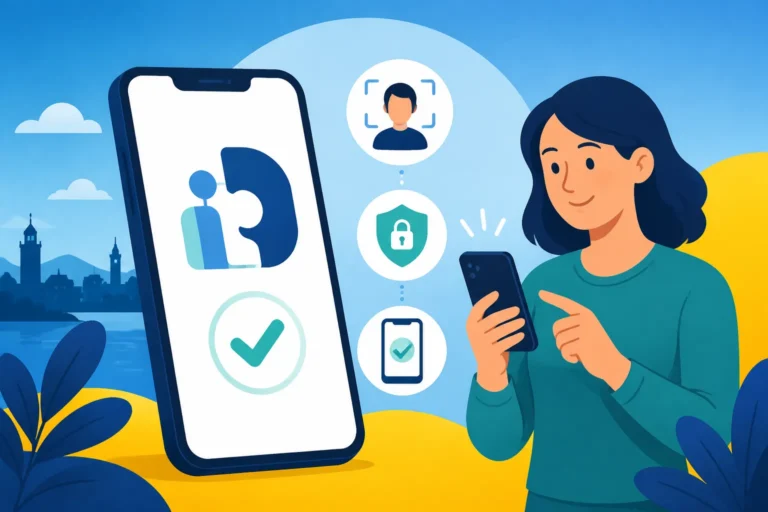
However, there is a catch: you cannot get Swish without a Swedish bank account and a BankID. This brings us back to the administrative waiting game. To understand the full process, you should read about Getting BankID: Sweden's Essential Digital Identity, as this is the digital key to your entire life in Sweden. Once you have it, you can connect it to the Swish app. The beauty of Swish is its simplicity; you enter the recipient's phone number (or scan a QR code), enter the amount, and sign with your BankID. The money moves in seconds, 24/7.
For those who are still in the "pre-Personnummer" phase, you will have to rely on the "I'll pay you back later" method or ask a friend to Swish on your behalf while you give them cash—though even your friends might be annoyed at receiving physical cash since they then have to find one of the few remaining "Inbetalning" machines to deposit it. It truly is a system designed to discourage the use of physical currency at every level.
| Feature | Physical Cash (SEK) | Swish / BankID | Foreign Credit Card |
|---|---|---|---|
| Acceptance | Low (Many shops are "Kontantfri") | Universal (Individuals & Shops) | High (Most retailers) |
| Speed | Slow (Manual counting) | Instant | Fast |
| Fees | ATM withdrawal fees may apply | Free for individuals | 1-3% Foreign Transaction Fees |
| Requirement | None | Swedish Bank Account & BankID | Valid Passport/ID |
| Security | Risk of loss/theft | Highly secure (Biometric) | High (Chip/Pin) |
Banking Hurdles and the Personnummer Gap
The most stressful period for any new expat is the "limbo" period between arrival and receiving a Personnummer. During this time, you are effectively a ghost in the financial system. You might find it useful to check How to Open Your First Swedish Bank Account Without a Personnummer, but be warned: while it is legally possible under EU law for banks to offer a basic "betalkonto" (payment account) to those without a residency number, many local branches are woefully uninformed or simply unwilling to deal with the paperwork.
When you finally do get your number, choosing a bank is your next step. While Choosing a Bank in Sweden: Swedbank, SEB, Handelsbanken, and Nordea will give you a breakdown of the major players, most expats find that they all offer very similar digital services. The real differentiator is their customer service for non-Swedish speakers. Some banks are much better at providing English-language interfaces for their apps than others. Once your account is open, make sure to request a "debitkort" (debit card) immediately. Most Swedish banks use the "Bankkort" branding, which is usually a Visa or Mastercard that pulls directly from your checking account.
Don't forget to also set up "Autogiro" (direct debit) for your recurring bills like rent, electricity, and internet. Swedes love automation. Manually paying bills every month via your bank's web portal is possible, but it requires typing in long "OCR" numbers (reference codes) for every transaction. Autogiro saves you from the inevitable late fees that come when you forget a bill tucked away in your physical mailbox.
Tax Implications and Reporting Foreign Assets
Once you are living and working in Sweden, you are likely a tax resident. This means the Swedish Tax Agency, Skatteverket, wants to know about your global income. If you have a savings account back home that is generating interest, or if you are selling property in your home country, you must report this. Dealing with the complexities of dual-taxation can be a nightmare, which is why professional services like Taxes for Expats are highly recommended for those with complicated financial footprints, especially US citizens who face "citizenship-based taxation."
Sweden has a very transparent tax system. In fact, income levels are technically public record. While this might feel like a massive invasion of privacy to a newcomer, it is part of the "Jantelagen" culture where transparency is equated with fairness. You should familiarize yourself with Understanding Your Swedish Payslip and Preliminärskatt so you aren't shocked when you see 30% or more of your gross salary disappeared before it hit your account.
If you are a high-earner or a specialist, you might be eligible for "Expert Tax" (forskarskattenämnden), which can significantly reduce your tax burden for the first few years. However, this must be applied for shortly after your arrival. For everyone else, the focus should be on maximizing deductions. For example, you can often deduct the costs of commuting if they exceed a certain threshold, or the costs of a home office in very specific circumstances. Keeping clean records of your currency conversions (using those Wise statements!) is vital when it comes time to file your "Inkomstdeklaration" in the spring.
Practical Daily Spending Tips for Expats
When you go to a supermarket like ICA, Coop, or Hemköp, you will notice "snabbkassa" (self-checkout) machines. Most of these do not accept cash at all. To use them, you simply scan your items and tap your card or phone. If you have a loyalty card (Medlemskort), you can often get significant discounts, but again, these usually require a Personnummer to sign up for. In the meantime, look for the "Willys" or "Lidl" stores, which tend to have lower baseline prices and are a bit more forgiving for those Groceries, Recycling, and Local Customs learning curves.
If you are planning to buy alcohol, remember that you can only buy anything stronger than 3.5% ABV at the state-run monopoly, Systembolaget. They have very strict hours and are closed on Sunday. While they accept all major credit cards, they are one of the few places where you might still see someone using cash, though it is increasingly rare. The prices are high due to heavy taxation, so keep that in mind for your weekend budget.
Finally, regarding public transport: do not expect to buy a ticket from the driver with cash. In cities like Stockholm, you can simply tap your contactless credit card or use the SL app. If you are traveling long-distance, you will need to book through the SJ app or website. For more details on the logistics of moving around, check out Public Transport in Sweden: SL, Regional Cards, and Apps. Most of these digital platforms save your card details, making the "money" aspect of the trip invisible, which is exactly how the Swedish system is designed to function.
Disclaimer
This article provides general information and personal perspective on financial matters in Sweden. We are not licensed financial advisors or tax professionals. Swedish regulations, exchange rates, and banking policies change frequently. You should always consult with official sources such as Skatteverket, your banking institution, or a qualified tax professional like Taxes for Expats before making significant financial decisions or moving large sums of money.