Is Sweden as Expensive as People Say?
Moving to Sweden often comes with a significant amount of financial anxiety. You have likely heard the horror stories about ten-dollar beers, eye-watering income tax rates, and the high cost of living in Stockholm. This guide dismantles those myths and provides a realistic breakdown of what life actually costs here, helping you plan your transition without the constant fear of going broke.
The Swedish Sticker Shock: Perception vs. Reality
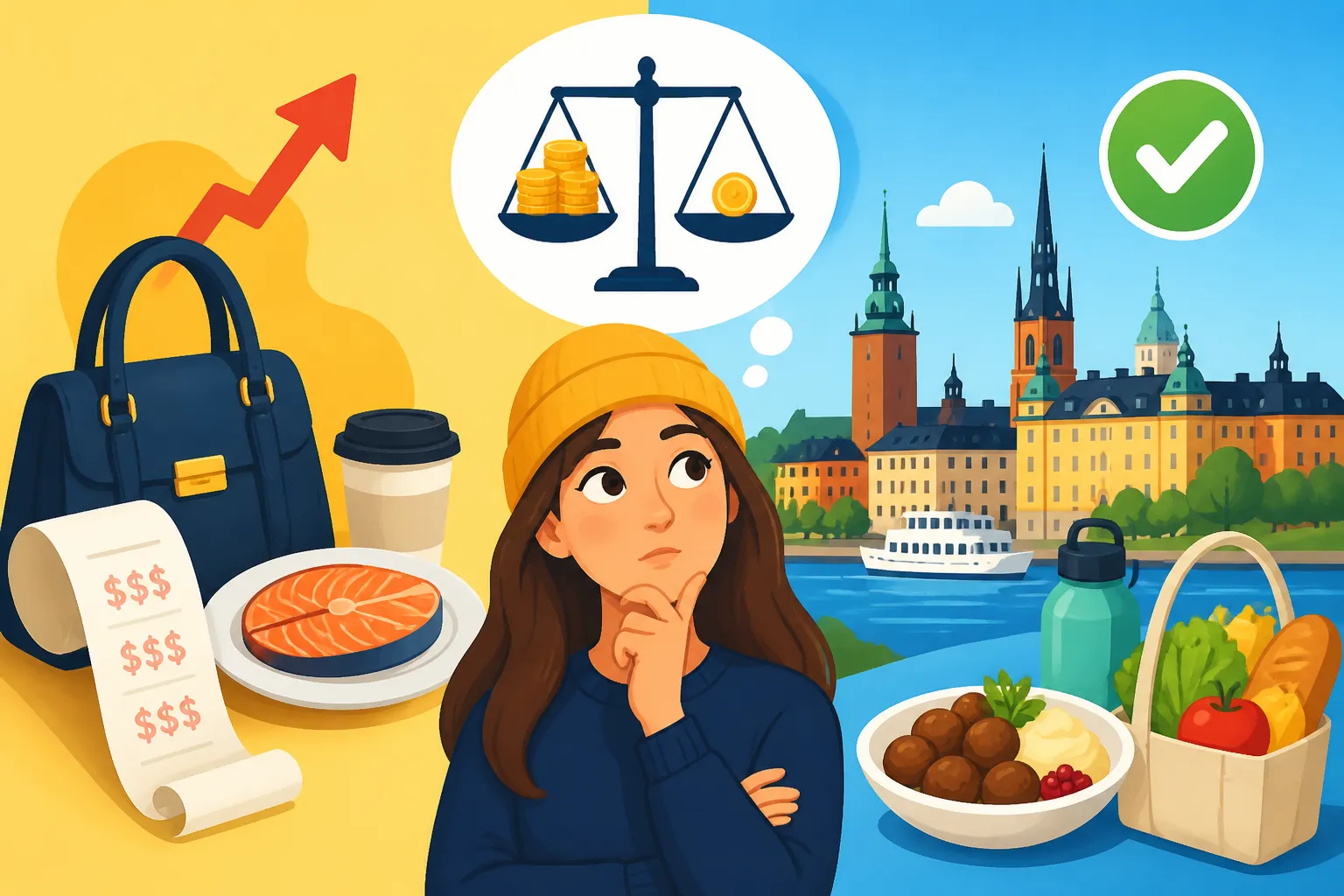
When you first arrive and step into a convenience store at Arlanda or a central cafe, the immediate reaction is usually a mild form of panic. You see a sandwich priced at 85 SEK and a coffee for 45 SEK, and you start doing the mental math. It is true that the "entry-level" cost of services and goods in Sweden is higher than in many other parts of the world. This is largely due to high labor costs and a strong social safety net that ensures even the person serving your coffee earns a living wage. Unlike in some countries where a cheap meal is subsidized by underpaid labor, in Sweden, you pay the "true" cost of service.
However, once you look past the initial price tags, the narrative begins to change. The cost of living is a multi-layered equation. While consumer goods and dining out can feel expensive, many of the massive expenses that plague residents in other countries—such as health insurance premiums, university tuition, and childcare—are either capped at a very low level or entirely free. To understand if Sweden is expensive for you, you have to look at your "net life cost" rather than just your "net salary." Many expats find that even with a high tax rate, their disposable income feels higher because they aren't saving for a 50,000 USD hospital bill or a child's future college tuition.
For those managing finances across borders, tools like Wise are essential for moving your initial relocation capital without losing a fortune to the traditional banks' predatory exchange rates. It is also vital to get a grip on your global tax obligations early on. Working with specialists like Taxes for Expats can ensure you aren't being double-taxed on your income, especially during that first confusing year when you might be a tax resident in two places at once. Understanding The Swedish Tax System Explained: Rates, Returns, and Filing is the first step in realizing that while the tax is high, the "return on investment" is visible in every clean park and well-maintained road you see.
Housing and Everyday Essentials: Where the Money Actually Goes
Housing is undeniably the largest expense for most foreigners in Sweden. If you are moving to Stockholm, Gothenburg, or Uppsala, you will quickly realize that the market is dysfunctional. Because of the rent control system for "first-hand" apartments, there is a massive shortage, leading to a "second-hand" market where prices can be steep. You will likely spend a significant portion of your first few years navigating these short-term sublets. It is important to understand The Swedish Housing Queue Explained: Bostadskö and Queue Days because even if it takes years to get a first-hand contract, the eventual savings on rent are massive.
When it comes to the grocery store, the "expensive" tag depends entirely on where you shop. If you do all your shopping at a small ICA Nära in the city center, your bill will be high. However, if you venture to larger out-of-town stores like Willys or Lidl, the prices are comparable to much of Western Europe. Swedes are also masters of the "Matlåda" (lunch box). Eating out for lunch every day can easily cost you 3,000 SEK a month, whereas bringing a home-cooked meal is the standard for everyone from interns to CEOs. This cultural quirk is one of the most effective ways to lower your daily expenses.
Transportation is another area where you can save or spend a fortune. Owning a car in a Swedish city is a luxury, not a necessity. Between high fuel taxes, parking fees, and congestion charges, it is a money pit. Conversely, Public Transport in Sweden: SL, Regional Cards, and Apps offers incredible value. For around 1,000 SEK a month, you get unlimited travel across an entire region. When you factor in the cost of car insurance, maintenance, and the "trängselskatt" (congestion tax), the public system is a financial lifesaver. You can check How Much Does It Cost to Live in Stockholm Each Month? for a more detailed breakdown of these specific city-based expenses.
| Expense Category | Typical Monthly Cost (Single Person) | Cost Mitigation Strategy |
|---|---|---|
| Rent (Second-hand, Stockholm) | 12,000 – 18,000 SEK | Join the Bostadskö immediately; look at suburbs. |
| Groceries | 3,500 – 5,000 SEK | Shop at Willys/Lidl; buy seasonal produce. |
| Public Transport | 950 – 1,050 SEK | Use the monthly or annual pass; bike in summer. |
| Utilities (Elec/Internet) | 800 – 1,200 SEK | Use price comparison sites for electricity providers. |
| Dining Out (2 meals/week) | 2,500 – 4,000 SEK | Stick to "Dagens Lunch" specials; avoid alcohol at dinner. |
| Health & Fitness | 400 – 700 SEK | Use the "Friskvårdsbidrag" from your employer. |
The Social Dividend: What Your Taxes Actually Buy You
The true secret to living in Sweden is understanding the "High Cost, High Service" trade-off. Many people moving from the US or the UK focus on the fact that 30% or more of their paycheck disappears before it hits their bank account. But consider what you no longer have to pay for. For instance, How Does the Maxtaxa Cap Childcare Costs in Sweden? ensures that no matter how much you earn, your childcare costs are capped at a very low monthly fee—usually around 1,600 SEK per month for the first child. In other major global cities, this same service could cost 20,000 SEK or more.
Healthcare is another area where the costs are deceptively low. While you do pay a small fee for doctor visits, the "high-cost protection" system means you will never pay more than a few thousand kronor a year for medical care or prescriptions combined. The Högkostnadsskydd Explained: Sweden's Healthcare Cost Ceiling and Frikort is a concept that sounds too good to be true until you experience it. Once you hit the ceiling, your care is free for the remainder of the twelve-month period. This eliminates the need for expensive private health insurance, although some still choose it for faster specialist access.
Then there is the matter of lifestyle and leisure. While Why Is Alcohol So Expensive in Sweden? remains a valid complaint for anyone who enjoys a night out, the cost of "being" in Sweden is low. Nature is free and highly accessible. The "Allemansrätten" (Right of Public Access) means you can hike, camp, and forage across the country for nothing. Swedes tend to spend their money on high-quality gear—the "buy once, cry once" philosophy—rather than constant cheap consumption. If you can adapt to this mindset, you will find Budgeting for the Real Cost of Living in Sweden becomes much simpler.
For professional expats, it is worth looking into The ISK Account: Sweden's Tax-Smart Way to Invest. While income tax is high, the tax on investments in an ISK is remarkably low and simple to manage. It’s one of the best ways to build wealth while living in a high-tax jurisdiction. When you combine this with the fact that you aren't paying for private schools or massive insurance premiums, the "expensive Sweden" myth starts to crumble for those with a steady professional income.
Practical Strategies for Living on a Swedish Budget
To survive and thrive here, you need to "go local" with your spending habits. This means leaning into the circular economy. Swedes love second-hand shopping. Apps like Tradera and Tise, or the "Loppis" (flea market) culture, are where you should buy your furniture, winter clothes, and kitchenware. Buying a new sofa from a boutique store is an expensive endeavor, but finding a pristine designer piece on Blocket for a fraction of the price is a national pastime. This is a core part of Everyday Living in Sweden: Groceries, Recycling, and Local Customs that many newcomers take too long to embrace.
Another tip is to manage your international financial footprint wisely. If you are still paying a mortgage back home or receiving income in another currency, use Wise to handle the transfers. Traditional Swedish banks like SEB or Swedbank often charge high "spreads" on currency exchange that aren't immediately visible. By using a dedicated service, you can save thousands of kronor a year on recurring transfers. Additionally, if your tax situation involves complex assets in multiple countries, consulting with Taxes for Expats can help you navigate the reporting requirements of both Sweden and your home country, preventing expensive legal headaches later.
Finally, keep a close eye on your How Much Should I Budget for Groceries in Sweden? goals by tracking seasonal sales. Sweden has a very strong "seasonal" culture—not just for food but for sales cycles. Knowing when the "Mellandagsrea" (post-Christmas sale) or the "Sommarrea" occurs can save you 50% or more on essential electronics and clothing. By being intentional with your spending and taking advantage of the social benefits you are paying for through your taxes, you will find that Sweden isn't necessarily "more expensive"—it’s just differently expensive. You pay for the privilege of a stable, high-functioning society, and once you are part of the system, that system works hard to keep you financially secure.
Disclaimer
The information provided in this guide is for general informational purposes only and does not constitute financial, legal, or tax advice. While we strive to provide accurate and up-to-date information, the cost of living and tax regulations in Sweden are subject to change. Always consult with a qualified professional, such as a tax advisor or financial planner, regarding your specific circumstances. We do not guarantee the accuracy of third-party services or external links.