What Is the Maximum I Pay for Healthcare in a Year in Sweden?
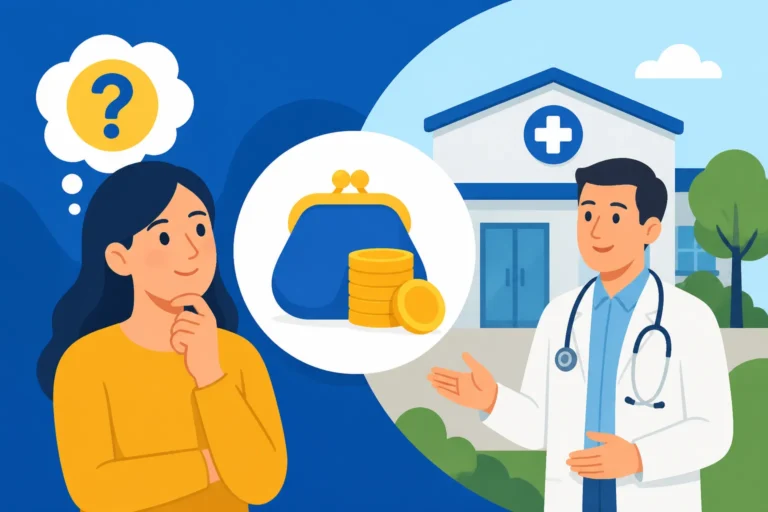
Moving to a new country involves a steep learning curve, but few things are as stressful as trying to figure out if a sudden illness will bankrupt you. I remember sitting in a dimly lit waiting room in Gothenburg during my first winter, clutching my throat and worrying that my visit would cost hundreds of euros. This guide breaks down the Swedish high-cost protection system so you can stop worrying about the bills and focus on getting better.
Understanding the Swedish Healthcare Cost Ceiling
The Swedish healthcare system is often touted as "free," but for most expats, the reality is a bit more nuanced. While it is heavily subsidized by taxes, you still have to pay a "patient fee" (patientavgift) for most visits. However, Sweden has a brilliant safety net known as Högkostnadsskydd, or high-cost protection. This is a state-mandated limit on how much any individual has to pay for medical care and prescriptions within a 12-month period.
The high-cost protection is divided into two distinct parts: one for medical consultations (outpatient care) and another for prescription medications. It is a fundamental part of Healthcare in Sweden for Foreign Residents: The Complete System Guide (2027) because it ensures that those with chronic illnesses or those who face a sudden medical crisis are not overwhelmed by costs.
For many of us coming from countries with private-led systems, the idea of a fixed cap is a massive relief. In my second year here, I had a series of specialist appointments that would have cost a fortune elsewhere. In Sweden, once I hit the ceiling, every subsequent visit for the rest of my "membership year" was absolutely free. It is a system designed to protect your wallet when your health is at its most vulnerable.
How the 12-Month Period Works
One of the most common points of confusion for newcomers is how this "year" is calculated. It is not based on the calendar year (January to December). Instead, it is a rolling 12-month period that begins the moment you make your first payment for a qualifying medical service.
If you visit a doctor on March 15, 2026, your 12-month "protection year" begins that day. Any fees you pay between that date and March 14, 2027, count toward your ceiling. If you reach the maximum amount within that timeframe, you are entitled to free care for the remainder of that specific 12-month period. Once that year is up, the counter resets, and you start paying again until you hit the next ceiling.
This rolling system can be a bit tricky to track if you aren't using digital tools. Fortunately, most regions in Sweden now track this automatically through your personnummer. However, if you are still waiting for your personal identity number, you may need to keep paper receipts to prove you have reached the limit. For those in the transitional phase of moving, services like SafetyWing can provide a necessary bridge for medical coverage before you are fully integrated into the Swedish population register.
The Current Maximum Costs for Medical Visits
As of 2026, the national ceiling for medical consultations is 1,400 SEK. This means that once you have spent a total of 1,400 SEK on doctor visits, specialist consultations, and certain tests, you receive what is called a Frikort (free card). This card entitles you to zero-cost visits for the rest of your 12-month period.
It is important to note that The Högkostnadsskydd Explained: Sweden's Healthcare Cost Ceiling and Frikort applies primarily to public healthcare providers and private providers that have a contract with the regional government. If you choose to visit a purely private clinic that does not have a "vårdavtal" (care agreement), the fees you pay there will not count toward your high-cost protection, and those clinics can charge significantly higher rates.
What Specifically Counts Toward the 1,400 SEK Cap
Not every single health-related expense is included in this particular ceiling. Generally, the following visits will count toward your 1,400 SEK total:
- Visits to a General Practitioner (GP) at your local Vårdcentral.
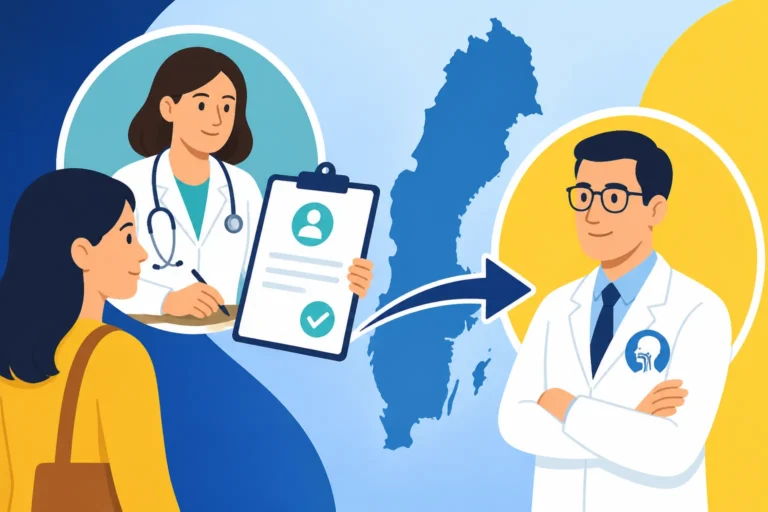
- Consultations with specialists (if you have a referral or are seeking necessary care).
- Physiotherapy and occupational therapy sessions.
- X-rays and certain laboratory tests.
- District nurse visits.
Some items are notably excluded. For example, if you miss an appointment without canceling at least 24 hours in advance, you will be charged a "missed appointment fee." This fee is often double the standard patient fee and does not count toward your high-cost protection. It is a painful lesson many expats learn the hard way.
Regional Variations in Patient Fees
While the 1,400 SEK ceiling is a national limit, the individual fees you pay per visit can vary slightly depending on which of the 21 regions in Sweden you live in. In Stockholm, a visit to a GP might cost 250 SEK, while in another region, it might be 200 SEK. These small differences don't change the ultimate cap, but they do change how many visits it takes to reach that cap.
Understanding Patient Fees (Patientavgift) Across Sweden's 21 Regions is vital because some regions have eliminated fees for certain age groups or specific types of preventative care. Generally, you can expect to hit your limit within 5 to 7 routine visits. If you are someone who prefers to bypass the potential wait times of the public system, you might look into Private Health Insurance in Sweden: When Sjukvårdsförsäkring Is Worth It. High-end providers like Cigna Global offer plans that can cover private care, which is particularly useful for specialists where the public wait list might be long.
The Prescription Medication Ceiling
Separate from the medical visit cap is the high-cost protection for prescription drugs. This is handled on a sliding scale. You don't just pay full price and then suddenly pay zero; rather, the more you spend, the higher the discount the state provides.
The maximum amount you will pay out of pocket for prescription medications in a 12-month period is 2,850 SEK. Just like the medical ceiling, this runs on a rolling 12-month basis starting from your first prescription purchase.
The Sliding Scale Breakdown
The subsidy system for medications is quite sophisticated. As your total expenditure increases, your discount increases:
- 0 – 1,400 SEK: You pay 100% of the cost.
- 1,401 – 2,577 SEK: You pay 50% of the cost.
- 2,578 – 4,683 SEK: You pay 25% of the cost.
- 4,684 – 6,561 SEK: You pay 10% of the cost.
- Above 6,561 SEK: The state pays 100%, and you pay nothing.
Note that the "thresholds" above refer to the total value of the medicine. Your actual out-of-pocket spending stops precisely at 2,850 SEK. This system is a lifesaver for people managing chronic conditions like diabetes or asthma. Prescription Medicines in Sweden: Recept, Refills, and the Cost Cap provides a deeper look at how the Apotek (pharmacy) system handles these transactions automatically via your personnummer.
| Type of Healthcare | Annual Out-of-Pocket Cap (Approx. 2026) | What is Included |
|---|---|---|
| Medical Consultations | 1,400 SEK | GP visits, specialists, physical therapy, X-rays |
| Prescription Drugs | 2,850 SEK | Most prescribed medicines, insulin, inhalers |
| Inpatient (Hospital) | ~130 SEK per day | Bed, meals, and nursing care while admitted |
| Dental Care (Adults) | No fixed cap | Basic exams, fillings, extractions (subsidized) |
Managing Your Frikort and Digital Health Records
In the old days, you had to carry a physical "high-cost card" and get it stamped at every reception desk. Thankfully, Sweden has moved into the digital age. Most of your payments are now registered electronically. When you reach the limit, the system at the reception desk will simply flag that your visit is free.
Using the 1177 Portal
The 1177 system is the backbone of Swedish healthcare communication. By logging in with your BankID, you can see how much you have paid toward your high-cost protection and when your current 12-month period expires. This level of transparency is incredibly helpful for budgeting.
1177 Vårdguiden: Navigating Sweden's National Health Advice Line and Portal is the best place to track your status. If you find that a payment wasn't registered—perhaps because you visited a doctor in a different region—you can usually contact the regional billing office to have it added. How the Frikort Works Once You Reach the High-Cost Ceiling explains that once the digital frikort is issued, it is valid across all public clinics in Sweden, regardless of where you initially paid the fees.
Challenges for Newcomers without a Personnummer
If you are a new arrival and haven't received your personnummer yet, navigating these caps is significantly harder. You will likely be asked to pay the full, non-subsidized cost of care, which can be several thousand kronor per visit. While you can sometimes claim this back retrospectively once your number is issued, it creates a massive temporary financial burden.
This is why many veterans recommend having comprehensive travel or expat insurance for those first few months. SafetyWing is a popular choice for digital nomads and those in limbo because it handles the "what if" scenarios while you wait for the Swedish Tax Agency (Skatteverket) to process your paperwork. Once you have your personnummer, you can transition fully into the Swedish system, but having that safety net early on is non-negotiable.
What Is Not Covered by the High-Cost Ceiling
It is a common mistake to assume that everything medical is covered by the 1,400 SEK or 2,850 SEK caps. There are several categories of care that sit outside these protections, and they can be expensive.
The Dental Care "Trap"
Adult dental care is arguably the biggest frustration for expats in Sweden. Unlike medical care, dental care is only heavily subsidized, not capped at a low annual amount. While the state provides an annual dental care allowance (tandvårdsbidrag) of 300 or 600 SEK, the actual costs for crowns, root canals, or even basic cleanings can be high.
There is a high-cost protection for dental care, but it only kicks in after you have spent 3,000 SEK, and even then, it only covers a percentage of the "reference price" set by the state. If your dentist charges more than the reference price, you pay the difference out of pocket. For more on this, see Dental Care in Sweden: Folktandvården, Costs, and the Tandvårdsbidrag.
Other Exclusions
- Health Certificates: If you need a medical certificate for a driving license, a job, or insurance, you will pay the full fee. These never count toward your high-cost protection.
- Cosmetic Procedures: Any surgery or treatment performed for purely aesthetic reasons is paid for entirely by the patient.
- Vaccinations for Travel: While childhood vaccines are free, if you are heading to Thailand and need Hep A/B or Yellow Fever shots, you will pay at a private vaccination clinic, and these costs aren't capped.
- Daily Hospital Fees: If you are admitted to the hospital, you pay a daily fee (usually around 130 SEK) for your bed and meals. This is not part of the 1,400 SEK outpatient cap, though there is a separate, higher cap for long-term stays.
Strategic Tips for Expats
Navigating the financial side of Swedish health requires a bit of strategy. First, if you have a choice, try to cluster your non-urgent specialist appointments within the same 12-month window. If you know you need a dermatologist, a physiotherapist, and a routine check-up, doing them all within a few months of each other increases the likelihood that you'll hit your frikort early, making subsequent care free.
Second, consider your insurance needs. While the public system is robust, the "wait time" is the hidden cost. Sweden has a "Care Guarantee" (vårdgaranti), but it often means waiting 90 days for a specialist. If you cannot afford to wait three months to see a doctor for a nagging back issue, a private policy from Cigna Global can be a worthwhile investment. It allows you to access private specialists within days, often bypassing the public queues entirely while still knowing that the public safety net is there for major emergencies.
Lastly, always keep your receipts if you are traveling between regions. While the system is mostly integrated, glitches happen. Being able to prove you already paid 300 SEK in Skåne can save you a headache when you're at a clinic in Stockholm.
Disclaimer
This guide is for informational purposes only and reflects the general state of the Swedish healthcare system as of 2026. Healthcare regulations, fees, and the specific thresholds for high-cost protection are subject to change by the Swedish government and regional authorities. Always consult the official 1177.se website or your local Vårdcentral for the most current and personal financial advice regarding your medical care.