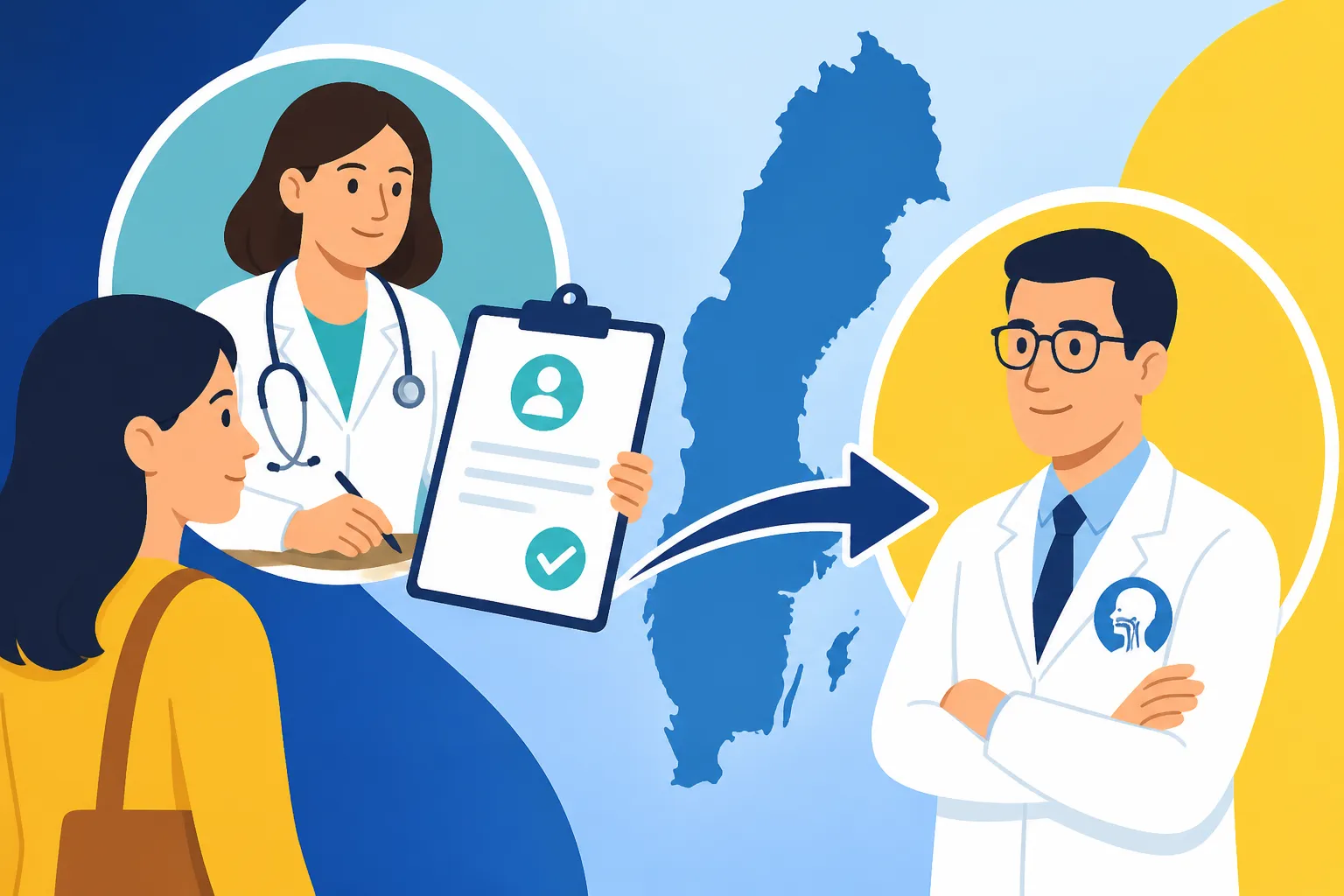
How Do I Get a Referral to a Specialist in Sweden?
Navigating the Swedish healthcare system can feel like trying to solve a Rubik’s cube in the dark, especially when you need to see a specialist for a persistent issue. I remember waiting weeks for a basic consultation just to be told I needed a different department, feeling completely lost in the bureaucracy. This guide explains exactly how to secure that crucial referral and navigate the Swedish specialist system efficiently.
The Gatekeeper System Understanding the Remiss
In many countries, if you have a skin rash or a persistent joint pain, you might simply pick up the phone and call a dermatologist or an orthopedist. In Sweden, the system is designed differently. It operates on a "gatekeeper" model where the primary care physician (GP) at your local clinic acts as the central hub for your medical journey. This is intended to ensure that specialist resources are reserved for those who truly need them, but for an expat used to direct access, it can be a source of significant frustration.
The golden ticket you are looking for is called a remiss (referral). A remiss is a formal document sent by a general practitioner to a specialist clinic. It contains your medical history, the specific symptoms you are experiencing, any tests already performed (like blood work or X-rays), and the GP's clinical justification for why specialist intervention is required. Without this document, the specialist clinic will likely reject your request for an appointment, or you will be forced to pay a significantly higher "non-referred" fee if the region even allows for self-referrals.
Before you can even think about a specialist, you must be properly set up within the primary care system. If you haven't done so yet, you should look into Registering with a Vårdcentral: Your Guide to Primary Care in Sweden. Having a consistent "home" clinic makes the referral process much smoother because your medical records are centralized in one place. When you visit your GP, they aren't just checking your symptoms; they are building the case for your remiss.
Step by Step How to Secure Your Referral
The process of getting a referral starts with a visit to your vårdcentral. You cannot simply call the clinic and ask for a referral over the phone; a physical or digital examination is almost always required. Start by Booking Doctor Appointments Online Through 1177.se with BankID to save time and avoid the morning telephone queues which can be notoriously long.
During the consultation, you need to be very specific about your symptoms. Swedish doctors tend to favor a "wait and see" approach (often starting with a recommendation for Alvedon and rest). To move toward a specialist referral, you should clearly document the duration of your symptoms, how they affect your daily life, and what self-treatments you have already tried. If the GP agrees that specialist care is necessary, they will "write a remiss."
Once the remiss is sent, it goes to a centralized screening unit or directly to a specific specialist clinic. They will grade the urgency of your case. You will then receive a remissbekräftelse (referral confirmation) via physical mail or through the 1177 digital inbox. This letter will either give you a date for an appointment or inform you that you have been placed on a waiting list. If you are still in the early stages of your move and haven't secured a personal number yet, you might wonder Can I See a Doctor in Sweden Before I Get My Personnummer? – the answer is yes, but the administrative path to a specialist becomes significantly more complex and often involves paper-based referrals and manual billing.
The Egenremiss An Alternative Path to Care
Many foreigners are unaware that Sweden offers a secondary path called the egenremiss or egenvårdsbegäran (self-referral). This allows you to write your own "referral" directly to a specialist clinic without seeing a GP first. Most regions in Sweden, including Region Stockholm and Västra Götaland, allow this for many specialties like orthopedics, gynecology, or dermatology.
However, there is a catch. When a doctor writes a remiss, it carries professional weight. When you write an egenremiss, the specialist clinic will evaluate it with a higher level of scrutiny. They will provide you with a standardized form—often available on their website or via 1177—where you must describe your condition in detail. If they feel your condition can be handled by a primary care doctor, they will deny your request and tell you to visit your vårdcentral.
The advantage of the egenremiss is speed; you skip the GP appointment. The disadvantage is that you might wait several weeks for the specialist to review your form only to be rejected. For those who are traveling or have not yet integrated into the Swedish social security system, specialized expat insurance like SafetyWing can be a lifesaver here, as it often provides access to private consultations where the referral requirements are much more flexible than the public system.
Waiting Times and the Vårdgaranti
Once your referral is accepted, you enter the "waiting phase." Sweden has a legal framework called The Vårdgaranti: Your Right to Timely Care in Sweden, which is often referred to as the 0-7-90-90 rule. For specialist care, the relevant number is 90. This means you should not have to wait more than 90 days to see a specialist once the referral has been issued.
In reality, many regions struggle to meet these targets. If your wait time exceeds 90 days, the region is legally obligated to offer you care at another facility, even if it is in a different city or a private clinic that has a contract with the region. You will need to contact the "Care Guarantee Office" (Vårdkansli) in your specific region to trigger this. It is a proactive process; the system rarely moves you to a faster queue automatically.
If you are feeling stuck, you should explore Can I Get Care in Another Region If My Wait Is Too Long in Sweden? to understand your mobility rights. Sometimes, a clinic in a neighboring municipality might have a much shorter queue for the same procedure.
Costs and Patient Fees for Specialist Care
Specialist care in Sweden is highly subsidized, but it is not free. You will be charged a patientavgift (patient fee) for every visit. These fees vary slightly by region but generally follow a similar structure.
| Type of Visit | Typical Cost (SEK) | Notes |
|---|---|---|
| Primary Care (GP) | 200 – 300 | Your first point of contact. |
| Specialist Visit (with referral) | 350 – 400 | Lower fee if you have a remiss. |
| Specialist Visit (without referral) | 500+ | Only applicable in certain regions/clinics. |
| Emergency Room (Akuten) | 400 | For urgent, life-threatening issues. |
The good news is that these costs are capped. Once you spend a certain amount on healthcare visits within a 12-month period, you reach the high-cost ceiling and receive a frikort. For 1,400 SEK (the 2024/2025 threshold), you get free care for the remainder of that year. You can find a detailed breakdown in The Högkostnadsskydd Explained: Sweden's Healthcare Cost Ceiling and Frikort. This cap includes specialist visits, making long-term chronic care very affordable once the initial hurdles are cleared.
Bypassing the Public Queue Private Insurance and Clinics
If the 90-day wait under the public system is unacceptable for your condition, or if you prefer a more "on-demand" style of healthcare, the private sector is an option. Private healthcare in Sweden exists in two forms: private clinics that have contracts with the state (where the same public fees apply) and "pure" private clinics that operate outside the state system.
For the latter, you do not need a referral. You can simply book an appointment and pay the full market rate, which can range from 1,500 to 3,000 SEK per visit. Many expats choose to maintain international health insurance to cover these costs. Providers like Cigna Global are particularly popular among the international community in Stockholm and Gothenburg because they allow you to bypass the vårdcentral entirely and go straight to a specialist.
Using Cigna Global or similar comprehensive coverage is often the most realistic way to get a specialist appointment within days rather than months. It is important to note that even with private insurance, you still have full access to the Swedish public system for emergencies or major surgeries. Many veteran expats find that a "hybrid" approach works best: using the public system for routine care and medication, while relying on private insurance for fast specialist access. If you are considering this, read about Private Health Insurance in Sweden: When Sjukvårdsförsäkring Is Worth It to see if the cost-benefit analysis makes sense for your family.
Managing Your Specialist Journey
Once you finally secure that appointment, the specialist will take over your specific treatment plan. They might order further tests, such as an MRI or specialized blood work. In Sweden, the results of these tests are usually not mailed to you; they are sent back to the referring physician or the specialist who ordered them.
You can usually see your results by logging into 1177.se, but be prepared for them to be written in medical Swedish. If you find the communication style a bit too direct or "minimalist," don't be afraid to ask questions. You have the right to Understanding the Referral (Remiss) System Works for Seeing a Specialist in Sweden in a way that allows you to make informed decisions about your health.
If your condition requires ongoing medication, the specialist will issue a recept (prescription). These are all digital and linked to your personnummer. You can pick up your medicine at any pharmacy in the country. To understand how the costs of these medications are also capped by the state, check out Prescription Medicines in Sweden: Recept, Refills, and the Cost Cap.
For those who find the language barrier daunting, you are entitled to a medical interpreter free of charge for your specialist visits. You must request this when the appointment is being booked. Most specialists speak excellent English, but having an interpreter ensures that no nuanced medical details are lost in translation. This is especially vital for complex issues or when discussing Mental Health Support in Sweden: Psychologists, Therapy, and Referrals, where precision in language is paramount to the quality of care.
Important Disclaimer
This guide is intended for informational purposes only and is based on personal experiences and general knowledge of the Swedish healthcare system. Healthcare regulations, fees, and waiting times can vary significantly between Sweden's 21 regions. Always consult with a qualified medical professional or contact 1177 Vårdguiden for official medical advice. If you are experiencing a life-threatening emergency, call 112 immediately. Medical insurance terms and coverage from providers like Cigna Global or SafetyWing are subject to their specific policy wording; always review your individual policy details before seeking private treatment.