Where Do I Apply for a Swedish ID Card?
Ah, the Swedish ID card. If you've spent any time in Sweden without one, you already know the distinct feeling of being a ghost in the machine. You have your passport, your residence permit, maybe even a foreign driver's license, but try to pick up a package, open a bank account, or truly integrate into Sweden's digital society, and you're often met with a polite but firm "Do you have a Swedish ID?" It's a frustrating hurdle many of us expats face, and this guide is here to demystify exactly where and how you apply for this essential piece of plastic, saving you headaches down the line.
The Swedish ID Card: Your Key to Everything (and Why It's a Hassle)
Let's be real, Sweden is probably one of the most digital and cashless societies in the world, and at the heart of that digital ecosystem is your Swedish ID card. Without it, you're constantly running into walls, even with your Getting Your Personnummer: The Gateway to Swedish Healthcare. I remember arriving, passport in hand, thinking I was ready for anything, only to discover that my fancy international ID was practically useless for anything beyond flashing at the airport. It's a unique Swedish phenomenon, this reliance on one specific form of identification, and it can be a source of immense frustration for newcomers.
Why Your Foreign ID Just Isn't Enough in Sweden
You'd think a valid passport, especially one from an EU country, would be sufficient for all your identification needs. And for some things, it is – proving your identity to Migrationsverket, for example. But for the everyday rhythm of life in Sweden? Not so much. Imagine trying to collect a registered letter at the post office (or rather, at the local grocery store that acts as a post office pickup point, which is usually the case). They'll ask for a Swedish ID. Want to sign up for a gym membership? Swedish ID. Pick up your prescription at the Pharmacies and Prescriptions in Sweden: The Apotek System for Newcomers? Often, a Swedish ID is preferred, even if they grudgingly accept a passport.
The reason for this deep reliance is largely rooted in security and the ubiquitous nature of BankID. The Swedish ID card is issued by a central authority (Skatteverket) and is linked directly to your personnummer, which is the cornerstone of your administrative existence here. This allows for seamless digital identification and signature across almost all platforms. Without that link, you're essentially locked out of the system.
The Personnummer Prerequisite: The Chicken and Egg Dilemma
Before you even think about applying for a Swedish ID card, you absolutely, unequivocally need a personnummer. This eleven-digit personal identity number is the real VIP pass to Swedish society. It's not just for Healthcare in Sweden for Foreign Residents: The Complete System Guide (2027); it's for everything. It's for taxes, it's for banking, it's for registering your children in school, it's even for getting points at the supermarket.
The frustrating part, and many expats report this, is that it can sometimes feel like a chicken and egg situation. You need a personnummer to get established, but to get a personnummer, you need to prove you're going to live here long-term and often have an address and some form of income or sufficient funds. It's a process, and it requires patience. Skatteverket determines if you meet the requirements for Getting Your Personnummer: The Gateway to Swedish Healthcare. They'll want to see your residence permit (if applicable), your passport, and often your rental contract to confirm your address. Only once that magical number is issued and you are registered in the population register (Folkbokföring) can you proceed to the next step of obtaining your ID card. It usually takes a few weeks to get your personnummer after moving to Sweden, so don't expect instant gratification.
Applying for the Swedish ID Card at Skatteverket: The Official Process
So, you've got your personnummer! Congratulations, you've cleared the biggest administrative hurdle. Now, the next step in getting that coveted plastic card is to apply directly through Skatteverket, the Swedish Tax Agency. There's no other official body that issues these national ID cards, so don't bother looking elsewhere. This isn't like applying for a driver's license through Transportstyrelsen or a residence permit through Migrationsverket; Skatteverket handles it all.
Booking Your Appointment: The Digital Frontier (with a Catch)
The first thing you need to do is book an appointment at a Skatteverket service office. You can't just walk in, unfortunately. They operate on an appointment-only basis for ID card applications, which is a common practice for major governmental services in Sweden.
- Head to Skatteverket's Website: Go to skatteverket.se. Navigate to the section about "Identitetskort" or "ID-kort."
- Find the Booking System: Look for the online booking portal. This is where you'll select a time slot at one of their service offices.
- Choose a Convenient Office: Skatteverket has offices in many cities across Sweden, but some are busier than others. If you live in a major city like Stockholm, Gothenburg, or Malmö, you might find appointment slots filling up quickly. Don't be surprised if the nearest available slot is a few weeks or even a month away. This is quite common and requires you to plan ahead.
- Important Note on Location: You should aim to book an appointment at an office located in the region where you are registered (your folkbokföringsadress). While some rules have relaxed over the years, it's always safest to stick to your region to avoid any unnecessary complications or delays.
When I first did this, I remember feeling a sense of mild panic as I saw the calendar dates stretching out weeks into the future. It’s a classic Swedish experience: efficient once you’re in the system, but getting into the system requires patience and foresight. It's not quite as straightforward as Booking Doctor Appointments Online Through 1177.se with BankID, which often has next-day availability for a simple GP visit.
What to Expect at Your Skatteverket Appointment
Your appointment itself will typically involve a few key steps. It's a formal process, but the staff are generally helpful, even if they speak Swedish predominantly (though many will switch to English if needed).
- Check-in: When you arrive, you'll usually check in at a self-service machine or a reception desk. You'll get a ticket number and wait for your turn.
- The Interview and Document Check: You'll be called to a counter where a Skatteverket officer will review all your original documents. This includes your passport, your residence permit card (if you're a non-EU/EEA citizen), and crucially, proof of your personnummer and registration in the population register. Make sure everything is original and valid. They are very particular about this.
- Photograph and Signature: They will take your photograph directly at the service office. You cannot bring your own photo. They will also capture your digital signature. This means you need to look your best for your photo – no last-minute hair adjustments in the mirror!
- The Fee: There is a fee for the Swedish ID card. As of my last check, it's SEK 400. You typically pay this directly at the office, and almost always by card. Sweden is incredibly cashless, so don't expect to pay with physical money. They will issue you a receipt.
- The Witness Requirement (or lack thereof): This is one of the trickiest parts for many newcomers, so we'll dive into it in more detail in the next section. Essentially, you either need someone to vouch for your identity, or you need to provide alternative robust documentation.
The entire process, from check-in to payment, usually takes around 15-30 minutes, assuming you have all your documents in order and don't encounter any issues with the witness requirement.
Navigating the Document Requirements: Passports, Permits, and Witnesses
This is often where expats stumble, especially with the witness requirement. Skatteverket needs to be absolutely certain of your identity before issuing such a crucial document.
Identifying Yourself: The Passport and Residence Permit
This might seem obvious, but it's vital to bring your original, valid passport. If you're a non-EU/EEA citizen, you must also bring your original, valid residence permit card (UT-kort) issued by Migrationsverket. Skatteverket will cross-reference these documents with your data in the population register.
If your name or any details on your passport don't exactly match what Skatteverket has on file (due to translation or different formatting), it can cause delays. Always make sure your information is consistent across all official documents when you're dealing with Swedish authorities.
Proving Your Address and Registration: Folkbokföring
As mentioned, you absolutely need to be registered in the Swedish Population Register (Folkbokföring). When you apply for your personnummer, Skatteverket registers your address. Your ID card will then show this registered address. So, before your ID card appointment, make sure your Registering Your Move (Flyttanmälan) with Skatteverket is up to date and confirmed. They won't ask for a utility bill as proof of address, as they rely on their own population register data.
The "Witness" Requirement: A Unique Swedish Twist
Here's the part that can cause some head-scratching. To verify your identity, Skatteverket often requires a witness (intygsgivare) to accompany you to your appointment. This witness must be:
- At least 18 years old.
- A Swedish citizen, or an EU/EEA citizen who has been registered in the Swedish Population Register for at least one year.
- Someone who can confirm your identity (e.g., they know you personally and can confirm you are who you say you are, perhaps by seeing you use other identity documents).
- They must bring their own valid Swedish ID card or another approved form of ID.
This is the crucial table for documents and witness requirements:
| Scenario | Required Documents (All Original & Valid) | Witness Needed? |
|---|---|---|
| New arrival, has personnummer & residence permit, no other Swedish ID | Passport, Residence Permit Card (UT-kort), Personnummer letter/confirmation | YES. Unless you have an approved foreign ID card (see next row). |
| Has personnummer, specific approved foreign national ID card | Passport, Approved Foreign National ID Card (e.g., specific EU national ID), Personnummer confirmation | NO. If the foreign ID card meets Skatteverket's stringent security requirements (photo, signature, holographic features, etc.). |
| EU/EEA citizen, right of residence registered, has personnummer | Passport, Proof of How EU/EEA Citizens Register Their Right of Residence in Sweden, Personnummer confirmation | YES. Unless they have an approved foreign national ID card from an EU/EEA country. |
| Renewing an existing Swedish ID card | Expiring/Expired Swedish ID Card, Passport | NO. Identity already established. |
What if you don't know anyone in Sweden who meets the witness criteria? This is a very common situation for new expats. Skatteverket does offer alternatives:
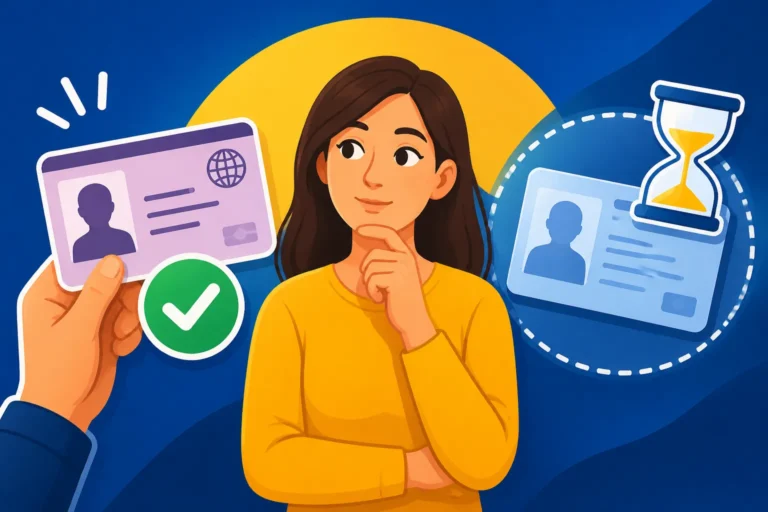
- Certain Approved Foreign ID Cards: If you have a national ID card from certain countries (primarily within the EU/EEA) that meet specific security standards, Skatteverket might accept it in place of a witness. This is assessed on a case-by-case basis, and the card must have certain security features, a high level of reliability, and be verifiable. Always check Skatteverket's current list of approved foreign ID documents. Don't assume your national ID will automatically work; many do not.
- Bank Verification (historical but less common now for ID cards): In the past, some banks would issue a document confirming your identity if you'd opened an account and they had done thorough checks. This is generally no longer accepted for the first ID card application at Skatteverket, as the bank itself relies on a Swedish ID for its most robust identity checks. However, your bank might still be helpful for other things while you're waiting.
This witness requirement is a genuine pain point. I've had friends desperately ask colleagues or even acquaintances they barely knew to accompany them. It's awkward and highlights the initial isolation some expats feel. My advice? Start networking early, or be prepared to thoroughly check if your foreign ID card meets their specific criteria.
While you're waiting for all these administrative things to fall into place, remember to stay connected. Many newcomers rely on international SIMs or eSIMs. Services like Airalo can provide you with data for your phone the moment you land, which is super helpful for navigating directions, looking up bus times, and staying in touch before you've sorted out a proper Swedish mobile contract (which, you guessed it, often requires a personnummer and Swedish ID!).
After the Application: The Wait, Collection, and What Comes Next
You've made it through the appointment, handed over your documents, taken your photo, and paid the fee. Now comes the classic Swedish administrative waiting game.
Processing Times and Collection
Typically, it takes about two to three weeks for your Swedish ID card to be produced and delivered. You won't receive it by post directly to your home address for security reasons. Instead, Skatteverket will send you a notification (often by SMS or a physical letter) when your card is ready for collection. This notification will tell you where to pick it up – usually a designated postal service partner or a specific Skatteverket office.
When you go to collect it, you'll need to bring another valid form of identification, ideally your passport, to prove you are the rightful recipient. This final step is usually quick and straightforward.
The Power of Your New Swedish ID Card
Once that sleek plastic card is in your hand, you'll feel an immediate sense of relief and integration. It truly is the golden ticket.
- BankID and Digital Life: The primary benefit is gaining access to BankID, Sweden's electronic identification system. With BankID, you can BankID and Digital Payments: How Money Moves in Cashless Sweden, Using Swish: How Sweden Pays Instantly, log into literally every government service (from 1177 Vårdguiden: Navigating Sweden's National Health Advice Line and Portal to Pensionsmyndigheten), sign documents digitally, and manage your affairs with unprecedented ease. This is the biggest game-changer.
- Opening Bank Accounts: While some banks might let you Opening a Bank Account in Sweden: A Step-by-Step Guide with just a personnummer and passport, having the Swedish ID card makes the process smoother and allows for full access to all digital banking features.
- Everyday Convenience: Picking up packages, renting a car, verifying your age, signing up for loyalty programs, getting a library card – all become effortless. No more awkward explanations or frantic searching for your passport.
- Public Transport: While your travel card (Public Transport in Sweden: SL, Regional Cards, and Apps) is proof of fare payment, your ID card can sometimes be required for verification purposes, especially with personalized tickets or certain regional passes.
Getting your Swedish ID card is one of those big milestone moments for any expat here. It transforms you from someone navigating the fringes of Swedish bureaucracy to a fully integrated member of society, able to access the seamless digital services Sweden is famous for. It might seem like a lot of hoops to jump through, but trust me, the freedom and convenience on the other side are absolutely worth it. And who knows, while waiting for all these documents, you might find your first temporary accommodation through platforms like Spotahome, bridging the gap until your permanent housing is secured and you can finally get that official ID that unlocks everything else.
Disclaimer
The information provided in this guide is intended for general informational purposes only and does not constitute legal or professional advice. While we strive to keep the information accurate and up-to-date, rules and regulations in Sweden, particularly concerning immigration and identification processes, can change. Always refer to the official websites of Skatteverket, Migrationsverket, and other relevant Swedish authorities for the most current and specific guidance applicable to your situation.