How Do I Know If a Second-Hand Rental Is Approved by the Landlord?
Navigating the Swedish housing market can feel like trying to solve a Rubik's Cube while blindfolded, especially when you’re new here. The second-hand rental market, or andrahand as it’s called, is a lifesaver for many, but it’s also riddled with potential pitfalls if you don’t know what to look for. One of the biggest worries? Ending up in an unapproved sublet. This guide will walk you through exactly how to determine if your potential second-hand rental has the green light from the primary landlord, saving you a whole lot of stress and potential legal headaches down the line.
Navigating the Second-Hand Rental Maze in Sweden
Let's be real, finding a place to live in Sweden, particularly in the major cities like Stockholm, Gothenburg, or Malmö, is notoriously difficult. The system often favors long-term residents with years of queue days for a First-Hand vs Second-Hand Rental Contracts in Sweden: Key Differences. This scarcity naturally pushes many newcomers and even long-time residents into the second-hand market. And while it offers much-needed flexibility, it’s also where the complexities really start to bite. You’re not just dealing with a direct landlord; you’re dealing with a tenant who is their tenant, and often, an underlying housing association or property owner. It’s like a nesting doll of tenancy agreements, and if one of those dolls isn’t playing by the rules, you’re the one who can get squeezed.
The temptation to just grab any apartment that comes along, especially after weeks or months of searching, is immense. Countless expats have almost fallen into traps when they were desperate. The stress of having no stable address, especially when trying to manage other essential tasks like Registering Your Move (Flyttanmälan) with Skatteverket, can make you overlook crucial details. This is why understanding landlord approval isn't just a formality; it's your shield against potential homelessness and financial loss. Without proper approval, your sublet agreement could be declared invalid, leading to a swift eviction. Imagine finding out your comfortable new home is actually an illegal arrangement a few months down the line – it’s a terrifying prospect that, unfortunately, happens.
Why Landlord Approval Is Paramount
In Sweden, a tenant cannot simply sublet their apartment to you without permission. This is not like some countries where a tenant has free rein. For hyresrätt (rental apartments, where the primary tenant rents from a property owner) and bostadsrätt (co-op apartments, where the primary tenant owns shares in a housing association), strict rules apply. The primary tenant must obtain permission from their landlord (for hyresrätt) or the housing association board (for bostadsrätt) to sublet their dwelling. This approval is usually granted for specific reasons, like temporary work abroad, studies in another city, or other valid, temporary circumstances, and usually for a limited period, often a year or two.
Without this approval, the original tenant is in breach of their contract. This breach can lead to the termination of their primary rental contract. And if their contract is terminated, your sublet contract becomes worthless. You could be forced to move out with very little notice, lose your deposit, and have no legal recourse against the primary landlord or housing association. It’s a messy, stressful, and expensive situation that is entirely avoidable if you do your due diligence upfront. This isn't just about good practice; it's about protecting your rights and ensuring Security of Tenure (Besittningsskydd): What Tenants Should Know in Sweden.
The Nuances of Hyresrätt vs. Bostadsrätt Subletting
The type of apartment you're looking at will subtly change who needs to grant approval. If it’s a hyresrätt, meaning the primary tenant rents directly from a large property owner (like Heimstaden, Wallenstam, or private landlords), then that property owner is the one who needs to give explicit permission. They often have very clear guidelines and forms for this.
If it’s a bostadsrätt, which is a co-operative apartment where the tenant "owns" the right to live there through shares in a housing association (bostadsrättsförening or BRF), then it’s the BRF’s board that grants the approval. BRFs often have slightly more leeway in their internal rules, but the principle remains the same: permission is mandatory. They’ll want to know the reason for the sublet, the duration, and sometimes even a little about you as the subtenant. Understanding these distinctions is key because it tells you exactly who you need to verify the approval with.
Understanding Landlord Approval for Andrahand Contracts
So, you’ve found a potential apartment, and the primary tenant seems nice enough. But how do you go beyond trust and get to actual verification? The approval process for a legitimate second-hand rental in Sweden isn't just a handshake agreement; it involves formal documentation. The primary tenant must have written consent from their landlord or housing association. This isn't optional, it's a legal requirement.
When a primary tenant applies for permission to sublet, they typically provide a reason (e.g., temporary work abroad, family circumstances, studies in another city) and the proposed duration. The landlord or BRF then evaluates this request. If approved, they issue a formal letter or document stating their consent. This document is what you need to see. It’s not enough for the person subletting to say they have permission; they need to show you the proof. This might sound overly cautious, but it’s the only way to genuinely protect yourself in this market.
What Does Official Approval Look Like?
An official approval document will typically include:
- The name of the primary landlord or housing association: This should match the official entity that owns or manages the building.
- The address of the apartment: Clearly identifying the specific unit being sublet.
- The name of the primary tenant: The person you're dealing with.
- The name of the subtenant (you): This is ideal, but sometimes the approval is generic for any subtenant.
- The approved period of the sublet: This is crucial. It will state the start and end dates for which the sublet is valid. Don’t assume it's open-ended.
- Date of approval and signature: A formal sign-off from the approving authority.
Sometimes, especially with larger property companies, the approval might be a standard form letter. For a bostadsrätt, it will often be an excerpt from the BRF's board meeting minutes, explicitly stating that the request for andrahandsupplåtelse (subletting permission) was granted for the specific apartment and period. Don’t be shy about asking for this, and don’t accept vague answers. If they hesitate or claim it’s "confidential," that’s a massive red flag.
The Role of Hyresnämnden in Subletting Disputes
What if the primary landlord or BRF denies the primary tenant’s request to sublet, but the tenant believes they have a valid reason? In such cases, the tenant can apply to The Hyresnämnden: Resolving Rental Disputes in Sweden (Rent Tribunal) to get permission. The Hyresnämnden is a special court-like body that mediates and resolves rental disputes. If the Hyresnämnden grants permission, then that decision acts as the official approval, overriding the landlord’s or BRF’s denial.
This is rare for most subtenants to encounter, but it’s good to know the mechanism exists. If a primary tenant presents a decision from the Hyresnämnden, that is indeed valid approval. Always ask for the actual document or case number so you can verify it yourself, if possible. The important takeaway is that written, verifiable permission is non-negotiable, whether it comes from the direct landlord/BRF or the Hyresnämnden.
Spotting the Red Flags of an Unapproved Sublet
As an expat, you might not always be familiar with the subtle cues or standard practices in Swedish housing. This makes you a prime target for less scrupulous individuals looking to exploit the housing shortage. So, it's vital to develop a keen eye for red flags that could indicate an unapproved or otherwise problematic sublet. Situations like this are common among expats. From sketchy platforms that seem to disappear overnight to individuals demanding cash upfront, the tactics can vary. Even on reputable platforms like Blocket or Facebook groups, you need to be vigilant.
Common Warning Signs to Watch For
- Evasiveness regarding landlord contact: If the primary tenant avoids giving you contact details for the main landlord or BRF, claiming it’s "unnecessary" or "private," be very wary. A legitimate subletter has nothing to hide.
- Unusually low rent for the area: While a good deal is always welcome, abnormally low rent, especially in a desirable area, can be a sign that the tenant is illegally profiting or trying to fill a vacancy quickly without proper channels. Remember the How Is Rent Decided for a First-Hand Apartment in Sweden? system – there are rules.
- Insistence on cash payments or unusual payment methods: While Swish is common for everyday transactions, large sums like deposits or first month's rent should preferably go via bank transfer for a clear paper trail. Any demand for cash, cryptocurrency, or obscure international payment systems should set off alarm bells.
- No formal contract or a very basic one: A legally sound sublet requires a comprehensive written contract. If the tenant only offers a verbal agreement or a flimsy, generic document, walk away. Always ensure you have a solid contract, detailed as suggested in What to Check Before Signing a Rental Contract in Sweden.
- Very short notice periods or extreme urgency: "Move in tomorrow or it's gone!" is a classic scammer tactic. While the market is fast, legitimate landlords and tenants allow reasonable time for due diligence. Be suspicious of overly aggressive timelines.
- Demand for a disproportionately large deposit or "key money": While a reasonable deposit is normal (usually one month's rent, sometimes two, as covered in How Much Is a Normal Deposit for a Rental in Sweden?), asking for several months' rent or "key money" (a non-refundable fee for access) is illegal and a major warning sign.
- Poor communication or inconsistent stories: If the tenant's story about why they are subletting changes, or if they are difficult to reach after initial contact, it could indicate dishonesty.
- Refusal to show the apartment in person: Never rent an apartment you haven't seen in person. If you're abroad, ask a trusted friend or colleague to view it for you. This is one of the most basic rules to prevent Avoiding Rental Scams in Sweden's Tight Housing Market. Even platforms like Spotahome, which aim to streamline the process, still advise extreme caution and direct verification where possible.
- Landlord claiming to be abroad indefinitely: While legitimate, this is a common trope in scams. If they can't meet in person, they must have clear, verifiable arrangements for keys, viewings, and contact.
The Problem of Illegal Overcharging
Beyond the lack of approval, many illegal sublets also involve overcharging. Swedish law has rules about how much a primary tenant can charge for a second-hand rental. For hyresrätt, the rent should not exceed what the primary tenant pays, plus a small markup for furniture if the apartment is furnished. For bostadsrätt, it’s calculated based on the apartment’s market value, plus costs for furniture, utilities, and the avgift (monthly fee to the BRF).
If you find yourself paying a significantly higher rent than seems reasonable for the apartment and area, it might be an illegal overcharge, which often goes hand-in-hand with unapproved sublets. While a bit complex to calculate accurately without all the details, excessive rent should prompt further investigation.
Your Checklist for Verifying Landlord Consent
Now for the actionable steps. This is where you, the prospective subtenant, take control and ensure you're not stepping into a legal quagmire. You need to be polite but firm in your requests. Remember, you have every right to ensure your living situation is legitimate. To make sure you're always connected and ready to follow up on these steps, ensuring you have a reliable data connection, perhaps through an eSIM from a service like Airalo, can be invaluable while you're actively searching and verifying details on the go.
Step-by-Step Verification Process
-
Request to See the Written Approval:
- Ask the primary tenant to provide you with a copy of the formal written consent from their landlord or the BRF board.
- Insist on seeing the original document, not just a screenshot or a verbal affirmation.
- Check that the dates of the approval cover your entire intended rental period. If the approval ends before your contract, that's an issue.
-
Identify the Primary Landlord/BRF:
- Ask the primary tenant for the full name of their landlord (the property company) or the name of the bostadsrättsförening (BRF).
- For a hyresrätt, they should be able to tell you the name of the real estate company.
- For a bostadsrätt, the BRF name will often be on a sign outside the building or on documents related to the apartment.
-
Contact the Landlord/BRF Directly (With Tenant’s Knowledge):
- Politely inform the primary tenant that, for your peace of mind, you’d like to independently verify the sublet approval.
- Ask for the contact details (phone number or email) of the landlord’s administrative office or the BRF board/administrator.
- If the primary tenant refuses to provide these details or objects strongly, this is a significant red flag. They should understand your need for security.
- Once you have the contact details, reach out yourself. State that you are planning to rent the apartment at [Address] from [Primary Tenant's Name] and would like to confirm that the sublet has been approved for your intended dates.
- Be prepared to provide the apartment number and the primary tenant's name. They will likely not share their personal rental details with you, but they can confirm whether permission has been granted for the apartment at all for your requested period.
-
Check Public Records (for BRFs):
- For bostadsrätt apartments, you can often find contact details for the BRF board online through their website or by searching for the BRF's name (which usually includes the address) on local community forums or Swedish company registers.
- Sometimes, if a BRF uses an external administrator, their contact details will be more readily available.
-
Review the Rental Contract Thoroughly:
- Ensure your second-hand rental contract explicitly mentions the primary tenant's obligation to have landlord approval.
- Verify that your contract dates align perfectly with the landlord's approval document.
- Pay close attention to all clauses, especially those concerning notice periods and deposits. You can read more about what to expect in Your Notice Period and How to End a Tenancy in Sweden.
This process might take a little extra time and effort, but it is unequivocally worth it. It’s your future home and financial security on the line.
Here’s a summary table for quick reference:
| Verification Step | What to Ask/Look For | Why it Matters |
|---|---|---|
| Written Approval Document | Official letter/email from landlord/BRF, Hyresnämnden decision | Proof of consent, clearly stating duration and parties. |
| Landlord/BRF Name & Contact | Property company name or BRF name and their contact info | Allows independent verification of sublet status. |
| Verification Call/Email | Confirmation from landlord/BRF admin that sublet is approved | Direct confirmation from the source, ensures your specific sublet is fine. |
| Contract Alignment | Dates in your sublet contract match approval document dates | Ensures your tenancy is fully covered by the official permission. |
| Reason for Sublet | Valid reason (work, studies, family) from primary tenant | Sublets are usually temporary; helps confirm legitimacy. |
The Risks of Renting an Unapproved Second-Hand Apartment
Falling into the trap of an unapproved second-hand rental is more than just an inconvenience; it can have severe consequences for you as the subtenant. While the primary tenant is ultimately the one breaching their contract with the landlord, you are the one who will bear the immediate burden of the repercussions. Understanding these risks should solidify your resolve to always verify approval. It truly pays to be informed and cautious when you're Renting a Home in Sweden: How the First- and Second-Hand System Works.
Immediate Eviction and Loss of Deposit
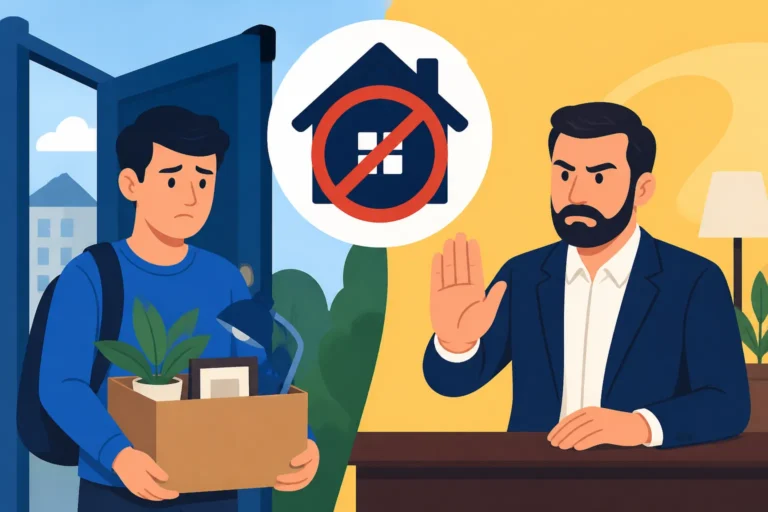
The most immediate and devastating risk is the possibility of swift eviction. If the primary landlord or BRF discovers an unapproved sublet, they have the right to terminate the primary tenant's contract. Once that contract is terminated, your sublet agreement effectively becomes void. You might find yourself with very little notice, sometimes just a few weeks, to vacate the premises.
Furthermore, getting your security deposit back can become a nightmare. The primary tenant, who illegally sublet the apartment, might be difficult to trace or simply refuse to return your money, especially if they’re facing legal troubles themselves. This is particularly frustrating as getting a deposit back often requires smooth communication, as highlighted in How Much Is a Normal Deposit for a Rental in Sweden?. Without a legitimate contract backed by landlord approval, your legal standing to reclaim your deposit can be severely weakened. You might have to pursue the primary tenant through legal channels, which is a time-consuming and costly process, especially if you’re new to the Swedish legal system.
Legal Recourse and Administrative Hurdles
While you might have a claim against the primary tenant for breach of your sublet contract, pursuing this can be incredibly complex. As a subtenant, you generally do not have a direct legal relationship with the primary landlord or BRF. Your recourse is against the person you signed the contract with, who may now be unreachable or unwilling to cooperate. This situation is fraught with administrative hurdles and can involve significant legal fees.
Moreover, if you’re new to Sweden and trying to establish yourself, an eviction can disrupt your ability to manage other crucial administrative tasks. You need a stable address for things like Getting Your Personnummer: The Gateway to Swedish Healthcare and Getting a Swedish ID Card After Your Personnummer. A sudden move can throw a wrench into all of these processes, creating a cascading effect of stress and delays.
The Impact on Your Future Housing Search
Being involved, even innocently, in an unapproved sublet could potentially impact your future housing prospects. While it might not directly blacklist you, if it comes to light during a background check for future rentals, it could raise questions. Many reputable landlords and housing associations conduct thorough checks, and a history of problematic tenancies (even if you were the victim) is not ideal. It’s always best to keep your rental history clean and above board.
Also, the emotional and psychological toll of being scammed or suddenly evicted is significant. It can make you wary and distrustful, which is a terrible way to start a new life in a new country. Taking the time to verify approval upfront is not just about avoiding legal trouble; it's about protecting your peace of mind and ensuring a smoother, more positive settling-in experience in Sweden. Remember that Home Insurance (Hemförsäkring): Why It's Essential in Sweden won't cover you if your tenancy itself is illegal.
Always prioritize clear, written communication and direct verification with the property owner or housing association. It might feel a bit like detective work, but it’s the best way to safeguard yourself in the often-challenging Swedish housing market.
Disclaimer
The information provided in this guide is intended for general informational purposes only and does not constitute legal advice. While we strive to offer accurate and up-to-date guidance based on general Swedish practices, specific situations may vary. For personalized advice regarding your rental contract or any legal housing matters, it is highly recommended to consult with a legal professional or the Hyresgästföreningen (Swedish Union of Tenants). Laws and regulations can change, and individual circumstances always play a role.