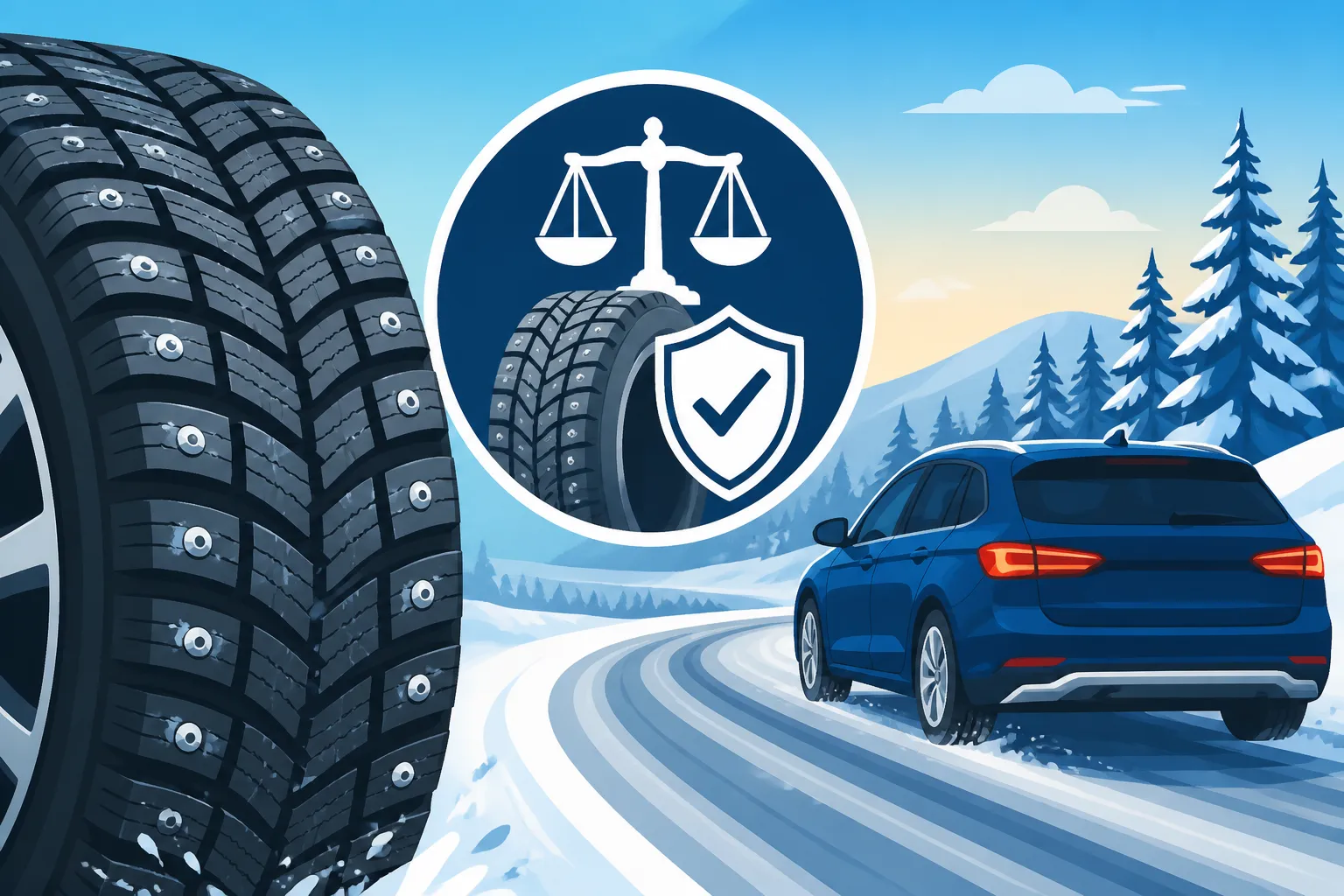
Winter Driving in Sweden: Studded Tyres and the Rules
Moving to Sweden often brings a profound appreciation for its stunning natural beauty, efficient systems, and the distinct rhythm of the seasons. But for many, especially those from milder climates, the transition to winter driving can feel like an entirely new, daunting skill to master. The mere thought of navigating icy roads and heavy snowfall can spark anxiety, and the local regulations around winter tyres add another layer of complexity. This guide is here to unravel the mysteries of winter driving in Sweden, focusing on the critical rules surrounding studded tyres and offering practical advice to help you feel confident and safe behind the wheel when the temperatures drop and the snow starts to fall.
The Chilling Reality of Driving in Swedish Winters
Sweden's winters are legendary, and for good reason. From the mild, damp, and often icy south to the deep snow and persistent cold of the north, the conditions you'll encounter on the roads can vary dramatically, but one thing is constant: winter driving here is a serious affair that demands respect and preparation. Many newcomers underestimate just how quickly conditions can change, or how different driving on snow and ice truly feels compared to wet asphalt.
The Climate and Road Conditions You'll Face
Imagine waking up to a pristine, snow-covered landscape – beautiful, right? Now imagine having to drive through it. In southern Sweden, like around Malmö and Gothenburg, winters tend to be milder but often fluctuate around freezing point. This means frequent thaws and refreezes, leading to insidious black ice, which is nearly invisible and incredibly dangerous. It's not uncommon to start a journey on clear roads and find yourself on a sheet of ice within minutes, particularly on bridges, overpasses, and shaded areas. Further north, for example, if you're exploring destinations or moving to cities beyond Stockholm and venturing into regions like Dalarna or up to Umeå and Kiruna, you'll likely experience more consistent, heavier snowfall and prolonged periods of sub-zero temperatures. Here, roads are often covered in packed snow or ice for months on end. The challenge isn't just the slipperiness but also reduced visibility due to blizzards, snowdrifts, and the low sun angle or perpetual twilight in the far north.
Why Winter Driving is Different Here
Driving in Sweden during winter is less about speed and more about finesse, anticipation, and understanding your vehicle's limits. The common perception of "driving slow" isn't just about reducing your speed; it's about making every input to the steering wheel, accelerator, and brake pedal smooth and deliberate. Sudden movements can easily cause a loss of traction on slippery surfaces. The Swedish road maintenance crews are incredibly efficient, but even they can't clear every road instantly during a heavy snowfall. You'll often find yourself on roads with a layer of packed snow or slush. This means your stopping distances will be significantly longer, and the car's handling will feel very different. The car becomes more 'floaty,' and turns need to be taken with far greater caution. Furthermore, the limited daylight hours, especially between December and February, mean a lot of driving in darkness, often compounded by snow glare or falling snow reducing visibility even further. It's a completely different environment, demanding a shift in mindset from dry-road driving.
Mandatory Winter Tyres: Navigating Sweden's Regulations
When you move to Sweden and decide to bring your car or buy one here, you quickly realise that changing tyres with the seasons isn't just a suggestion – it's often a legal requirement, crucial for your safety and avoiding hefty fines. The rules are in place because the conditions genuinely demand it.
The Dates: When Winter Tyres Are Required
Sweden has specific dates for when winter tyres are mandatory, but it’s not always a rigid calendar decree. The general rule is that you must use winter tyres between December 1st and March 31st if there are winter road conditions present. This means if there's snow, ice, slush, or frost on any part of the road, your vehicle (and any trailer it might be pulling) must be equipped with winter tyres.
It’s important to note the nuance here: the mandatory period specifies when you must use them if conditions demand it. However, studded tyres (dubbdäck) have a separate restriction. You are generally permitted to use studded tyres between October 1st and April 15th. If winter road conditions persist outside this period, studded tyres can still be used. Conversely, if roads are completely dry and clear during the mandatory winter tyre period, you can technically drive on summer tyres, but this is extremely rare and ill-advised. The authorities understand that weather can be unpredictable. The key is to monitor local weather forecasts and road conditions. My advice? Get those winter tyres on well before December 1st, and don't rush to take them off on April 1st. Better safe than sorry, and it avoids the last-minute rush at the tyre shops. Remember, winter tyres must have a minimum tread depth of 3 millimetres. Anything less is illegal and unsafe.
Exceptions and Flexibility for Foreign-Registered Vehicles
This is where it gets a little tricky for new arrivals. If you've just moved to Sweden and haven't yet sorted out your Driving in Sweden: Exchanging Your Licence with Transportstyrelsen or your vehicle registration, you might be driving a foreign-registered car. The good news is that foreign-registered passenger cars, light trucks, and buses are also subject to the same winter tyre requirements as Swedish-registered vehicles. So, between December 1st and March 31st, if winter road conditions prevail, you must use winter tyres.
However, there's a practical side to this. If your foreign-registered vehicle is only passing through Sweden for a short period, or if you're in the process of importing it, there might be some flexibility. But this flexibility is not an excuse to ignore safety. The general expectation is that if you are resident in Sweden, even temporarily, your vehicle should conform to Swedish standards. My advice would always be to ensure your car is properly equipped regardless of its registration status, especially if you plan to be here for the winter season. The safety implications alone are reason enough to adhere to the rules, let alone avoiding the potential fines and complications with insurance if you're involved in an accident without the correct tyres.
The Legal Implications of Non-Compliance
Driving without suitable winter tyres during the mandatory period and under winter conditions can lead to a fine. The police are quite vigilant about this, especially after the first significant snowfall. Beyond the direct monetary penalty, the more serious implication is safety. Your insurance company might also take a dim view if you're involved in an accident and found to be non-compliant with the tyre regulations. This could potentially reduce your payout or even invalidate your claim, leaving you with significant costs.
Let's say you've just found a great apartment, maybe after browsing platforms like Spotahome, and you're driving your car to get settled. If you slide into another car because you were on summer tyres in a snowstorm, the legal and financial headache will be far greater than the cost of a set of winter tyres. It's simply not worth the risk. The law is designed to protect everyone on the road, including you. Getting familiar with traffic laws is as important as getting your Personnummer: The Gateway to Swedish Healthcare or sorting out your Registering Your Move (Flyttanmälan) with Skatteverket.
Studded vs. Non-Studded: Choosing Your Winter Grip
One of the first big decisions you'll face when preparing for winter driving in Sweden is whether to opt for studded tyres (dubbdäck) or non-studded friction tyres (friktionsdäck), often just called "winter tyres" in English, but distinctly different from studded ones. Both have their merits and drawbacks, and the best choice really depends on your driving habits, where you live, and the conditions you expect to encounter most often.
The Pros and Cons of Studded Tyres (Dubbdäck)
Studded tyres are exactly what they sound like: tyres with small metal studs embedded in the tread. These studs act like tiny ice picks, digging into ice and packed snow to provide superior grip.
Pros of Studded Tyres:
- Exceptional Ice Grip: This is their main advantage. On pure ice, nothing beats studded tyres for traction, braking, and steering control. If you live in an area prone to black ice, or if you frequently drive on less-maintained, icy country roads, studded tyres offer a significant safety boost.
- Predictable Handling: They tend to provide more feedback and a more predictable feel on extremely slippery surfaces, which can be reassuring for less experienced winter drivers.
Cons of Studded Tyres:
- Environmental Impact and Road Wear: The studs cause wear and tear on asphalt roads, releasing fine particulate matter into the air. This is a significant environmental concern, particularly in urban areas.
- Noise: They are noticeably noisier than non-studded tyres, especially on dry asphalt.
- Performance on Dry/Wet Roads: On dry or wet asphalt, the studs reduce the contact patch of the rubber, which can slightly decrease grip and increase braking distances compared to non-studded winter tyres.
- Cost: Generally, studded tyres can be a bit more expensive than their non-studded counterparts.
- Restrictions: Some municipalities, particularly major cities like Stockholm and Gothenburg, have restrictions on where and when studded tyres can be used to mitigate environmental impact. For instance, in central Stockholm, there are specific streets where studded tyres are banned during certain periods, even within the allowed season. You need to pay attention to signage.
Exploring Non-Studded Alternatives (Friktionsdäck)
Non-studded winter tyres, or friction tyres, rely solely on their specially designed rubber compound and tread pattern to provide grip in cold conditions. There are generally two main types: Nordic friction tyres, designed for deep snow and extreme cold, and Central European friction tyres, which are better suited for wet and slushy conditions typical of milder European winters. For Sweden, you'll almost certainly want Nordic friction tyres.
Pros of Non-Studded Tyres:
- Versatility: They can be used all year round (though not recommended for summer as they wear quickly and perform poorly in warm weather) and have no specific date restrictions for use, meaning you don't have to worry about the April 15th cut-off for studs.
- Better on Snow and Slush: While studded tyres excel on ice, good Nordic friction tyres often perform very well on fresh snow and slush.
- Quieter and More Comfortable: They are much quieter and offer a smoother ride than studded tyres, especially on dry roads.
- No Urban Restrictions: You won't face any restrictions on where you can drive with them in cities.
- Less Road Wear: No studs mean no road surface damage or particulate matter.
Cons of Non-Studded Tyres:
- Inferior Ice Grip: This is their main drawback. On pure black ice, especially when braking or turning quickly, non-studded tyres simply cannot match the grip of studded tyres. This is the trade-off.
- Can Feel Less Secure: Some drivers find them less reassuring on icy patches, especially if they are used to the bite of studs.
Choosing the Right Tyre for Your Driving Habits and Region
So, how do you decide? It's a personal choice, but here's a guide:
- If you live in a major city (e.g., central Stockholm, Gothenburg) and primarily drive on well-maintained roads: Non-studded Nordic friction tyres might be a good choice. City roads are often cleared quickly, and you'll benefit from the reduced noise and lack of urban restrictions. However, be acutely aware of black ice on less-trafficked side streets or early mornings.
- If you live in a rural area, frequently drive on country roads, or commute through regions prone to heavy ice: Studded tyres are generally recommended. The added safety on icy patches can be a lifesaver.
- If you travel frequently between different regions of Sweden: Studded tyres offer the most comprehensive protection across varying winter conditions, though you'll need to be mindful of any city-specific studded tyre bans.
- Your experience level: If you're new to winter driving, the extra grip and feedback from studded tyres might give you more confidence, particularly on ice.
Ultimately, both types of winter tyres are vastly superior to summer tyres in cold, snowy, or icy conditions. The rubber compound in winter tyres is designed to remain flexible at low temperatures, unlike summer tyres which harden and lose grip. Always ensure your tyres are in good condition and have sufficient tread depth.
Here’s a quick comparison:
| Feature | Studded Tyres (Dubbdäck) | Non-Studded Tyres (Friktionsdäck) |
|---|---|---|
| Primary Advantage | Superior grip on pure ice | Good grip on snow and slush, quieter |
| Ice Performance | Excellent | Good to adequate (Nordic friction), but inferior to studded |
| Snow/Slush Performance | Very Good | Excellent (Nordic friction) |
| Dry/Wet Road Performance | Good (can be slightly reduced due to studs) | Very Good (Nordic friction, on cold roads) |
| Noise Level | Noticeably louder | Quiet |
| Road Wear/Environment | Causes road wear, releases particulate matter | Minimal road wear, environmentally friendlier |
| Urban Restrictions | Possible bans on certain city streets/zones | None |
| Usage Period (Permitted) | Oct 1 – Apr 15 (or longer if winter conditions persist) | All year (though not recommended for summer) |
| Cost | Generally slightly higher | Generally slightly lower |
Mastering the Road: Essential Winter Driving Techniques
Having the right tyres is a huge step, but it's only part of the equation. You also need to adapt your driving style to the challenging conditions. Swedish drivers often seem effortlessly competent in snow and ice, but that's a skill honed over years. You can learn it too by adopting some key techniques and a healthy dose of caution.
The Art of Driving on Snow and Ice
Forget everything you know about aggressive driving; winter driving in Sweden is about gentleness and foresight. The fundamental principle is to reduce speed and increase the smoothness of your inputs. When you accelerate, do it very gently to avoid spinning the wheels. If your wheels spin, you lose traction and control. On a manual car, starting in a higher gear can sometimes help. In an automatic, just feather the accelerator. When braking, apply the brakes gently and progressively. Slamming on the brakes, even with ABS, can lead to a skid. Look far ahead to anticipate traffic, junctions, and potential hazards, giving yourself ample time to react. If you feel the car starting to slide, resist the urge to panic. Look where you want the car to go and gently steer in that direction. Avoid sudden steering inputs. On curves, reduce your speed before entering the turn, then maintain a steady, gentle throttle through the curve. Remember, your car's weight shifts during acceleration, braking, and turning, and on a slippery surface, these weight transfers can easily lead to a loss of grip.
Anticipation and Safe Distances
This really can't be stressed enough: slow down and increase your following distance. On dry asphalt, you might think a two-second gap is sufficient. On ice, that might need to be five, ten, or even more seconds. The stopping distance on ice can be ten times longer than on dry roads. A good rule of thumb is to allow for enough space that you could stop completely if the car in front of you slammed on its brakes, without needing to react suddenly. If you can see the car ahead of you has white slush or snow spraying from its tyres, it's driving on a slippery surface, and you should extend your distance even more.
Anticipation also means being aware of your surroundings. Are there trees lining the road that might create shaded, icy patches? Are you approaching a bridge or overpass, which tends to freeze before the main road? Is there glare from the sun or a snowplough approaching? Use your eyes and your intuition. Having a good internet connection to check weather forecasts and road conditions is also a big help, so consider an eSIM from providers like Airalo if you want seamless data while travelling around. Always assume the worst conditions, especially in the early morning or late at night.
What to Do in a Skid or Emergency
Even the most cautious driver can encounter a skid. The key is to remain calm and react instinctively but correctly. Most modern cars have Electronic Stability Control (ESC) and Anti-lock Braking Systems (ABS), which are your allies.
- If the front wheels lose traction (understeer): The car will continue in a straighter line than you are steering. Gently ease off the accelerator and reduce your steering input slightly to allow the front wheels to regain grip, then re-apply gentle steering in the desired direction. Do not brake hard.
- If the rear wheels lose traction (oversteer), causing the tail to swing out: This is often called "fishtailing." Gently steer into the skid – meaning, if the rear of the car is sliding to the right, steer gently to the right. As the car begins to straighten, gently counter-steer back to straight. Avoid braking during a skid, as this can make it worse. Focus on regaining control through gentle steering.
- Emergency Braking: If you must stop quickly, engage ABS by pressing the brake pedal firmly and holding it down. You'll feel a pulsating in the pedal – that's normal. Steer to avoid obstacles if possible. Remember that your stopping distance will still be very long on slippery surfaces.
The best way to prepare for a skid is to practice in a safe, empty, snow-covered parking lot. Experiment with gentle braking, acceleration, and steering to understand how your car feels on slippery surfaces. This invaluable experience can save you in a real emergency.
Gearing Up: Preparing Your Car for Sweden's Cold
Beyond just the right tyres and driving techniques, a huge part of surviving and thriving on Swedish winter roads involves ensuring your car itself is winter-ready. This isn't just about comfort; it's about reliability and safety. Neglecting simple preparations can lead to frustrating breakdowns in bitter cold or even dangerous situations.
Essential Winter Car Kit Items
Think of your car as a mini survival pod during the winter months. Even a short trip can become problematic if you break down in freezing temperatures. Here’s a list of essential items you should always have in your car from late autumn until spring:
- Shovel: A small, foldable snow shovel is incredibly useful for clearing snow around your tyres if you get stuck or for digging out your parking spot.
- Brush and Scraper: An ice scraper for windows and a sturdy snow brush are non-negotiable. Good visibility is paramount. Don't forget to clear snow from your roof, bonnet, and lights – it's illegal to drive with snow that can fly off and obstruct others' views.
- Jump Start Cables/Power Bank: Cold batteries can die suddenly. Having jump start cables or a portable battery pack specifically for car batteries can get you going again without needing roadside assistance.
- Warm Clothes and Blanket: If you break down, the car heater will eventually stop working. A warm jacket, hat, gloves, and a blanket for each passenger could be crucial.
- Torch/Headlamp: With limited daylight, a reliable light source is essential for checking under the bonnet or changing a tyre in the dark.
- High-Visibility Vest: If you need to stop on the roadside, a high-vis vest makes you much more visible to other drivers, especially in poor light or snowy conditions.
- Tow Rope: If you get stuck in a snowdrift, a tow rope might allow another driver to help pull you out.
- First-Aid Kit: Always important, regardless of the season.
- Snacks and Water: Just in case you're delayed or stranded for a while.
- Fully Charged Phone & Power Bank: For emergencies, of course.
Checking Your Battery, Fluids, and Lights
The cold is brutal on car batteries. A battery that functions fine in summer might give up the ghost at -20°C. Get your battery checked by a mechanic before winter, or consider replacing an old one. Ensure your car's fluids are winter-grade:
- Antifreeze: Make sure your coolant has enough antifreeze to prevent your engine from freezing.
- Windscreen Washer Fluid: Use only winter-specific washer fluid, as summer versions will freeze solid in your reservoir. This is absolutely critical for maintaining clear visibility.
- Engine Oil: Some newer cars benefit from lower viscosity oils in winter to aid cold starts, though modern synthetic oils are usually good year-round. Check your car's manual.
- Fuel: Keep your fuel tank at least half full. This prevents condensation from forming in the tank (which can freeze) and ensures you have enough fuel to run the heater if you get stuck.
Beyond fluids, your lights are paramount. Check all your lights – headlights (both low and high beam), tail lights, brake lights, turn signals, and fog lights – regularly. Ensure they are clean and free of snow and ice. Replace any burnt-out bulbs immediately. Good lighting is not just for you to see; it's for others to see you.
Getting Your Car Serviced for Winter
A comprehensive winter service can prevent a lot of headaches. Many garages offer specific "winter checks" or "vintercheck." They will typically:
- Check your battery's condition and charging system.
- Inspect your tyres for tread depth and even wear.
- Check brake fluid, oil, coolant, and washer fluid levels and concentrations.
- Inspect your brakes for wear and tear – you want them in top condition for winter.
- Check windscreen wipers – worn wipers are useless in snow and slush. Consider winter-specific blades.
- Inspect belts and hoses for cracks or wear.
- Check your car's heating and ventilation system to ensure it's functioning effectively for defrosting windows.
Investing a little in proactive maintenance can save you a lot of trouble and expense when the deep cold hits. It’s like setting up your Setting Up Electricity (El-avtal) in Your Swedish Home and Home Insurance (Hemförsäkring): Why It's Essential in Sweden – essential preparation for living safely and comfortably in Sweden.
Beyond the Tyres: Key Winter Road Rules and Safety
While winter tyres are often the star of the show when it comes to Swedish winter driving discussions, there's a whole constellation of other rules, habits, and considerations that contribute to safe and stress-free navigation. From specific parking regulations to understanding Sweden's unique infrastructure in winter, being informed can make all the difference.
Snow Chains and Other Traction Aids
For the vast majority of drivers in Sweden, especially those sticking to main roads and urban areas, properly fitted winter tyres (studded or non-studded) are sufficient. Snow chains are not generally required or recommended for regular passenger cars on public roads, especially not in southern and central Sweden. The road maintenance is usually so good that chains would damage the road surface and offer little benefit.
However, if you're venturing far north, into extremely rural areas, or off-road in very deep snow, snow chains could be considered. For heavy vehicles, like trucks and buses, chains can sometimes be a legal requirement in certain conditions or areas. For passenger cars, they are more of a last-resort option for getting unstuck from a deep drift rather than a regular driving accessory.
Another form of traction aid you might see is a "traction mat" or "sand mat" – simple plastic or metal mats that you place under a spinning wheel to provide grip when stuck in snow or ice. These are excellent additions to your winter car kit, much easier and safer to use than chains for an average driver.
Parking Rules in Winter
Parking in Sweden during winter, particularly in residential areas, can be a game of strategic planning, often dictated by the needs of snow clearance. You might notice streets with signs indicating "no parking" on certain days or hours during winter months, or signs that alternate which side of the street you can park on. These rules are put in place by municipalities to allow snowploughs and snow removal vehicles to operate efficiently.
- Temporary Parking Bans: Always pay close attention to temporary signs (often yellow with red borders) that indicate upcoming parking bans due to snow clearing. Ignoring these can result in a hefty fine and, worse, your car being towed. And trust me, getting your car back from the impound lot in the middle of winter is not a fun experience.
- Clearing Snow Around Your Car: It's considered good etiquette, and sometimes a necessity, to clear snow from around your parked car yourself. This helps the snowploughs and makes it easier for you to drive away.
- Engine Block Heaters: In colder regions, many parking spaces, especially at workplaces or in apartment complexes, have electrical outlets. These are for engine block heaters (motorvärmare) or cabin heaters, which keep your engine warm for easier starting and can pre-heat your car's interior. Using one dramatically reduces wear on your engine and battery in extreme cold. If you live in an apartment, check if your complex offers these. It's a lifesaver.
Dealing with Heavy Snowfall and Road Closures
Sweden's infrastructure is generally excellent at dealing with snow. Major roads are cleared quickly, and road conditions are constantly monitored by the Swedish Transport Administration (Trafikverket). However, during exceptionally heavy snowfall or blizzards, roads can become impassable, and closures can occur, particularly on smaller roads or in northern regions.
- Trafikverket and 1177.se: Before embarking on a long journey, especially in winter, always check Trafikverket's website for current road conditions and warnings. They provide real-time updates on closures, accidents, and slippery stretches. While 1177 Vårdguiden: Navigating Sweden's National Health Advice Line and Portal is great for health advice, Trafikverket is your go-to for road info.
- Allow Extra Time: Always, always, always allow significantly more time for your journey than Google Maps suggests. Delays are common, whether due to slower traffic, snowploughs, or unexpected conditions.
- Reconsider Travel: If a severe weather warning is issued, or if road conditions are exceptionally bad, seriously consider if your journey is essential. Sometimes, the safest option is simply not to drive. Public transport, such as SJ trains, often runs more reliably in poor weather, though even they can face delays.
- Emergency Services: In case of a major accident or if you are stranded and in danger, call 112 – Sweden's universal emergency number. They can dispatch police, ambulance, or rescue services.
Driving in winter in Sweden might seem daunting at first, but with the right tyres, proper preparation, and a cautious, adaptive driving style, you'll soon be navigating the snowy landscapes with confidence. Embrace the challenge, stay informed, and prioritise safety above all else.
Disclaimer
The information provided in this guide is intended for general informational purposes only and does not constitute legal, financial, or professional advice. While we strive to provide accurate and up-to-date information, rules and regulations in Sweden, particularly concerning driving and vehicle requirements, can change. Always consult official sources such as the Swedish Transport Agency (Transportstyrelsen) or the police for the most current and specific information. We recommend seeking professional advice for your individual circumstances.