How Do I Choose a School for My Child in Sweden?
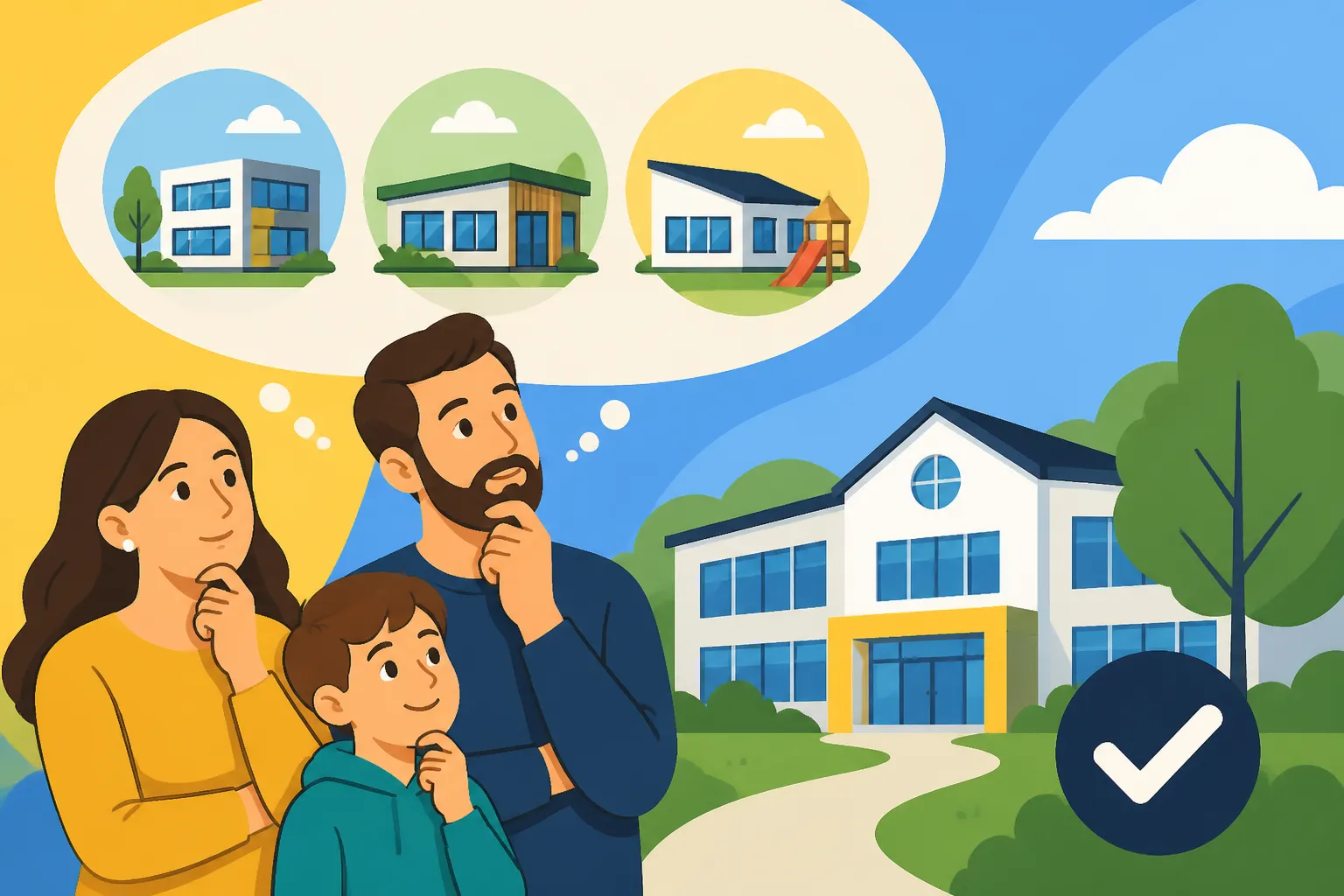
Okay, let's be real. Moving to Sweden with kids is one thing, but then comes the colossal task of figuring out the school system. It's not like back home where you might have a straightforward zoning system or a clear private school path. Sweden has its own unique flavour, and for us expats, it can feel like trying to navigate a dense forest without a compass. This guide is here to cut through the jargon and give you a genuine, boots-on-the-ground understanding of how to choose a school for your child in Sweden, from grundskola to international options, so you can make the best decision for your family.
Understanding the Swedish School System Structure
Before you even start looking at individual schools, it’s crucial to wrap your head around the basic structure here. It’s different, and understanding these differences will save you a lot of headaches and confusion down the line. Sweden values equality and accessibility in its education, which shapes everything from funding to pedagogical approaches.
The Public School Grundskola Model
The bedrock of Swedish education is the public school system, known as grundskola (compulsory school). These schools are municipally run and, crucially, free of charge. This means everything from tuition to textbooks, school meals, and even school trips are covered. It’s a huge relief for many families, especially coming from countries with high private school fees. Your child typically starts grundskola in the autumn of the year they turn six, attending a class called förskoleklass (preschool class), which acts as a bridge between Enrolling Your Child in Förskola (Preschool) in Sweden and the formal first grade.
The grundskola is generally comprehensive, meaning children of all academic abilities and backgrounds learn together. The curriculum is national, ensuring a certain standard across the country, but schools do have some flexibility in how they implement it. Don't expect a super-competitive, test-heavy environment. The focus is often on holistic development, critical thinking, and social skills, alongside academic subjects. For many expat families, the biggest initial hurdle here is the language – instruction is in Swedish. However, municipalities are generally quite good at providing language support for newcomers, often with dedicated classes or extra help within the regular classroom. The integration process is typically very supportive, aiming to get your child comfortable and fluent as quickly as possible. You can read more about this in our guide on Starting Grundskola: The Swedish School System for Families.
Independent Schools Fristående Skolor and Their Role
Beyond the public system, you have fristående skolor, or independent schools. These are also publicly funded and, like grundskola, are free of charge. Yes, you read that right – free independent schools. This is often a surprise for new arrivals! The key difference is that they are run by private organizations, foundations, or sometimes even parent cooperatives, rather than the municipality. This allows them to have a distinct profile, often based on a specific pedagogical approach (like Montessori or Waldorf), a religious orientation, or a particular academic focus (e.g., arts, science, or bilingualism).
While they follow the national curriculum, they have more freedom in how they deliver it, which can be appealing if you’re looking for something specific. Admission to these schools is generally based on a queue system, often prioritizing siblings, or in some cases, a first-come, first-served basis. It's not uncommon for families to sign up their child for a queue at a fristående skola almost at birth, especially for popular ones in bigger cities. So, if this is a path you're considering, getting on those waiting lists early is absolutely key. Don't wait until you've settled into your housing; start researching and applying as soon as you have an idea of your potential move date, even if you’re still browsing housing options on a site like Spotahome from abroad.
International Schools: A Specific Niche
For many expat families, especially those on shorter assignments, with children nearing high school age, or simply wanting to maintain a continuity of education in English, international schools are often the first port of call. These schools typically follow an international curriculum, such as the International Baccalaureate (IB), British, or American systems. Unlike grundskola and fristående skolor, international schools usually charge tuition fees, which can be substantial.
These schools are concentrated in Sweden’s larger cities like Stockholm, Gothenburg, and Malmö. They are designed specifically for the international community, offering instruction primarily in English, with some offering other languages. The benefit here is obvious: a familiar curriculum, an international peer group, and less of a language barrier initially. The downside, besides the cost, can be availability and competitive admissions. Many have waiting lists, and some prioritize students whose parents are on specific international contracts or who have recently moved to Sweden. It’s definitely worth exploring these if your budget allows and you need that continuity. Our detailed guide on Are There International Schools in Sweden? dives deeper into this option.
Here’s a quick overview of the main school types:
| Feature | Public School (Grundskola) | Independent School (Fristående Skola) | International School |
|---|---|---|---|
| Cost | Free | Free | Tuition fees apply (often substantial) |
| Funding | Municipal | Publicly funded (via municipality, but privately run) | Private funding (tuition fees, sometimes corporate sponsorship) |
| Curriculum | National Swedish Curriculum | National Swedish Curriculum (with pedagogical variation) | International (e.g., IB, British, American) |
| Language | Swedish (with language support for new arrivals) | Primarily Swedish (some bilingual options exist) | Primarily English (or other international languages) |
| Admissions | Assigned based on residential address, with some choice options | Queue system (often first-come, first-served or sibling priority) | Application, interview, assessment (often competitive) |
| Target Audience | All resident children | Children seeking specific pedagogy/profile | International/expatriate families |
| Availability | Widespread across all municipalities | More common in urban areas, can have long queues | Limited, mostly in major cities |
Key Factors When Choosing a School
Alright, now that you know the different types, how do you actually pick one? This is where the real soul-searching and practical considerations come in. There’s no single "best" school; it’s about finding the best fit for your child and your family’s circumstances.
Location and Commute: The Practical Realities
Sweden is a beautiful country, but commutes can be a real drag, especially in larger cities like Stockholm or Gothenburg. The first, and often most limiting, factor is location. For public schools, your child is typically assigned a school based on your residential address. While you can express a preference for another public school in your municipality, places are not guaranteed, and distance often plays a significant role in who gets priority. So, where you choose to live directly impacts your public school options. This means looking for a home and a school often go hand-in-hand. When you’re browsing properties, whether through local real estate agents or platforms like Spotahome, always check the proximity to schools and investigate the local municipality’s school assignment policies.
For independent and international schools, you have more flexibility regarding location, but you'll need to factor in the daily commute. Will it involve multiple bus changes, a long train ride, or a potentially icy bike ride in winter? Consider how this will impact your child’s energy levels and your family’s morning routine. A shorter, simpler commute can dramatically improve daily life. Remember, public transport in Sweden is generally excellent, but those cold, dark winter mornings can make even a short trip feel long. Our guide on Choosing Where to Live in Stockholm: Neighbourhoods for Newcomers can offer some local insights that might indirectly help your school search by narrowing down housing areas.
Educational Philosophy and Pedagogy
Beyond the nuts and bolts of location, think about what truly matters to you in an educational environment. Do you prefer a highly structured, academic-focused approach, or something more child-led and creative? The Swedish public school system, as mentioned, tends towards a holistic, less test-driven model. However, within fristående skolor, you’ll find diverse philosophies.
For example, a Montessori school will emphasize self-directed learning and hands-on activities, while a Waldorf school focuses on imaginative play, arts, and crafts in early years, gradually introducing academics. If you have a child who thrives on routine and clear expectations, a more traditional approach might be better. If your child is highly independent and creative, a progressive model could be a perfect fit. Visit schools if possible, talk to current parents, and try to get a feel for the day-to-day atmosphere. Remember, the "best" pedagogical approach is always subjective and depends entirely on your child's personality and learning style.
Language of Instruction and Support for English Speakers
This is often the biggest concern for expat parents. If your child doesn't speak Swedish, how will they cope in a Swedish-speaking school?
- Public and Independent Swedish Schools: Most Swedish public and independent schools are highly experienced with integrating children who don't speak Swedish. They are legally obligated to provide language support, often through dedicated Swedish as a Second Language (SVA) lessons or "mother tongue" instruction if there are enough students speaking a particular language. Children are incredibly adaptable, and many pick up Swedish remarkably quickly, especially at younger ages. It's often harder for parents! The immersion can be incredibly beneficial for true integration into Swedish society. However, expect a period of adjustment, and be prepared for your child to feel a bit isolated initially. Active communication with the school is vital during this period.
- International Schools: The obvious advantage here is the immediate familiarity of an English (or other language) speaking environment. This can reduce stress for children (and parents) during an already significant life change. However, it can also slow down integration into Swedish society and culture. While your child will learn Swedish as a foreign language, they might not achieve the same fluency as in an immersive Swedish school. This is a trade-off many families consciously make, balancing immediate comfort against long-term integration.
When researching, ask schools directly about their support programs for non-Swedish speakers. What resources do they offer? How do they communicate with non-Swedish speaking parents? Keeping connected and informed is crucial, especially in the early days, and having reliable mobile connectivity from a provider like Airalo for international calls or data can be surprisingly important for these interactions.
School Culture, Extracurriculars, and Parental Involvement
Every school has its own unique vibe. Some are very academic, others more arts-focused, some prioritize outdoor activities. Consider what kind of environment your child will thrive in. Are extracurricular activities important to you? Many Swedish schools offer a range of after-school activities (fritids), but these can vary greatly. In public schools, organized sports or clubs often happen outside school hours, through local sports clubs (idrottsföreningar) or cultural associations. This means integrating into the local community and its offerings becomes a crucial part of your child’s social life.
Parental involvement also differs. While Swedish schools generally welcome parental engagement, it might not be as hands-on or formal as in some other countries. There are parent-teacher conferences and opportunities to volunteer, but the culture is often one of trust in the professionals. Don't expect a constant stream of fundraising events or daily classroom volunteering opportunities. Understanding this cultural nuance is important. If you’re used to being very involved, you might need to find other avenues for engagement, perhaps through the local föräldraförening (parent association) or by volunteering in community activities.
Navigating the Application Process
So, you’ve done your research, you’ve thought about what’s important. Now for the nitty-gritty: actually getting your child into a school. This can feel like a bureaucratic maze, so let's try to untangle it.
Applying to Public Schools: Your Municipality's System
This is where your personnummer and being officially registered (folkbokförd) in your municipality become absolutely essential. Once you're in the Swedish population register, your municipality will be aware of your child's age and schooling needs. You will usually receive information directly from your local municipality about applying for a school place as your child approaches school age (for förskoleklass or if you're moving with older children).
The process generally involves filling out an application form where you list your preferred schools within the municipality, usually in order of preference. As mentioned, distance to the school is often a primary factor in allocation, but sibling priority also plays a big role. It’s not a first-come, first-served system like some independent schools. The municipality aims to place every child in a school as close to their home as possible, taking into account parental preferences where capacity allows. If you have just arrived and haven’t received information, contact your municipality’s education department (barn- och utbildningsförvaltningen or similar) directly. They are the gatekeepers here. Remember, you can't even think about registering for a public school until you've completed your Registering Your Move (Flyttanmälan) with Skatteverket and obtained a personnummer.
Applying to Independent and International Schools
The application process for independent and international schools is usually much more direct and handled by the schools themselves, rather than the municipality.
- Independent Schools: For fristående skolor, you’ll typically apply directly to each school you’re interested in. This often means putting your child on a waiting list (kö) as early as possible. Each school will have its own specific application form and rules regarding how their queue works. Some prioritize siblings, some prioritize children of staff, and others are strictly chronological. It’s imperative to check the specific criteria for each school. Keep track of your applications and any follow-up required. If you're hoping for a place, be prepared to wait, sometimes for years.
- International Schools: Similarly, international schools manage their own admissions. This usually involves an application form, submission of previous school records, possibly an interview with the child and parents, and sometimes an assessment or entrance exam, particularly for older students. There may also be specific deadlines. Because spaces are limited and demand is high, it's wise to apply well in advance and be prepared for a competitive process. Some schools might also ask for proof of your expatriate status or your company's involvement. It’s also good to note that due to varying school calendars, transferring from a school following a different system (e.g., British September-August to Swedish August-June) might mean a slight adjustment in grade level.
Deadlines, Waiting Lists, and the Tough Realities
The reality of the Swedish school choice, especially in popular urban areas, is that it can be stressful. Deadlines for municipal public school applications are typically in late winter/early spring for the following autumn term. Missing these can mean less choice. For independent and international schools, deadlines vary widely, but "the earlier, the better" is almost always the rule.
Waiting lists are a common part of the landscape. For fristående skolor, these can be years long, especially for the most sought-after schools. For international schools, while maybe not as long, they can still mean you don't get your first choice, or any choice, if you apply too late. Be prepared to be flexible and have backup options. It’s not always easy, and sometimes you just have to take what’s available, especially if you’re arriving mid-year. Don’t get disheartened if your top choice doesn’t work out; many Swedish schools, even those that weren’t your first pick, offer excellent education.
Addressing Common Expat Concerns
As an expat, you’ll likely have questions and concerns that local parents might not. Let's tackle a few of those.
Support for New Arrivals and Language Barriers
One of the most frequent worries is how children will cope with a new language and culture. Swedish schools are generally very welcoming and experienced with new arrivals. They understand the challenges. As previously mentioned, public schools are mandated to provide language support, but the how varies. Some schools have dedicated "introduction classes" for non-Swedish speakers, where children spend a period of time intensively learning Swedish before fully integrating into regular classes. Others integrate children directly into regular classes with extra support from an SVA teacher.
It's absolutely okay to ask schools about their specific support programs. Don't be shy about advocating for your child’s needs. While many Swedes speak excellent English, the language of instruction in Swedish schools will be Swedish. So, initial communication with teachers might require a bit of patience, but schools are generally good at finding solutions. As a parent, you might also find support from expat groups or community initiatives, especially if you’re also embarking on Learning Swedish: SFI, Courses, and Language Paths for Newcomers.
Integrating into the Swedish System
Integration is a two-way street. While schools do their part, actively seeking ways to help your child integrate socially is equally important. Encourage participation in local sports clubs, cultural activities, or after-school programs (fritidshem or fritids) at their school. These are fantastic avenues for making friends outside the classroom and practicing Swedish in informal settings. Swedes can sometimes appear reserved, but once you break through that initial barrier, they are incredibly warm and welcoming.
Parents often worry about their children losing their native language skills. Many municipalities offer "mother tongue instruction" (modersmålsundervisning) for children who speak a language other than Swedish at home, provided there are enough students for a group. This is typically an optional, supplementary lesson during or after school hours. Inquire about this possibility with your municipality or chosen school. It’s a wonderful resource that helps children maintain their heritage language while learning Swedish.
The Role of Parental Advocacy and Communication
In Sweden, teachers and school staff are highly respected professionals. The culture around education often means parents entrust the school with their child’s learning and development, without excessive intervention. This is a contrast to some cultures where parents might be expected to be highly hands-on or to challenge teachers frequently.
However, this doesn't mean you shouldn't communicate or advocate for your child. It just means doing it in a culturally appropriate way. Regular parent-teacher meetings (utvecklingssamtal) are standard, and you should use these to discuss your child's progress and any concerns. If issues arise, it's best to approach the teacher directly and calmly, seeking collaboration rather than confrontation. If the issue is serious or not resolved, you can then escalate to the principal (rektor). Building a good relationship with the school staff from the beginning will always serve you and your child well. Many schools use digital platforms for communication, making it easier to stay updated on your child’s daily activities and school news. Ensure you know how to access these and what communication channels are preferred.
The Bottom Line: Be Prepared and Patient
Choosing a school for your child in Sweden is a significant decision, and for expat families, it comes with its own unique set of considerations. The Swedish system is generally excellent, but navigating it requires patience, research, and a willingness to adapt. Start your research early, understand the different school types, prioritize what’s important for your child, and be prepared for the realities of waiting lists or municipal allocations.
Whether you opt for the immersive experience of a grundskola, the specialized focus of a fristående skola, or the familiarity of an international school, remember that your child's well-being and successful integration are paramount. Embrace the journey, and don’t hesitate to seek out local expat networks for advice and support – they’ve all been through it too!
Disclaimer
The information provided in this guide is intended for general informational purposes only and does not constitute legal, financial, or educational advice. While we strive to provide accurate and up-to-date information, regulations and circumstances in Sweden can change rapidly. Always consult official sources, such as the Swedish National Agency for Education (Skolverket), your local municipality, or relevant school admissions offices, for the most current and specific information pertaining to your individual situation.