What Brexit Means for British Citizens Living in Sweden
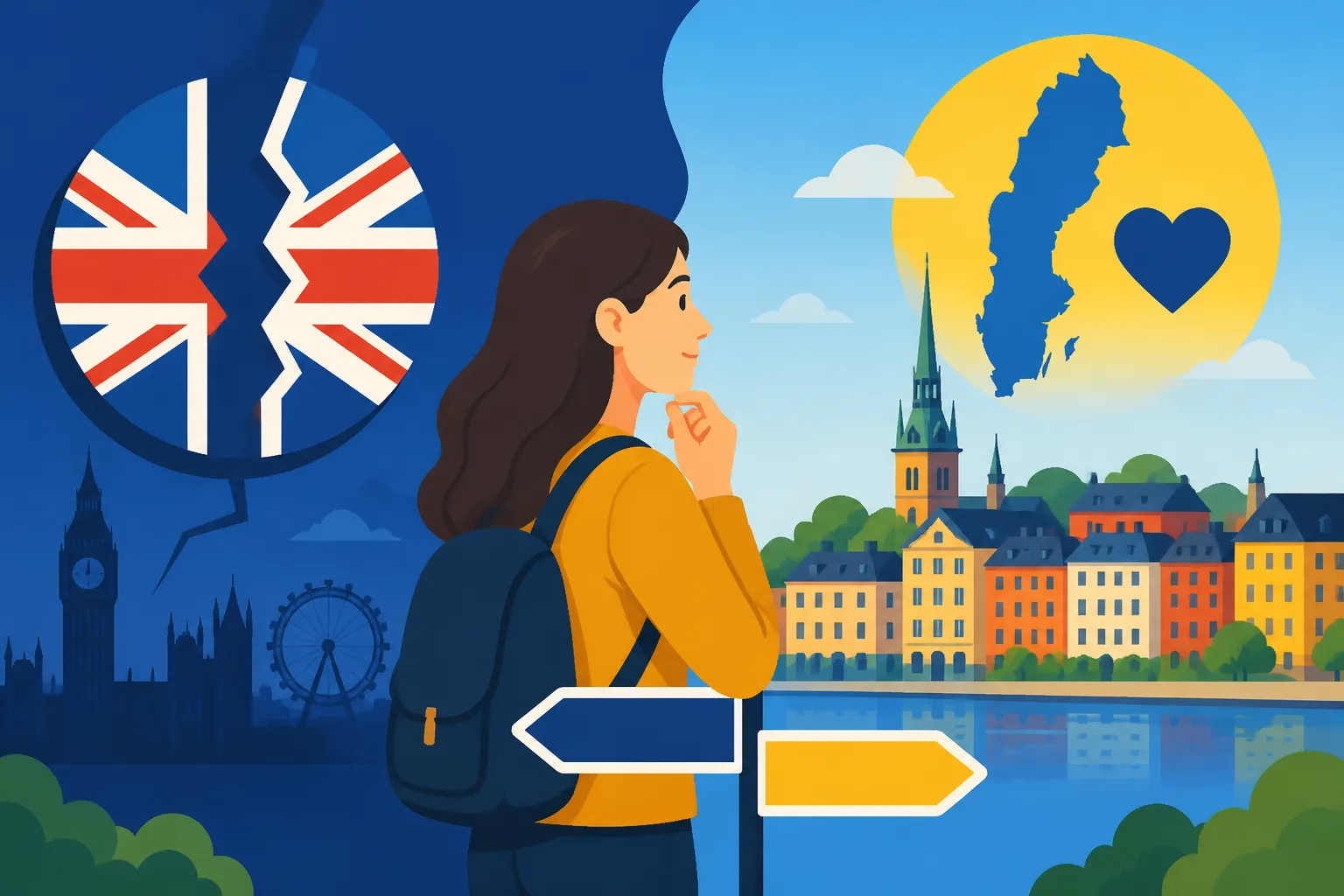
Oh, Brexit. Just saying the word brings back a wave of anxiety, confusion, and no small amount of exasperation for so many of us Brits who chose Sweden as our home. The seamless life we once knew, hopping between countries with just a passport, evaporated almost overnight. If you're a British citizen living in Sweden, or contemplating a move, you've likely navigated a labyrinth of new rules. This guide is here to untangle that knot, offering a clear-eyed look at what Brexit truly means for your life in Sweden, based on the realities we've all faced.
The Initial Shockwave: Understanding the Change from EU to Third-Country National
For many years, being a British citizen in Sweden was, administratively speaking, relatively simple. We enjoyed the full benefits of EU membership, primarily the fundamental right to freedom of movement. This meant we could live, work, and study in Sweden with minimal fuss, largely treated on par with Swedish citizens once we had established our right of residence. There were no complex visa applications, no salary thresholds to meet for our permits, and certainly no need for extensive sponsorship. It was, in essence, a privilege that allowed for spontaneous decisions and a general sense of ease.
Loss of Freedom of Movement and Residence Rights
Then came January 1, 2021. The moment the UK officially left the European Union, British citizens, whether they liked it or not, were reclassified overnight as "third-country nationals" in the eyes of Swedish immigration law. This wasn't just a bureaucratic label; it fundamentally altered our legal standing. The automatic right to live and work in Sweden, which had been a cornerstone of our expat lives, was gone. Suddenly, we found ourselves in the same category as citizens from countries like the US, Canada, Australia, or India – subject to Sweden's standard immigration rules for non-EU individuals.
This shift meant that if you arrived in Sweden after the end of the transition period (which was December 31, 2020), you could no longer simply move here and register. You would now need a specific residence permit, such as a work permit or a student permit, just like any other non-EU citizen. The initial flexibility and ease that defined pre-Brexit life for Brits vanished, replaced by a much more structured and often more challenging path to residency. It was a jarring change that required immediate action and a steep learning curve for many.
The Importance of the Withdrawal Agreement
Thankfully, not all was lost for those of us who were already established here. Recognising the monumental upheaval this would cause for millions of people, the UK and EU negotiated the Withdrawal Agreement. This wasn't some minor administrative footnote; it was a legally binding international treaty designed specifically to protect the rights of UK nationals who were living in an EU member state (and vice versa) by the end of the transition period, December 31, 2020.
If you had officially established residence in Sweden by that crucial cut-off date, the Withdrawal Agreement provided a lifeline. It ensured that your existing rights – to live, work, study, and access healthcare and social security – would largely continue as before. This meant that while our passports might have changed status, our daily lives wouldn't be immediately upended, provided we took the necessary steps. It’s vital to understand that this agreement applies only to those who were genuinely resident by the end of 2020; it doesn't create new rights for those who arrived later.
Securing Your Status: The Post-Brexit Residence Permit for Britons
For those British citizens who were already living in Sweden, the Withdrawal Agreement mandated a new application process to formalise their status. This wasn't about applying for a new right to reside, but rather for a new type of document that legally recognised our continued right under the special terms of the Withdrawal Agreement. It was a period of intense paperwork and often anxious waiting.
Who Needed to Apply and the Deadline
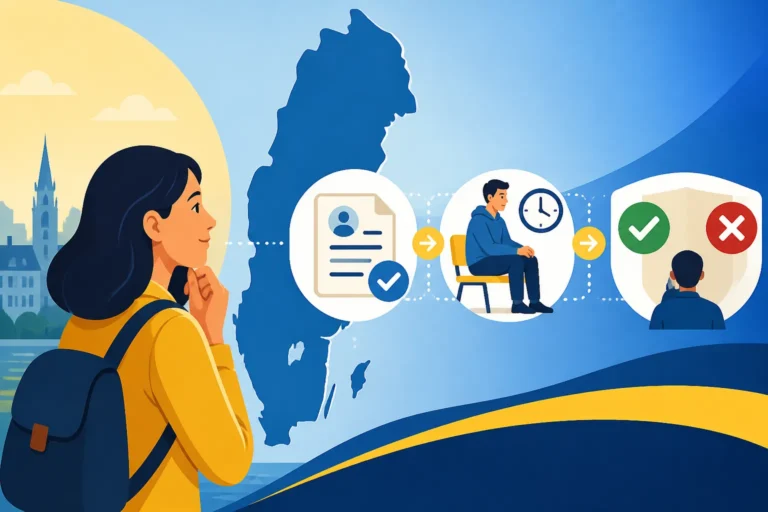
The clock started ticking on January 1, 2021. Any British citizen who had established their residence in Sweden by December 31, 2020, and wished to continue living here, needed to apply to Migrationsverket (the Swedish Migration Agency) for a new residence status under the Withdrawal Agreement. The deadline for these applications was September 30, 2021. This window was a frantic time for many, as everyone scrambled to gather documents and navigate the online portal.
Missing that deadline had serious consequences. If you were eligible but failed to apply by September 30, 2021, you effectively lost the protection of the Withdrawal Agreement. This meant you would then be treated as a regular third-country national, requiring you to apply for a standard work permit, student permit, or other relevant permit from scratch, potentially even having to leave Sweden to apply from your home country. It was a stressful time, filled with concerns about documents, processing times, and ensuring every detail was correct. Many worried about older relatives or those less comfortable with digital applications.
Application Requirements and Process
The application itself, submitted through Migrationsverket's online portal, required a substantial amount of documentation to prove continuous residence in Sweden prior to the end of 2020. You typically needed to provide:
- Proof of identity: A valid UK passport.
- Proof of residence: Documents showing you had lived in Sweden by December 31, 2020. This could include rental contracts, utility bills, bank statements, payslips, or registration with Skatteverket (the Swedish Tax Agency) showing your
folkbokföring(population registration). - Proof of right of residence under EU rules: This meant demonstrating that you were working, studying, self-sufficient, or a family member of an EU/UK citizen. Payslips, employment contracts, university enrolment letters, or proof of sufficient funds and comprehensive health insurance were all relevant here.
- Family ties: If applying as a family member, marriage certificates, birth certificates, and proof of your relationship.
Once the application was submitted, a biometrics appointment was necessary, usually at a Migrationsverket service centre, to provide fingerprints and a photograph for the new residence permit card, known as an UT-kort. This card is your physical proof of status under the Withdrawal Agreement. It was a long wait for many, with processing times varying, but the relief upon receiving that plastic card was immense. For any non-Swedish documents you had, such as marriage certificates from outside Sweden or detailed bank statements from a foreign account, professional translation was often required. Services like RushTranslate or Translayte proved invaluable for ensuring these documents met the official standards and were accepted by Migrationsverket without unnecessary delays.
Understanding the "Permanent" Nature of the New Status
One of the most significant advantages of the Withdrawal Agreement residence status was the potential for immediate permanent residence. If you, as a British citizen, could prove you had legally resided in Sweden for at least five continuous years under EU rules by the time you applied, you were often granted permanent residence directly. This "permanent" status offers an incredible level of security, granting rights that are very close to those of a Swedish citizen, including the right to work, study, access social benefits, and leave and re-enter Sweden without issue. It essentially cemented your place in Swedish society without the need for periodic renewals.
For those who had lived in Sweden for less than five years by the end of 2020, the Withdrawal Agreement status was typically granted as a temporary permit, but crucially, it still put you on a clear path to permanent residence. You would receive a permit valid for a period that allowed you to complete your five years of continuous residence. Once that five-year mark was met, you could then apply for permanent residence. This phased approach provided assurance that your time here counted towards a long-term future. This new residence permit became the crucial document for navigating daily life, acting as proof of your legal right to remain and access services, far more important than just your passport alone.
Practical Implications for Everyday Life
Even with the Withdrawal Agreement permit in hand, many British citizens wondered what the daily practicalities of post-Brexit life in Sweden would look like. Would we lose access to our doctors? Could we still travel freely? The good news for those covered by the WA is that much of our day-to-day life remains largely unaffected, thanks to the protections afforded.
Healthcare and Social Security Access
One of the biggest concerns for any expat is healthcare. For British citizens protected by the Withdrawal Agreement, your rights to public healthcare and social security benefits in Sweden largely remain intact. This means you continue to be eligible for care from your vårdcentral (primary healthcare centre) and specialists, just as you were before. Your access is tied to your population registration (folkbokföring) and your registration with Försäkringskassan (the Swedish Social Insurance Agency).
You still need to be registered in the Swedish population register to access these benefits fully, which is why Getting Your Personnummer: The Gateway to Swedish Healthcare is so crucial for new arrivals, and maintaining it is essential for existing residents. Once you're properly registered, your personnummer ensures you're part of the system. While your UK-issued EHIC (European Health Insurance Card) may still be valid for a transitional period or under specific conditions for some, relying on your full registration with Försäkringskassan and the regional health system is the most robust approach for long-term residents. You can find more comprehensive details on Healthcare in Sweden for Foreign Residents: The Complete System Guide (2027) and the steps for Registering with Försäkringskassan: When and Why You Need To. In essence, the WA means you haven't been pushed to the back of the queue; your eligibility for Sweden's generous welfare state remains secure.
Work, Study, and Driving Licences
Your Withdrawal Agreement residence permit solidifies your right to work in Sweden without needing a separate work permit. This is a significant relief, as it means you can change jobs, take on new employment, or start your own business without additional immigration hurdles related to your nationality. You're treated like any other long-term resident in terms of employment rights and access to the job market. This also means you can fully participate in the Swedish education system, whether that's SFI (Swedish for Immigrants) courses, university studies, or vocational training, without needing a student visa specific to your nationality. Your WA status grants you the same access as Swedish residents. For a deeper dive into career opportunities, you can explore Working in Sweden as a Foreigner: The Complete Guide (2027).
When it comes to driving, there was a grace period for British driving licence holders. If you were a British citizen with a valid UK driving licence who was legally resident in Sweden under the Withdrawal Agreement, you generally had a period to exchange your UK licence for a Swedish one. After a certain point, often tied to the specifics of the transition period, UK licences would no longer be valid for use in Sweden. It was imperative to exchange it through Transportstyrelsen. If you didn't, you might find yourself needing to re-take your driving test in Sweden. It’s always best to check the latest rules on Driving in Sweden: Exchanging Your Licence with Transportstyrelsen.
Travel and Border Control
This is where the most noticeable practical change for British citizens has occurred. While your Withdrawal Agreement permit allows you to live in Sweden, your UK passport is no longer an EU passport. This means:
- Border Queues: When travelling to and from EU/Schengen countries, you can no longer use the faster 'EU/EEA/Swiss' lanes at border control. You will now join the 'All Passports' or 'Third-Country Nationals' queues, which can often be significantly longer.
- Schengen 90/180-day Rule: For short visits to other Schengen area countries (including most of the EU), the 90/180-day rule now applies to you as a UK passport holder. This means you can spend a maximum of 90 days in any 180-day period within the Schengen area without a visa. This rule is crucial for British citizens who frequently travel for leisure or business outside of Sweden. However, if you have a valid Withdrawal Agreement residence permit for Sweden, your time within Sweden does not count towards this 90-day limit. When travelling through other Schengen countries to get to or from Sweden, your Swedish residence permit allows you transit, but technically, your stay in those transit countries can count towards the 90 days if you linger.
It is absolutely vital to carry your UT-kort (Swedish residence permit card) alongside your UK passport when travelling internationally. This card is your legal proof that you are a resident of Sweden under the Withdrawal Agreement and exempt from the general Schengen short-stay rules within Sweden. Without it, you could face questions or delays at border crossings. For detailed information on short-term travel, consult Visiting Sweden: Schengen Visas and the 90-Day Rule.
Here's a quick overview of the key differences:
| Feature | Before Brexit (Pre-2021) | Post-Brexit (Withdrawal Agreement Permit) | Post-Brexit (New Arrivals, No WA Permit) |
|---|---|---|---|
| Legal Status | EU Citizen | Third-country national with WA protections | Third-country national |
| Residency | Right to reside based on EU freedom of movement | Right to reside based on WA permit | Requires work/study/other specific permit |
| Work Rights | Automatic right to work | Right to work with WA permit | Requires specific work permit |
| Healthcare | Access via population registration (Personnummer) |
Access via WA permit and Personnummer |
Access depends on permit type, usually via Personnummer |
| Social Security | Full access | Full access under WA permit | Access depends on permit type and folkbokföring |
| Travel (Schengen) | EU passport lanes, no 90/180-day limits | Third-country national lanes, 90/180-day rule outside Sweden | Third-country national lanes, 90/180-day rule applies |
| Driving Licence | Valid for an indefinite period, then exchange | Grace period for exchange, then must exchange | Must exchange within one year or re-take test |
| Path to Citizenship | 5 years continuous residence | WA time counts, 5 years continuous residence | Time on specific permits counts, 5 years continuous residence |
The Path to Swedish Citizenship: A Post-Brexit Perspective
For many British citizens, moving to Sweden was always intended to be a long-term commitment. After navigating the initial complexities of Brexit, the question of Swedish citizenship often comes to the forefront. The good news is that Brexit hasn't fundamentally derailed this path for those covered by the Withdrawal Agreement; it has, however, clarified the steps.
Counting Your Time for Citizenship
One of the most important aspects for British citizens looking towards Swedish citizenship is how their time in Sweden is counted. The time you spent living in Sweden before Brexit, when you were an EU citizen, absolutely counts towards the residency requirement for Swedish citizenship. This is a vital protection under the Withdrawal Agreement. If you had, for example, lived in Sweden for three years as an EU citizen and then obtained your Withdrawal Agreement permit, those three years are still valid towards the five-year continuous residency requirement for citizenship.
The period you've spent here with your Withdrawal Agreement permit also counts towards this period. So, for most British citizens covered by the WA, the path to citizenship is simply a continuation of their previous residency, culminating in the standard five years of continuous legal residence in Sweden. For those who are married to or in a registered partnership (sambo) with a Swedish citizen, the residency requirement can be shortened to three years, provided other conditions are met. Your Withdrawal Agreement permit is a strong foundation for future citizenship applications, proving your legal and continuous stay here. If this is a path you're considering, Becoming a Swedish Citizen: Requirements and the Application Process provides a thorough overview of the process.
New Requirements: Language and Civics
While your existing residency counts, future changes to Swedish citizenship rules will apply to British citizens just as they do to other non-EU citizens. Sweden has been discussing, and is in the process of implementing, new requirements for citizenship, specifically a mandatory language test (proving proficiency in Swedish) and a civics test (demonstrating knowledge of Swedish society, history, and laws). These changes are expected to come into force in the near future, though the exact dates and details are still being finalised.
For many British citizens, particularly those who have lived here for a long time, the prospect of a language test might be daunting but manageable. For others who primarily operate in English-speaking environments, it will require dedicated effort. My advice, as a fellow expat, is to start learning Swedish now if you haven't already. It enriches your life here immensely, and it will soon be a non-negotiable step towards citizenship. You can explore The New Citizenship Requirements in Sweden: Language and Civics for the latest updates on these upcoming changes. Just as with initial permit applications, any supporting documents for citizenship, such as certified birth certificates or educational qualifications, might require professional translation if they are not in Swedish or English. Services like RushTranslate or Translayte can handle these translations, ensuring they are officially recognised.
For Those Who Arrived After 2020: The "Regular" Third-Country National Route
The picture changes significantly for British citizens who decided to move to Sweden after December 31, 2020. For this group, the protections of the Withdrawal Agreement do not apply, and the journey to living in Sweden is entirely different.
No Withdrawal Agreement Protection
If you arrived in Sweden on or after January 1, 2021, you are, by definition, not covered by the Withdrawal Agreement. This means you are treated exactly like any other citizen from a country outside the EU/EEA. There's no special 'British' route; you fall under the standard Swedish immigration framework for third-country nationals. This distinction is paramount, as it dictates entirely different requirements, application processes, and eligibility criteria. It means you cannot simply move here and expect to register your right of residence; you must apply for a specific permit before you can establish residency.
This is a key point of confusion for some, especially those who had family or friends move here before Brexit with relative ease. The post-Brexit reality is far more stringent and requires careful planning and adherence to strict immigration rules. Your journey will parallel that of individuals moving from countries such as the USA, Canada, or India, requiring a formal residence permit based on employment, study, or family ties.
Applying for Work or Study Permits
For British citizens arriving post-2020, the most common routes to residency are through work or study.
- Work Permits: To obtain a work permit in Sweden, you generally need a concrete job offer from a Swedish employer. The employer must then apply for the permit on your behalf, and the role often needs to meet specific salary thresholds and conditions set by collective agreements (trade union review is common). The process can be time-consuming and requires your employer to meet certain criteria, sometimes including being a 'certified employer' to potentially expedite the process. This is a significant hurdle compared to the previous freedom to seek employment after arrival. For a thorough understanding of this path, refer to Work Permits in Sweden: Categories, Salary Rules, and How to Apply.
- Study Permits: If you've been accepted to a recognised higher education programme in Sweden, you can apply for a student residence permit. This requires proof of admission, sufficient funds to support yourself, and comprehensive health insurance for the duration of your stay. Unlike before, where British students could just enrol, you now need to secure a permit before arriving and potentially facing tuition fees if the course isn't free. Detailed guidance can be found in Studying in Sweden: A Complete Guide for International Students (2027).
These permits are temporary and typically granted for the duration of your employment contract or study period, requiring renewal. They also come with specific conditions, such as working only for the employer who sponsored your permit or adhering to study requirements.
Family Reunification for New Arrivals
Bringing family members to Sweden has also become more complex for British citizens who arrived after 2020. If you are here on a work or study permit, your family members (spouse/partner, minor children) may apply to join you through family reunification. However, this process comes with significant requirements:
- Maintenance Requirement: You, as the permit holder, must demonstrate that you can financially support both yourself and your family members during their stay in Sweden. This often means providing bank statements, payslips, or other proof of sufficient income to cover living expenses.
- Suitable Housing: You must also be able to provide suitable housing for your family. This isn't just about having a roof over your head; the accommodation must be of a reasonable size for the number of people living there, and you usually need to provide a rental contract or ownership documents.
These requirements can be substantial hurdles, especially in competitive housing markets like Stockholm or Gothenburg. The application process for family reunification can also be lengthy, involving Migrationsverket and potentially interviews. For comprehensive information on this, refer to Family Reunification in Sweden: Bringing Your Loved Ones. The days of simply having your spouse or children register with Skatteverket upon arrival, as was common before Brexit, are long gone for this group.
Disclaimer
The information provided in this guide is intended for general informational purposes only and does not constitute legal advice. While we strive to ensure accuracy, immigration laws and regulations in Sweden are complex and subject to change. It is always recommended to consult with Migrationsverket or a qualified immigration lawyer for advice tailored to your specific situation. We are not responsible for any actions taken based on the information in this guide.