How Do I Prove My Identity to Migrationsverket?
One of the most anxiety-inducing aspects of moving to Sweden, especially when dealing with the Swedish Migration Agency (Migrationsverket), is proving who you are. It sounds simple, right? You have a passport! But for many of us, navigating the precise, sometimes rigid, requirements for identity verification can feel like trying to fit a square peg in a round hole. This guide aims to cut through the confusion and explain exactly how to prove your identity to Migrationsverket, ensuring your applications move forward smoothly.
The Absolute Importance of Identity Verification for Migrationsverket
Let's be brutally honest: Sweden takes identity seriously. Very seriously. It's not just about knowing your name; it's about establishing your legal presence, preventing fraud, and ensuring the integrity of the entire social system. Migrationsverket, as the gatekeeper for residence permits and citizenship, is at the forefront of this scrutiny.
Why Migrationsverket is So Strict About Identity
From the moment you begin the process of moving to Sweden from outside the EU/EEA, proving your identity is paramount. The Swedish legal framework, deeply rooted in precision and transparency, demands unequivocal proof. This isn't just bureaucratic red tape; it's a fundamental pillar of how Swedish society functions. Without a solid, verifiable identity, it's impossible to get a Personnummer, which is your gateway to virtually everything else – healthcare, banking, work, and even library cards.
Think of it this way: every piece of your life in Sweden, from your job to your ability to open a bank account, hinges on your identity being correctly registered and verified. This is why Migrationsverket, and later Skatteverket for your Personnummer, are meticulous. They need to be absolutely certain you are who you say you are, that your documents are authentic, and that there's no ambiguity that could lead to issues further down the line. It protects you, the applicant, and the Swedish state from potential fraud.
Common Scenarios Requiring Robust Identity Proof
You'll encounter the need for solid identity proof throughout your immigration journey. It starts right at the very beginning when you apply for your initial residence permit in Sweden: Types, Requirements, and How to Apply. Whether you're coming for work, study, or family reunification, the first thing Migrationsverket needs to see is your undisputed identity.
This requirement doesn't disappear once you're here. You'll need to re-verify your identity during extension applications, especially if your initial permit was short-term. When it comes time for family reunification in Sweden: Bringing Your Loved Ones, every family member, including children, will need to prove their identity just as thoroughly. And when you finally embark on The Path to Permanent Residence in Sweden: Rules and Timeline, or even Becoming a Swedish Citizen: Requirements and the Application Process, robust identity proof is, again, non-negotiable. For citizenship, especially, the stakes are even higher, and the requirements for proving your identity to Migrationsverket become even more stringent. They want to ensure there's a clear, unbroken chain of identity verification from your first arrival to your final citizenship application.
Acceptable Forms of Identity for Migrationsverket
So, what exactly does Migrationsverket deem acceptable when it comes to proving who you are? It's often simpler than people imagine, but there are strict criteria that must be met.
The Gold Standard: Passports and National ID Cards
For the vast majority of non-EU/EEA citizens, your passport is the gold standard for identity proof. It must be:
- Valid: This is absolutely critical. An expired passport, even by a day, is usually not accepted. Migrationsverket needs to see a passport that is valid for the entire duration of the permit you are applying for, or at least a significant portion of it. If you're wondering What Happens If My Passport Expires During My Swedish Permit?, it's best to renew it well in advance.
- Undamaged: Tears, water damage, missing pages, or altered details will immediately raise red flags and could lead to your application being denied or significantly delayed.
- Machine-readable: Most modern passports have a machine-readable zone at the bottom of the biographical page. This is essential for quick and accurate processing.
- Contain a clear photograph: The photo should clearly depict you and be up-to-date.
For citizens of EU/EEA countries, a national ID card (one issued by a national authority that shows your citizenship and is typically machine-readable) is often accepted as equivalent to a passport. However, a standard driving license from an EU/EEA country is generally not sufficient as primary identity proof because it doesn't always indicate citizenship or meet the same security standards as a national ID card or passport. Always err on the side of caution and use your passport or official national ID.
The Challenge of Other Identity Documents and When They Might Work
Here’s where it gets a bit tricky. While your passport or national ID card is your primary form of identity, you might have other documents that supplement your identity, but rarely replace the primary document for Migrationsverket applications.
Driving Licenses: A foreign driving license, while useful for driving, is generally not considered sufficient primary identity proof by Migrationsverket for residence permit applications or citizenship. It lacks the biometric data and international recognition of a passport, and crucially, it doesn't prove your citizenship. You might be asked for it at a biometrics appointment for secondary verification, but it won't stand alone.
Birth Certificates: A birth certificate is crucial for establishing your parentage and age, especially for minors or in family reunification cases. However, it's not a primary identity document in the same vein as a passport for immigration purposes. It confirms when and where you were born and who your parents are, but not who you currently are in terms of your present legal identity with a photograph and biometric data. You will definitely need it as part of What Documents Do I Need for a Swedish Residence Permit?, particularly if you're applying for children or if your identity has changed (e.g., through marriage).
Other IDs (Military IDs, Diplomatic IDs, Refugee Travel Documents): These can sometimes be accepted, but often with additional scrutiny or requirements. Refugee travel documents, for instance, are specifically designed for individuals who cannot obtain a national passport and are processed according to international conventions. If you have such a document, it's vital to ensure it's valid and undamaged. Always check Migrationsverket's specific guidelines for these unique situations, as they vary.
The general rule of thumb is: if it's not an internationally recognized passport or a national ID card from an EU/EEA country, it will likely be considered supplementary information, not primary proof of identity for a major application.
Navigating Identity Proof with Foreign Documents: The Nitty-Gritty
Bringing your documents from abroad often adds another layer of complexity. The key words here are certified translations and authentication. Getting these wrong can cause significant delays.
Translations and Authentications: When and How
Swedish authorities require that any document not originally in Swedish or English be translated. This is where many applicants make mistakes. It's not enough to just translate it yourself or use an online tool; the translation must be certified.
- Certified Translations: This means the translation must be performed by a translator authorized and approved by a relevant authority, typically a notary public or a governmental body in your home country or in Sweden. The translation must be accompanied by the original document (or a certified copy), the translator's stamp, signature, and a declaration that it is a true and accurate translation.
- For applicants outside Sweden, research your country's regulations for certified translators. Often, your embassy or a specialized translation agency can help.
- For applicants already in Sweden, Kammarkollegiet maintains a list of authorized translators.
- Many applicants find services like RushTranslate or Translayte useful for getting quick, certified translations that are often accepted by immigration authorities globally, provided they meet the specific requirements for Sweden (i.e., certified by a recognized authority). Always confirm with Migrationsverket if a translation from a particular service will be accepted, especially if it's not from a translator authorized by Kammarkollegiet.
- Apostilles and Legalizations: These are about authenticating the origin of the document, not its content or translation.
- An apostille is a certification issued by a country that is party to the Hague Apostille Convention. It verifies the authenticity of the signature on a public document (e.g., a birth certificate, marriage certificate, police certificate) and the capacity in which the person signing acted. If your home country is a member of the Hague Convention, an apostille is usually sufficient.
- Legalization (or consular legalization) is required if your home country is not part of the Hague Apostille Convention. This is a more complex process where the document is first authenticated by a relevant authority in your home country, then by the Swedish embassy or consulate in that country.
- Crucial point: Passports themselves generally do not require apostilles or legalization. They are considered internationally recognized travel documents. It's usually other supporting documents, like birth certificates or marriage certificates, that need this kind of authentication, especially for applications like family reunification or for proving your identity for Swedish citizenship.
What if Your Documents are Damaged or Near Expiry?
Migrationsverket is very clear on this: documents must be valid and undamaged. If your passport is nearing its expiry date, especially within six months, or if it has any form of damage (even a small tear or water stain), you should renew it immediately before submitting any application. Submitting damaged or soon-to-expire documents will inevitably lead to delays, requests for new documents, or even rejection. It's an unnecessary headache you can easily avoid with a bit of foresight. Don't take a chance; Migrationsverket won't.
Providing Identity for Minors
For children, proving identity is equally important.
- Child's Passport: If the child has one, this is the primary document.
- Birth Certificate: This is absolutely essential for all child applications. It proves the child's identity, age, and crucially, the parental relationship. Remember, if it's not in Swedish or English, it will need a certified translation and potentially an apostille or legalization, depending on the country of origin.
- Parental Consent: For minors travelling or applying with only one parent, or if there are complex custody situations, official consent from the absent parent(s) (often notarized) is required.
Common Pitfalls and How to Avoid Them
Dealing with Migrationsverket can be a test of patience and precision. Understanding common mistakes can save you a lot of stress.
The Dreaded "Insufficient Identity Proof" Rejection
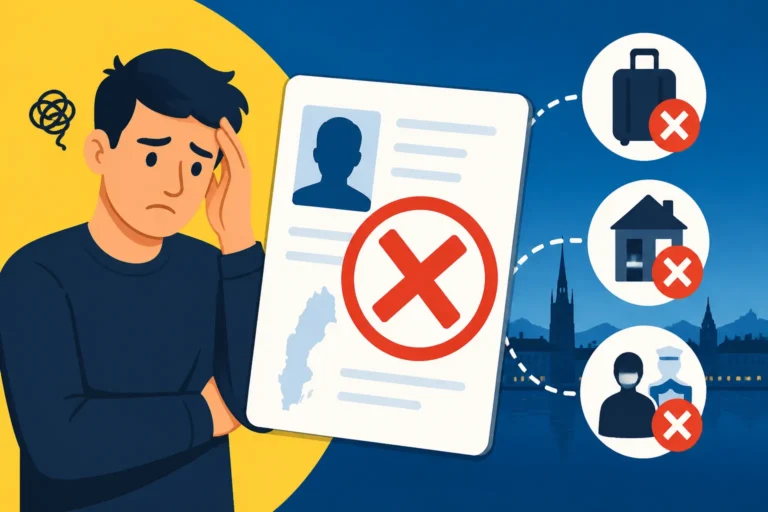
Receiving a decision that states "insufficient identity proof" is a heartbreaking setback, often resulting in significant delays or even outright rejection of your application. This can happen for several reasons:
- Expired or damaged documents: As mentioned, this is a frequent culprit.
- Uncertified translations: Submitting your own translation or one from an unapproved source.
- Lack of authentication (apostille/legalization): For documents where this is required, its absence will be noted.
- Inconsistencies: Discrepancies between names on different documents (e.g., maiden name vs. married name, or different spellings) without supporting legal documentation (like a marriage certificate or name change decree) can cause major issues.
The consequences range from having to restart parts of your application, leading to months of extra waiting, to having your application denied, potentially forcing you to leave Sweden. This can also impact your timeline for The Path to Permanent Residence in Sweden: Rules and Timeline or Becoming a Swedish Citizen: Requirements and the Application Process, as continuous legal residency is usually a requirement.
Proactive Steps: Double-Checking and Seeking Clarification
The best defense is a good offense when it comes to Migrationsverket.
- Read the official guidelines thoroughly: Every application type on Migrationsverket's website has specific document requirements. Don't skim; read every detail, including the fine print on translations and authentications.
- Use their online portal: When you apply online, the portal often guides you on required documents. Upload clear, high-resolution scans or photos of all pages of your passport and any other required documents.
- Cross-reference names and dates: Ensure consistency across all your documents. If there are any legitimate variations, provide legal proof (e.g., a marriage certificate, a court order for a name change).
- Contact Migrationsverket for clarification: If you are unsure about a specific document or a translation requirement, it's always better to ask. You can call their customer service or use their contact forms. While getting through might require some patience, it's worth the effort to avoid mistakes.
- Utilize reputable translation services: For critical documents, going through recognized services like RushTranslate or Translayte for certified translations can provide peace of mind. Just ensure their certification process aligns with Swedish requirements.
The Biometrics Appointment: Your Final Identity Check
Even if you've uploaded every document digitally, your identity isn't fully verified until your biometrics appointment. This is a crucial step for almost everyone applying for a residence permit or an extension. During this appointment, you'll provide fingerprints and a photo, and importantly, you must bring your original passport or national ID card. This is Migrationsverket's opportunity to physically inspect your primary identity document, ensuring it matches the digital copies and that it's genuine and undamaged. They will cross-reference it with the biometrics they collect.
This step is typically arranged after you've submitted your application and it's deemed 'complete enough' for processing. For those applying from outside Sweden, this appointment will be at a Swedish embassy or consulate in your home country or a neighbouring one. If you're already in Sweden, you'll visit one of Migrationsverket's service centres. Don't underestimate the importance of this appointment, or forget to bring your original, valid identification, as it's the final piece of the identity puzzle for your residence permit card (UT-kort) in Sweden.
Summary of Identity Document Requirements for Migrationsverket
| Document Type | Primary Use Case | Key Requirements | Notes |
|---|---|---|---|
| Passport | Primary identity proof for non-EU/EEA, travel | Valid, undamaged, machine-readable, clear photo. | Essential for all major applications (residence, extension, permanent residence, citizenship). No apostille/legalization usually required. |
| National ID Card | Primary identity proof for EU/EEA citizens | Valid, undamaged, photo, shows citizenship, machine-readable. | Accepted for EU/EEA citizens instead of a passport. Not all national ID cards are equal; ensure it explicitly states citizenship. |
| Birth Certificate | Supplementary, for family & age proof | Original (or certified copy), certified translation (if not in SE/EN), potentially apostille/legalization. | Crucial for minors, family reunification, establishing parental links. Not sufficient as primary identity for adults. |
| Driving License | Supplementary, secondary ID | Valid, photo. | Generally not accepted as primary identity proof for residence permits or citizenship. May be requested as secondary verification at appointments. |
| Marriage Certificate | Supplementary, name changes | Original (or certified copy), certified translation (if not in SE/EN), potentially apostille/legalization. | Important for proving relationship in family reunification, or for explaining name changes. |
| Refugee Travel Document | Primary identity for recognized refugees | Valid, undamaged, photo, issued by competent authority. | Specific requirements apply. Always check Migrationsverket's current guidelines for these documents. |
| Translations | For non-SE/EN documents | Certified by an authorized translator (e.g., Kammarkollegiet in Sweden). Must be attached to the original document or a certified copy. | Uncertified translations will be rejected. Services like RushTranslate or Translayte can provide certified translations; verify their acceptance for Swedish authorities. |
| Apostille/Legalization | Authenticates origin of public documents | Issued by competent authority in country of origin (apostille for Hague Convention countries; legalization otherwise). | Typically required for birth/marriage certificates, police records, but generally not for passports. Always check per document and country. |
Proving your identity to Migrationsverket doesn't have to be a nightmare, but it does demand attention to detail. By understanding the specific requirements for your documents, ensuring they are valid and correctly translated, and bringing all originals to your appointments, you'll navigate this crucial step with confidence. Remember, the goal is clarity and authenticity, and Migrationsverket has little patience for anything less.
Disclaimer
The information provided in this guide is intended for general informational purposes only and does not constitute legal advice. Immigration laws and regulations in Sweden are complex and can change frequently. While we strive to provide accurate and up-to-date information, individual circumstances vary, and the information may not apply to your specific situation. We strongly recommend consulting with Migrationsverket directly or seeking advice from a qualified immigration lawyer or consultant for personalized guidance regarding your identity verification and residence permit applications in Sweden.