Why Was My Swedish Bank Account Application Rejected?
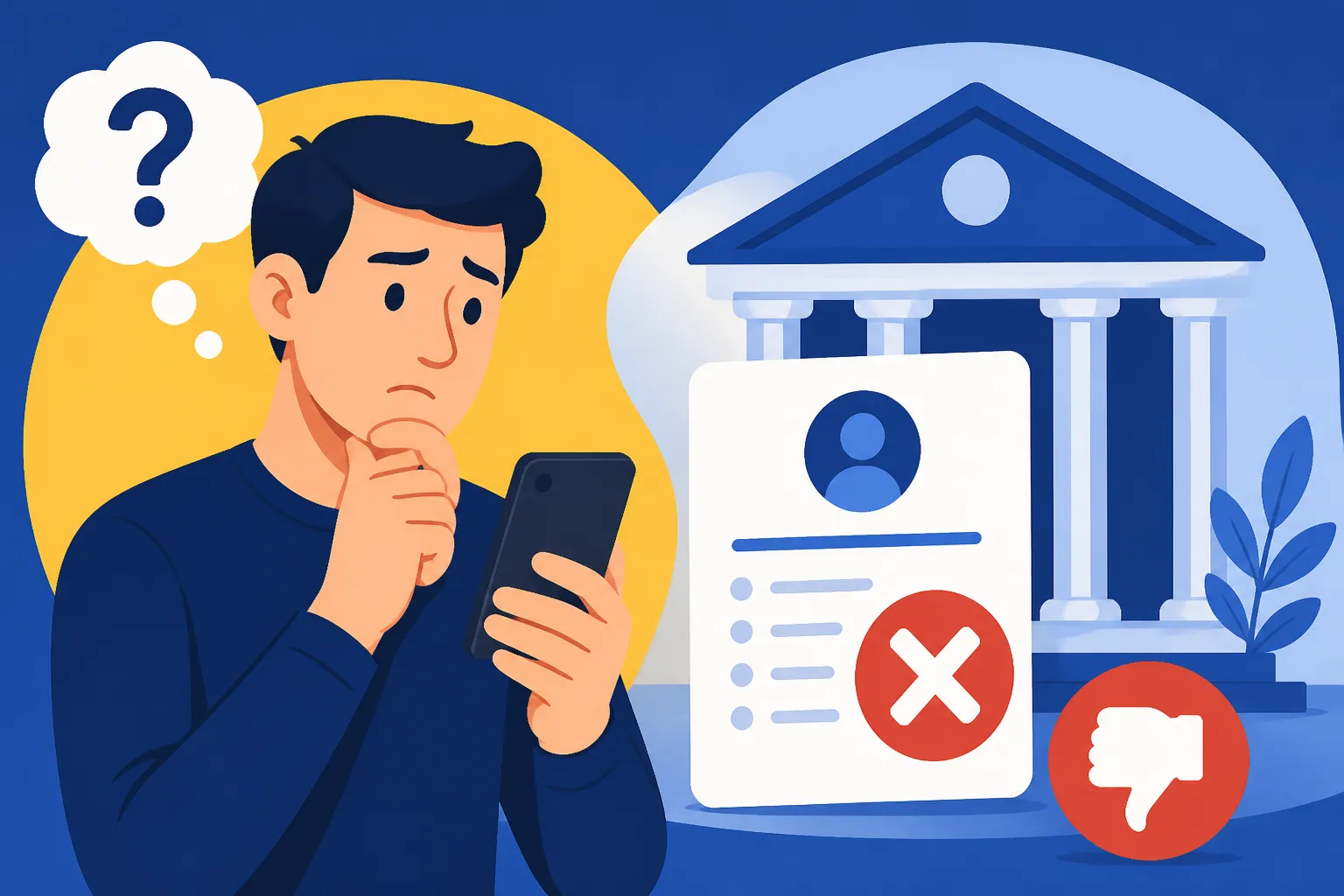
Walking into a sleek Swedish bank branch with your employment contract and passport in hand, only to be told that your application has been denied, is one of the most isolating experiences a newcomer can face. In a country that is almost entirely cashless, being without a bank account means you cannot pay rent easily, get a phone contract, or use Swish. This guide explains why these rejections happen and provides the concrete steps you need to take to secure your financial footprint in Sweden.
The Gap Between EU Law and Swedish Reality
One of the most confusing aspects of moving here is the contradiction between what the law says and what actually happens at the bank teller's desk. Under European Union law, specifically the Payment Accounts Directive, any legal resident of the EU has the right to a "basic payment account" regardless of their nationality or place of residence. In theory, this means that even if you are still waiting for your personal identity number, the bank should be able to open a restricted account for you.
However, the reality on the ground in Stockholm, Gothenburg, or Malmö is often quite different. Swedish banks are under immense pressure from the Swedish Financial Supervisory Authority (Finansinspektionen) to prevent money laundering and terrorist financing. Because the penalties for non-compliance are astronomical, many banks have adopted a "zero-risk" approach. If a clerk feels that your documentation is slightly irregular or that they cannot fully verify your identity through the standard digital systems, it is often easier for them to simply say "no" than to perform the manual due diligence required by law.
This creates a frustrating catch-22 for many. You are told you need a bank account to receive your salary, but the bank tells you they cannot open an account because you haven't received your first salary yet. Understanding that this is a systemic hurdle rather than a personal failure is the first step toward overcoming it. You are essentially fighting against a rigid bureaucratic machine that prioritizes risk mitigation over universal access.
The Personnummer Paradox and Documentation Hurdles
The single most common reason for a rejection is the lack of a Swedish personal identity number. For many, the process of Getting Your Personnummer: The Gateway to Swedish Healthcare is the first priority, but it can take weeks or even months. Without this number, you do not exist in the Swedish credit and civil registries, which makes banks extremely nervous.
Even if you have your number, the bank might reject you if you do not yet have a Swedish ID card issued by Skatteverket. While a foreign passport is technically a valid form of identification, many bank employees are not trained to recognize the security features of every global passport. They much prefer the standard Swedish ID card, which can be scanned and verified instantly. If you find yourself in this situation, it is often worth reading about Why You Need a Personnummer for Almost Every Financial Service in Sweden to understand why this string of digits holds so much power over your financial life.
Beyond identity, banks will ask for a "purpose of account." If you cannot provide a clear, documented reason for needing the account—such as a Swedish work contract, a university acceptance letter, or a marriage certificate to a Swedish resident—they may view your application as a risk. They are looking for "strong ties" to Sweden. If your stay is perceived as temporary or if your income comes from volatile foreign sources, the bank’s internal "KYC" (Know Your Customer) flags might be triggered, leading to an immediate rejection.
Understanding KYC and Anti-Money Laundering (AML) Flags
When you apply, you will be asked a series of "customer excellence" questions. These are not just polite inquiries; they are legal requirements. The bank must know where your money is coming from and where it is going. If you answer these questions vaguely, or if your financial history involves countries that Sweden considers "high risk," your application will likely be denied.
Swedish banks are particularly wary of large incoming transfers from outside the EU. If you plan to move your life savings to Sweden to buy an apartment, you must be prepared to show a clear paper trail of how that money was earned. For Americans, this process is even more complex due to FATCA (Foreign Account Tax Compliance Act) regulations. Swedish banks often view US citizens as a high administrative burden because they must report account details back to the IRS. In these instances, consulting experts like Taxes for Expats can help you ensure your paperwork is in order so you don't inadvertently trigger a rejection based on tax status.
Common AML flags include:
- Inability to explain the source of initial deposits.
- Frequent transactions with "non-cooperative" jurisdictions.
- A lack of a clear permanent address in Sweden.
- Being a "Politically Exposed Person" (PEP) or a family member of one.
If you are rejected for "KYC reasons," the bank is often legally prohibited from telling you exactly what triggered the flag. This "tipping off" rule is meant to prevent criminals from learning how to bypass security, but it leaves honest expats in the dark.
How to Handle a Rejection: Your Right to Appeal
If a bank rejects your application, the first thing you should do is remain calm and ask for the decision in writing. According to Swedish law (Lagen om obetalda fakturor and related consumer protections), the bank must provide you with information on how to appeal the decision and where you can turn for help. They are not allowed to just wave you away.
If they claim you lack "sufficient identity," ask them exactly which documents would satisfy their requirement. If they refuse to open an account because you lack a Personnummer, remind them of the EU Directive on the Right to a Basic Payment Account. While this doesn't always work at the branch level, having the law on your side is vital if you need to take the matter further.
The next step is to contact the National Board for Consumer Disputes (Allmänna reklamationsnämnden or ARN). This is a government agency that resolves disputes between consumers and businesses. While their decisions are not technically binding, Swedish banks almost always follow their recommendations to avoid reputational damage. Additionally, the Swedish Consumers' Banking and Finance Bureau (Konsumenternas bank- och finansbyrå) can provide free guidance on whether your rejection was lawful. It is also helpful to review Money and Finance in Sweden: A Complete Guide for Foreigners (2027) to see if there are alternative institutions that are known to be more "expat-friendly."
| Common Rejection Reason | Underlying Cause | Potential Solution |
|---|---|---|
| Lack of Personnummer | Bank's internal policy requires civil registry lookup. | Request a "Basic Payment Account" under EU law; use a temporary ID. |
| No Swedish ID Card | Foreign passports are harder to verify manually. | Apply for a Skatteverket ID card immediately after getting your number. |
| Source of Wealth Issues | Large foreign transfers without documentation. | Provide bank statements and tax records from your home country. |
| US Citizenship (FATCA) | Increased reporting requirements for the bank. | Ensure all US tax filings are up to date via Taxes for Expats. |
| No Local Employment | Perception that the account isn't "necessary." | Show proof of residence, a rental contract, or a pension statement. |
Practical Interim Solutions for Newcomers
While you are fighting for your Swedish account, you still need to live your life. Fortunately, the rise of fintech has provided several lifelines for expats. Services like Wise allow you to hold a balance in Swedish Krona (SEK) and provide you with local bank details that can sometimes be used to receive salary payments (though not all Swedish employers' systems accept non-Swedish IBANs). Using Wise for your daily expenses while waiting for your local account can save you a fortune in currency conversion fees from your home bank.
Another option is to look into digital-first banks or smaller niche banks that might have more flexible onboarding processes than the "Big Four" (SEB, Nordea, Swedbank, and Handelsbanken). Some newcomers find success with ICA Banken or Marginalen Bank, though even these have become stricter in recent years. It is important to note that without a full Swedish bank account, you will struggle to get BankID and Digital Payments: How Money Moves in Cashless Sweden, which is the digital key to almost all government and private services in the country.
During this interim period, make sure you are also looking into Opening a Bank Account in Sweden: A Step-by-Step Guide to see if there is a specific bank known for helping people in your exact situation—whether you are a student, a researcher, or a trailing spouse.
Strategic Tips for Your Next Application
If you have been rejected once, do not simply walk into the next bank and try the exact same thing. You need to change your approach. First, try to get an appointment rather than just walking in. An appointment suggests you are serious and gives the bank time to assign a clerk who might be more experienced with international clients.
Second, bring "The Big Folder." This should include:
- Your passport and your Swedish residence permit card.
- Your Personnummer notification (Personbevis) from Skatteverket.
- A certified copy of your employment contract or university enrollment.
- A recent rental agreement showing your Swedish address.
- Tax returns from your home country to prove the source of your savings.
If you are transferring money from abroad, be proactive. Tell the bank, "I plan to move 500,000 SEK from my home country to buy a home; here is the documentation showing the sale of my previous property and the tax paid on it." Transparency is your greatest ally. If the bank feels they have to "dig" for information, they will get suspicious. If you hand it to them on a silver platter, they are much more likely to hit the "approve" button.
Once you finally secure that account, you'll be able to start Using Swish: How Sweden Pays Instantly, which will change your daily life overnight. Suddenly, you'll be able to pay for items at flea markets, split dinner bills with friends, and pay for your coffee at small kiosks that don't take cards.
Navigating the Complexity of Foreign Assets
If your rejection was based on the complexity of your global financial life, you may need to simplify things before applying again. Swedish banks are wary of "tax residency" issues. They want to know where you are paying tax to ensure they are compliant with international treaties. Reading up on Double Taxation: How Sweden's Tax Treaties Protect You can help you explain to the bank clerk why you still have financial interests abroad and how they are being legally managed.
For many expats, the frustration of the bank account is just the first hurdle in a larger financial integration process. It is often linked to other administrative steps, such as How to Open Your First Swedish Bank Account Without a Personnummer, which provides specific strategies for those in the very early stages of their move. Remember that the bank clerk is often just following a script; if you can provide the documentation that allows them to "check the boxes" on their screen, you will eventually succeed.
Disclaimer
This guide is for informational purposes only and does not constitute legal or financial advice. Banking regulations in Sweden are subject to frequent changes, and individual bank policies may vary. Always consult with the specific financial institution or a legal professional for advice regarding your specific situation. Swedbank, SEB, Nordea, and Handelsbanken are independent entities with their own internal risk assessment criteria.