Getting BankID: Sweden’s Essential Digital Identity
Moving to Sweden often feels like stepping into the future, a land where cash is almost obsolete and digital solutions reign supreme. But for many newcomers, this digital paradise hits a snag: BankID. You quickly realize you can’t do much of anything without it, from paying bills to talking to your doctor, and getting one can feel like navigating a bureaucratic maze designed specifically to test your patience. This comprehensive guide will walk you through everything you need to know about securing your BankID, tackling the common hurdles, and understanding why this little app becomes your ultimate lifeline in Sweden.
What is BankID and Why is it Indispensable in Sweden?
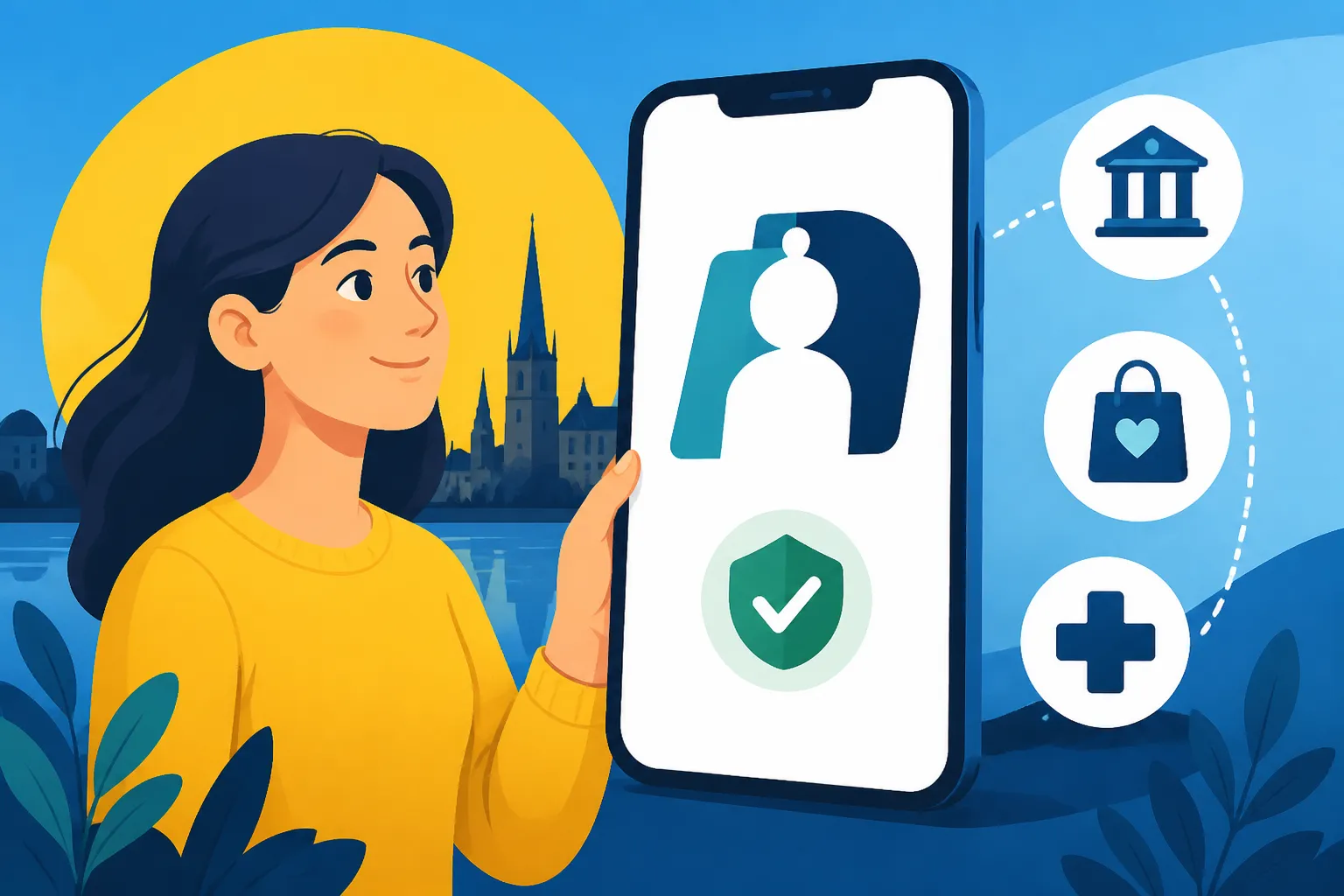
When you first arrive in Sweden, you might hear about BankID from employers, landlords, or even when trying to sign up for a loyalty program. It’s not just another app on your phone; it’s a personal electronic identification that lets you prove your identity securely online. Think of it as your digital passport, signature, and key to practically every essential service in Sweden, all rolled into one. Without it, you’re often stuck in a frustrating analogue world while everyone else breezes through their daily tasks with a tap.
More Than Just an ID: BankID's Role in Everyday Life
BankID’s reach in Sweden is truly astounding. It’s deeply integrated into the fabric of society, making countless aspects of daily life incredibly smooth and secure for those who have it. For expats, understanding its ubiquitous presence is key to unlocking Sweden's digital convenience.
Imagine needing to access your healthcare records, renew a prescription, or book an appointment at your local vårdcentral. You'd typically log into 1177.se, Sweden's national health advice portal, using your BankID. This isn't just for booking; it's how you access your personal medical data, communicate securely with healthcare providers, and manage a vast array of health-related services. Without BankID, these crucial interactions often require a phone call during specific hours or even a physical visit, which can be a significant barrier if you're still grappling with the language or understanding the system. The convenience of being able to check your health records and even Book Doctor Appointments Online Through 1177.se with BankID from the comfort of your home is something most Swedes take for granted.
Beyond healthcare, BankID is essential for all your financial dealings. You'll use it to log into your online banking, approve transactions, and manage investments. Even making instant payments with Swish, Sweden's wildly popular mobile payment service, relies entirely on your BankID. It's the secure authentication that ensures only you can authorize money transfers. Moreover, when it comes to official government services, BankID is your primary key. Filing your annual tax return (Deklaration) is overwhelmingly done online, and guess what? Your BankID is your digital signature to approve your pre-filled return with Skatteverket, the Swedish Tax Agency. For anyone needing to manage their finances or navigate the Swedish tax system, perhaps with help from services like Taxes for Expats, BankID is non-negotiable. It makes tasks like understanding The Swedish Tax System Explained: Rates, Returns, and Filing significantly more streamlined.
Furthermore, signing contracts, applying for loans or credit cards, setting up utilities, and even managing your children's school applications online often require BankID verification. Many employers also use it for internal systems, and joining a trade union or accessing your A-kassa unemployment fund portal will likely demand it. It truly streamlines bureaucratic processes that can otherwise be incredibly cumbersome for newcomers. This pervasive use means that while getting it can be a challenge, the benefits once you have it are immense, transforming your daily interactions from frustrating to fantastically efficient.
The Different Flavours of BankID: Mobile, on File, and on Card
BankID isn't a one-size-fits-all solution; it comes in a few different forms, each serving slightly different purposes and having distinct technical requirements. Understanding these variations can help you decide which one is right for you, or at least understand what your bank is offering.
The most common and widely used type is Mobile BankID (Mobilt BankID). This is the version you install as an app on your smartphone or tablet. It's incredibly convenient because your phone is usually always with you, allowing you to authenticate transactions and log in to services on any device, whether it's your computer, another phone, or even a public terminal, simply by scanning a QR code or entering a security code into your Mobile BankID app. Most people use Mobile BankID because of its portability and ease of use for everyday tasks, from online shopping to interacting with government agencies. It's truly the workhorse of digital identity in Sweden.
Then there's BankID on File (BankID på fil), which is installed directly on your computer. This version typically resides in your web browser's certificate store or a dedicated security program. While it offers similar functionality to Mobile BankID, its main drawback is its lack of portability. You can only use it on the specific computer where it's installed, which can be limiting in Sweden's highly mobile digital landscape. However, some people prefer it for security reasons, feeling that a dedicated desktop installation provides an extra layer of control. It was more common in the past, but Mobile BankID has largely overtaken it due to convenience.
Finally, there's BankID on Card (BankID på kort). This version requires a physical smart card (issued by your bank, sometimes also serving as a debit card) and a card reader connected to your computer. You insert the card into the reader and enter a PIN to authenticate. This method offers the highest level of security, as it combines something you have (the card) with something you know (the PIN). While extremely secure, its reliance on a physical card reader makes it less practical for spontaneous online interactions or use on the go. Some financial institutions or organizations with very high-security requirements might still recommend or even mandate BankID on Card, but for the average person, Mobile BankID is the preferred choice due to its flexibility.
Here's a quick overview:
| BankID Type | Device Requirement | Portability | Common Use Case | Security Level |
|---|---|---|---|---|
| Mobile BankID | Smartphone/Tablet | High (via app) | Daily online transactions, logins, Swish | High |
| BankID on File | Specific Computer | Low (tied to PC) | Less common, some niche uses | High |
| BankID on Card | Computer + Card Reader | Very Low (physical) | High-security financial apps | Very High |
The Prerequisites: What You Absolutely Need Before Applying
Before you even think about applying for BankID, you need to understand that it's not something you can just walk in and get. There are fundamental requirements that often pose the biggest hurdles for new expats. Without these foundational elements firmly in place, you'll find yourself hitting brick wall after brick wall. It’s a classic Swedish paradox: to get essential services, you need another essential service, which in turn requires yet another.
The Personnummer: Your Golden Ticket
Let’s be brutally honest here: if you don’t have a Personnummer, your chances of getting a BankID are pretty close to zero. This ten-digit personal identity number is the backbone of Swedish bureaucracy and digital life. It's not just a number; it’s your entry pass into Swedish society, granting you access to everything from healthcare to banking and, yes, BankID.
The Personnummer is issued by Skatteverket (the Swedish Tax Agency) when you are registered in the Swedish Population Register (Folkbokföringen). To get one, you generally need to be planning to live in Sweden for at least one year and meet specific requirements based on your citizenship and reason for moving. For EU/EEA citizens, this often involves proving your right of residence (e.g., through employment, study, or sufficient funds) and registering with Skatteverket. Non-EU citizens typically get their Personnummer once their residence permit has been approved for a stay of longer than a year. It's a critical step in Getting Your Personnummer: The Gateway to Swedish Healthcare and indeed, to almost all other aspects of life here.
Many expats find this initial waiting period incredibly frustrating. You arrive, eager to set up your life, but you’re held back because you don’t have this magical number. This means that for a while, you might be navigating Sweden with less digital convenience, relying on your passport for identification and often needing to perform tasks in person or via slower postal methods. Patience, unfortunately, is a virtue you'll need in spades during this phase. If you're wondering Why You Need a Personnummer for Almost Every Financial Service in Sweden, BankID is a prime example.
A Swedish Bank Account: The Foundation
Once you have your Personnummer, the next critical step is to open a proper Swedish bank account. This isn't just about having somewhere to put your salary; it's a prerequisite for BankID. You see, BankID is issued by the banks, not a government agency. They are essentially vouching for your identity based on their "Know Your Customer" (KYC) processes.
Opening a bank account in Sweden can itself be a mini-saga for newcomers. While some banks might allow you to open a basic account with a coordination number (samordningsnummer) or even just your passport initially, getting a full-service account that qualifies you for BankID almost always requires your Personnummer. Banks like Swedbank, SEB, Handelsbanken, and Nordea are the big players, but their policies for new arrivals, especially those without a long history in Sweden, can vary. Sometimes, you might need to prove your address, your source of income, or even your reason for being in Sweden in extensive detail. This process often feels like a chicken-and-egg situation: you need a bank account for BankID, but getting a bank account can be tricky without the digital conveniences that BankID provides.
Don't despair, though. With your Personnummer in hand, the process of Opening a Bank Account in Sweden: A Step-by-Step Guide becomes significantly smoother. Be prepared to bring your passport, residence permit (if applicable), Personnummer registration certificate from Skatteverket, and possibly even your employment contract. Some banks may also ask about your tax residency in other countries, which is standard procedure, but it's good to be prepared. Once you have an active Swedish bank account with a major bank, you're halfway to securing your BankID.
Age and Residency Requirements
Beyond the Personnummer and a Swedish bank account, there are a few other eligibility criteria that banks typically enforce when issuing a BankID. These are generally straightforward but worth noting.
Firstly, you need to be of a certain age. Most Swedish banks require you to be at least 13 years old to get a Mobile BankID. For children between 13 and 18, parental consent (usually from both parents, and often requiring their own BankID to sign digitally) is generally needed. This ensures that minors use the digital ID responsibly and with appropriate oversight. This minimum age is important because BankID isn't just for adults; even teenagers use it for various digital services, including signing in to school portals or youth healthcare services.
Secondly, while having a Personnummer implies a level of residency, banks also need to confirm that you are a legitimate customer with a connection to Sweden. This means having an active relationship with the bank, not just a dormant account. They need to verify that you are indeed living in Sweden, which is intrinsically linked to your Personnummer and your Folkbokföring (population registration). You won't typically get a BankID if you're only visiting or have a short-term visa that doesn't qualify for a Personnummer. The banks, as issuers, have a responsibility to ensure that the digital identities they provide are tied to individuals with a verifiable presence in the country, largely to prevent fraud and comply with anti-money laundering regulations. This is why attempting to apply for BankID as a temporary visitor, even if you managed to open a basic account without a Personnummer, is almost certainly going to result in a refusal.
Step-by-Step: How to Get Your BankID
Once you've cleared the initial hurdles of getting your Personnummer and establishing a relationship with a Swedish bank, the actual process of applying for and activating your BankID becomes much more manageable. However, there are still nuances that can make the experience smoother or, if overlooked, cause unnecessary delays.
Choosing Your Bank: Not All Are Created Equal for Expats
While all major Swedish banks issue BankID, their policies and processes for new arrivals, particularly expats, can differ. This is where choosing the right bank can really save you some headaches. The large, traditional banks like Swedbank, SEB, Handelsbanken, and Nordea are the primary issuers of BankID. You can't get BankID from a smaller niche bank or an international online-only service like Wise, which handles international money transfers but doesn't operate as a full-service Swedish bank.
Historically, some banks have been perceived as more "expat-friendly" than others, with clearer instructions in English and a more streamlined approach for non-Swedes. However, policies can change, and your individual experience might vary depending on the branch and the staff you encounter. It's often worth asking around in expat forums or local Facebook groups for recent experiences and recommendations regarding which bank has been easiest to deal with for BankID applications.
Once you have your Personnummer, you'll need to open an account with one of these banks. Some may allow you to start the account opening process online, but for full verification and BankID activation, an in-person visit to a branch is almost always required. During this visit, they will verify your identity thoroughly, often requiring your passport, your residence permit (if applicable), and your Personnummer certificate. Make sure to choose a bank where you can communicate effectively, whether that's in English or through a Swedish-speaking friend if your language skills aren't quite there yet. The ease of getting your How to Open Your First Swedish Bank Account Without a Personnummer might be an initial factor, but for BankID, a full Personnummer is paramount.
The Application Process: Online or In-Branch?
The method for applying for BankID largely depends on your bank and whether you're initiating the process for the very first time as a new customer.
First-time applications for new customers almost always require an in-branch visit. This is a critical point for expats. You cannot simply download the app and sign up remotely if you've never had a BankID before and are new to the Swedish banking system. The bank needs to perform a robust identity verification in person to comply with regulations. During this visit, a bank representative will guide you through the process, often helping you download the Mobile BankID app onto your phone and performing the initial activation. They will link your Personnummer and bank account to your new BankID. Be prepared to spend a bit of time at the branch, as this is a thorough process.
For those who already have an existing BankID (perhaps you had one, it expired, or you got a new phone), renewal or activation on a new device can often be done online. If your existing BankID is active, you can typically use it to log into your online banking portal and then follow the instructions to order a new Mobile BankID for a new phone or reactivate an expired one. This is significantly more convenient, but it highlights the initial hurdle: getting that first BankID.
During the in-branch application, the bank will:
- Verify your identity: Using your passport, residence permit, and Personnummer.
- Confirm your details: Ensure your registered address and contact information are up-to-date.
- Explain the terms: Go over the user agreement and security advice for BankID.
- Help with activation: Assist you in downloading the Mobile BankID app on your phone and linking it to your bank account. You'll typically set a personal security code (PIN) for your BankID during this step.
It’s crucial to treat your BankID PIN like you would any other highly sensitive password. Don't share it, and be wary of any calls or messages asking for it. The bank will never ask you for your BankID PIN over the phone or email.
Activating and Using Your New BankID
Once you’ve successfully completed the application process, whether online or in a branch, the final step is to activate and start using your BankID. This is usually very straightforward.
If you opted for Mobile BankID, you will have downloaded the app from your phone's app store (Google Play for Android, Apple App Store for iOS). During the in-branch process, the bank will likely help you through the initial setup, which involves connecting the app to your bank account using a one-time code or QR code they provide. Once activated, you'll set your personal security code, which is typically six digits long. Every time you use your BankID, you'll launch the app and enter this code.
Using your BankID is surprisingly intuitive. When you visit a website or app that requires BankID (which will be most things in Sweden), you'll typically see a "Logga in med BankID" (Log in with BankID) or "Signera med BankID" (Sign with BankID) button. Clicking this will prompt you to open your Mobile BankID app. Depending on the service, you might need to:
- Scan a QR code: Some services display a QR code on your computer screen; you use the BankID app's scanner to read it, then enter your PIN.
- Enter your Personnummer: Other services ask for your Personnummer, which then sends a push notification to your Mobile BankID app; you approve the request and enter your PIN.
The system is designed for quick and secure authentication. You'll use it to:
- Log into your online bank.
- Make payments with Swish.
- Access 1177.se for healthcare services. If you need to log into 1177.se with BankID, this is how it's done.
- Sign documents digitally with various government agencies like Skatteverket or Försäkringskassan. When you're registering with Försäkringskassan: When and Why You Need To, having BankID makes the digital side of things seamless.
- Shop online securely.
- Manage utilities and subscriptions.
It truly integrates into almost every digital interaction you'll have. You'll find yourself reaching for your phone to use the app dozens of times a week without even thinking about it.
Common Challenges and Troubleshooting for Foreigners
Even with all the right prerequisites in place, the journey to getting and maintaining BankID can present some unique challenges for foreigners. It’s not always a perfectly smooth road, and being aware of potential bumps can help you navigate them more effectively.
"My Bank Won't Give Me One!" – Navigating Bank Policies
This is a common and incredibly frustrating cry from many new expats. You've got your Personnummer, you've opened a bank account, but then you're told, "Sorry, you don't qualify for BankID yet." Why does this happen, and what can you do about it?
One of the primary reasons for refusal, even with a Personnummer, can be a perceived lack of "established relationship" or insufficient "presence" in Sweden from the bank's perspective. Banks are under strict anti-money laundering (AML) and "Know Your Customer" (KYC) regulations. For new arrivals, even with a Personnummer, they might consider your profile to be higher risk, especially if you have no credit history in Sweden, your Personnummer is very new, or your bank account hasn't been active for long. Some banks have internal policies that require you to have been a customer for a certain period, or to have a salary regularly paid into the account, before they will issue a BankID. It’s not discriminatory; it’s often a cautious approach to compliance.
Another issue can arise if your documentation isn't absolutely perfect. While a Personnummer is key, some banks might also scrutinize the validity period of your residence permit. If your permit is valid for a short period (e.g., less than a year, or close to expiry), they might be hesitant to issue a BankID that is tied to a potentially short-term stay. Ensure all your documents are current and clearly show a long-term intention to reside in Sweden.
What to do if you face a refusal:
- Don't give up: Policies can vary even between branches of the same bank. Try another branch, or even another major bank if you feel you meet all the criteria.
- Ask for clarification: Politely ask why they are refusing. Understanding the specific reason (e.g., "new Personnummer," "lack of transaction history") can help you address the issue or formulate a plan.
- Build your banking relationship: If the reason is a lack of history, try to use your Swedish bank account actively. Get your salary paid into it, pay your bills from it. After a few months of regular activity, revisit the bank.
- Confirm your tax residency: Ensure your bank understands your tax residency status. Services like Taxes for Expats highlight the complexities of international taxation, and banks are cautious about this.
- Seek expat community advice: Other expats have faced similar issues. Online forums or local expat groups can offer valuable, up-to-date advice on which banks are currently most accommodating or specific strategies that have worked for others.
Technical Glitches and How to Fix Them
Even once you have your BankID up and running, technology being technology, you might occasionally encounter glitches. These can range from minor annoyances to more critical issues that prevent you from logging in.
Common technical issues include:
- App not opening or crashing: Sometimes, a simple restart of your phone or reinstalling the Mobile BankID app can solve this. Ensure your phone's operating system is up-to-date.
- "Error connecting to BankID server": This can be due to temporary internet issues, server problems at your bank, or sometimes firewall/VPN interference. Try disabling VPNs, checking your internet connection, or trying again later.
- Incorrect PIN/security code: Double-check you're entering the correct code. If you've forgotten it, you will likely need to order a new BankID via your online banking (if you have another active BankID) or contact your bank directly. You cannot reset a BankID PIN independently.
- "No active BankID found": This might happen if your BankID has expired (they usually have a validity period of 2-3 years) or if you've recently changed phones and haven't migrated your BankID. You'll need to renew or activate a new one, usually via your online banking or by contacting your bank.
Troubleshooting tips:
- Check your internet connection: A stable connection is essential.
- Restart your device: The classic IT solution, but it often works.
- Update the app and OS: Ensure both your Mobile BankID app and your phone's operating system are running the latest versions.
- Try a different browser/device: If you're using BankID on a computer, try a different web browser. If you have BankID on another device, see if it works there.
- Contact your bank's IT support: Your bank's customer service or dedicated BankID support line is your best resource for persistent issues. They can often see if there's an issue with your specific BankID certificate or bank connection.
- Reinstall the app (as a last resort): Be careful with this. If you don't have another active BankID or a way to reactivate it through your online bank, reinstalling might require another trip to the branch. Only do this if instructed by your bank or if you're sure you can reactivate it.
Security and What to Do If You Lose Your BankID
BankID is designed with robust security features, but like any digital identity tool, user vigilance is key. Understanding the security protocols and knowing what to do in case of compromise is crucial.
Security features:
- Personal PIN: Every transaction or login requires your unique security code, which only you should know.
- Binding to device: Mobile BankID is tied to your specific phone/tablet. If you get a new device, you need to reactivate it.
- Encryption: All communication with BankID services is encrypted.
- Limited validity: BankID certificates expire (usually after a few years), requiring renewal, which ensures up-to-date security measures.
What to do if you lose your phone or suspect compromise:
- Block your BankID immediately: This is the most critical step. Contact your bank as quickly as possible to block your Mobile BankID. Most banks have a dedicated phone number for blocking BankID, often available 24/7. This prevents anyone else from using it, even if they know your PIN.
- Report your lost/stolen phone: File a police report for your lost or stolen device.
- Change your bank account passwords: As a precautionary measure, change your online banking password and any other critical passwords that might be accessible via your phone.
- Order a new BankID: Once your old BankID is blocked, you'll need to apply for a new one. This typically involves another visit to your bank branch or, if you have another active BankID (e.g., on a different device or computer), you might be able to order a new one through your online banking.
Remember, never share your BankID PIN with anyone, including bank employees or government officials. Be extremely wary of phishing attempts via email or SMS that ask you to "verify" your BankID or click suspicious links. Always go directly to official websites or use the legitimate app. Swedes are very aware of BankID scams, and you should be too.
Beyond BankID: Other Digital Identification Methods
While BankID is undeniably the king of digital identification in Sweden, it’s not the only option. However, it's important to understand that alternatives often come with significant limitations, especially for comprehensive access to services.
Freja eID: An Alternative (But Not a Full Replacement)
One of the most prominent alternatives to BankID is Freja eID. This is another government-approved electronic identification service that aims to provide similar functionality to BankID. Like BankID, Freja eID comes as a mobile app and can be used to log in to various online services and sign documents digitally. It also offers a physical ID card option, which can be particularly useful for those struggling to obtain a regular Swedish ID card. Getting a Swedish ID card often requires BankID anyway, so this offers an alternative path for some. For example, if you're stuck in a loop trying to figure out How Do I Get a Swedish ID Card?, Freja eID might provide a different route for physical identification.
Why Freja eID might be an option for expats:
- Potentially easier to obtain: In some cases, particularly for those with a Personnummer but facing difficulties with banks, Freja eID might be a slightly more accessible initial digital ID. Its verification process can sometimes be completed at a postal agent (PostNord) rather than solely at a bank branch.
- Accepted by a growing number of services: Freja eID is increasingly accepted by various public authorities and private companies, including some regions for healthcare services (like 1177.se, though BankID is still more common).
- Physical ID card: The optional Freja eID physical ID card can serve as a valid form of identification in many situations where a Swedish ID card is required, and your passport might not be accepted as easily for everyday use.
However, it’s crucial to understand Freja eID’s limitations:
- Not universally accepted: While its reach is growing, Freja eID is not accepted by as many services as BankID. Many banks, for instance, still exclusively use BankID for their online services. Critical platforms like Swish rely solely on BankID.
- Banks are still the main gatekeepers: Even if you get Freja eID, you will likely still need a BankID to access the full suite of online banking services from Swedish financial institutions.
- Less intuitive for some: While functional, some users find the interface or integration less seamless than BankID, which has been the dominant player for much longer.
In essence, Freja eID can be a valuable supplement or a stop-gap solution for specific needs, but it generally cannot replace BankID entirely for comprehensive digital integration into Swedish society.
International Alternatives (and Why They Don't Work Here)
Expats often wonder if they can use digital identification from their home countries or other international services to navigate Sweden's digital landscape. The short answer is almost always no.
- Foreign digital IDs/BankIDs: Digital identity solutions like Germany's eID, Norway's BankID, or Estonia's e-Residency are country-specific. They are designed to verify identity within their respective national systems and are not recognized for logging into Swedish services. Each country maintains its own digital infrastructure, and there's no widespread cross-border recognition for these types of high-assurance digital identities within the EU or globally, unfortunately.
- Generic authentication apps: Apps like Google Authenticator or Microsoft Authenticator provide two-factor authentication, which is a security layer for logins. However, they are not themselves identity providers. They confirm you are logging into a service you already have an account with, but they don't verify your identity to create new accounts or access government services in the way BankID does.
- Payment services (like Wise or Revolut): While excellent for international money transfers and multi-currency accounts, platforms like Wise do not issue digital IDs that integrate with Sweden's national systems. They are financial service providers, not identity providers. You might use Wise to send money back home or receive funds, but you can't use it to log in to Skatteverket or 1177.se. They exist in parallel to the Swedish digital identity system, not as a part of it. This highlights the distinction: a tool like Wise facilitates transactions, but BankID authenticates the person initiating those transactions within the Swedish framework.
So, while these international services are invaluable for managing your global finances and staying connected, when it comes to being a digitally recognized individual within Sweden, BankID remains the primary, essential tool. There's no escaping the need for a truly Swedish digital identity if you plan to integrate fully into life here.
Disclaimer
The information provided in this guide is for general informational purposes only and does not constitute financial, legal, or professional advice. While we strive to provide accurate and up-to-date information, rules and regulations in Sweden, particularly concerning banking and digital identification, can change. Always consult with the relevant authorities, such as your bank, Skatteverket, or Migrationsverket, for the most current and personalized advice regarding your specific situation. We are not responsible for any actions taken based on the information in this guide.