What Documents Do I Need to Open a Swedish Bank Account?
Trying to open a bank account in Sweden often feels like a frustrating game of administrative "chicken" where the bank demands a Personnummer, but Skatteverket needs a bank account to prove your local ties. This guide dismantles that catch-22 by detailing exactly which documents you need for every residency scenario, ensuring you walk into the branch prepared to successfully navigate the Swedish financial system.
The Absolute Foundation: Primary Identification and Proof of Identity
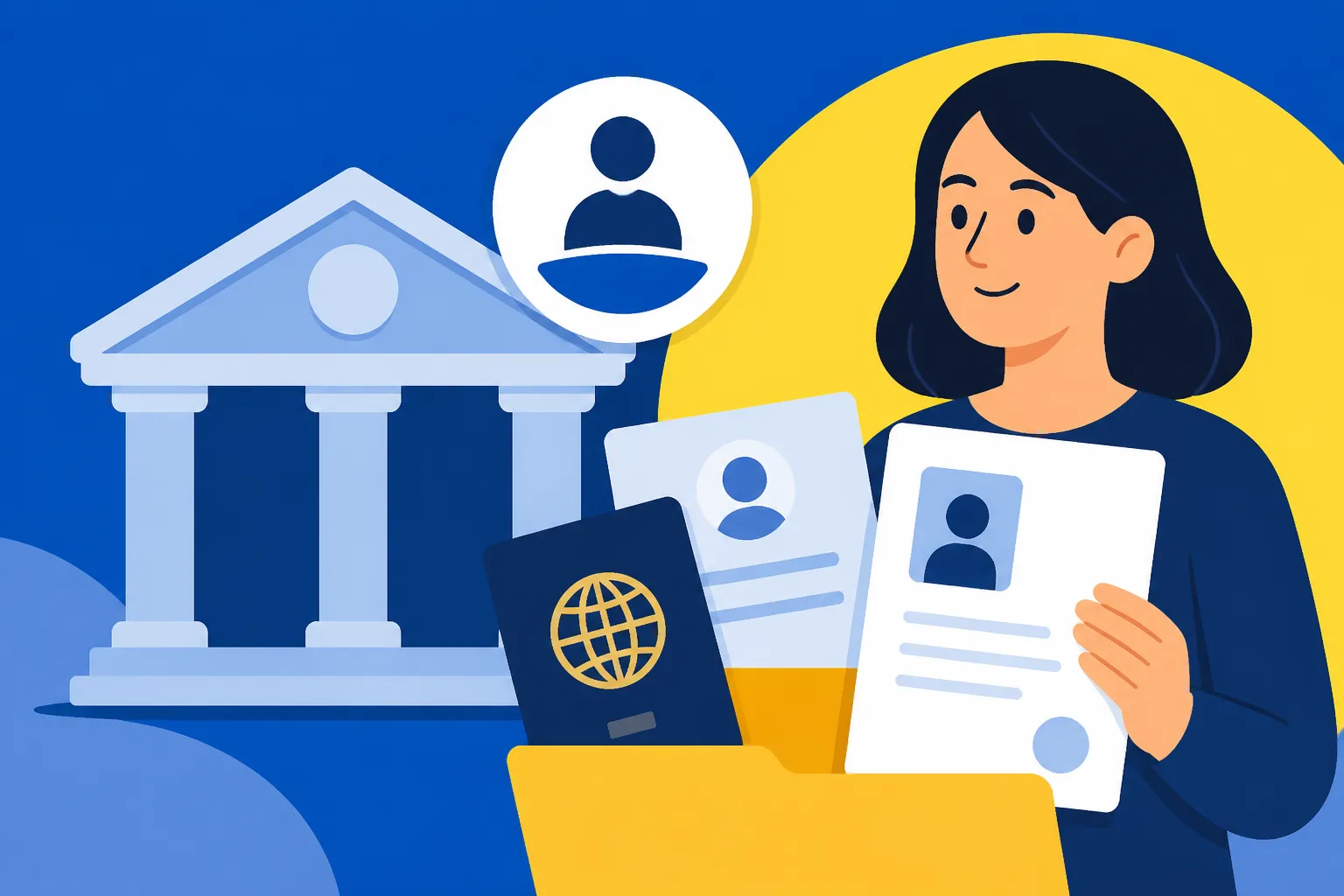
When you first step into a branch of Nordea, SEB, or Handelsbanken, your passport is the most obvious tool in your arsenal, but it is rarely enough on its own. In Sweden, banks operate under incredibly strict "Know Your Customer" (KYC) regulations and anti-money laundering laws. This means they aren't just looking for a photo of you; they are looking for a verification of your identity that aligns with Swedish standards.
If you are a citizen of a country outside the EU/EEA, a valid passport is mandatory. However, once you have been in the country for a few weeks and have received your personal identity number, you should immediately prioritize Getting a Swedish ID Card After Your Personnummer. The Swedish ID card, issued by Skatteverket, is the gold standard for banks. It contains a chip that makes you "verifiable" in their systems in a way that a foreign passport simply cannot. Many expats spend hours in bank lobbies only to be told their high-security foreign passport isn't sufficient because it lacks the specific digital recognition required for certain account features.
For EU/EEA citizens, a national ID card that clearly states your citizenship is often acceptable, but even then, I highly recommend bringing your passport as a backup. The bank clerks are looking for consistency. If there is even a slight discrepancy between your middle name on your employment contract and your ID, the process will grind to a halt. You must ensure that every piece of paper you present matches the spelling and format of your primary identification exactly. This is also where services like Wise can be a lifesaver; having an international account that already verifies your identity can sometimes serve as a secondary "proof of life" while you wait for your Swedish documents to arrive.
The Personnummer and Proof of Residency
The most significant hurdle you will face is the demand for your Personnummer. This ten- or twelve-digit number is the skeleton of Swedish society. Without it, you are essentially a ghost in the eyes of many banking software systems. Most banks will ask for your "Personbevis," which is a certificate from the Tax Agency proving that you are registered in the population register.
If you have already navigated the process of Registering Your Move (Flyttanmälan) with Skatteverket, you can download a Personbevis directly from the Skatteverket website using a digital ID, or request one be sent to your registered address. The bank wants to see that you are a long-term resident with a "vital interest" in being in Sweden. They will check your registration date and your address. If you are staying in temporary housing or a hotel, you will find it nearly impossible to open a full-service account. You need a residential address that matches the one in the population register.
For those who are still waiting for their number, there is a common misconception that you are legally barred from having an account. This is not true. EU law mandates that banks provide a "basic payment account" to anyone legally residing in the EU. However, proving your "legal residence" without a Personnummer requires a mountain of alternative paperwork. You will need to show why you are in Sweden—usually through a work permit or a university acceptance letter—and explain Why You Need a Personnummer for Almost Every Financial Service in Sweden just to justify your presence to the clerk. Even in these cases, the bank may limit your access to features like Getting BankID: Sweden's Essential Digital Identity, which is the real prize of Swedish banking.
Employment Contracts and the Source of Funds
In the modern banking era, being a "customer" is no longer a right; it is a relationship that the bank must vet. One of the most critical documents you will need is a certified copy of your Swedish employment contract (Anställningsavtal). The bank needs to see how much money will be coming into the account and from whom. They are looking for the name of your employer, your monthly salary, and whether your position is permanent (Tillsvidare) or a fixed-term contract.
When you present your contract, the bank will often cross-reference it with your expected tax obligations. This is a good time to consult resources like Taxes for Expats to ensure you understand how your income will be reported, as the bank might ask questions about your global tax residency. They will specifically ask if you are a "US Person" for tax purposes due to FATCA regulations. If you are, expect another three or four forms to sign. If you are self-employed, the requirements are even more strenuous; you will likely need to provide your F-skatt registration and a business plan.
Beyond just the contract, be prepared to answer the "Customer Excellence" questionnaire. This is a series of questions where you must declare how much you intend to transfer internationally each month, whether you or a family member are a "Politically Exposed Person" (PEP), and where your initial deposit is coming from. If you are moving a large sum of savings from abroad to buy a house, you will need bank statements from your home country proving that the money was earned through legitimate means, such as a house sale or years of salary. Using a service like Wise to move these funds can sometimes simplify the paper trail, as they provide clear, downloadable transfer receipts that Swedish banks are increasingly familiar with.
Documentation Requirements by Residency Status
| Residency Status | Primary ID Required | Proof of Residency | Proof of Income/Purpose |
|---|---|---|---|
| Non-EU Work Permit Holder | Passport + UT-Card | Personbevis (Personnummer) | Signed Employment Contract |
| EU/EEA Citizen | National ID or Passport | Registration with Skatteverket | Contract or Proof of Sufficient Funds |
| International Student | Passport | Letter of Acceptance (LoA) | Grant info or Bank Statements |
| Sambo / Family Member | Passport + UT-Card | Personbevis | Proof of relationship & partner's income |
| Asylum Seeker | LMA Card | Proof of address from Migrationsverket | N/A (Basic account only) |
The Interview: Why Your Documents Are Only Half the Battle
Simply having the folder of documents is often not enough to walk out with an account on the same day. Most major banks in cities like Stockholm, Gothenburg, or Malmö now require you to book an appointment weeks in advance. During this appointment, you will undergo what feels like a job interview. The bank official will go through your documents one by one, and their goal is to ensure you aren't a risk for money laundering.
During this meeting, you should be very clear about your needs. If you tell them you just want a place to put your salary, they might give you a "limited" account without a debit card or online banking. You must explicitly state that you need an account for your daily life, including the ability to pay bills via "Autogiro" or "Plusgiro." If you have already begun Registering with Försäkringskassan: When and Why You Need To, bring any correspondence from them as well; it further proves you are integrating into the Swedish social system.
A veteran tip: Bring a printed copy of the "Right to a Bank Account" (Rätten till konto) rules from the Swedish Consumers' Banking and Finance Bureau (Konsumenternas) if you are trying to Open a Bank Account in Sweden: A Step-by-Step Guide without a Personnummer. Sometimes, lower-level clerks are not fully aware of the EU regulations and will default to saying "No" if they don't see a Personnummer in their system. Having the legal requirement in Swedish to show them can change the tone of the conversation instantly. Also, keep in mind that companies like Taxes for Expats can help you prepare any necessary foreign tax declarations that the bank might request if you have complex income streams.
Final Preparations and Digital Hurdles
Once the bank accepts your documents, there is often a waiting period of one to two weeks while their back-office team "approves" the application. They will mail your "Welcome Pack" and your debit card to your registered address in the population register. This is why having your address updated with Skatteverket is non-negotiable.
When you finally get your account, your next step is to ensure they help you set up BankID and Swish. To do this, you will need a Swedish phone number and, in almost all cases, a Swedish ID card. If you only have a foreign passport, many banks will refuse to issue a "Mobile BankID," which will leave you locked out of most of Swedish digital life. Newcomers are generally advised to be persistent. If one branch of Swedbank tells you no, try another branch or a different bank like Choosing a Bank in Sweden: Swedbank, SEB, Handelsbanken, and Nordea. Every branch manager has a slightly different appetite for risk when it comes to international clients.
Before you leave the branch, make sure you have:
- Your IBAN and BIC/SWIFT codes for international transfers.
- A temporary password for the online banking portal.
- Clarity on their monthly fees (typically 25-50 SEK).
- Information on how to Understanding Your Swedish Payslip and Preliminärskatt so you can verify when your first salary arrives.
The process is bureaucratic and can feel cold, but once those documents are in the system and your BankID is active, the rest of your life in Sweden becomes infinitely easier. You will finally be able to sign for an apartment, pay for a gym membership, and shop at a grocery store without the constant stress of foreign transaction fees.
Important Disclaimer
The information provided in this guide is for educational and informational purposes only and does not constitute legal, financial, or professional advice. Banking regulations in Sweden, including Anti-Money Laundering (AML) and Know Your Customer (KYC) requirements, are subject to frequent changes by the Swedish Financial Supervisory Authority (Finansinspektionen) and individual bank policies. While every effort has been made to ensure the accuracy of this information, requirements may vary significantly based on your specific nationality, residency status, and the individual bank branch. Always consult directly with your chosen financial institution or a qualified legal professional regarding your specific situation.