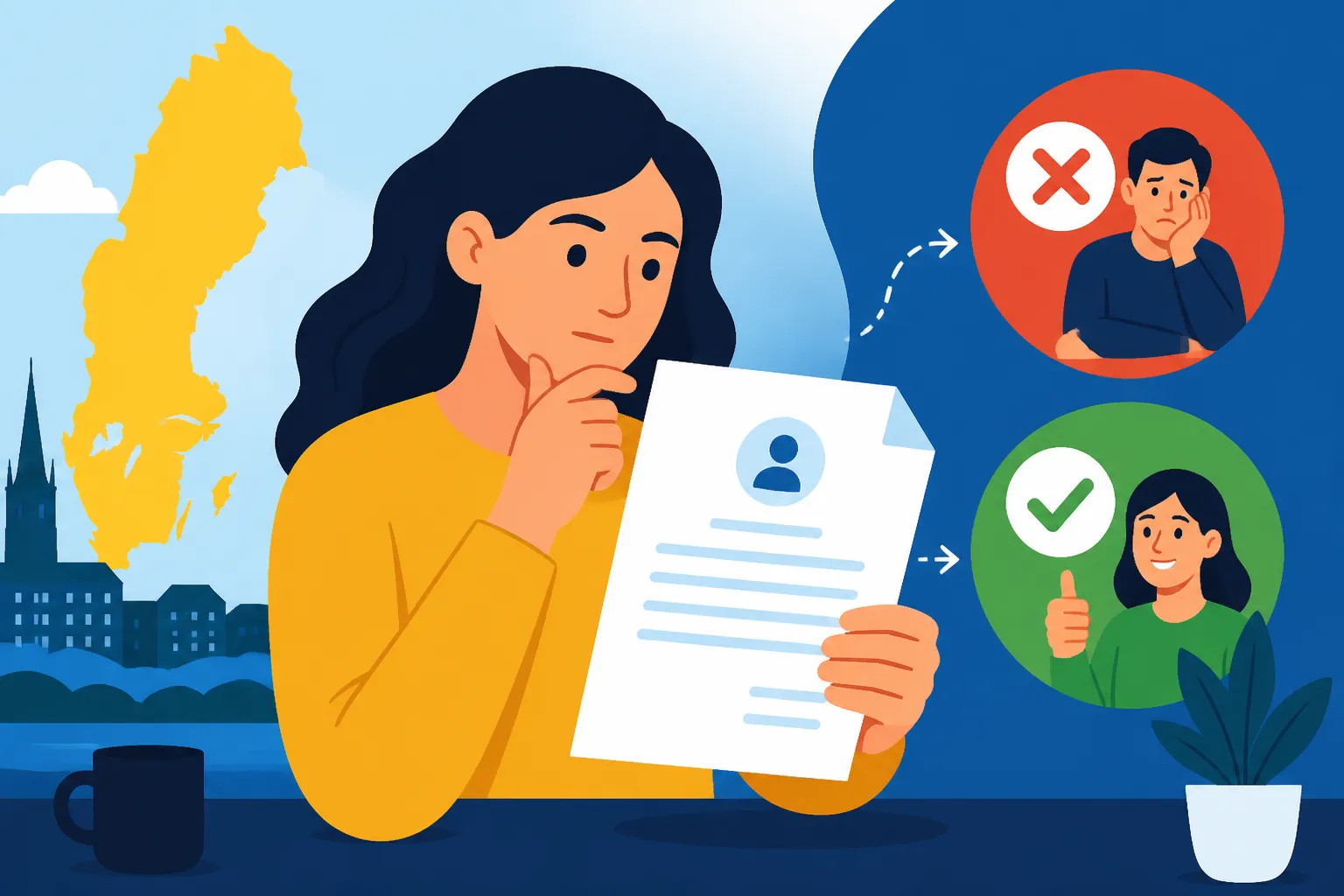
How to Read and Respond to a Migrationsverket Decision
That envelope from Migrationsverket… it can feel like a heavy weight dropping through your letterbox, can't it? After months, sometimes years, of waiting, the moment of truth has finally arrived, and now you have this official document in your hand. But what does it actually mean? And more importantly, what are you supposed to do next? This guide is here to walk you through the labyrinthine world of Migrationsverket decisions, helping you understand the outcome and navigate your response, whether it’s an approval, a request for more information, or, unfortunately, a refusal.
Understanding the Migrationsverket Decision Letter
Receiving official correspondence from Migrationsverket, Sweden's Migration Agency, can induce a mix of anxiety and anticipation for anyone navigating the immigration process. Whether it’s an update, a request for more information, or the final decision itself, these letters are crucial and often dense with legal Swedish. Your initial reaction might be to panic, especially if the letter isn't in a language you're fully comfortable with, but taking a deep breath and systematically going through it is key. This document is the formal communication of your application's fate and the basis for any subsequent actions you might need to take.
The Structure of the Letter
Migrationsverket's decision letters, regardless of the outcome, generally follow a specific, formal structure. They almost always arrive in Swedish, which can be the first hurdle for many newcomers. At the very top, you'll usually find the case number (ärendenummer), your personal details, and the date. This is followed by a section outlining what decision has been made – for example, a residence permit has been granted, or an application has been refused.
After this initial statement, there's typically a 'motivering' (motivation or reasoning) section. This is where Migrationsverket explains why they arrived at their decision. This part is incredibly important, especially if the decision is not in your favor, as it will detail the legal grounds and factual basis for the outcome. Finally, the letter will outline your rights, including information on how to appeal the decision if it's negative, and the deadline for doing so. Understanding this structure is the first step to truly grasping the content and knowing where to focus your attention. Don't skim; every paragraph holds weight.
Key Terminology You'll Encounter
Navigating these letters means getting familiar with a handful of critical Swedish terms. Without these, the core message can be lost, leading to misunderstanding or missed deadlines. For instance, "uppehållstillstånd" means residence permit, "avslag" signifies a refusal, and "beslut" simply means decision. If the letter mentions "komplettering," it's a request for additional information or documents – a common occurrence that isn't necessarily a bad sign, but a chance to strengthen your application.
Other terms you might see include "utvisning" (deportation – the most severe outcome), "överklaga" (to appeal), "överklagandetid" (appeal period), and "migrationsdomstolen" (the Migration Court). The term "lagrum" refers to the legal provisions or paragraphs from which the decision derives its authority. Having a good translation tool handy, or even better, a professional translator, is invaluable here. Many expats rely on services like RushTranslate or Translayte for quick and accurate certified translations, especially for legal documents where precision is paramount. Knowing these terms upfront will save you a lot of headache and potential misinterpretation.
What to Do Immediately After Receiving It
First and foremost, do not panic. Resist the urge to toss it aside if it looks complicated or immediately jump to conclusions based on a few words you recognize. Your very first step should be to identify the type of decision. Is it an approval, a request for more information, a refusal, or a dismissal? The tone and content will usually make this clear fairly quickly. If the letter is in Swedish and you don't understand it, get it translated immediately. Do not delay, as some decisions come with strict deadlines for response or appeal.
Once you have a clear understanding of the decision, mark any deadlines prominently. If it's a request for supplementary information, gather the required documents. If it's an approval, celebrate, but then ensure you understand the next steps, such as booking your biometrics appointment for your Biometrics and the Residence Permit Card UT-kort in Sweden. If it's a refusal, understand that you have the right to appeal, and the clock for that appeal period starts ticking the moment you receive the letter. This immediate, systematic approach is vital to ensuring you respond appropriately and within the required timeframe.
Decoding the "Why": Reasons for Decisions
Understanding why Migrationsverket made a certain decision is arguably more important than the decision itself. The reasoning section, or 'motivering,' is where the agency lays out its assessment of your application against Swedish law and policy. This section is particularly critical because it directly informs your next steps, whether it's simply moving forward with your new permit or preparing for a detailed appeal.
Approval: The Best-Case Scenario
Congratulations! If your letter states you've been granted an "uppehållstillstånd" (residence permit), this is the outcome every applicant hopes for. An approval means that Migrationsverket has assessed your application and found that you meet all the legal criteria for the specific permit you applied for. This could include meeting the salary threshold for a work permit, proving family ties for a reunification permit, or demonstrating sufficient funds for a student permit. The letter will confirm the type of permit, its validity period, and often include instructions on what to do next.
For most people, the next step after approval is to provide your biometrics – fingerprints and a photograph – to produce your physical residence permit card (UT-kort). If you applied from outside Sweden, you might have done this at the embassy. If you applied from within, you’ll need to book an appointment with Migrationsverket. It's a huge relief to get an approval, but remember that the journey isn't quite over until that card is in your hand and you've completed any follow-up steps, such as registering your move with Skatteverket once you're physically in Sweden.
Refusal: The Common Pitfalls
Receiving an "avslag" (refusal) is, without a doubt, a devastating blow. It means Migrationsverket has determined that you do not meet the legal requirements for a permit. The 'motivering' section will explain exactly why. Common reasons for refusal vary greatly depending on the type of permit, but they often revolve around:
- Insufficient Documentation: You failed to provide all necessary documents, or the documents provided were incomplete, outdated, or not properly translated. This is a common issue and highlights the importance of ensuring your What Does a 'Complete Application' Mean for Migrationsverket? when you submit it.
- Lack of Economic Means: For student permits or permits requiring self-sufficiency, not demonstrating enough funds for your stay is a frequent cause.
- Not Meeting Specific Requirements: For work permits, this could be not meeting the How the New 2026 Salary Threshold Affects Swedish Work Permits or the job not fulfilling certain collective agreement standards. For family reunification, it might be an issue with proving the relationship or the reference person's ability to support you.
- Credibility Issues: Migrationsverket might question the veracity of your claims or documents.
- Previous Immigration Violations: If you've overstayed a visa or permit in Sweden or another Schengen country, this can lead to a refusal.
The refusal letter will also clearly state that you have the right to appeal, and it will specify the deadline for doing so. This is your chance to present new evidence, clarify misunderstandings, or argue against Migrationsverket's assessment.
Dismissal: Not the Same as Refusal
It's crucial to understand that a "avvisning" (dismissal) is different from an "avslag" (refusal), although both mean your application won't lead to a permit. A refusal happens after Migrationsverket has processed your application and found you don't meet the criteria. A dismissal, however, means your application wasn't even processed on its merits. This often occurs when your application is deemed incomplete, meaning it lacks fundamental information or documentation required to even start the assessment.
For example, if you submit an application without a valid passport copy, or if you failed to pay the application fee, Migrationsverket might dismiss it. Sometimes, if you've been asked for "komplettering" (additional information) and fail to provide it by the deadline, your application could be dismissed. The consequences of a dismissal are similar to a refusal in that you won't get a permit, but the reasoning is different. With a dismissal, the agency hasn't judged your eligibility; it's simply stated that the application wasn't properly submitted. In such cases, your path forward is often to submit a completely new, properly completed application, rather than appealing the dismissal itself, as there isn't a "merit" decision to appeal.
Your Options After a Migrationsverket Decision
Receiving a decision can be a pivotal moment. The path you take next depends entirely on the nature of that decision and your personal circumstances. It’s important to remember that even a negative decision doesn’t always mean the end of the road.
Accepting the Decision
Sometimes, accepting the decision, even a negative one, is the most pragmatic or even the only viable option. If you receive an approval, accepting it is straightforward: you follow the instructions to get your permit card and proceed with your plans in Sweden. If you receive a refusal or dismissal, accepting it might mean that you don't wish to go through the often lengthy and emotionally taxing appeal process, or perhaps you've realized that you genuinely don't meet the requirements and an appeal would be futile.
For instance, if your work permit was refused because your salary offer was below the new threshold and your employer can't adjust it, an appeal based on the same information would likely fail. Accepting a negative decision often means that you will need to leave Sweden if you are already here, or that your plans to move here are put on hold. It’s a tough reality, but sometimes knowing when to fold is part of the expat journey. The decision letter will typically outline the timeframe within which you are expected to leave Sweden if your application is refused and you do not appeal.
Seeking Clarification or Reconsideration
In some instances, particularly if you believe there's been a clear factual error or misunderstanding in Migrationsverket's decision, you might want to seek clarification or reconsideration before resorting to a formal appeal. This isn't a common or guaranteed process, but sometimes a well-reasoned request for review can highlight an oversight. For example, if you did provide a document that Migrationsverket stated was missing, you could point this out.
However, it's crucial to understand that Migrationsverket is a formal authority, and their decisions are based on legal assessment. They are unlikely to simply "change their mind" without concrete new evidence or a clear procedural error on their part. This step is distinct from an appeal, which goes to a separate court. It's more about pointing out an obvious mistake rather than re-arguing your case. Always remember that pursuing clarification does not pause your appeal deadline. If you're considering an appeal, you must initiate that process regardless of whether you're also seeking clarification from Migrationsverket.
The Right to Appeal
One of the most fundamental rights you have as an applicant is the "rätt att överklaga" – the right to appeal a negative decision. This means that if Migrationsverket refuses your application, you can ask a higher authority, namely the Migration Court (Migrationsdomstolen), to review that decision. This right is enshrined in Swedish law and is explicitly stated in every refusal letter.
The appeal process allows you to present new arguments, submit additional documents, or highlight aspects of your case that you believe Migrationsverket overlooked or misinterpreted. It’s an opportunity to convince an independent court that Migrationsverket's decision was incorrect. The timeline for lodging an appeal is strict, usually three weeks from the date you received the decision. Missing this deadline almost invariably means you lose your right to appeal that specific decision. This is why immediate translation and understanding of the decision letter are paramount, as discussed earlier. For a deeper dive into this process, you can explore resources like Appealing an Immigration Decision in Sweden: The Migration Courts.
Responding to an Approval or Request for More Information
Not all communications from Migrationsverket are negative. Sometimes, they bring good news, or they're simply asking for more details to help them make a fair assessment. Knowing how to respond effectively in these scenarios can significantly streamline your process.
Confirming Your Permit and Biometrics
If your application is approved, the letter will specify the type of permit granted and its validity period. This is fantastic news, but your journey isn't quite finished. The next critical step is almost always to provide your biometrics – your fingerprints and a photo for your residence permit card. The letter will contain instructions on how and where to do this. If you applied from outside Sweden, you usually visit the Swedish embassy or consulate in your home country. If you applied from within Sweden, you'll need to book an appointment at a Migrationsverket service center. It’s important to book this appointment as soon as possible, as waiting times can vary.
Once your biometrics are submitted, it takes some time for the card to be produced and delivered. If you're outside Sweden, it will be sent to the embassy where you applied for collection. If you're inside, it will be mailed to your registered address. Remember, your physical permit card is your proof of legal residence in Sweden, and you'll need it for things like opening a bank account, getting a Swedish ID card, and even for re-entering Sweden if you travel abroad. Be sure to check the validity dates and understand When Should I Apply to Renew My Swedish Residence Permit? well in advance of its expiry.
Providing Additional Documents
It's very common for Migrationsverket to send a request for "komplettering," asking for additional information or documents. Don't view this as a setback; rather, see it as an opportunity to strengthen your application and address any gaps they've identified. The request will clearly state what is needed and provide a deadline for submission, which is usually around two weeks.
These requests can range from a missing bank statement, a clearer copy of a passport, proof of relationship, or an updated employment contract. Make sure you provide exactly what they ask for, and nothing more, unless you believe additional context is genuinely helpful. If the documents are not in Swedish or English, you will need to get them certified by a professional translator. This is where services like RushTranslate and Translayte prove invaluable, ensuring that the translations are accepted by Migrationsverket without issue. Always send the requested documents clearly referencing your case number, and keep copies for your own records. Failing to respond by the deadline could lead to your application being dismissed.
Handling Conditions or Specific Instructions
Sometimes, an approval might come with certain conditions, or a decision letter might contain very specific instructions that you need to be aware of. For instance, a work permit might be tied to a particular employer or role, meaning you cannot simply switch jobs without notifying Migrationsverket and potentially applying for a new permit. Or, a permit might be granted for a shorter period than anticipated, requiring a renewal sooner than expected.
It's vital to read the entire decision letter carefully to understand any such caveats. For example, if you're on a permit that allows family members to join you, there might be specific instructions about their applications or travel. Ignoring these conditions or instructions can have serious consequences, potentially affecting your future permit applications or even leading to the revocation of your current permit. This is also why keeping meticulous records of all correspondence and decisions is so important – it helps you keep track of your responsibilities and understand your legal status. You can track your application status and decision updates on How Do I Track My Application on Migrationsverket's My Page?.
Appealing a Negative Decision: The Migration Court
If you've received a refusal, and you believe it's incorrect or based on incomplete information, the appeal process is your formal recourse. This isn't a simple re-submission; it's a legal challenge that moves your case from Migrationsverket to an independent court system.
Understanding the Appeal Process
When you appeal a decision, your case is sent to one of Sweden's four Migration Courts (Migrationsdomstolen), which are special administrative courts. This court will independently review Migrationsverket's decision based on the evidence presented in your original application, Migrationsverket's reasoning, and any new evidence or arguments you submit with your appeal. The purpose is not to start fresh but to assess whether Migrationsverket applied the law correctly to your specific situation.
The appeal letter you send to Migrationsverket (who then forwards it to the Migration Court) must clearly state why you believe the decision is wrong and what you want the court to change. This is your opportunity to highlight facts, present new evidence, or explain aspects of your case that you feel were misunderstood. The Migration Court's decision can, in turn, be appealed to the Migration Court of Appeal (Migrationsöverdomstolen), but this requires "prövningstillstånd" (leave to appeal), which is only granted in very specific circumstances, usually when the case has significant precedent-setting value. The entire process can be lengthy and complex, so managing your expectations about Understanding Migrationsverket Processing Times and Delays is important.
Here's a simplified overview of the appeal stages:
| Stage | Action | Authority | Outcome |
|---|---|---|---|
| Initial Decision | Application submitted | Migrationsverket | Approval, Refusal, or Dismissal |
| Appeal to Court | Submit an appeal letter with new evidence/arguments | Migrationsverket (for forwarding) | Court reviews; either upholds original decision or sends it back to Migrationsverket for reconsideration or new decision. |
| Further Appeal | Request "leave to appeal" to the Migration Court of Appeal | Migration Court of Appeal | If granted, court hears the case; decision is final and sets precedent. |
Gathering New Evidence and Arguments
A strong appeal often hinges on new, relevant evidence or compelling arguments that were not adequately presented or considered in the initial application. Simply reiterating what you've already stated is unlikely to change the outcome. Think critically about why Migrationsverket refused your application and what information could directly counter their reasoning.
For example, if your work permit was refused due to an insufficient salary, and your employer has since increased the offer, this would be new, crucial evidence. If your family reunification was refused because proof of relationship was deemed weak, new photographic evidence, communication logs, or witness statements could be vital. If Migrationsverket misunderstood a cultural context in your home country, explaining this clearly and providing supporting documentation could also be effective. All documents not in Swedish or English must be officially translated. Professional translation services (again, think RushTranslate or Translayte) can ensure these are handled correctly and accepted by the courts. Remember to submit all new evidence with your appeal letter, not piecemeal. It's also important to understand the concept of What Happens If Your Swedish Permit Is Refused and how it impacts your future.
Seeking Legal Counsel
Navigating the appeal process, especially to the Migration Court, can be incredibly daunting. Swedish immigration law is complex, and presenting a legally sound argument requires a deep understanding of the regulations and precedents. This is where seeking legal counsel becomes almost essential. An immigration lawyer or legal representative specializing in Swedish migration law can:
- Interpret the refusal decision: They can pinpoint the exact legal basis for the refusal and identify potential weaknesses in Migrationsverket's reasoning.
- Advise on new evidence: They can help you determine what new evidence is relevant and how to best present it.
- Draft the appeal letter: A lawyer can write a formal, legally robust appeal letter that addresses all pertinent points and cites relevant laws.
- Represent you in court: If the court decides to hold an oral hearing, your lawyer can represent you.
While legal fees can be a concern, the cost of not getting expert help might be far greater if it leads to an unsuccessful appeal and the loss of your opportunity to live in Sweden. For guidance on finding support, you might want to read How Do I Get Legal Help to Appeal an Immigration Decision in Sweden?.
Practical Tips for Navigating Migrationsverket Decisions
Dealing with immigration authorities is inherently stressful. Research on the Swedish system suggests that a few key practices can make the process significantly smoother, even when things get tough.
The Importance of Translation
As you've probably gathered by now, Sweden runs on Swedish, especially when it comes to official government communication. Every single decision letter, every request for additional information, every official form from Migrationsverket will be primarily in Swedish. Unless you are fluent in Swedish, professional, certified translation services are not just a convenience; they are an absolute necessity. Relying solely on online machine translators for critical legal documents is a recipe for disaster, as nuances, legal jargon, and specific instructions can easily be misinterpreted.
When Migrationsverket or the Migration Court requests documents that are not in Swedish or English, they almost always require certified translations. This means the translation must be done by a professional translator who is officially authorized or "certified" in Sweden (auktoriserad translator) or recognized internationally, ensuring accuracy and legal validity. This is precisely why services like RushTranslate and Translayte are so often recommended in expat communities – they specialize in certified translations that meet official requirements. Getting your documents translated accurately and promptly can prevent delays, misunderstandings, and even outright rejections of your application or appeal. Don't cut corners here; it's a small investment that protects a much larger one: your future in Sweden.
Keeping Meticulous Records
This cannot be stressed enough: keep detailed records of everything related to your immigration application. From the very first inquiry to the final decision and beyond, every piece of paper, every email, every receipt, and every official communication needs to be organized and accessible. This includes:
- Copies of all submitted applications and forms: Keep the exact versions you sent.
- All supporting documents: Birth certificates, marriage certificates, employment contracts, bank statements, educational diplomas – keep copies of everything, both original and translated versions.
- Proof of postage/submission: If you mailed anything, keep tracking numbers or receipts. If you submitted online, screenshot confirmation pages.
- All correspondence from Migrationsverket: Every letter, every email, in chronological order.
- Notes from phone calls: Date, time, who you spoke to, and what was discussed.
This meticulous record-keeping is your safety net. If Migrationsverket claims they didn't receive a document, you have proof. If you need to appeal, you have all the necessary information at your fingertips. If your What Happens If My Passport Expires During My Swedish Permit?, having all your permit documents makes applying for a new UT-kort easier. It also helps you keep track of deadlines and easily access information when you need to renew your permit or apply for The Path to Permanent Residence in Sweden: Rules and Timeline.
Managing Expectations and Stress
The immigration process in Sweden, as in many countries, can be a marathon, not a sprint. Waiting times can be long – sometimes exceedingly so – and the process itself can be opaque and frustrating. It’s easy to get caught in a cycle of anxiety, constantly checking your application status on How Do I Track My Application on Migrationsverket's My Page? or panicking every time you see a letter from a Swedish authority.
It's crucial to manage your expectations and cultivate coping mechanisms for the stress. Understand that delays are common, and Migrationsverket is dealing with a high volume of cases. While it's important to be proactive and informed, constant worry doesn't speed things up and can take a serious toll on your mental health. Find support in expat communities, talk to friends and family, and engage in activities that help you relax. Focus on what you can control – ensuring your application is complete, responding promptly to requests, and keeping your records organized. Remember that you're not alone in this; countless expats have navigated these waters before you. Even if the journey is tough, the reward of building a life in Sweden can be immense.
Disclaimer
The information provided in this guide is intended for general informational purposes only and does not constitute legal advice. While we strive to keep the information up-to-date and accurate, immigration laws and procedures in Sweden are complex and subject to change. For personalized advice regarding your specific situation, it is highly recommended to consult with a qualified immigration lawyer or legal professional.