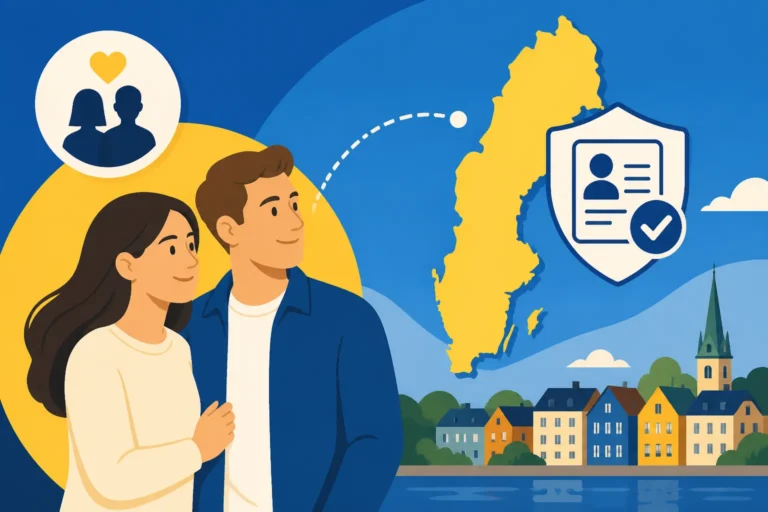
Applying for a Swedish Residence Permit Online with Migrationsverket
Trying to navigate the Swedish immigration system can feel like deciphering an ancient runic inscription while juggling three lingonberry jams. The stress of gathering documents, understanding requirements, and dealing with official websites is a universal expat experience. This guide aims to demystify the process of applying for a Swedish residence permit online with Migrationsverket, offering practical, empathetic advice to help you confidently submit your application and move one step closer to your Swedish dream.
Why Online Applications Are the Go-To for Swedish Residence Permits
Back in the day, if you wanted to apply for a residence permit in Sweden, it often meant piles of paper, endless trips to embassies, and the constant fear of a misplaced document. But times have changed, thankfully. Migrationsverket, the Swedish Migration Agency, has largely shifted to an online application system, and for good reason. It's designed to streamline the process, though, let's be honest, "streamlined" in bureaucracy often means "different kind of complicated."
The Convenience and Accessibility of Digital Submission
One of the biggest advantages of applying online is the sheer convenience. You can complete your application from pretty much anywhere in the world, as long as you have an internet connection. This means no more printing out dozens of pages, carefully arranging them, and then finding a secure way to mail them across continents, hoping they don't get lost in transit. Instead, you upload your documents digitally, which not only saves you time and postage but also gives you a digital record of what you've sent.
Think about it: you can work on your application in stages, saving your progress and coming back to it when you have more time or have gathered more information. This flexibility is a godsend when you're dealing with complex requirements and potentially tight deadlines. For those of us living outside Sweden or even within, but far from a Migrationsverket office, this accessibility is invaluable. It reduces the need for physical appointments until later stages, like the biometrics appointment for your residence permit card (UT-kort), which we'll get to later.
Common Misconceptions and Why Online is Often Better
Many newcomers, especially those from countries where paper applications are still the norm, might feel hesitant about putting their entire future into a digital form. There's a common misconception that a physical application somehow feels more "official" or less likely to get lost in the digital ether. However, from Migrationsverket's perspective, the online system is actually designed to be more efficient and trackable. Each step you take is recorded, and there's a clear audit trail.
Another myth is that if you apply online, you can't get personal help. While the initial submission is digital, it doesn't mean you're on your own. Migrationsverket often communicates via your online account, allowing for a direct, recorded dialogue should they need more information or clarification. This can actually be more efficient than trying to get through on the phone or waiting for a letter. Moreover, the online portal often guides you through the process, prompting you for necessary documents and information, which can reduce the chances of submitting an incomplete application – a common reason for delays. While the system isn't perfect, and technical glitches can happen, the benefits of digital convenience, speed, and traceability generally outweigh the drawbacks for most applicants. If you're wondering about the various types of permits, you can delve deeper into Residence Permits in Sweden: Types, Requirements, and How to Apply for a broader understanding.
Essential Preparations Before You Even Click "Apply"
Before you even think about logging onto the Migrationsverket website, you absolutely need to prepare. This isn't a race; it's a marathon that requires meticulous planning. Trust me, skipping steps here will only lead to headaches and delays down the line. Remember the mantra: preparation, preparation, preparation.
Gathering Your Documents: The Digital Checklist
This is perhaps the most crucial stage. Migrationsverket requires very specific documents depending on your permit type, and they need to be clear, legible, and often in a particular format. Your first step should be to visit Migrationsverket's official website and find the exact requirements for your specific permit. Do not guess. Do not assume. Read every single bullet point.
For instance, if you're applying for a work permit, you'll need things like a copy of your passport, a job offer, and sometimes documents about your employer. If it's a family reunification permit, you'll be looking at marriage certificates, birth certificates, and proof of your relationship. Every document has its purpose.
Here's a general checklist to start with, though your specific list will vary:
| Document Type | Common Requirements | Notes |
|---|---|---|
| Passport | Copy of all pages showing personal data, photo, signature, validity, and entry/exit stamps. | Ensure all pages are clear. Don't miss any stamped pages, even blank ones. |
| Job Offer/Contract | Full employment contract, job description, salary details. | Must meet specific salary thresholds and conditions, especially for work permits. |
| Marriage Certificate | Official certificate for family permits. | If not in Swedish or English, official translation is mandatory. |
| Birth Certificate | For children or proving familial links. | Again, official translation if not in Swedish or English. |
| Bank Statements | Proof of funds, often for student permits or family reunification. | Must show sufficient funds to support yourself (and family, if applicable) for the duration of the permit. |
| Education Diplomas | Relevant degrees or vocational certificates for work permits. | May need to be assessed or recognized by relevant Swedish authorities. |
| Comprehensive Health Insurance | Proof of valid insurance, especially for non-EU/EEA students or visitors. | Check the specific coverage requirements; not all travel insurance is sufficient. See Comprehensive Sickness Insurance and the Maintenance Requirement in Sweden. |
Make sure each document is scanned clearly, ideally in PDF format. Pay attention to file size limits – too large, and the system might reject it, too small or poor quality, and Migrationsverket might ask for better copies, causing delays. It’s always a good idea to name your files clearly, like "Passport_JohnDoe.pdf" or "EmploymentContract_CompanyX.pdf", so you can easily identify them when uploading.
The Importance of Accurate Translations and Certifications
This is where many people trip up, and it's a critical detail that Migrationsverket does not overlook. Any document not issued in Swedish or English usually needs to be officially translated into one of these languages. And by "officially translated," they mean translated by a certified translator. This isn't a task for your bilingual cousin, no matter how good their Swedish is.
Imagine submitting your university diploma, vital for your work permit, only for it to be rejected because the translation isn't certified. That’s a massive setback. These translations often need to be accompanied by the original document and a certification from the translator stating that it’s a true and accurate translation.
This is where services like RushTranslate or Translayte can be incredibly helpful. They specialize in certified translations accepted by official bodies like Migrationsverket. Using a reputable service ensures your documents are handled correctly, saving you potential delays and rejections. Don't skimp on this step; it's an investment in your application's success. Double-check if the translation needs to be apostilled or legalized, depending on your home country and Sweden's agreements with it. Failing to provide certified translations is one of the quickest ways to get your application marked as incomplete or even refused. Remember, every piece of paper tells a part of your story, and it needs to be understood perfectly by the decision-makers.
A Step-by-Step Walkthrough of the Migrationsverket Online Portal
Alright, you've gathered your documents, you've got your translations in order – now it's time to actually dive into the Migrationsverket online portal. This is where the rubber meets the road, and while it might seem intimidating, breaking it down into manageable steps makes it much less daunting. Think of it like assembling IKEA furniture, but with higher stakes and less cryptic instructions (usually).
Creating Your Account and Navigating the System
First things first, you'll need to create an account on Migrationsverket's e-service portal. This is your personal hub for all interactions with the agency. You'll typically register with an email address and create a password. Make sure to use an email you check regularly, as this is how Migrationsverket will send you important updates and requests. Keep your login details somewhere safe, because you'll be coming back to this portal frequently.
Once logged in, you'll usually see an overview of available application types. You'll need to carefully select the correct category for your residence permit – for example, "Apply for a work permit" or "Apply for a residence permit for a family member." Be absolutely meticulous here, as choosing the wrong application type can lead to significant delays or even outright rejection. The system will then guide you through a series of sections, prompting you for personal details, information about your purpose for staying in Sweden, and details about your family if applicable.
Navigating the system is generally intuitive, but the language might be a mix of English and Swedish, especially in some older or less frequently updated sections. Don't panic if you see some Swedish; Google Translate is your friend, but always double-check against official English information where possible. The portal often includes help texts or question marks next to fields that you can click for further explanation. Read these carefully! They often clarify exactly what information is needed and why. Remember that this portal is also where you'll track your application status later, which is why understanding how to use it from the start is so important.
Filling Out the Application Form: Common Pitfalls and Tips
The application form itself is a structured questionnaire designed to gather all necessary information. It's crucial to fill out every section completely and accurately. Incomplete fields are a red flag for case officers and will almost certainly lead to a request for supplementary information, prolonging your waiting time.
One common pitfall is inconsistency. Ensure that all dates, names, and addresses match exactly across all your submitted documents. If your passport says "Erik Svensson" and your job contract says "Eric Svenson," clarify this. Even small discrepancies can cause confusion and suspicion. Be prepared to provide exhaustive details about your employment, your relationship, or your studies, depending on your permit type. For instance, a work permit application will require specific details about your employer, your position, your salary, and how the job was advertised. For family reunification, you'll need to detail your relationship timeline, how you met, and any previous marriages.
Always review your answers before moving to the next section or, especially, before submitting. A simple typo can have significant consequences. Many sections allow you to go back and edit, so take advantage of this. If you are unsure about a question, it's better to pause, consult the Migrationsverket website, or seek advice from a legal professional specializing in Swedish immigration rather than guessing. Remember, this is your official statement to the Swedish authorities, so make it as clear and error-free as possible. You can read more about what happens after submission in Dealing with Migrationsverket: Applications, Waiting, and Decisions.
Uploading Documents: Formats, Size Limits, and Naming Conventions
This is the final hurdle before submission. The Migrationsverket portal will have specific sections for uploading each type of document. For example, there might be dedicated slots for "Passport Copy," "Employment Contract," "Marriage Certificate," etc. It's vital to upload the correct document to the correct slot. Accidentally uploading your dog's vaccination records instead of your birth certificate will definitely cause issues!
Most commonly, Migrationsverket prefers PDF files. Image files like JPEGs or PNGs are sometimes accepted, but PDFs generally maintain better quality and allow for multi-page documents to be combined into one file. Pay close attention to file size limits, which are usually specified on the upload page. If your file is too large, you'll need to compress it. Many online tools can help with this, or you can adjust scanning settings. However, ensure that compressing doesn't compromise the readability of the document. The text must be sharp and clear.
When it comes to naming your files, consistency and clarity are key. While the portal might rename them upon upload, having well-named files on your end helps you stay organized. For example, "Passport_JohnDoe.pdf", "EmploymentContract_AcmeAB.pdf", "MarriageCertificate_JohnJaneDoe.pdf", "UniversityDiploma_JohnDoe.pdf". This makes it easy for you to double-check that you've uploaded everything required. After uploading, many systems allow you to preview the document. Always do this! Ensure the entire document is visible, correctly oriented, and perfectly legible. Missing information or blurry scans will only prolong your waiting period. Taking the time to get this right will save you immense frustration later.
Understanding Specific Permit Types and Their Online Nuances
While the general online application process for a Swedish residence permit follows a similar structure, each permit type has its own distinct set of requirements and considerations. It's not a one-size-fits-all situation, and understanding these nuances is crucial for a successful application.
Work Permits: Employer Involvement and Supporting Documents
Applying for a work permit in Sweden is a classic example where the employer plays a significant role in the online application process. Often, your employer will initiate the application on their side, providing details about the job, the terms of employment, and their company information. They are essentially making the "job offer" part official within the Migrationsverket system. Once they've submitted their part, you, as the applicant, will receive an email invitation to complete your section of the application. This typically involves submitting your personal details, passport copies, educational qualifications, and any other supporting documents.
One key nuance for work permits is the requirement for a valid job offer that meets specific Swedish collective agreement standards or, failing that, industry-standard wages. The employer needs to demonstrate that they tried to recruit within the EU/EEA first, usually by advertising the position with Arbetsförmedlingen (the Swedish Public Employment Service). You also need to confirm that your salary and employment conditions meet the requirements, including adequate insurance cover. The role of trade unions can also be significant here, as they might be asked to review the terms of employment to ensure they are fair. For more on this, you might want to look at The Union's Role in Reviewing Your Swedish Work Permit Application and What a Certified Employer Means for Your Swedish Work Permit.
If the employer is not a "certified employer" with Migrationsverket, the processing times can be longer, and the scrutiny might be higher. Always ensure your employer is fully aware of their responsibilities in the application process, as their documentation and timely submission are just as critical as yours. Missing details from their end, like incomplete company information or a vague job description, can lead to significant delays for both parties. Detailed information on Work Permits in Sweden: Categories, Salary Rules, and How to Apply is available.
Family Reunification Permits: Proving Your Relationship and Maintenance
Family reunification applications, whether for a spouse, sambo (cohabiting partner), or child, come with their own distinct set of challenges and, often, a much higher level of scrutiny regarding the relationship itself. The online application for these permits will heavily focus on proving the authenticity and nature of your relationship with the person you wish to join in Sweden.
This means you'll be asked to provide a myriad of documents: marriage certificates, birth certificates, shared tenancy agreements, photos together, communication logs (like chat history or call records), and even flight tickets from visits. Migrationsverket wants to see concrete evidence that your relationship is genuine and not solely for the purpose of gaining a residence permit. Expect detailed questions about how you met, how your relationship developed, and your plans for the future in Sweden. It's a deeply personal process that can feel intrusive, but it's part of the standard procedure.
Crucially, the "reference person" in Sweden (the person you are joining) also has significant responsibilities. They usually need to prove they can financially support you and have adequate housing for everyone. This is known as the "maintenance requirement" (försörjningskravet) and it's a major hurdle for many. The online portal will have sections where the reference person uploads their payslips, bank statements, and rental contracts or property deeds. Failing to meet these financial or housing requirements is a common reason for family reunification permits to be denied. Be prepared to provide clear, irrefutable evidence for every aspect of your relationship and the reference person's ability to support you both. Delve into Family Reunification in Sweden: Bringing Your Loved Ones for a complete picture.
Post-Submission: What Happens Next and How to Track Your Application
You've clicked submit, taken a deep breath, and maybe even poured yourself a celebratory cup of coffee. But the journey isn't over. The period after submission is often characterized by anxious waiting, but also by critical next steps that you need to be aware of. Understanding what happens post-submission and how to track your application is vital for managing expectations and responding promptly to any requests.
Biometrics, Interviews, and Waiting Times
After submitting your online application, one of the first crucial steps for many non-EU/EEA applicants will be providing your biometrics. This usually involves taking your fingerprints and a photo. If you applied from outside Sweden, you'll typically need to visit a Swedish embassy or consulate in your home country or a neighboring country. If you applied from within Sweden (which is only possible for certain permit types or extensions), you'll go to a Migrationsverket service center. It’s imperative to book this appointment as soon as possible after submitting your application, as slots can fill up quickly. Your permit card (UT-kort) cannot be produced without these biometrics. You can find more details on this in Biometrics and the Residence Permit Card (UT-kort) in Sweden.
Depending on your permit type and nationality, you might also be called for an interview. This is particularly common for family reunification permits, where Migrationsverket wants to assess the genuineness of the relationship firsthand. These interviews can be conducted both for the applicant abroad and the reference person in Sweden, sometimes separately. It's crucial to be honest, consistent, and well-prepared for any interview.
And then there's the waiting game. Oh, the waiting game. Migrationsverket is notorious for its processing times, which can range from a few weeks to well over a year, depending on the permit type and current caseload. You can usually find estimated processing times on their website, but take them with a pinch of salt; they are averages and your individual case might take longer. The best strategy is to prepare for the long haul. Regularly check your online account for updates, but avoid calling or emailing Migrationsverket too frequently, as this can actually slow down their process. For a deeper understanding of what to expect, check out Understanding Migrationsverket Processing Times and Delays.
Communicating with Migrationsverket and Handling Requests for More Information
Your online account with Migrationsverket is your primary communication channel. This is where you'll receive notifications about updates, decisions, and most importantly, requests for supplementary information (called "komplettering" in Swedish). If a case officer needs more documents or clarification on something, they will almost always send a request through your online portal. You'll usually get an email notification that there's a new message in your account.
It is absolutely critical to respond to these requests promptly and completely. Migrationsverket typically gives you a deadline, and missing this deadline can lead to your application being decided based on the information they do have, which might result in a refusal. When providing additional documents, ensure they are clearly labeled, directly address the request, and are uploaded correctly. If you used a translation service like Translayte or RushTranslate for your initial documents, keep them in mind if you need additional certified translations.
Sometimes, the request might seem minor or even confusing. If you are unsure what exactly is being asked, try to re-read it carefully. If it's still unclear, you might consider contacting Migrationsverket's customer service for clarification, but be prepared for potentially long wait times. The goal is to make it as easy as possible for the case officer to process your application, so clear, concise, and complete responses are your best bet.
Troubleshooting and Avoiding Common Mistakes
Even with the best intentions and meticulous preparation, things can sometimes go wrong during an online application. Technical glitches, misunderstandings, or simply overlooking a crucial detail can lead to delays or even a refusal. Being aware of these potential pitfalls can help you navigate them more effectively.
Technical Glitches and Browser Issues
The Migrationsverket online portal, like any complex web system, isn't immune to technical issues. You might encounter problems with uploading documents, pages not loading correctly, or even the dreaded "timeout" error. While frustrating, these are usually temporary.
Here are some tips to troubleshoot:
- Clear your browser cache and cookies: This can often resolve display or loading issues.
- Try a different browser: If you're using Chrome and having issues, switch to Firefox or Edge. Sometimes compatibility problems arise.
- Check your internet connection: A stable connection is essential for uploading large files.
- Disable browser extensions: Ad-blockers or security extensions can sometimes interfere with website functionality.
- Try again later: If it's a widespread system issue, waiting an hour or two might resolve it. Migrationsverket's website sometimes announces planned maintenance or known issues.
If you suspect a persistent technical problem on Migrationsverket's end, you can try contacting their technical support if available, or their general customer service. However, they typically expect you to try basic troubleshooting first. Keep screenshots of any error messages you encounter, as these can be useful if you need to explain the problem later. Losing your progress due to a technical glitch is annoying, but usually preventable by taking the time to save frequently and be patient.
Misunderstandings and Incomplete Applications
This is arguably the most common reason for delays and refusals. The language barrier, cultural differences in legal terminology, and the sheer volume of information required can lead to critical misunderstandings. An "incomplete application" is essentially one where Migrationsverket doesn't have all the information or documents they need to make a decision.
Common mistakes include:
- Missing documents: Not uploading every single document explicitly requested for your permit type. Go back to the checklist!
- Incorrect document formats or quality: Blurry scans, documents uploaded sideways, or files that exceed size limits.
- Uncertified translations: Submitting documents in a language other than Swedish or English without an official, certified translation. This is where services like RushTranslate become invaluable.
- Inconsistent information: Discrepancies between your application form and your supporting documents.
- Failing the maintenance requirement: For family permits, the reference person in Sweden not meeting the income or housing criteria.
- Not responding to requests for supplementary information: Ignoring emails or notifications from Migrationsverket asking for more details.
To avoid these:
- Read everything carefully: Go through the requirements for your specific permit type multiple times. Have a friend or a professional review it if possible.
- Double-check everything: Before clicking submit, review your entire application, all uploaded documents, and every answer.
- Translate accurately: Use professional, certified translation services for non-Swedish/English documents. Translayte is another option that ensures accuracy.
- Stay updated: Regularly check your online account for messages from Migrationsverket.
- Be proactive: If you realize you've made a mistake or forgotten something before they ask, contact Migrationsverket through your online account to provide the missing information. It shows diligence.
Ultimately, your goal is to present a clear, coherent, and complete case to Migrationsverket. Every piece of information should support your application without ambiguity. Understanding What Happens If Your Swedish Permit Application Is Refused can provide perspective on the consequences of these mistakes.
Disclaimer
Please remember that immigration laws and procedures in Sweden are subject to change. While every effort has been made to provide accurate and up-to-date information in this guide, it is provided for informational purposes only and does not constitute legal advice. Always refer to the official Migrationsverket website or consult with a qualified immigration lawyer for the most current and personalized guidance regarding your specific situation.