How Does Laundry Room Booking Work in Swedish Buildings?
Moving to Sweden often presents a series of delightful discoveries and, let's be honest, a few head-scratching moments for newcomers. One of the most common surprises for foreigners is the shared laundry room, or tvättstuga, a cornerstone of Swedish apartment living. If you're used to having your own washer and dryer tucked away in your home, the concept of booking a specific time slot for your weekly wash can feel like an administrative hurdle. This guide will walk you through everything you need to know about navigating the tvättstuga booking systems, from traditional methods to modern digital solutions, ensuring your laundry day runs smoothly.
The Quintessentially Swedish Shared Laundry Room Phenomenon
In many countries, having a washing machine and dryer in your apartment is a given. Not so in Sweden, especially in older buildings or smaller apartments. This isn't because Swedes dislike modern conveniences; it's deeply rooted in urban planning, space efficiency, and a collective approach to resources. Historically, it was more economical for buildings to have a shared facility. Today, it's also seen as an environmentally friendlier option, reducing the number of individual machines and centralizing energy consumption. Imagine the space saved in thousands of apartments without bulky appliances! This also means the machines in these shared spaces are often industrial-grade, offering powerful washes and quick drying times that individual units simply can't match. For anyone looking for housing, understanding this system is crucial, whether you're renting your first First-Hand vs Second-Hand Rental Contracts in Sweden: Key Differences or even considering Buying Property in Sweden as a Foreigner: A Complete Guide.
This shared facility concept often extends beyond just laundry. You'll find similar shared resources in many apartment complexes, from bike rooms to communal spaces, reflecting a certain emphasis on community and practical resource management. It's part of the fabric of Everyday Living in Sweden: Groceries, Recycling, and Local Customs.
For many expats, the tvättstuga system is one of the first truly "Swedish" cultural differences they encounter. It can feel like a step back in time, or an unnecessary complication in an already complex process of settling into a new country. You might wonder, "Why can't I just wash my clothes whenever I want?" This initial frustration is completely valid, but with a bit of understanding and adaptation, it often becomes just another part of daily life. The key is to shift your mindset from individual convenience to collective responsibility and planning.
One common worry is privacy or the potential for items to go missing. While generally rare, it's always wise to be mindful. The system relies heavily on trust and respect for shared resources, which are strong values in Swedish society. It's an unspoken agreement that everyone adheres to the rules for the common good. You might also notice a particular attention to cleanliness in these shared spaces, another reflection of the cultural value placed on order and tidiness in communal areas. This shared responsibility is often discussed in the broader context of What Should I Know About Swedish Apartment Etiquette?.
Deciphering the Booking Systems: Traditional and Digital Approaches
Navigating the tvättstuga begins with understanding how to book a slot. Depending on your building, you'll encounter one of two primary methods, each with its own quirks and advantages.
The Classic: Physical Booking Boards and Lock Cylinders
This is the traditional method you'll find in countless older apartment buildings, particularly in hyresrätter (rental apartments) and some bostadsrätter (housing cooperatives). Picture a wooden or metal board, usually located either outside the laundry room itself or in the building's entrance hall. On this board, you'll see a grid representing days and specific time slots – typically 2-4 hour blocks. Each slot has a small hole or hook. You'll be assigned a unique plastic or metal cylinder (often with your apartment number or a specific identifier) when you move in. To book a slot, you simply place your cylinder into the hole for your desired time. It's a remarkably simple, analogue system that works on a first-come, first-served basis.
The beauty of this system is its clarity and straightforwardness. You can see at a glance when the next available slot is. The downside? You physically have to go to the board to book or check availability. This can be a bit of a trek if you live on a higher floor or if the board is in a separate building. Also, popular slots (like evenings and weekends) can get booked up weeks in advance, requiring a bit of foresight. It's a system that truly embodies the need for planning in Sweden.
The Modern: Digital Screens and Smartphone Apps
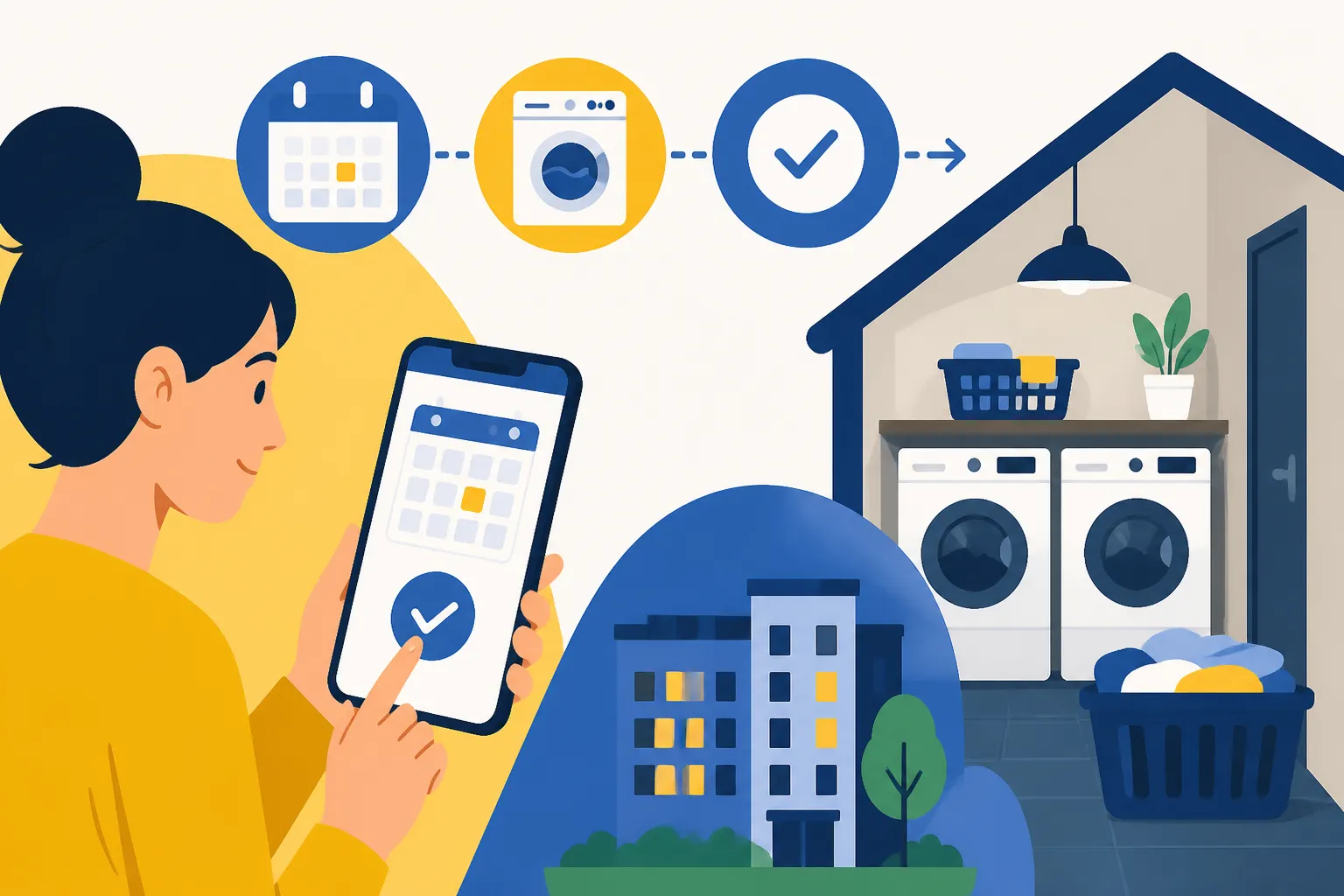
As Sweden moves towards an increasingly cashless and digital society, many newer buildings, and even renovated older ones, have embraced digital booking systems. These typically involve a touch screen panel, often mounted in the entrance lobby or by the laundry room door, or even a dedicated smartphone app. You'll log in using your apartment number, a personal code, or sometimes even your BankID – that omnipresent digital identification tool you'll quickly learn to rely on for everything from banking to Booking Doctor Appointments Online Through 1177.se with BankID. If you're a new arrival trying to get all your digital ducks in a row, making sure you have reliable internet and a working phone is key; perhaps even looking into an eSIM from a provider like Airalo could be useful for ensuring connectivity right from the start, especially if you haven't yet sorted out your local phone plan while Getting Broadband and Mobile Service in Sweden.
These digital systems offer much more flexibility. You can often book from the comfort of your sofa, view detailed availability, and even receive reminders for your upcoming slot. Some advanced systems allow you to see which specific machines are free within a slot, or report a fault directly through the interface. They are generally more efficient, but they do require a certain level of digital literacy and, of course, a working internet connection.
Step-by-Step: How to Secure Your Laundry Slot
Here's a quick guide to using both types of systems:
For Physical Boards:
- Locate the Board: Find the physical booking board, usually near the tvättstuga entrance or in the main lobby.
- Identify Your Cylinder: Make sure you have your assigned booking cylinder. If you haven't received one, contact your landlord or bostadsrättsförening (BRF) for guidance.
- Check Availability: Look for an empty slot on the desired date and time. These are typically marked by a blank space where a cylinder can be inserted.
- Book Your Slot: Insert your cylinder into the designated slot. Make sure it's firmly in place.
- Confirm: Double-check that your cylinder is in the correct slot. Now you just need to remember your time!
For Digital Systems (Screens/Apps):
- Access the System: Go to the digital screen or open the dedicated app on your smartphone.
- Log In: Enter your apartment number, personal code, or use your BankID to log in. This typically requires you to have already secured your Getting Your Personnummer: The Gateway to Swedish Healthcare and Getting BankID: Sweden's Essential Digital Identity.
- Browse Availability: Navigate through the calendar or list of available times.
- Select a Slot: Tap or click on the desired date and time. The system will usually confirm your selection.
- Confirm Booking: Confirm your booking. You might receive a confirmation message or email. Some systems allow you to set reminders.
- Cancel if Needed: If your plans change, remember to cancel your slot to free it up for others. This is a crucial part of the communal spirit.
| Feature | Traditional Physical Board System | Modern Digital System (Screen/App) |
|---|---|---|
| Booking Method | Physical cylinder/key on a board | Touch screen panel or smartphone app |
| Access | Must be physically present at the board | Anywhere with internet access |
| Visibility | Immediate visual overview of availability | Digital calendar, often with more detail |
| Reminders | None, purely manual | Often sends push notifications or emails |
| Login Required | Your unique cylinder | Apartment number, personal code, or BankID |
| Flexibility | Limited to physical interaction | High, easy to change/cancel from afar |
| Common in | Older apartment buildings (hyresrätt & bostadsrätt) | Newer constructions & recently renovated buildings |
| Maintenance | Low tech, robust | Requires electricity, software updates |
The Unwritten Rules and Essential Etiquette of the Swedish Laundry Room
The tvättstuga operates on a social contract of mutual respect and responsibility. Abiding by these unwritten rules is essential to harmonious co-existence with your neighbours.
Punctuality and Respecting Time Slots
This is perhaps the golden rule of the tvättstuga. When your booked slot begins, you should be there, ready to load your machines. Similarly, when your slot ends, your laundry should be out, and the machines should be clean and ready for the next person. Seriously, Swedes take this very, very seriously. Arriving late or, even worse, running over your allotted time is considered incredibly rude and disrespectful of other residents' time. You might find a passive-aggressive note on the door if you regularly break this rule – and trust me, you don't want that!
Imagine arriving for your 1 PM slot only to find the previous person's clothes still tumbling in the dryer. This not only delays your start but can throw off your entire schedule. It’s a collective annoyance. Conversely, leaving your laundry beyond your allotted time means the next person can legally (and often will) remove your clothes from the machine and place them on a designated table or basket. Don't be surprised if they're neatly folded – or simply stacked. It's not malicious; it's simply adhering to the schedule.
Leaving Everything Spick and Span
Another non-negotiable rule is to leave the laundry room cleaner than you found it, or at the very least, as clean as you found it. This means:
- Wiping down machines: Use a damp cloth (often provided, or bring your own) to wipe out the detergent drawer and around the door seal of the washing machine.
- Cleaning the lint filter: Always clean the lint filter in the dryer after you've used it. This isn't just about tidiness; it's a fire safety measure and ensures the dryer works efficiently for everyone.
- Sweeping/wiping the floor: If you've spilled detergent or tracked in dirt, do a quick sweep or wipe.
- Emptying the shared bins: If there are bins for lint or other small waste, ensure they are not overflowing.
Failing to clean up is a major faux pas and a surefire way to earn the quiet disdain of your neighbours. It's a shared resource, and the expectation is that everyone contributes to its upkeep, much like the general rule that Do I Need to Clean the Apartment Before Moving Out in Sweden?.
Noise Levels and Respecting Neighbours
While laundry machines can be noisy, try to minimize any additional disturbances. Avoid loud conversations, especially late at night or early in the morning. If you're doing laundry late, be extra quiet when moving your basket or closing doors. Remember, these laundry rooms are often in residential buildings, and sound carries. This is part of the general respect for quiet hours that is typical of What Is the Quiet Hours in a Swedish Apartment Building?.
Children are generally welcome, but they should be supervised to ensure they don't interfere with machines or other residents' laundry. It's a functional space, not a playground.
Dealing with Potential Disputes
Most of the time, the tvättstuga system works flawlessly because everyone adheres to the rules. However, sometimes issues arise: someone might take your slot, leave a mess, or just generally be inconsiderate.
The Swedish approach to conflict resolution is generally non-confrontational. The first step is often a polite, passive-aggressive note – perhaps a carefully worded reminder about cleaning the lint filter. Direct confrontation is rare. If a problem persists, the next step is usually to contact your landlord or the BRF board. They are responsible for enforcing the rules and mediating disputes. Avoid taking matters into your own hands, as this can escalate the situation unnecessarily. Remember, while a shared laundry room fosters community, it also means shared problems. If you're encountering larger issues with your rental, it's good to know your Tenant Rights in Sweden: Contracts, Rent, and the Hyresnämnden or how The Hyresnämnden: Resolving Rental Disputes in Sweden can assist.
Common Mishaps and How to Navigate Them
Even with the best intentions and the clearest rules, sometimes things go awry in the tvättstuga. Knowing how to handle these situations gracefully is key to maintaining peace and getting your clothes clean.
When Your Booked Slot is Already Taken
It happens. You arrive for your carefully booked laundry slot, only to find someone else's clothes in the machine or their cylinder still on the board. Your first reaction might be frustration, and that's perfectly normal.
- Stay Calm: Avoid immediately emptying their laundry or removing their cylinder. This can lead to unnecessary conflict.
- Check the Time: Double-check the booking board or digital system to ensure there hasn't been a misunderstanding. Sometimes people accidentally book the wrong slot or forget they've changed plans.
- Polite Notification: If someone is definitely in your slot, and their booked time has officially ended, you can usually take their laundry out of the machine and place it neatly in a basket or on a designated table. This is generally accepted practice, especially if you have another booking following immediately. If you're unsure, or it's still their time, leave a polite note on the machine or on their laundry, gently reminding them of the rules. For example, "Hej! This slot is booked from XX:XX. Please remove your laundry. Tack!"
- Contact Management: If it's a recurring issue with the same individual, or if the situation feels particularly aggressive or confusing, document the time and date, and then contact your landlord or BRF board. They can intervene and send out a general reminder about the rules.
Dealing with Broken Machines or Facility Issues
Even industrial-grade machines can break down. If you discover a machine isn't working, or if there's a leak or other issue in the tvättstuga, here's what to do:
- Report Immediately: Look for a contact number or email for maintenance, often posted inside the laundry room or in the building's main entrance. If using a digital booking system, there might be a direct reporting function. Be as specific as possible about the machine number and the nature of the problem.
- Leave a Note: If possible, put a clear "OUT OF ORDER" (or UR FUNKTION) sign on the broken machine so others don't waste their time or detergent.
- Alternative Plans: If a breakdown affects your ability to do laundry during your booked slot, you might need to try to re-book, or inquire if there are other laundry facilities within the building complex. Sometimes, the BRF or landlord might offer a temporary solution or even a small compensation if a prolonged outage occurs. When you're Setting Up Your Home in Sweden: Utilities, Internet, and Insurance, make sure you know who to contact for building maintenance.
Lost and Forgotten Items
It's easy to forget a sock, a t-shirt, or even an entire basket of freshly washed clothes in the hustle and bustle.
- Lost & Found: Most tvättstugor have a designated lost and found area – often a shelf or a basket. Check there first if you've left something behind.
- Returning Items: If you find someone else's forgotten items, place them neatly in the lost and found. Resist the urge to keep anything, no matter how tempting that stray sock might be!
- Valuables: If you find something valuable, like a phone or wallet, hand it over to your landlord or BRF immediately.
Remember, the laundry room is a microcosm of Swedish society's emphasis on shared responsibility and respect. By understanding and following these unwritten rules, your laundry days in Sweden will quickly become a predictable and manageable part of your new life.
Disclaimer
The information provided in this guide is intended for general informational purposes only and does not constitute legal or professional advice. While we strive to provide accurate and up-to-date information, rules and regulations in Sweden, especially those related to housing and community living, can change and vary by region, municipality, and individual building association (BRF). Always consult official sources, your landlord, or your bostadsrättsförening for the most current and specific guidance applicable to your situation.