Which Foreign Licences Can Be Exchanged in Sweden?
Ah, the Swedish driving licence – it's one of those administrative hurdles that catches so many of us expats off guard when we first arrive. You come from a country where you've driven for years, only to find out your trusted licence might not be worth the paper it's printed on after a certain point here. This guide will walk you through the often-confusing world of which foreign driving licences Sweden actually allows you to exchange, and which will send you straight back to the driving school.
Understanding the Swedish Driving Licence System
When you move to Sweden, one of the many things that needs sorting is your ability to legally drive. It’s not just about knowing the rules of the road – which, let's be honest, can be an adventure in itself, especially if you're suddenly dealing with roundabouts and a distinctly Swedish interpretation of pedestrian crossings. It's about official recognition, and for that, you'll be dealing with Transportstyrelsen, the Swedish Transport Agency. They are the gatekeepers of all things driving-related in Sweden.
The rules around foreign driving licences are quite specific and depend heavily on where your licence was issued and, crucially, when you became a registered resident in Sweden. Many people assume a valid licence from their home country is enough for the long haul, but Sweden has a strict one-year rule for most non-EU/EEA licences, after which it becomes completely invalid. This isn't just a minor inconvenience; it can mean you're driving illegally, risking heavy fines, and potentially voiding your insurance if you're involved in an accident. Trust me, you do not want to be in that situation here.
The Importance of Your Personnummer and Folkbokföring
Before you even think about exchanging a foreign driving licence, or doing pretty much anything significant in Sweden, you're going to need your personnummer. This ten-digit personal identity number is your key to Swedish society, unlocking everything from banking to healthcare and, yes, driving licence exchanges. Without it, you’re often stuck in a bureaucratic limbo, unable to complete many official processes. The journey to Getting Your Personnummer: The Gateway to Swedish Healthcare is often the first, and sometimes most frustrating, step for new arrivals.
Once you have your personnummer, the next critical step is being folkbokförd, or registered in the Swedish Population Register. This means you are officially considered a resident of Sweden by Skatteverket (the Swedish Tax Agency). Transportstyrelsen will use this date of registration as the starting point for various deadlines, particularly the infamous one-year rule for foreign driving licences. So, make sure you understand Getting Registered in the Population Register (Folkbokföring) as soon as you arrive. Without both your personnummer and official folkbokföring, the process of exchanging your licence is essentially a non-starter.
General Rules for Foreign Licences
For most foreign residents, there's a grace period. If you have a driving licence issued in a country outside the EU/EEA, it's generally valid in Sweden for one year from the date you become folkbokförd. After this year, it ceases to be valid for driving here. This is a crucial detail many overlook. It doesn't matter if your licence is still valid in your home country; if you're a registered resident in Sweden and that year has passed, you're essentially driving without a licence.
For those from EU/EEA countries, the rules are much more relaxed, thanks to mutual recognition agreements. Your licence is generally valid for as long as it is valid in your home country, or until you turn 70, whichever comes first. This is a significant distinction that simplifies life for many European expats considerably. Always carry your physical licence with you when driving, along with proof of identity.
Licences You Can Exchange: The Straightforward Cases
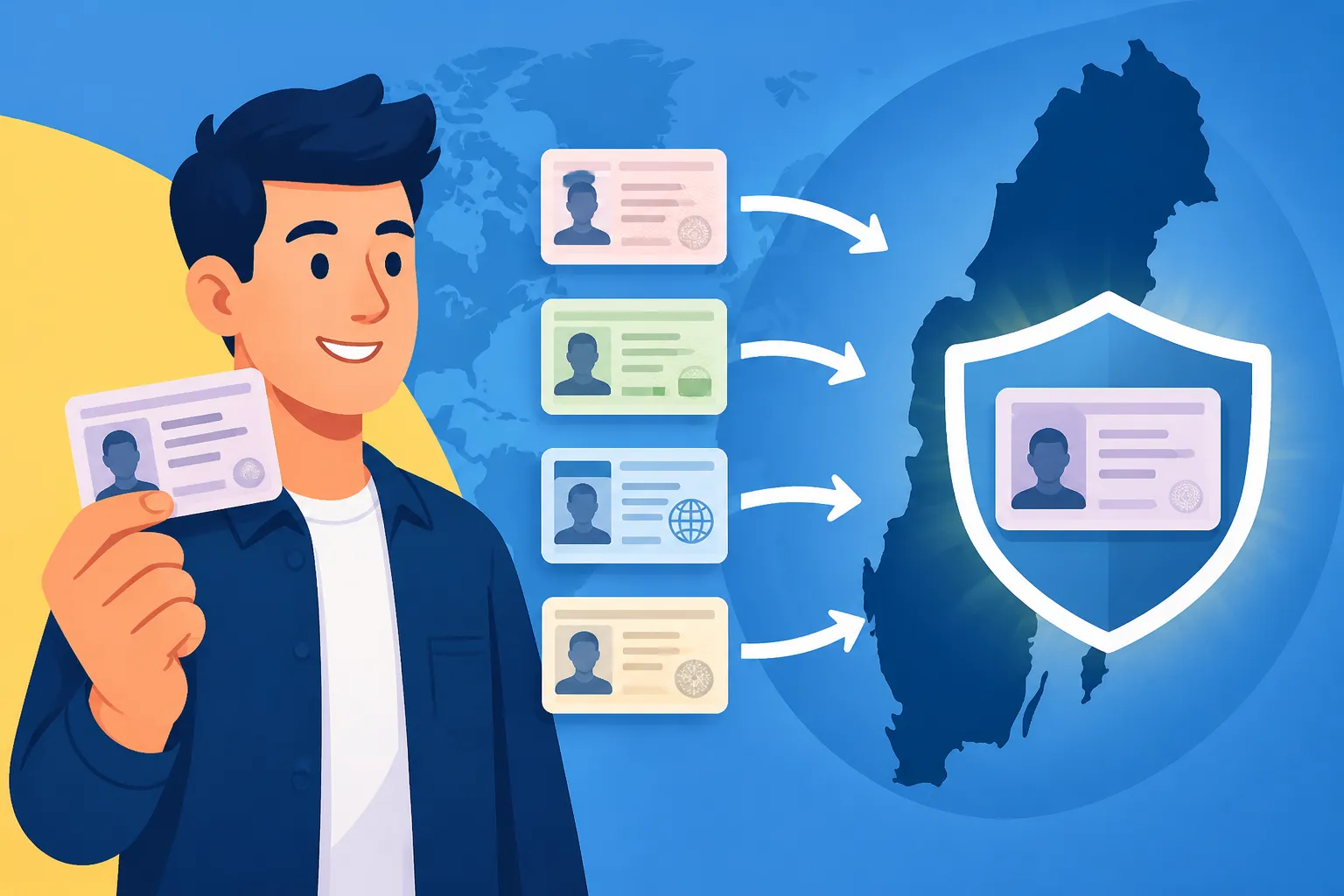
Let's start with the good news. For some, the process of getting a Swedish driving licence is a relatively simple exchange, without the need to retake tests. This applies to a specific set of countries where Sweden has agreements in place.
EU/EEA Licences: The Simplest Scenario
If your driving licence was issued in an EU or EEA country (that's all 27 EU member states plus Iceland, Liechtenstein, and Norway), you're in luck. Your licence is valid in Sweden and you have the option to exchange it for a Swedish one if you wish. You don't have to, but many choose to, especially if their original licence is nearing expiration or for the sheer convenience of having a Swedish document. This is by far the easiest category.
The main reasons you might exchange your EU/EEA licence are:
- Expiration: If your EU/EEA licence is about to expire, you can exchange it for a Swedish one, which typically comes with a 10-year validity. This saves you the hassle of renewing it through your home country's authorities.
- Convenience: Having a Swedish driving licence can serve as a valid Swedish ID card, which is incredibly useful for everyday life here, especially for things like Getting a Swedish ID Card After Your Personnummer if you haven't sorted that out yet, or for everyday tasks that require proving your identity.
To exchange an EU/EEA licence, you'll generally need to apply to Transportstyrelsen, prove your identity and residency, and surrender your original licence. It’s a pretty administrative process, usually without further testing.
Licences from Countries with Exchange Agreements
Beyond the EU/EEA, Sweden has bilateral agreements with a few specific countries that allow for direct exchange of driving licences. This means residents from these nations can exchange their foreign licence for a Swedish one without having to go through the full Swedish driving test process (yay!).
Currently, these countries include:
- Switzerland
- Japan
- Andorra
- Faroe Islands
- Isle of Man
- Monaco
- San Marino
- Gibraltar
This list is subject to change, so always double-check the latest information on the Transportstyrelsen website. If your licence is from one of these countries, the exchange process is significantly simpler than for most other non-EU/EEA nationals. You'll still need to meet residency requirements and typically provide a certificate of authenticity or other documentation, but you avoid the practical and theoretical exams.
Step-by-Step: Exchanging an Eligible Licence
For those lucky enough to have an eligible licence, here’s a general rundown of the exchange process with Transportstyrelsen:
- Application Form: Download and fill out the "Application for driving licence exchange" (Ansökan om utbyte av utländskt körkort) from Transportstyrelsen's website.
- Health Declaration: You'll also need to fill out a health declaration (Hälsodeklaration), which asks about your medical history and fitness to drive. For some licences, particularly professional ones, a medical certificate might be required.
- Eye Test: Obtain an eye test certificate from an authorized optician. Many opticians offer this service, and it's usually a quick and straightforward process.
- Identity and Residency Proof: You'll need to prove your identity (often with your Swedish ID card or passport) and your registration in the population register (folkbokföring).
- Your Foreign Licence: You must submit your original foreign driving licence along with your application. This is a critical point – you will be surrendering it.
- Photo: Include a recent passport-style photo.
- Payment: Pay the application fee.
- Submit: Send all documents to Transportstyrelsen. They will review your application and, if all is in order, issue a Swedish driving licence.
The processing time can vary, so it's wise to apply well in advance, especially if your current licence is nearing its one-year validity period (for non-EU/EEA eligible licences). Remember, during this time, your ability to drive legally might depend on the specific rules of your original licence and the one-year grace period.
Licences You Cannot Directly Exchange: The Tougher Reality
Now for the less straightforward, but unfortunately more common, scenario for many expats. If your licence is from pretty much anywhere else in the world – think North America, Australia, New Zealand, most of Asia, Africa, and South America – you cannot directly exchange it for a Swedish one. This is a source of considerable frustration for many, and it means preparing for the full Swedish driving test.
The Dangers of Driving on an Unrecognized Licence
After your one-year grace period from the date of your folkbokföring, your non-exchangeable foreign driving licence becomes completely invalid in Sweden. Period. Full stop. It doesn't matter if it's still valid in your home country, or if you've been driving safely for decades. If you continue to drive, you are operating a vehicle without a valid licence.
The consequences of this are severe:
- Fines: You can face significant fines for driving without a valid licence.
- Insurance Invalidity: Perhaps most critically, your car insurance will likely be invalid. If you're involved in an accident, even if it's not your fault, you could be held personally liable for all damages and injuries, which can be financially ruinous.
- Criminal Record: In some cases, repeated offences could lead to a criminal record.
- Difficulty Getting a Swedish Licence: Having been caught driving illegally can complicate future applications for a Swedish licence.
Many expats find themselves in a bind, especially if they need a car for work or family life. It’s tempting to think you can stretch the rules, but the risk is simply not worth it. If you need to stay connected and navigate your new life, consider options like an eSIM from a provider like Airalo to ensure you always have access to maps or public transport apps, even if you can't drive your car.
The Full Swedish Driving Test: The Only Path for Many
If your licence isn't from the EU/EEA or one of the handful of exchange-agreement countries, your only option to get a Swedish driving licence is to go through the entire process as if you were a brand-new driver. This means:
- Driving Permit (Körkortstillstånd): Apply for a driving permit, which requires an eye test and a health declaration.
- Theoretical Exam (Teoriprov): Pass a comprehensive written exam covering Swedish traffic laws and road safety. This is offered in several languages, including English.
- Practical Driving Test (Körprov): Pass a practical driving test with a Transportstyrelsen examiner. This test assesses your ability to drive safely and independently in various traffic situations.
- Risk Education (Riskutbildning): Complete two compulsory risk education courses:
- Riskutbildning del 1 (Riskettan): A theoretical course on risk factors like alcohol, drugs, fatigue, and aggressive driving.
- Riskutbildning del 2 (Risktvåan): A practical course focusing on speed, safety, and special vehicle maneuvers on a slippery track (often called the "haltbana").
This process can be time-consuming and expensive. Many drivers, even those with decades of experience, find the Swedish tests challenging because they require adherence to specific Swedish methodologies and a thorough understanding of local traffic culture. It’s not just about being a good driver; it's about being a good Swedish driver.
The "Residency Rule" for Licence Exchange
There's another critical rule to be aware of: you cannot exchange a driving licence issued in an EU/EEA country if you obtained that licence while you were already a resident (folkbokförd) in Sweden. This is to prevent people from sidestepping the Swedish driving test by simply getting an EU licence in another member state and then trying to exchange it in Sweden. Transportstyrelsen is quite vigilant about this, checking your residency history. So, if you're already settled here, planning a quick trip to, say, Denmark, to get an EU licence, then coming back to exchange it – that tactic won't work. This rule reinforces the need to understand your options for Driving in Sweden: Exchanging Your Licence with Transportstyrelsen from the outset.
Practicalities and Common Pitfalls
Navigating the driving licence maze in Sweden requires careful planning and an understanding of the specific timelines and requirements.
The One-Year Rule: Counting the Clock
As mentioned, for most non-EU/EEA licences, you have one year from the date you register in the Swedish Population Register (folkbokföring) to drive legally on your foreign licence. This clock starts ticking immediately. This is not a generous allowance, and it flies by faster than you think, especially when you're busy with all the other complexities of Setting Up Your Home in Sweden: Utilities, Internet, and Insurance or finding a job.
What happens if you're not folkbokförd but living in Sweden? For example, if you're on a student permit that’s shorter than a year, or if your plan to stay doesn’t meet Skatteverket’s criteria for How Long Must I Plan to Stay to Get a Personnummer?. In such cases, your licence is generally valid for the duration of your intended stay, but never exceeding one year. It gets complicated, and it's always best to check with Transportstyrelsen directly if your situation is unusual. The safest bet is to get folkbokförd as soon as possible if you intend to stay long-term, as that at least gives you a clear start date for the one-year countdown.
What to Do While Waiting for Your New Swedish Licence
If you're in the process of taking the full Swedish driving test, or even if you're exchanging an eligible licence, there will be a period when you don't have a valid Swedish driving licence in hand.
- For exchangeable licences: Once you submit your foreign licence for exchange, you will no longer have a physical licence. Transportstyrelsen might issue a temporary driving certificate in some cases, but it's not a given. Always confirm if you will have any temporary driving privileges before surrendering your licence. It may be that you cannot drive until your Swedish licence arrives.
- For those taking the full test: You cannot drive unsupervised until you pass both the theoretical and practical tests and receive your provisional licence. You can drive with a learner's permit (often called an 'övningskörningstillstånd') but only with a qualified supervisor in the car who meets specific criteria. This means relying on Public Transport in Sweden: SL, Regional Cards, and Apps, carpooling, or a service like Spotahome to find housing close to your work or school to minimize your commute.
Specific Scenarios: Motorbikes, Trucks, and Professional Licences
The general rules outlined above primarily apply to standard B-category car licences. However, the same principles extend to other licence categories like motorbikes (A), light trucks (C), and buses (D). If you hold a foreign professional driving licence, such as for trucks or buses, the exchange rules are even more stringent.
- Professional Qualifications: For professional driving categories, you often need to meet additional requirements beyond just the driving test. This can include specific medical examinations and proof of professional competence (Yrkeskompetensbevis, or YKB). Even if your country has an exchange agreement for a B-licence, it doesn't automatically mean your professional categories are exchangeable. You might have to undergo further testing and certification.
- Winter Driving: While not directly related to licence exchange, anyone driving in Sweden, especially those just getting their Swedish licence, must be aware of the specific rules and challenges of Winter Driving in Sweden: Studded Tyres and the Rules. This is part of the theoretical knowledge tested and is absolutely critical for safety.
The takeaway here is that driving in Sweden, whether you're a seasoned expat or a fresh arrival, requires diligent attention to the rules and a willingness to navigate the bureaucracy. It's not always simple, but with the right information and a bit of patience, you'll get there.
Disclaimer
Please remember that I'm an expat blogger, not an official legal or government authority. While I strive to provide accurate and up-to-date information based on my personal experience and publicly available sources, rules and regulations around visas, residency, and driving licences in Sweden can change. Always consult the official websites of Transportstyrelsen and Migrationsverket, or seek advice from a qualified legal professional, for the most current and authoritative information pertaining to your individual situation.