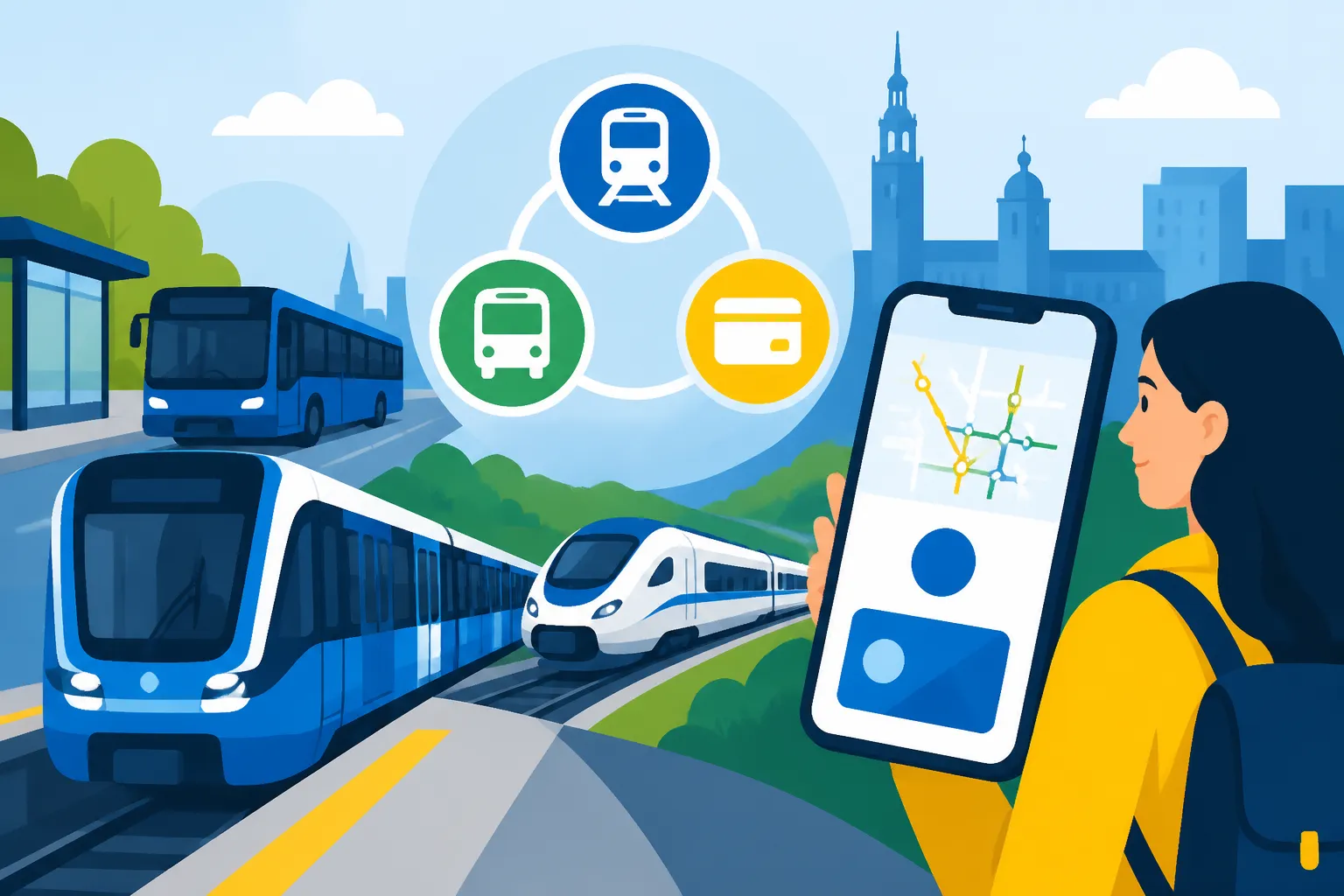
Public Transport in Sweden: SL, Regional Cards, and Apps
Stepping off the plane or ferry in Sweden, one of the first things you'll realize is that navigating this new land requires understanding its unique rhythm, and that certainly extends to its public transport. It's not always intuitive, especially when you're used to a single national system, and the sheer number of regional operators can feel like a labyrinth at first glance. This comprehensive guide is here to untangle that complex web, offering practical, empathetic advice on everything from digital tickets to unspoken etiquette, ensuring you can travel across Sweden with confidence and ease, even if you’re still wrestling with Getting Your Personnummer: The Gateway to Swedish Healthcare.
The Public Transport Landscape in Sweden: A Regional Maze
One of the most striking differences for newcomers to Sweden is the highly regionalized public transport system. Forget a single national ticket or app that works everywhere; Sweden operates more like a collection of mini-countries when it comes to getting around on public transit. This can be a bit of a shock, and honestly, a source of significant frustration when you're trying to figure out if your Stockholm ticket is valid in Gothenburg (spoiler: it's not). Each region, or län, has its own public transport authority, its own apps, and its own ticketing system.
Understanding the Regional Operators
At the heart of this regionalized system are the various public transport operators, each responsible for services within their respective county. The three biggest players, and likely the ones you'll encounter most if you're living in or visiting major cities, are:
- SL (Storstockholms Lokaltrafik): This is your go-to for all public transport within Stockholm County. We're talking the iconic blue and red metro trains (Tunnelbana), buses, trams, commuter trains (Pendeltåg), and even some ferries. It's an extensive network covering the capital and its surrounding areas, and it's where most new arrivals will first grapple with the Swedish system.
- Västtrafik: Based in Västra Götaland County, Västtrafik manages public transport around Gothenburg, Sweden's second-largest city, as well as Trollhättan, Uddevalla, Borås, and more. Their network is famous for its bright blue trams, local buses, regional trains, and even some boat services along the coast and rivers. Getting familiar with the Västtrafik To Go app is crucial here.
- Skånetrafiken: Down in the southernmost county of Skåne, serving cities like Malmö, Lund, Helsingborg, and Kristianstad, you'll find Skånetrafiken. They operate city buses, regional buses, and a vital network of regional trains (Pågatåg and Öresundståg) that connect towns within Skåne and even stretch across the Öresund Bridge to Copenhagen, Denmark. Their app is a must-have for anyone living in or visiting this vibrant region.
Beyond these giants, you'll find other operators like Östgötatrafiken (Östergötland, e.g., Linköping, Norrköping), Upplands Lokaltrafik (UL) (Uppsala), Länstrafiken (numerous smaller regions), and many more. The crucial takeaway is this: a ticket from one region is almost never valid in another. If you're moving between counties, you're essentially starting fresh with a new provider. This can be a bit of a headache, especially if you have a job that involves travel across regional borders, so always double-check which operator governs your specific journey.
Navigating Different Modes of Transport
Within each regional system, you'll find a diverse array of transport modes designed to get you wherever you need to go. Sweden's commitment to public transport means these systems are generally well-integrated and efficient, even if the regional boundaries are a pain.
In Stockholm, the Tunnelbana is the pulsating heart of the city's transport. It’s not just a way to get around; some of its stations are famous for their unique art installations, making your commute a mini-art exhibition. Alongside the metro, an extensive network of buses covers areas not reached by rail, including crucial night bus services that can be a lifesaver after a late dinner or night out. Trams offer a charming, often scenic, way to traverse certain parts of the city, and the Pendeltåg (commuter rail) extends far into the suburbs, making it possible to live a bit further out while still working in the city center. Lastly, in a city built on islands, several ferries are also part of the SL system, providing a unique perspective on the city from the water.
Gothenburg, on the other hand, is defined by its trams. They are everywhere, covering the city center and reaching out to most residential areas, making them the most iconic and often the most convenient way to travel. Complementing the trams are buses that fill in the gaps, and the Älvsnabben ferries offer a pleasant journey along the Göta älv river, connecting different parts of the city. Regional trains also run under the Västtrafik umbrella, linking Gothenburg with other towns in Västra Götaland county.
Down south in Skåne, trains truly dominate the inter-city transport. The bright yellow Pågatåg trains crisscross the county, offering fast and frequent connections between towns. Öresundståg trains then take you further afield, not just within Sweden but also directly into Denmark. Within cities like Malmö and Lund, efficient city buses ensure you can get around locally, often with high frequency and clear route information. Regardless of where you land in Sweden, you’ll find that public transport is generally a very reliable and well-maintained option, even if learning the nuances of each system takes a bit of time.
Essential Ticketing and Payment Systems: Beyond Cash
Forget fumbling for coins or crisp bills on a Swedish bus or tram. In this increasingly cashless society, public transport has long embraced digital solutions, and if you’re still relying on physical money, you’re going to run into some serious roadblocks. Learning the payment systems is arguably the most critical step to mastering public transport here.
The Rise of Digital Ticketing and Apps
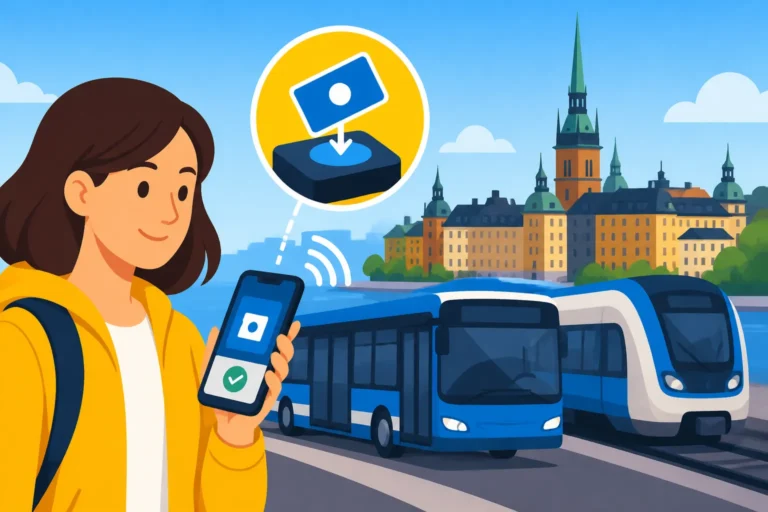
The absolute best way to handle public transport in Sweden is through the official regional apps. They are your personal guide, ticket office, and real-time information center all rolled into one. For Stockholm, it’s the SL-Reseplanerare och biljett app. For Gothenburg and Västra Götaland, it's Västtrafik To Go. And for Skåne, it’s the Skånetrafiken app.
These apps are usually available on both iOS and Android and are incredibly user-friendly, often offering an English interface. To get started, you'll typically need to:
- Download the specific regional app: Don't download one and expect it to work in another region.
- Create an account: This usually involves your email and a password.
- Link a payment method: Most Swedish debit/credit cards (Visa, Mastercard) work seamlessly. If you're a newcomer and haven't yet set up a Swedish bank account, some international cards might work, but it's always best to check.
- Purchase tickets: You can buy single journey tickets, 24-hour, 72-hour, or 30-day passes directly within the app. Crucially, your ticket is usually activated at the time of purchase or shortly before travel, so don't buy it too far in advance unless it's a period pass. You then simply show the activated QR code or dynamic ticket display to the driver (on buses) or pass it through a scanner at metro/train gates.
The apps aren't just for buying tickets; they also offer excellent journey planners, real-time departure information, and updates on any delays or disruptions. They’ve become an indispensable part of daily life for anyone relying on public transport. Having a reliable data plan is absolutely essential here, so if you're fresh off the plane, consider an eSIM from providers like Airalo to get connected instantly and make using these apps a breeze. You’ll be glad you did, especially when you're trying to figure out which bus to take after a long day. If you haven't yet sorted out Can I Get a Swedish Phone Plan Without a Personnummer?, make sure to do so quickly.
Physical Cards and Contactless Payments
While digital apps are king, physical travel cards still have a place, particularly for those who prefer not to rely on their phone battery or for longer-term passes. In Stockholm, the SL Access card (a blue plastic card) used to be the primary way to carry period tickets or pay-as-you-go credit. While it's still active, SL is phasing it out in favor of digital and contactless solutions. You can still buy and top up these cards at metro stations, SL Centers, and many newsagents.
Increasingly, regions are embracing contactless bank card payments (tap-and-go) directly on card readers. This is incredibly convenient for spontaneous travel without needing to download an app or buy a physical card. For instance, in Stockholm, you can simply tap your Visa, Mastercard, or American Express credit/debit card (or a mobile payment service like Apple Pay or Google Pay) on the card reader at metro gates or on buses and trams. The system automatically charges you for a single journey, and often, it even calculates a "best price" daily cap if you make multiple journeys, meaning you won't pay more than the cost of a 24-hour ticket. This feature, however, isn't uniform across all regions, so always check the local operator's website for specifics. It’s also worth noting that while Sweden is largely cashless, sometimes international cards can have issues, so having a Swedish card or a backup payment method is wise. If you're wondering about using your non-Swedish cards, check out Can I Use My Foreign Credit Card in Sweden?.
Single Tickets vs. Period Passes
Deciding between buying individual tickets or a period pass depends heavily on your travel habits. For tourists or those making very infrequent journeys, a single ticket is obviously the most straightforward option. You buy it for a specific journey, and it's valid for a set amount of time (usually 75-90 minutes, allowing transfers within that period). You can buy these via the apps, contactless bank card, or at ticket machines/service points.
However, if you're living in Sweden or plan to use public transport regularly, period passes are almost always the most cost-effective solution. These typically come in 24-hour, 72-hour, 7-day, 30-day, 90-day, or even yearly formats.
- 24-hour and 72-hour passes: These are excellent for tourists or visitors who plan on doing a lot of sightseeing over a few days. They offer unlimited travel within the chosen region for the duration.
- 30-day passes (or monthly passes): This is the bread and butter for most commuters and residents. It provides unlimited travel within the entire region (or specific zones, depending on the operator) for a full month. The savings compared to buying daily tickets quickly add up, making it an essential purchase if you commute regularly. These are almost always bought through the apps or loaded onto physical cards.
It’s important to carefully consider how much you'll be traveling. If you’re only commuting a couple of days a week, two 7-day passes might be cheaper than a 30-day pass, for example. Always do a quick calculation based on your expected usage. Remember, these passes are strictly regional; a 30-day SL pass won't get you a single ride on a Västtrafik tram.
| Feature | SL (Stockholm) | Västtrafik (Gothenburg/Västra Götaland) | Skånetrafiken (Malmö/Skåne) |
|---|---|---|---|
| Main Cities | Stockholm | Gothenburg, Borås, Trollhättan | Malmö, Lund, Helsingborg, Kristianstad |
| Primary Modes | Metro (Tunnelbana), Buses, Trams, Commuter Rail | Trams, Buses, Ferries, Regional Trains | City Buses, Regional Buses, Regional Trains (Pågatåg) |
| Official App | SL-Reseplanerare och biljett | Västtrafik To Go | Skånetrafiken App |
| Payment Methods | App (card), Contactless bank card (tap), SL Access Card | App (card), Physical travel card (Västtrafik Card), Ticket Vending Machines, Contactless (some zones) | App (card), Physical travel card (Jojo Card being phased out), Contactless bank card (on board) |
| Key Passes | 24h, 72h, 30-day | 24h, 72h, 30-day | 24h, 30-day, Flex 10/30 (flexible 10 days out of 30) |
| Info English? | Yes | Yes | Yes |
Deep Dive into Major City Networks: Stockholm, Gothenburg, Malmö
Understanding the general principles is one thing, but navigating the specific quirks of each major city's network is where the rubber meets the road. These are the urban centers where most expats land, and their transport systems are robust but each has its own unique feel. This is crucial for making informed decisions on Choosing Where to Live in Stockholm: Neighbourhoods for Newcomers or Living in Gothenburg and Malmö: What Newcomers Should Know.
Stockholm's SL System: Tunnelbana, Buses, and Pendeltåg
Stockholm’s public transport, run by SL, is a truly comprehensive system, designed to move millions of people daily. The Tunnelbana (metro) is the most recognizable component, famous for its efficiency and artistic stations. There are three main lines (green, red, and blue), each with several branches, extending across the city and into many suburbs. For first-timers, getting to grips with the lines and their directions (e.g., "Mörby centrum" or "Fruängen" for the Red line) is key. Don't be shy about consulting the large maps in stations or, better yet, the SL app.
Beyond the metro, buses fill in the urban landscape. Inner-city routes are frequent, and some lines are designated as "Blue Buses" (blåbussar), which are larger, more frequent, and often serve as cross-city arterial routes. Night buses operate after the metro closes, often covering similar routes, which is incredibly useful. Trams serve specific areas, like Djurgården (the tourist island) and the inner city, offering a more leisurely ride with fantastic views. For those living further out, the Pendeltåg (commuter rail) connects Stockholm with towns like Södertälje, Uppsala, and Märsta. It's an efficient way to travel longer distances within the county, but make sure you understand the difference between the Pendeltåg and long-distance SJ trains, which are separate. You can learn more about specific ticket purchasing in How Do I Buy Public Transport Tickets in Stockholm? and about the older card system in What Is the SL Card and How Does It Work?.
When paying, Stockholm has been at the forefront of digital adoption. While the old SL Access card still works for pre-loaded credit and period tickets, most people now use the SL app for buying single tickets or 30-day passes. Even more conveniently, you can tap your bank card (Visa, Mastercard, Amex) directly at the metro gates or on board buses and trams. The system calculates the best price, including a 24-hour cap, which is fantastic for those unexpected multiple journeys. Just remember to use the same card for all taps within a 24-hour period to benefit from the price cap.
Gothenburg's Västtrafik: Trams and Buses Galore
Gothenburg has a very distinct public transport identity, largely centered around its extensive tram network. For many, the trams are Gothenburg. These blue-and-white workhorses traverse the entire city, making them an easy and pleasant way to get from A to B. Learning the main tram lines and their destinations is an essential part of settling into Gothenburg life.
In addition to trams, buses supplement the network, covering areas that trams don't reach and providing important connections, especially in the suburbs. A unique feature of Gothenburg's transport is the Älvsnabben ferries (part of the Västtrafik system), which glide along the Göta älv river, offering a scenic and efficient way to cross the city, especially useful for reaching areas like Lindholmen. Regional trains also operate under the Västtrafik banner, connecting Gothenburg to other parts of Västra Götaland County, for example, to destinations like Borås or Strömstad.
For ticketing, the Västtrafik To Go app is indispensable. It allows you to purchase all types of tickets, from single journeys to 30-day passes, and provides real-time travel information. Västtrafik also offers its own physical travel cards (the Västtrafik Card), which can be loaded with credit or period passes, available at various service points. Contactless bank card payment is available on board some vehicles and at certain stops, but it's not as universally integrated as in Stockholm, so always check the latest information on the Västtrafik website for where you can tap and go. Zones are also a critical factor here, so make sure your ticket covers the correct zone for your journey, especially when venturing out of the immediate city center.
Skånetrafiken in Malmö and Beyond: Pågatåg and Buss
Down south, Skånetrafiken governs public transport, with its hub cities being Malmö and Lund. The region is characterized by its excellent regional train network, primarily the bright yellow Pågatåg and Öresundståg trains. These trains are crucial for connecting the many charming towns and cities within Skåne, and the Öresundståg line even links directly to Copenhagen, making cross-border commuting or day trips a breeze.
Within Malmö and Lund, city buses are the primary mode of internal transport. Malmö, being quite flat and compact, is also very bike-friendly, but the buses provide efficient coverage. The buses are clean, modern, and frequent, ensuring smooth journeys across the city. Regional buses also exist to connect smaller towns and villages.
As with other regions, the Skånetrafiken app is the primary tool for purchasing tickets and planning journeys. You can buy single tickets or period passes, and the app provides real-time updates. Skånetrafiken used to rely heavily on its physical "Jojo Card," but this is being phased out in favor of digital solutions and contactless payments. You can now often pay for single journeys directly on board buses and at train stations using a contactless bank card, which charges you the appropriate fare for your journey within the Skåne zones. For a more comprehensive overview of life in these southern cities, including transport, consider reading Living in Gothenburg and Malmö: What Newcomers Should Know.
Costs, Discounts, and Inter-Regional Travel
Understanding the geographical intricacies of Swedish public transport is just one piece of the puzzle. The financial side, with its zone systems and varying discounts, can be equally baffling if you don't know what you're looking for.
Understanding Fares and Zone Systems
Swedish public transport fares are almost universally based on a zone system within each region. This means the price of your ticket depends on how many zones you travel through or, in some cases, which specific zones your journey spans.
- Stockholm (SL): Historically, Stockholm had a complex zone system, but it has been simplified significantly. Now, for single journeys, the system primarily calculates a flat fare within the entire SL area, regardless of the distance, with a few exceptions for outer commuter train lines where tickets might differ slightly. Period passes, like the 30-day pass, cover the entire SL network. This simplification makes travel much less stressful as you don't have to constantly worry about crossing zone boundaries.
- Västra Götaland (Västtrafik): This region uses a clear zone system, often denoted by letters (A, B, C). A journey within one zone is the cheapest. Crossing into a second zone increases the price, and a journey spanning three zones is the most expensive. When purchasing a ticket via the Västtrafik To Go app, you simply input your start and end points, and the app automatically calculates the correct zone and fare. For period passes, you typically buy a pass for 1, 2, or all 3 zones, depending on your usual travel routes.
- Skåne (Skånetrafiken): Skånetrafiken also employs a zone-based system. Their app and ticket machines guide you through selecting the correct zones for your journey. As with Västtrafik, crossing more zones means a higher fare. Their passes might also be zone-specific or cover the entire region, depending on the type. This is particularly important for regional train travel, as you might quickly cross multiple zones between cities.
Always be mindful of the zones when purchasing tickets, especially for single journeys or if you have a zone-specific period pass. A common mistake newcomers make is assuming a single ticket from one city center covers a trip to a suburban area in a different zone, leading to an invalid ticket and potential fines.
Discounts and Special Passes
Sweden is generally good about offering discounts on public transport, primarily for specific demographic groups.
- Children and Young People: Almost all regional operators offer significant discounts for children and young people, typically up to 19 years old, sometimes even older depending on the region and whether they are students. These discounts can be as much as 40-50% off the adult fare. Family tickets or weekend family offers are also common, allowing adults to travel with children for a reduced combined fare. Always check the age limits and specific conditions for each operator.
- Students: Students enrolled in Swedish universities or colleges can usually access student discounts on period passes. To qualify, you generally need a valid student ID card, often one that displays the "Studentkortet" or "Mecenat" logo, indicating membership in a student union or organization. Simply showing a foreign student ID or an enrollment letter might not be enough. If you’re a student, ensure you get one of these official Swedish student cards.
- Pensioners/Seniors: Most regions offer reduced fares for senior citizens. The age threshold varies (often 65 or 67), and you usually need to prove your age with a Swedish ID card or equivalent.
- Tourist Passes: While not strictly public transport passes, some city tourist cards (like the Stockholm Pass) might include public transport for a set period. Always read the fine print to see if public transport is integrated or if it's just discounts on attractions. For most, buying a dedicated public transport period pass (e.g., 24h/72h) via the regional app is more straightforward and often more cost-effective if transport is your primary focus.
It’s always a good idea to visit the specific regional operator’s website (SL.se, Västtrafik.se, Skånetrafiken.se) and navigate to their "fares" or "tickets" section for the most up-to-date information on discounts applicable to your age group or status.
Connecting Between Regions and Long-Distance Travel
As mentioned, the regional nature of public transport means that a ticket or pass from one county is not valid in another. This is a common point of confusion and a mistake many newcomers make. If you travel, for instance, from Uppsala to Stockholm, your UL ticket is only valid up to the county border. You then need a separate SL ticket for the Stockholm portion of your journey.
For inter-regional and long-distance travel within Sweden, you primarily turn to SJ (Statens Järnvägar), the state-owned national railway company. SJ operates an extensive network of intercity, regional, and high-speed trains connecting major cities like Stockholm, Gothenburg, Malmö, Uppsala, and Umeå. Booking SJ tickets is separate from regional transport, usually done via their website (SJ.se) or their app. Prices fluctuate based on demand, so booking in advance is almost always cheaper.
Long-distance buses are another popular and often more economical alternative for inter-regional travel. Companies like Flixbus and Vy Buss (formerly Swebus) operate routes connecting many Swedish cities. These can be particularly good for budget travel or for reaching destinations not well-served by train. You can find more detailed information on options and booking for these longer journeys in our guide on Travelling Between Cities: SJ Trains and Long-Distance Buses in Sweden. When planning your budget for living in Sweden, remember to factor in not just local transport but also potential costs for inter-regional visits, as they can add up if you travel frequently. For a broader financial overview, check out Budgeting for the Real Cost of Living in Sweden.
Practical Tips and Etiquette for Newcomers
Beyond the mechanics of buying tickets and understanding routes, mastering public transport in Sweden also involves understanding the unwritten rules and practicalities that make your journeys smoother.
Journey Planning and Real-Time Information
In today's connected world, planning your journey is easier than ever, but knowing which tools to use is key.
- Official Regional Apps: These are your best friends. The SL app, Västtrafik To Go, and Skånetrafiken app not only allow you to buy tickets but also include robust journey planners. They give you the fastest routes, tell you which bus/tram/train to take, how many stops, and crucially, provide real-time updates on departures and any delays. This is invaluable when you're waiting at a windy bus stop.
- Google Maps: Google Maps is surprisingly accurate for public transport in Swedish cities. It integrates real-time data from the operators and often provides multiple route options. Many expats find it a convenient all-in-one solution, especially if they're moving between regions and don't want to switch between multiple transport apps.
- Physical Displays: At most major bus stops, tram stops, and all metro/train stations, you'll find digital displays showing the next departures and any significant delays. Always cast an eye on these, as they're constantly updated.
The ability to plan efficiently and react to real-time changes is crucial, particularly during the harsh Swedish winters when delays can occur due to snow or ice. Having a charged phone and mobile data is therefore not just a convenience, but almost a necessity.
Public Transport Etiquette in Sweden
Swedish public transport has a few unwritten rules of etiquette that are good to know, so you don't inadvertently cause a stir (or earn a few silent, disapproving looks!).
- Let People Off First: This is perhaps the most important rule. Always stand to the side of the doors and allow passengers to exit the bus, tram, or train before you attempt to board. It seems obvious, but many people from other cultures instinctively try to get on as soon as the doors open.
- Personal Space and Quiet: Swedes generally value personal space and quiet. Avoid loud phone conversations, boisterous discussions, or playing music without headphones. On many regional trains and even some city trams, you might find designated "quiet carriages" or sections where talking is discouraged. Embrace the silence; it’s a time for reflection or simply enjoying the view.
- Bags on Seats: Avoid placing your bags on empty seats, especially during peak hours. If the vehicle is crowded, keep your belongings on your lap or on the floor to make space for other passengers.
- Offer Seats: While not strictly enforced, it's considered good manners to offer your seat to the elderly, pregnant individuals, or those with small children.
- Tickets Ready: Have your ticket ready for inspection. On buses, show it to the driver. At metro or train gates, scan your card or app. Random ticket inspections happen frequently on all modes of transport, and being caught without a valid ticket can result in a hefty fine.
- Queueing (or lack thereof on buses): While Swedes are great at queuing, you might notice on some bus stops that it’s less formal. People often stand spread out and then converge at the door. However, in metro stations or train platforms, queues are more structured. When in doubt, observe what others are doing.
Dealing with Delays, Disruptions, and Support
Even in a highly efficient system like Sweden's, delays and disruptions happen. Knowing how to react can save you a lot of stress.
- Checking for Disruptions: Your best source for real-time information is the regional public transport app. They have dedicated sections for current disruptions. Station announcements and digital displays will also provide information.
- Resegaranti (Travel Guarantee): This is a fantastic benefit for public transport users in Sweden. All major regional operators offer a "Resegaranti" which means if your journey is significantly delayed (the exact time varies per region, but often 20-30 minutes for city travel), you may be entitled to a reimbursement for an alternative travel option (like a taxi, up to a certain amount) or a refund for your ticket. You usually need to make a claim via their website within a certain timeframe. Don't be afraid to use it if you qualify – it's your right!
- Customer Service: Each regional operator has a customer service line (often available in English) and dedicated service centers (e.g., SL Center in Stockholm). If you have issues with your ticket, need help planning a complex journey, or want to make a claim, these are the places to go. It's helpful to remember that even if you're feeling frustrated, a calm and polite approach will generally yield the best results.
Navigating Sweden’s public transport can feel like a steep learning curve at first, with its regional variations and reliance on digital tools. But once you get the hang of it, you’ll find it to be a clean, efficient, and often pleasant way to explore your new home. Don’t be discouraged by initial confusion; every expat has been there. With this guide, a good app, and a bit of patience, you’ll be tapping and scanning like a seasoned local in no time.
Disclaimer
The information provided in this guide is intended for general informational purposes only and is based on current understanding and publicly available data. While every effort has been made to ensure accuracy, public transport rules, fares, apps, and services in Sweden are subject to change by the respective regional authorities (e.g., SL, Västtrafik, Skånetrafiken). We strongly recommend consulting the official websites and apps of the relevant public transport operators for the most up-to-date and specific information regarding your travel needs. This guide does not constitute legal, financial, or immigration advice.