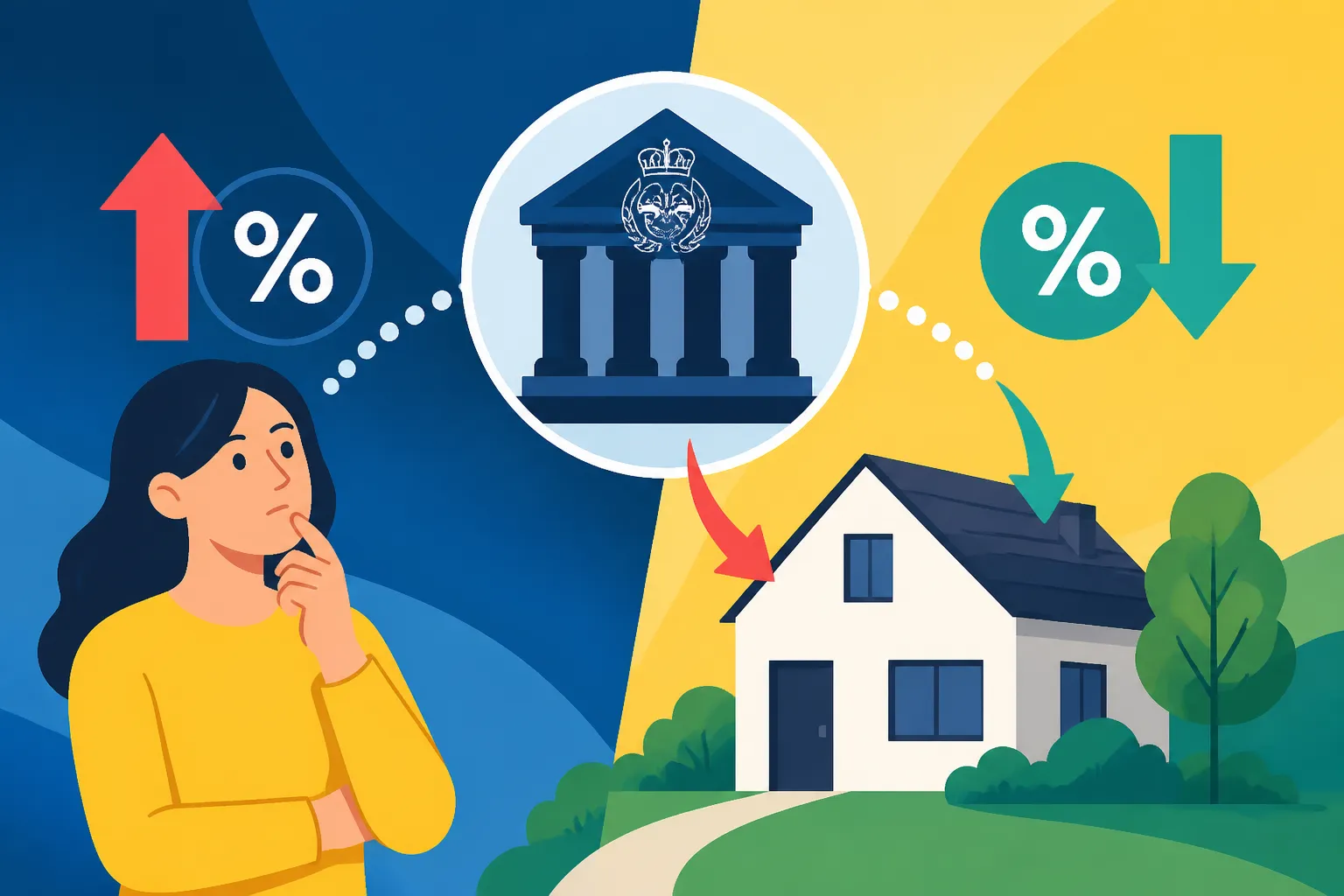
How Does the Riksbank’s Interest Rate Affect My Mortgage?
Let's be honest, trying to wrap your head around the Swedish housing market and its financial intricacies can feel like deciphering ancient runes, especially when you're still getting used to things like Systembolaget opening hours. One of the biggest head-scratchers for many newcomers, and even seasoned expats, is how the Riksbank's decisions on interest rates actually hit your wallet, particularly when it comes to that hefty mortgage payment. This guide is here to untangle the knot, explaining the connection between Sweden's central bank and your monthly housing costs with clear, real-world insights.
Understanding the Riksbank's Policy Rate and Its Ripple Effect
The Riksbank, Sweden's central bank, is a bit like the quiet puppet master pulling the strings of the national economy. Their primary tool for managing inflation and economic stability is something called the policy rate, or in Swedish, the reporänta. For anyone with a mortgage, understanding this rate is crucial, because its fluctuations can literally add or subtract hundreds, if not thousands, of kronor from your monthly expenses.
What is the Riksbank's Policy Rate (Reporänta) and Why Does It Matter?
At its core, the Riksbank's policy rate is the interest rate at which commercial banks can borrow or deposit money with the Riksbank overnight. Think of it as the base rate for the entire Swedish financial system. The Riksbank’s main job is to keep inflation, which is the rate at which prices rise, at a stable 2 percent. When inflation is too high, they tend to raise the policy rate to make borrowing more expensive, which slows down the economy and ideally brings prices back in line. Conversely, if inflation is too low or the economy is sluggish, they might lower the rate to encourage spending and investment.
For us, the regular folks with homes to pay for, this policy rate doesn't directly dictate our mortgage rate. Instead, it acts as a very strong signal and a fundamental cost input for all the commercial banks in Sweden – the likes of Handelsbanken, Swedbank, SEB, and Nordea. When the Riksbank changes its policy rate, it immediately affects how much these commercial banks pay to borrow money themselves. This cost is then, quite predictably, passed on to us, their customers. It's like if the cost of flour goes up for a baker; you can bet the price of your morning kanelbulle will soon follow.
How Commercial Banks Respond to Policy Rate Changes
When the Riksbank makes an announcement about a change to the reporänta, the major Swedish banks don't just shrug their shoulders. They pay very close attention. Within days, sometimes even hours, you'll see them adjust their own reference rates. These reference rates are what they use as a basis for calculating the interest on loans, including your mortgage, or bolån.
For instance, if the Riksbank raises its policy rate by 0.25 percentage points, you can almost guarantee that your bank will soon announce a similar increase in its own mortgage lending rates. They have to, otherwise, their own profit margins would suffer, or they'd be lending money out for less than it costs them to borrow. This is why you often hear news reports focusing on the Riksbank's monetary policy meetings; they’re not just dry economic discussions, they are direct indicators of what your mortgage payments might look like in the coming months.
It's a nuanced dance, because while the Riksbank sets the stage, individual banks also factor in their own specific funding costs, competitive landscape, and risk assessments when setting their final mortgage rates. But the policy rate is always the loudest voice in the room. This direct linkage means that if you have a variable rate mortgage, your payments will quite literally fluctuate in sync with the Riksbank’s decisions. For those on fixed rates, you get a temporary reprieve, but only until your fixed term is up for renewal, at which point the prevailing Riksbank rate will once again be a dominant force in determining your new terms.
Navigating Mortgage Interest Rates in Sweden: Fixed vs. Variable
When you get a mortgage in Sweden, one of the most significant decisions you'll make is whether to opt for a variable (rörlig) or fixed (bunden) interest rate. Both have their unique characteristics and implications, directly influenced by the Riksbank's policy rate and the broader economic climate. It's a choice that can lead to significant savings or unexpected financial strain, and many expats find themselves weighing the pros and cons carefully, often with a slight feeling of guesswork.
The Variable Rate Mortgage (Rörlig Ränta) Explained
The variable rate mortgage, known as rörlig ränta in Sweden, is exactly what it sounds like: an interest rate that changes. Typically, it's reviewed every three months by your bank. The major advantage, and also the major risk, of a variable rate is its direct responsiveness to market conditions and, crucially, to the Riksbank's policy rate. If the Riksbank lowers its reporänta, your variable rate will likely go down, leading to lower monthly payments. This is fantastic when rates are falling or stable at a low level, offering you potential savings and flexibility without the commitment of being "locked in."
However, the flip side is equally true: when the Riksbank raises rates, your variable mortgage payment will increase. This can be a real shock to the system if you haven't budgeted for it. Imagine you’ve just settled into your new apartment in Stockholm, thinking you've got your finances sorted, and then a Riksbank hike adds an extra 1,500 SEK to your monthly mortgage. Suddenly, those social activities or plans for a summer trip feel a lot further away. Many expats, especially those new to Sweden, might find the uncertainty unsettling, particularly if they're still figuring out their overall Budgeting for the Real Cost of Living in Sweden. You really need to have a buffer in your finances to absorb these potential increases.
The Fixed-Rate Mortgage (Bunden Ränta) Explained
If the thought of fluctuating payments gives you hives, a fixed-rate mortgage, or bunden ränta, might be more up your street. With a fixed rate, you lock in an interest rate for a specific period, usually 1, 2, 3, 5, or even 10 years. This offers fantastic predictability: your monthly mortgage payment remains the same for the entire fixed period, regardless of what the Riksbank does.
The biggest pro here is peace of mind. You know exactly what you'll be paying each month for years to come, making long-term financial planning much simpler. This can be incredibly valuable for expats who are still establishing themselves and want to minimize financial surprises. You're essentially paying a premium for stability, shielding yourself from sudden rate hikes. However, this stability comes with its own trade-offs. If the Riksbank decides to lower rates during your fixed term, you won't benefit from those reductions. You'll continue paying your higher, locked-in rate while variable rate holders enjoy cheaper payments. Furthermore, if you need to break your fixed-rate mortgage early (e.g., if you sell your home and need to move), you might face significant "break fees" (ränteskillnadsersättning) charged by your bank to compensate them for the interest they would have received. It's a calculated risk, a bit like gambling on future interest rates.
Hybrid Approaches and Negotiation Tips
It's not always an "either/or" situation in Sweden. Many homeowners, expats included, opt for a hybrid approach, splitting their mortgage into different parts – for example, fixing one portion for three years and keeping another portion variable. This strategy aims to balance the predictability of fixed rates with the potential benefits of falling variable rates. It’s about diversifying your rate risk, which can be a smart move in an uncertain economic climate.
What many newcomers don't realize is that mortgage rates in Sweden are often negotiable. The advertised rates are rarely the lowest rates available. Banks compete for your business, especially if you have a good financial standing. Don't be afraid to shop around and compare offers from different banks. You can even use an offer from one bank to negotiate a better deal with another, including your current bank. It's a bit like haggling, but in a very polite, Swedish way. When comparing offers, make sure you're looking at the effective interest rate (effektiv ränta), which includes all associated fees, to get a true picture of the cost. Understanding How Mortgages (Bolån) and the Amortisation Requirement Work in Sweden will give you an edge in these negotiations, as you'll be well-versed in the terminology.
| Feature | Variable Rate (Rörlig Ränta) | Fixed Rate (Bunden Ränta) |
|---|---|---|
| Response to Riksbank Rate | Directly and quickly fluctuates with Riksbank policy rate. | Stable; unaffected by Riksbank changes during fixed term. |
| Payment Predictability | Low; monthly payments can change every 3 months. | High; monthly payments are fixed for the chosen period. |
| Flexibility | High; easy to switch banks or pay off extra without penalties. | Low; breaking early incurs significant fees (ränteskillnadsersättning). |
| Potential Savings | Good when rates are falling or stable at low levels. | Miss out on rate drops; protects against rate hikes. |
| Risk | High; susceptible to sudden increases in monthly payments. | Low against rate hikes, but risk of paying more if rates fall. |
| Common Terms | 3-month review period. | 1, 2, 3, 5, 10 years. |
Broader Economic Impacts and What Expats Should Consider
The Riksbank's policy rate doesn't just impact your mortgage; it sends ripples throughout the entire Swedish economy, affecting everything from your daily shopping basket to the overall health of the housing market. For expats, these broader impacts can influence your financial stability and long-term planning in Sweden in ways you might not immediately consider.
The Cost of Living and Disposable Income
When the Riksbank raises interest rates to combat inflation, it's not just mortgage holders who feel the pinch. The cost of borrowing for all sorts of loans – personal loans, car loans, and even credit card interest – tends to increase. This means less disposable income for households across the board. If you're someone who is new to Sweden and perhaps still grappling with the generally high cost of living, especially in cities like Stockholm, this can be particularly challenging. Suddenly, everything feels a bit more expensive, from groceries to going out for a meal.
This squeeze on disposable income can alter your daily spending habits. You might find yourself rethinking that spontaneous weekend trip or putting off upgrading your furniture. For many expats, the initial excitement of moving to Sweden is often tempered by the realities of budgeting. Keeping a close eye on the Riksbank's announcements and understanding how they feed into the broader economy is vital for maintaining a realistic financial plan. It's also worth remembering that if you have any loans from back home, currency exchange rates can also play a role in your overall financial picture, and services like Wise can be incredibly helpful for managing international transfers efficiently when you need to move money between accounts in different countries.
The Housing Market Dynamics
Interest rate changes have a profound effect on the Swedish housing market. When rates are low, borrowing is cheaper, which stimulates demand for housing and tends to push up property prices. People can afford to borrow more, so they're willing to pay more for homes. This was a significant factor in the booming housing market Sweden experienced for many years.
Conversely, when the Riksbank raises rates, borrowing becomes more expensive. This cools down the housing market. Potential buyers might find they can no longer afford as much, or they might become more cautious, leading to fewer transactions and potentially falling house prices. For expats looking into Buying Property in Sweden as a Foreigner: A Complete Guide, these fluctuations are incredibly important. A rising interest rate environment means that while house prices might stabilize or even drop, your monthly cost of ownership could still be higher due to the increased mortgage interest. It’s a delicate balance to navigate, and timing your entry into the market can feel like a high-stakes gamble.
Financial Planning and Tools for Expats
Given the intricate relationship between the Riksbank's policy rate and your personal finances, proactive financial planning is non-negotiable for expats in Sweden. Regularly reviewing your mortgage terms with your bank is crucial. Don't just set it and forget it. Be aware of when your fixed rate terms are expiring or how current market rates compare to your variable rate.
It's also a good idea to seek advice. Financial advisors in Sweden can help you understand the long-term implications of different mortgage choices and broader economic trends. They can also help you understand your tax situation, especially regarding interest deductions, or ränteavdrag. In Sweden, you can deduct 30% of your mortgage interest costs from your capital income tax, which can soften the blow of rising rates somewhat. Understanding nuances like this, which services like Taxes for Expats specialize in, is vital for optimizing your financial health in Sweden.
Furthermore, consider other aspects of your financial life. How do interest rates impact your savings and investments? While higher rates mean more expensive borrowing, they can also mean better returns on savings accounts, though this is often not enough to offset increased mortgage costs. Having a comprehensive understanding of Money and Finance in Sweden: A Complete Guide for Foreigners (2027) will empower you to make informed decisions beyond just your mortgage. Staying informed and prepared will help you weather the economic shifts the Riksbank throws our way.
Disclaimer
The information provided in this article is intended for general guidance and informational purposes only, and does not constitute financial, legal, or professional advice. While we strive to provide accurate and up-to-date content, economic conditions and regulations in Sweden can change rapidly. Always consult with qualified financial advisors, tax professionals, or relevant authorities for advice tailored to your specific situation. Reliance on any information in this article is solely at your own risk.