What VAT Rate Applies to Food in Sweden in 2026?
Moving to Sweden often feels like a constant battle with a series of confusing acronyms and high price tags, especially when you step into a local grocery store for the first time. This guide specifically breaks down the VAT rates for food and beverages, explaining why your receipt looks the way it does and how to manage the real-world cost of filling your fridge in one of Europe’s most expensive nations.
The Basics of Moms for New Arrivals
When you first land in Stockholm or Gothenburg, you’ll quickly notice the word "Moms" everywhere. This isn’t a reference to anyone’s mother; it’s the Swedish term for mervärdesskatt, or Value Added Tax (VAT). For most goods and services, Sweden has one of the highest VAT rates in the world, sitting at a standard 25 percent. However, as an expat trying to navigate Money and Finance in Sweden: A Complete Guide for Foreigners (2027), you’ll be relieved to know that food is treated with a bit more leniency.
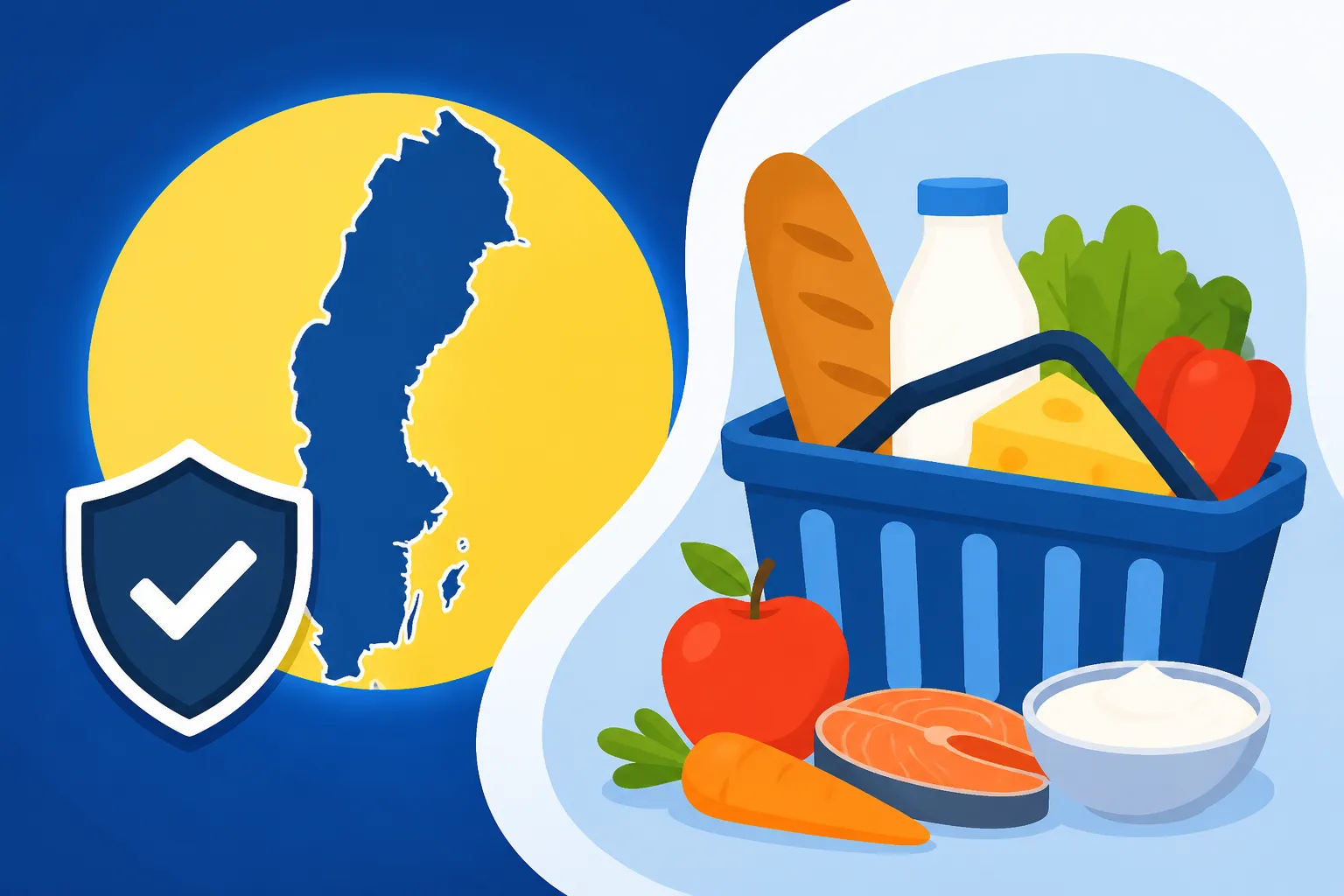
In 2026, the VAT rate for food remains at 12 percent. This reduced rate applies to almost everything you would consider "groceries" intended for human consumption. The Swedish government utilizes this tiered system to ensure that while luxury goods and services are taxed heavily, the basic necessity of nutrition remains slightly more accessible to the general population. But don't let that lower percentage fool you into thinking groceries are cheap. When you combine a 12 percent tax with Sweden’s naturally high base prices, your weekly trip to ICA or Coop can still be a significant drain on your wallet.
Why 12 Percent is the Magic Number for Food
The decision to keep food VAT at 12 percent is a social policy designed to mitigate the high cost of living. If food were taxed at the standard 25 percent rate, the average family’s grocery bill would skyrocket overnight. As someone who has lived here through several economic shifts, I can tell you that even a small percentage change in "Moms" is a major topic of debate in the Riksdag.
This 12 percent rate covers your milk, bread, vegetables, meat, and even processed snacks. It is a "consumption tax," meaning the price you see on the shelf at a store like Hemköp already includes this 12 percent. This is a significant cultural shift for those coming from North America, where tax is added at the register. In Sweden, what you see is what you pay, which at least makes Budgeting for the Real Cost of Living in Sweden a little more predictable, even if the numbers are higher than you’d like.
Identifying VAT on Your Supermarket Receipt
If you take a close look at a receipt from Willys or Lidl, you will see a breakdown at the bottom. It usually lists "Moms 12%" and "Moms 25%." Most of your items will fall under the 12 percent column. However, you might be surprised to see certain items pushed into the 25 percent category. Things like toilet paper, dish soap, and aluminum foil are not "food," even though you buy them at the grocery store.
Understanding this distinction is vital for accurate financial tracking. If you are using services like Taxes for Expats to manage your home-country tax obligations while living abroad, keeping these receipts and understanding the "Moms" breakdown can help you categorize your spending more effectively. It’s also worth noting that the 12 percent rate applies to non-alcoholic beverages, which we will discuss in more detail regarding the specific rules for cafes and restaurants.
Dining Out vs. Cooking at Home
One of the most frequent questions I get from newcomers at the local expat meetups in Södermalm is whether it’s cheaper to eat out or cook at home. In many countries, the tax difference between "raw ingredients" and "prepared meals" is massive. In Sweden, the gap was bridged several years ago to simplify the system for business owners.
In 2026, the VAT for restaurant services and catering is also 12 percent. This means whether you are buying a bag of frozen meatballs to cook at home or sitting down for a plate of köttbullar at a local bistro, the VAT rate remains the same. This was a move by the Swedish Tax Agency (Skatteverket) to encourage the hospitality industry and make dining out more competitive.
The Restaurant Experience
When you receive your bill at a restaurant, the 12 percent "Moms" is already baked into the menu price. However, the bill will get complicated the moment you order a glass of wine or a beer. While the food is taxed at 12 percent, any beverage with an alcohol content over 3.5 percent is taxed at the full 25 percent rate.
This is why a meal that seems reasonably priced can suddenly become astronomical once drinks are added. I always tell people that if they are Opening a Bank Account in Sweden: A Step-by-Step Guide and watching their initial savings, they should be very wary of the "liquid tax." The difference between a 12 percent tax on a soda and a 25 percent tax on a craft beer adds up quickly over a long Friday night in the city.
Takeaway and the Unified Rate
There used to be a lot of confusion regarding "to-go" food versus "dine-in" food. Thankfully, in 2026, the 12 percent rate applies to both. It doesn’t matter if you are eating your kebab on a park bench or at the counter; the tax remains consistent. This simplifies life for the small business owners running the ubiquitous "hål-i-väggen" (hole-in-the-wall) eateries that dot cities like Malmö and Uppsala.
If you are a freelancer or digital nomad, you might be interested in Self-Employment in Sweden: Starting a Business and Getting F-skatt. If so, understanding these VAT tiers is crucial. You’ll need to report your outgoing "Moms" correctly if you ever decide to open your own food-related business.
The Higher Rate for Drinks and Specific Items
While 12 percent covers most things you eat, there are notable exceptions that catch expats off guard. The most significant one is alcohol. Sweden has a very specific relationship with alcohol, characterized by the state-run monopoly, Systembolaget.
Systembolaget and the 25 Percent Tier
Any beverage with an alcohol content higher than 3.5 percent is taxed at the standard 25 percent VAT rate. This applies whether you are buying a bottle of Rioja at Systembolaget or a cocktail at a fancy bar in Östermalm. The logic here is two-fold: alcohol is seen as a luxury/non-essential good, and high taxes act as a deterrent to excessive consumption, funding the national healthcare system.
When you are Using Your EHIC for Care While Settling Into Sweden, remember that a portion of the high taxes you pay on that Friday night bottle of wine is essentially feeding back into the public health infrastructure. It doesn’t make the 25 percent "Moms" any easier to swallow, but it provides some context for why Sweden is so much more expensive than its neighbors to the south.
Sugar Taxes and Recent Legislative Shifts
As of 2026, there have been ongoing discussions in the Swedish parliament about implementing a "sugar tax" on top of the standard VAT for certain food items. While currently most candy and sodas still fall under the 12 percent food VAT, some specific imported goods or high-sugar items may face additional excise duties.
For expats moving money from abroad to cover these costs, using a service like Wise is highly recommended. Because food prices are high and the tax is substantial, you don't want to lose an additional 3 to 5 percent on poor currency exchange rates. Using Wise ensures that your euros, dollars, or pounds are converted into Swedish Krona (SEK) at the mid-market rate, giving you more "buying power" at the grocery store.
Comparing Food VAT Across the Nordics
To give you some perspective on whether you’re getting a good deal in Sweden, it’s helpful to look at how our neighbors handle food taxes. Sweden’s 12 percent is actually quite middle-of-the-road for the region.
| Country | Standard VAT Rate | Food VAT Rate (2026) | Restaurant VAT Rate |
|---|---|---|---|
| Sweden | 25% | 12% | 12% |
| Denmark | 25% | 25% | 25% |
| Norway | 25% | 15% | 25% |
| Finland | 25.5% | 14% | 14% |
As you can see, Denmark is the outlier, charging a flat 25 percent on everything, including bread and milk. This is why many Danes living near the Oresund Bridge often cross over to Malmö to do their grocery shopping. If you are Living in Gothenburg and Malmö: What Newcomers Should Know, you’ll see this cross-border shopping phenomenon in action.
Managing Your Grocery Budget in a High-VAT Environment
Since you can't change the VAT rate, the best way to survive is to change your shopping habits. When I first arrived, I shopped exclusively at the store closest to my apartment. I soon realized I was paying a "convenience tax" on top of the actual tax.
Strategic Shopping at Lidl and Willys
To keep your costs down, you need to identify the "price-leader" stores. Willys and Lidl are consistently the cheapest options in Sweden. They carry many of the same goods as ICA, but their base prices are lower, meaning the 12 percent "Moms" is calculated on a smaller number.
If you are Grocery Shopping in Sweden: ICA, Coop, Willys, and Saving Money, pay attention to the "Extrapris" (extra price) signs. These are weekly discounts that can significantly lower your bill. Also, consider joining the loyalty programs. Most require a Swedish personnummer, which is the key to unlocking the real discounts in this country.
Tracking Expenses with International Tools
For those of us who still have financial ties to our home countries, managing a Swedish budget can be a headache. I highly recommend using digital tools to keep everything in order. If you are a US expat, for example, working with Taxes for Expats can help you navigate how your Swedish cost of living and local taxes (like the VAT you pay) interact with your US tax filings.
While VAT isn't usually something you can deduct on a personal income tax return, understanding your total expenditure is vital for the Filing Your Swedish Tax Return (Deklaration): What You Need to Know process. It helps you see the "hidden" costs of your lifestyle and adjust accordingly.
Navigating Taxes and Financial Planning as an Expat
The 12 percent VAT on food is just one piece of the larger financial puzzle in Sweden. Between the Municipal vs State Income Tax in Sweden: How They Stack Up and the various social insurance contributions, your take-home pay might feel smaller than expected.
However, the "Moms" system is remarkably efficient. You rarely have to think about it because it's always included. The only time you really need to be alert is when you are Dealing with Kronofogden: Debt Enforcement in Sweden or managing a business where you have to collect and pay VAT yourself. For the average consumer, it's just a number on a receipt that explains why your avocado cost 25 SEK.
Final Tips for the Food Market
- Check the Unit Price: Always look at the jämförpris (comparison price) on the shelf tag. This tells you the price per kilo or per liter, including VAT. It’s the only way to truly compare brands.
- Watch the Alcohol: Remember that the jump from 12 percent to 25 percent VAT on drinks is the biggest budget killer during a night out.
- Use Local Apps: Apps like "Matpriskollen" allow you to track deals across different supermarkets, helping you beat the high cost of the 12 percent VAT environment.
- Exchange Rates Matter: If you are living off foreign savings, use Wise to ensure you aren't losing money before you even get to the checkout counter.
Living in Sweden is a lesson in "paying for the system." The 12 percent VAT you pay on your groceries is part of the engine that keeps the country’s high-quality infrastructure and social safety nets running. Once you get past the initial price shock, you’ll find that the transparency of the "Moms" system actually makes life quite simple—even if it is a bit pricey.
Disclaimer
The information provided in this guide is for informational purposes only and does not constitute professional financial, tax, or legal advice. VAT rates and Swedish tax laws are subject to change by the Swedish government. While we strive to keep this information up to date for 2026, you should always consult with a qualified tax professional or refer to the official Skatteverket website for the most current regulations.