Can Both Parents Take Parental Leave at the Same Time in Sweden?
Navigating the world of parental leave in Sweden can feel like learning a whole new language, especially when you're trying to figure out how it works with two parents involved. Many expat parents find themselves scratching their heads, wondering if they can both take time off with their newborn or young child without sacrificing precious benefits. This guide will meticulously break down the Swedish parental leave system, specifically focusing on the rules and practicalities of both parents taking leave at the same time, helping you plan your family's precious first years in Sweden.
The Foundation: Understanding Parental Leave (Föräldrapenning) in Sweden
Before we dive into the specifics of simultaneous leave, let's lay the groundwork of Sweden's incredibly generous parental leave system, known as föräldrapenning. It's a cornerstone of Swedish family policy, designed to allow parents ample time with their children while maintaining financial stability. This benefit is managed by Försäkringskassan, the Swedish Social Insurance Agency, and understanding their role is paramount for any new parent in Sweden. To get a full grasp of the system, you might want to delve into our comprehensive guide on Parental Leave in Sweden: Föräldrapenning and the 480 Days.
At its core, the system provides 480 days of paid parental leave per child. These days can be used until the child turns 12 years old, or until they finish their fifth year of school. However, 390 of these days are paid at a "sickness-based level," which is approximately 80% of your regular income (up to a certain ceiling), while the remaining 90 days are paid at a "minimum level" (currently 250 SEK per day). It’s important to remember that these 480 days are per child, not per parent.
The magic of the Swedish system is its flexibility, but also its push for equality. Out of the 480 days, 90 days are specifically reserved for each parent and cannot be transferred to the other. This means that if one parent doesn't use their 90 reserved days, those days are simply lost. This policy, often referred to as "pappa-månader" (daddy months) or "mamma-månader" (mummy months), is a deliberate effort to encourage both parents to take an active role in childcare from early on. For families navigating their first administrative hurdles, understanding how to register with Försäkringskassan is key, as highlighted in our guide Registering with Försäkringskassan: When and Why You Need To.
The 480-Day Allotment and Its Divisions
Let's unpack these 480 days a little further, because this is where the flexibility, and sometimes the confusion, truly lies. The total 480 days of föräldrapenning are allocated for each child. For a single child, you get 480 days. For twins, you get an additional 180 days, totaling 660 days. This allocation ensures that families with multiple births get extended support, recognizing the increased demands.
Crucially, the days are designed to be shared. The 390 days at the sickness-based level are the ones calculated based on your income, providing a significant portion of your salary. These are the days that often require careful planning to maximize financial benefits. The remaining 90 days, paid at the minimum level, are a fallback for when income-based days run out, or simply when parents want to extend their time without a high income replacement.
What makes this system unique is that these days can be taken flexibly. You don't have to take them all at once or even in full-day increments. You can take them as full days, three-quarters, half, one-quarter, or even one-eighth of a day. This incredible flexibility allows parents to gradually return to work, work part-time, or stagger their leave in a way that best suits their family's needs and employer's capabilities. Imagine wanting to ease back into your job; you could work 75% for a few months and use 25% of your parental leave days to cover the remaining time. This helps bridge the gap between full-time parental leave and a full return to work.
Days Reserved for Each Parent
The non-transferable 90 days for each parent are a really important feature. These are designed to ensure both parents engage in the childcare period. If you’re a couple where one parent is, for whatever reason, unable or unwilling to use their days, those days are simply forfeited. This is a significant point for expat families, especially if one parent might not be eligible for Swedish social insurance benefits due to specific visa or work situations. It truly emphasizes shared responsibility and gives both parents dedicated time with their child.
It's also worth noting that parental leave benefits interact with other aspects of family life, including healthcare during pregnancy and after birth. Understanding How Parental Leave and Healthcare Connect During Pregnancy in Sweden can provide a holistic view of the support available to expectant and new parents. The Swedish system is complex but incredibly supportive once you understand its various components.
Can Both Parents Take Parental Leave Simultaneously? The "Dubbeldagar" Explained
Alright, let's get to the heart of the matter: Can both parents take parental leave at the same time in Sweden? The answer is a resounding yes, but with important conditions and limitations, especially regarding the first year of the child's life. This concept is often referred to as "dubbla dagar" (double days).
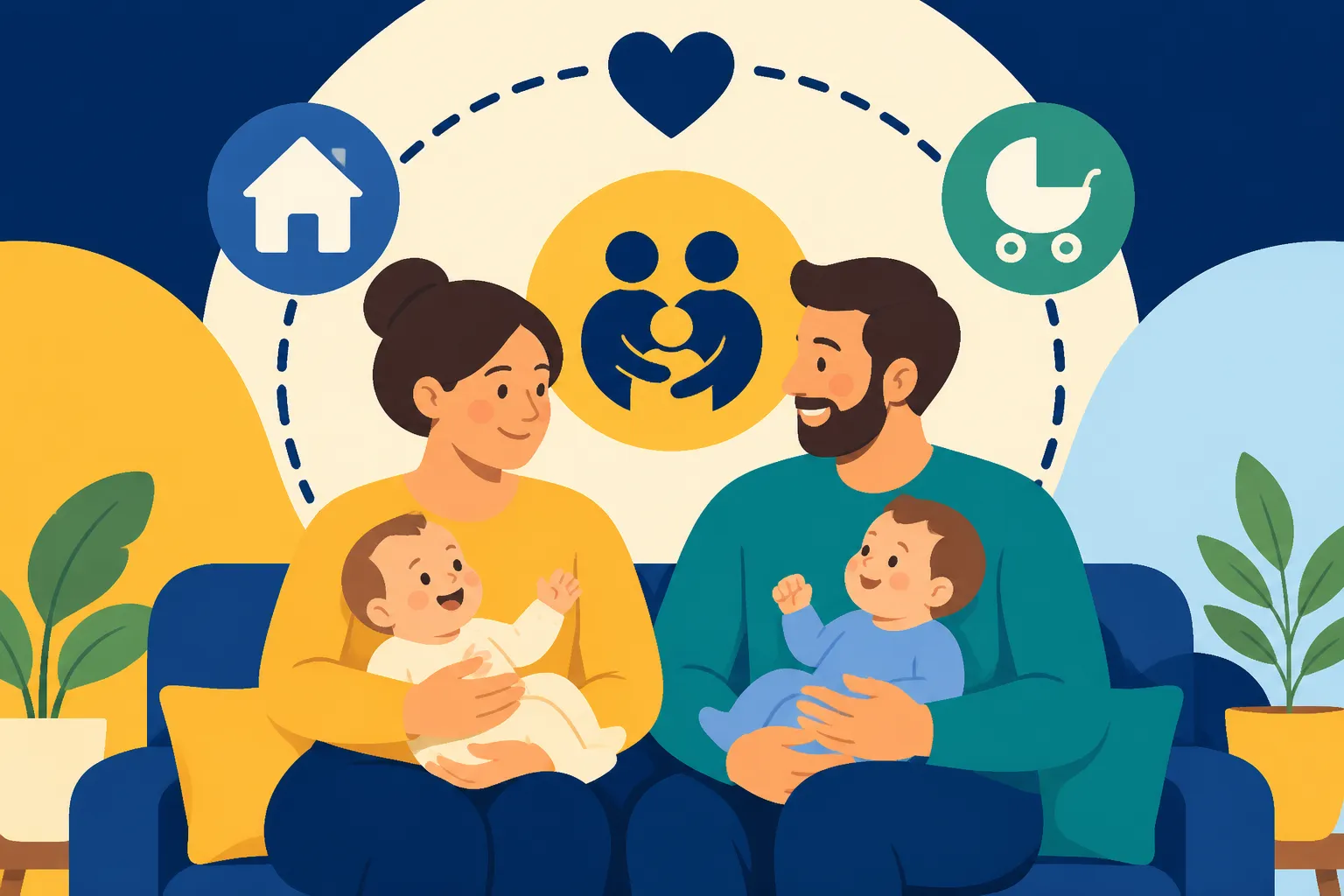
During the child's first year of life (up to 18 months, to be precise, as this extends a bit beyond their first birthday), both parents can indeed take parental leave simultaneously for a total of up to 30 days. These 30 "double days" are deducted from the total 480 parental leave days. This means if you use 10 double days, 20 days are deducted from your shared pool (10 from Parent A, 10 from Parent B). This allows both parents to be at home together, providing joint care for their newborn or young infant, without one parent having to be at work.
This is a fantastic provision, especially for new parents who are navigating the steep learning curve of parenthood. Imagine having both parents present for those first few weeks, tackling sleepless nights, doctor's appointments, and simply bonding with the new family member. It offers invaluable support, especially if one parent is recovering from childbirth. After the child turns one year and six months (18 months old), the possibility of taking "double days" ceases. From that point onwards, only one parent can claim parental leave benefits for the child at any given time.
The Mechanism of "Dubbla Dagar"
To utilize these 30 "double days," both parents simply apply for föräldrapenning for the same days, specifying that they are taking leave simultaneously. Each parent claims parental leave days from their own allotted 480 days (or the remaining days in their shared pool). So, if you decide to take 5 "double days," Parent A applies for 5 days of föräldrapenning, and Parent B applies for 5 days of föräldrapenning for the exact same period. Försäkringskassan then approves both applications, deducting 5 days from each parent's available total.
It's important to understand that these "double days" are not additional days. They are part of the total 480 days. This means if you use all 30 double days, you will have 30 fewer days to use individually later on. Therefore, it's crucial for families to plan carefully how and when they want to use these days. Many families choose to use them right after the birth to help with the initial adjustment period, or perhaps during significant milestones in the child's first year.
For expats, the initial period can be particularly overwhelming, from figuring out the personnummer process to understanding local nuances. Having both parents at home during this time can significantly reduce stress. You can even use some of this time to work on integration, perhaps even fitting in some Swedish language lessons with a service like iTalki, which can be incredibly useful for communication and feeling more at home.
Practical Scenarios for Simultaneous Leave
Let's look at some real-world scenarios to illustrate how "dubbla dagar" might play out:
Scenario 1: The Initial Weeks
A couple, Anna and Ben, have just welcomed their first child. Anna has recovered from childbirth, but they both want to be home to bond with the baby and manage the intense first few weeks. They decide to use 10 "double days" immediately after the birth. Anna applies for 10 days of föräldrapenning at 80% of her salary, and Ben applies for 10 days at 80% of his salary. Both claims are approved by Försäkringskassan. Their total parental leave days are reduced by 20 days (10 from Anna's share, 10 from Ben's share), leaving them 460 days for future use. This allows them to support each other and focus entirely on their newborn.
Scenario 2: Reaching a Milestone
Maria and Lars have a 9-month-old baby who is starting to crawl and explore. They want to experience this exciting developmental stage together. They decide to use 5 "double days" when their baby turns 9 months. They both apply for föräldrapenning for those 5 days. Again, 10 days are deducted from their combined pool, but they get to share those precious moments and divide childcare duties, perhaps even taking a short family trip.
Scenario 3: Strategic Planning for Parental Leave
An expat couple, Chloe and David, are very conscious of their financial situation and the need to maximise their parental leave benefits. They know they have 30 "double days" available until their child is 18 months old. They decide to save these days for specific times when they anticipate needing extra support, like when their child starts förskola (preschool) and might get sick frequently during the initial adjustment phase, or perhaps for a short family holiday. They diligently track their remaining days and benefits, using resources like our guide on How Do I Apply for Föräldrapenning Through Försäkringskassan to ensure they're always on top of their applications.
It's crucial for both parents to be actively claiming föräldrapenning for the same days for them to count as "double days." If one parent is simply on annual leave or not claiming benefits, it doesn't count towards the 30 simultaneous days allowance.
Planning Beyond the "Double Days"
After the child is 18 months old, the option for "double days" disappears. From that point until the child turns 12 (or finishes fifth grade), parental leave must be taken by one parent at a time. This is where strategic planning becomes even more important. Parents often alternate weeks, months, or even full-time work with part-time parental leave to cover childcare needs.
Many expat families find themselves doing a delicate dance, coordinating their work schedules with available parental leave days. This planning often extends to considering the broader financial landscape, including tax implications, especially if both parents are earning income or receiving benefits from different countries. Consulting resources like Taxes for Expats or other financial advisors can be invaluable in these situations. Understanding How Much Income Tax Will I Pay on a Swedish Salary and The Swedish Tax System Explained: Rates, Returns, and Filing can help you prepare financially.
Financial Implications and Benefits Calculation
When both parents take "double days," each parent receives their individual föräldrapenning benefit, calculated at their specific sickness-based level (approximately 80% of their income, up to the ceiling). This means that for those 30 days (or fewer, if you choose), the household income will effectively be the sum of both parents' parental benefits. This can be a significant boost compared to when only one parent is on leave.
However, as mentioned, these are not additional days. The total pool of 480 days is still what you have to work with. So, using "double days" means you'll have fewer days for individual parental leave later on. This makes thoughtful planning essential.
Let's illustrate the financial aspect with a simplified table:
| Scenario | Parent A's Benefit (per day) | Parent B's Benefit (per day) | Total Household Benefit (per day) | Days Deducted from Total Pool (per day) |
|---|---|---|---|---|
| One Parent on Leave | 80% of income | 0 (working) | 80% of Parent A's income | 1 |
| Both on "Double Days" | 80% of income | 80% of income | 80% of A + 80% of B's income | 2 |
Note: Benefits are capped at a specific ceiling. The 80% figure is an approximation; the exact calculation involves your SGI (Sickness Cash Benefit Qualifying Income).
The ceiling for föräldrapenning means that if you earn above a certain income threshold, your parental benefit will not be 80% of your entire salary, but 80% of the salary up to that cap. In 2024, the ceiling is roughly SEK 573,000 per year (or SEK 47,750 per month). If your salary is higher than this, the part of your salary above the cap is not included in the föräldrapenning calculation. This is a crucial detail for higher-earning expats to consider in their financial planning.
For instance, if Parent A earns 60,000 SEK/month and Parent B earns 40,000 SEK/month:
- When Parent A takes leave alone: They get 80% of 47,750 SEK (the cap) = ~38,200 SEK/month.
- When both take "double days": Parent A gets ~38,200 SEK/month, and Parent B gets 80% of 40,000 SEK = 32,000 SEK/month. Their combined benefit is ~70,200 SEK/month, but two days are deducted from the total pool for each day taken.
Maximizing Benefits and Planning Ahead
Many families use a combination of these days to optimize their financial situation and childcare needs. Some parents take a longer period at 80% of their income, while others might stretch their leave by taking föräldrapenning for a smaller percentage of the day (e.g., 25% or 50%) while working part-time.
For expat parents, understanding the nuances of these calculations is vital. It's often beneficial to sit down with a calculator and map out different scenarios. Försäkringskassan's website also provides tools and calculators to help you plan your parental leave. Don't forget to factor in other family benefits that might apply, such as barnbidrag (child allowance), which is covered in guides like Family Benefits in Sweden: Child Allowance, Housing, and Parental Pay.
It’s also important to consider the long-term perspective. While taking "double days" offers immediate benefits of shared childcare, it does reduce the total number of days available for the future. This can impact how long you can delay your child starting full-time childcare, or how flexibly you can respond to future needs, like extended sick days for your child (VAB, vård av barn).
Applying for Parental Leave as Both Parents
The application process for föräldrapenning, whether for individual days or "double days," is managed through Försäkringskassan. The good news is that much of the application can be done online, especially if you have a Swedish BankID, which is an essential digital identification. Our guide on Booking Doctor Appointments Online Through 1177.se with BankID also touches on the importance of BankID for various administrative tasks.
Here's a general outline of the process:
- Register with Försäkringskassan: As soon as possible after receiving your personnummer (or in some cases, even with a samordningsnummer for certain benefits), you should ensure you are registered with Försäkringskassan. This is crucial for accessing any social insurance benefits in Sweden.
- Report Your Parenthood: Once your child is born and registered with Skatteverket, Försäkringskassan will typically be notified. You might need to confirm your relationship to the child and register as a parent in their system.
- Plan Your Leave: Before applying, sit down with your partner and plan out your parental leave days. Decide how many "double days" you want to use, and when. Consider how this will impact your remaining individual days.
- Apply Online: Both parents submit their applications for föräldrapenning through Försäkringskassan's e-service. It's vital that for the "double days," both applications specify the exact same dates.
- Employer Notification: Although Försäkringskassan handles the benefit payments, you still need to notify your employer(s) about your parental leave plans, typically at least two months in advance (or as per your collective agreement, if applicable). This is a legal requirement and good practice for workplace planning.
- Receive Payments: Once approved, Försäkringskassan will pay out the föräldrapenning directly to your Swedish bank account. Payments are usually made once a month.
It sounds straightforward, but as any expat knows, Swedish bureaucracy can have its quirks. Keep all your documentation handy, and don't hesitate to contact Försäkringskassan directly if you have questions. They often have English-speaking staff available to assist.
One important aspect to consider is your employer's role. While parental leave benefits come from Försäkringskassan, some employers offer additional top-ups to parental leave pay, often through collective agreements (kollektivavtal). It's always worth checking your employment contract or speaking with your HR department or union representative about any such benefits. This could significantly impact your household income during parental leave.
Learning Swedish During Parental Leave
Many expats view parental leave not just as a time for childcare, but also as an opportunity for personal development and integration into Swedish society. Learning Swedish is a huge part of this. While the idea of studying with a newborn sounds ambitious, even small steps can make a big difference. Services like iTalki, which offer flexible, online language lessons with native speakers, can be a fantastic tool for new parents. You can fit in lessons during nap times or when your partner is taking over childcare. It’s a great way to improve your language skills, which are invaluable for navigating daily life, from grocery shopping (check out Grocery Shopping in Sweden: ICA, Coop, Willys, and Saving Money) to communicating at the vårdcentral (health clinic). Learning the language also greatly enhances the experience of everyday living in Sweden. For more on this, see our article on Learning Swedish: SFI, Courses, and Language Paths for Newcomers.
Conclusion: Empowering Your Parental Leave Journey
The Swedish parental leave system is designed with families in mind, offering extensive support and flexibility. The ability for both parents to take simultaneous parental leave for up to 30 days during the child's first 18 months is a prime example of this support. It allows for shared responsibility, intensive bonding during the crucial early months, and mutual support for new parents, which can be particularly valuable for expats navigating a new country and culture.
While the system is generous, it requires careful planning and understanding to maximize its benefits. Remember to plan your "double days" strategically, keep an eye on your remaining days, and always keep Försäkringskassan informed of your plans. Utilize the resources available, whether it's Försäkringskassan's online tools, your employer's HR department, or even online language platforms to make the most of this unique and precious time. By understanding and utilizing these provisions, you can ensure a smoother, more supported, and more equitable parental leave experience in Sweden.
Disclaimer
The information provided in this guide is for general informational purposes only and does not constitute legal or financial advice. While we strive to provide accurate and up-to-date information, rules and regulations regarding parental leave and social insurance in Sweden can change. Always consult the official Försäkringskassan website, Skatteverket, or a qualified legal or financial professional for personalized advice regarding your specific situation.