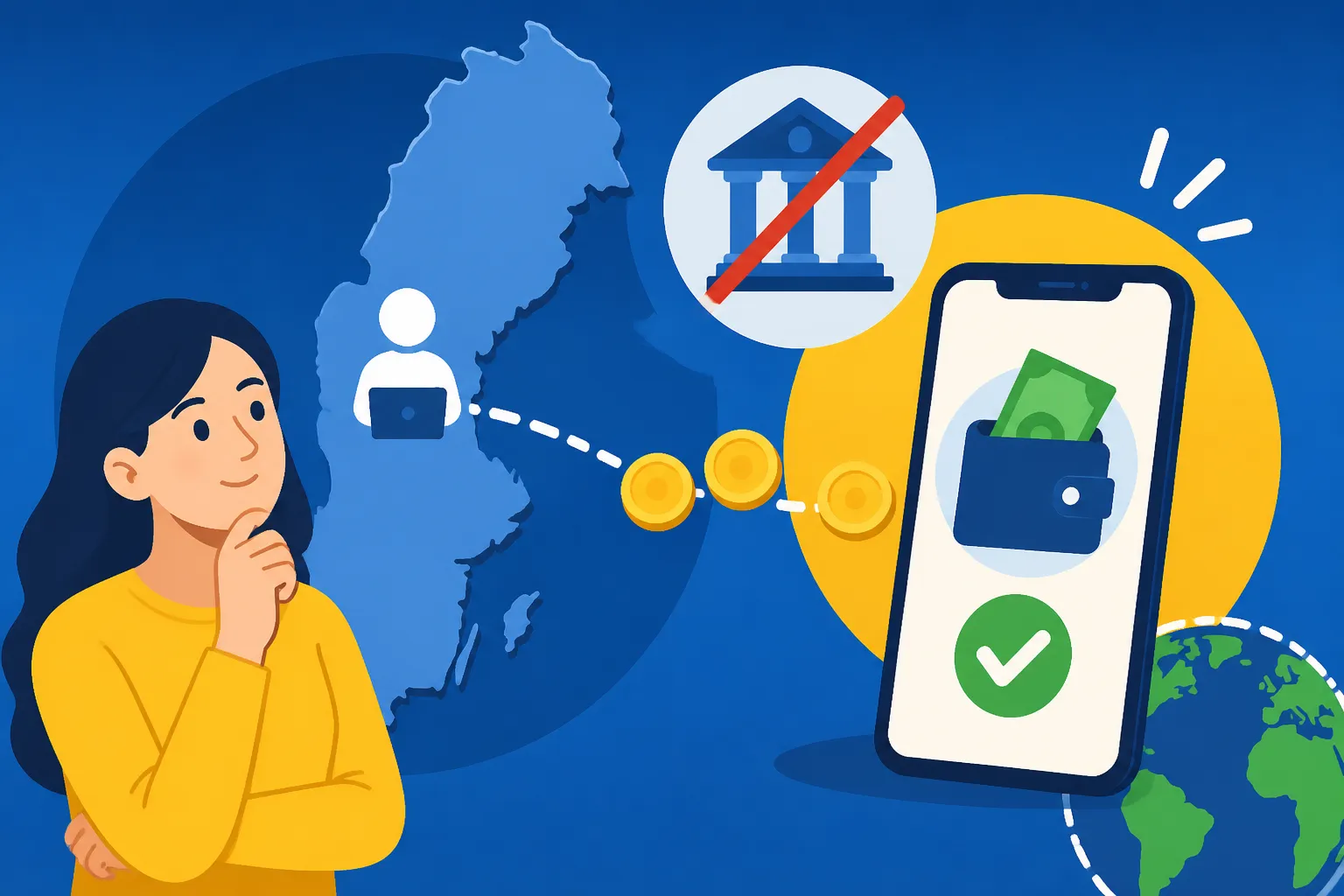
How Do I Receive My Swedish Salary Without a Local Bank Account?
Moving to Sweden is an exciting adventure, but let’s be real, it often feels like you’re trying to navigate a labyrinth blindfolded, especially when it comes to something as fundamental as getting paid. One of the earliest and most frustrating hurdles many newcomers face is the seemingly simple act of receiving their salary when they haven't yet managed to get a local Swedish bank account. This guide will walk you through the realities, the temporary fixes, and the ultimate solutions for getting your hard-earned money into your pocket while you settle into Swedish life.
The Initial Hurdle: Why a Swedish Bank Account is So Crucial
Oh, Sweden. The land of efficiency, innovation, and… cashlessness. Seriously, you’ll find yourself in situations where even public toilets demand card payments, and forget about trying to pay with physical kronor at many places. This digital-first approach extends profoundly to how salaries are handled. For employers, a Swedish bank account isn't just a preference; it's practically embedded in the payroll system.
Swedish companies are deeply integrated into a digital financial ecosystem. They use systems that are designed to transfer funds directly to Swedish bank accounts, often leveraging services like Bankgirot. This isn't just about convenience; it ties into tax reporting, social security contributions, and overall financial administration. When you don't have a local account, it throws a significant wrench into their automated processes, often requiring manual workarounds that most employers simply aren't set up for or willing to undertake long-term.
The difficulty arises when you hit that classic expat Catch-22: you need a job offer to get your Personnummer, but you often need a Personnummer to open a full-service Swedish bank account, and you need a bank account to receive your salary. It can feel like you’re running in circles before you’ve even had your first fika. This administrative friction is a common source of stress, and it’s completely understandable to feel overwhelmed by it.
Navigating Salary Payments Without a Swedish Bank Account – Your Options
So, you've landed that dream job, but your Personnummer is still somewhere in the Migrationsverket pipeline, and the bank won't look at you twice without it. What are your immediate options for getting paid?
Temporary Solutions While You Wait for Your Personnummer
This is where you'll need to be a bit resourceful and, critically, have a very open conversation with your employer.
Foreign Bank Accounts: Many expats initially rely on their existing bank accounts from their home country. While technically possible for your employer to transfer funds internationally, this comes with a host of caveats.
- Fees: International bank transfers can incur significant fees, both on the sending and receiving ends, eating into your salary.
- Exchange Rates: Unless your salary is paid in your home currency, you'll be at the mercy of daily exchange rates, which can fluctuate and sometimes result in less money than you anticipated.
- Employer Reluctance: As mentioned, Swedish payroll systems are not typically set up for international transfers. Even if they can do it, it's often a manual, time-consuming process for them, and they might flat-out refuse or strongly discourage it. Large, international companies might have more flexibility, but smaller Swedish businesses rarely do.
- Proof of Income: You’ll also find that many administrative tasks in Sweden (like signing a rental contract or even some subscriptions) require proof of income in kronor in a Swedish bank account.
International Money Transfer Services: Services like Wise (formerly TransferWise), Revolut, or N26 can offer a viable short-term solution. These platforms often provide local bank details in various currencies, including Swedish Kronor (SEK), allowing your employer to pay into a "local" account number which then converts to your primary currency.
- Pros: Lower fees and better exchange rates than traditional banks, and your employer can make a local transfer in SEK, making it easier for them. You might even get a virtual card to use locally.
- Cons: These aren't full-service banks. While they can receive your salary, they often don't provide the crucial BankID, which is your digital key to Swedish society. Without BankID, you'll struggle to sign documents, access public services on 1177.se, or even pay certain bills. They also might not be accepted by all landlords or service providers as proof of funds. Always confirm with your employer if they are willing to pay into such an account.
Getting Paid in Cash: Let me be unequivocally clear: getting paid in cash for your regular salary in Sweden is extremely rare, highly irregular, and usually a major red flag. Sweden is virtually cashless. Any employer suggesting this might be operating outside of standard practices and could cause you immense problems with tax authorities (Skatteverket) and social security (Försäkringskassan) down the line. Avoid this at all costs.
Employer-Specific Solutions: In very rare cases, if you work for a large multinational company, they might have internal systems to pay employees into a foreign account or have a temporary arrangement. This is the exception, not the rule, and you should clarify this during your job offer negotiation.
The Role of a Coordination Number (Samordningsnummer)
The Samordningsnummer, or coordination number, is often issued to individuals who don't yet qualify for a Personnummer but need an identifier for certain administrative tasks, such as tax purposes or opening a basic bank account. It’s better than nothing, but it’s not a Personnummer.
While a Samordningsnummer allows Skatteverket to process your taxes, it generally does not open the floodgates to full financial services. Many traditional Swedish banks, like Swedbank, SEB, Handelsbanken, and Nordea, still require a Personnummer for their standard accounts that provide BankID. You might, however, be able to open a very basic account (often without BankID or a debit card, sometimes just for incoming payments) with a Samordningsnummer and proof of ID from your home country, especially if you have an employment contract. The success rate for this varies wildly between banks and even individual branches. You can learn more about this distinct identifier in our guide on The Coordination Number (Samordningsnummer) Explained.
The Best Long-Term Solution: Getting a Swedish Bank Account (Eventually)
Ultimately, the goal is to get a proper Swedish bank account. This is the only truly sustainable and hassle-free solution for your salary and daily financial life in Sweden. Once you secure your Personnummer, the process becomes significantly smoother, though still requiring some patience.
With a Personnummer in hand, you can then approach any major Swedish bank to open an account. This will typically give you:
- A Swedish bank account number (IBAN).
- A debit card.
- Access to internet banking.
- Crucially, BankID.
The Personnummer is truly the gateway to virtually all essential services here. Without it, you’ll constantly feel like you’re hitting administrative walls. If you’re still waiting for yours, don’t fret, there’s a process for Getting Your Personnummer: The Gateway to Swedish Healthcare, which is a key step towards financial integration.
For a detailed walkthrough, check out our comprehensive guide on Opening a Bank Account in Sweden: A Step-by-Step Guide. If you're still navigating the pre-Personnummer stage, we also have advice on How to Open Your First Swedish Bank Account Without a Personnummer, offering more specific tactics for that challenging period.
Practical Steps and Considerations for Getting Paid
Being proactive and informed can make a world of difference during this initial period of financial limbo.
Communicating with Your Employer
Open and honest communication with your employer is paramount. As soon as you accept a job offer, or even during the offer stage, discuss your banking situation.
- Be Proactive: Explain that you are a newcomer, are in the process of obtaining your Personnummer (if applicable), and therefore don't yet have a Swedish bank account.
- Ask About Options: Inquire if they have any experience or existing procedures for paying international employees into non-Swedish accounts, or if they have a preferred temporary solution.
- Provide Solutions: Suggest using a service like Wise with SEK account details if they are amenable. Frame it as making their payroll process easier.
- Understand Their Limitations: Be prepared for them to say no to foreign bank accounts due to administrative burden. Legally, an employer must pay your salary, but they aren't obligated to use a payment method that is overly cumbersome for them. Their preferred solution will always be a Swedish bank account.
Understanding Taxation and Bureaucracy
Even if your salary is temporarily routed through a foreign account, Swedish tax rules still apply. Your employer is legally obliged to withhold taxes from your salary.
- SINK Tax vs. Regular Tax: For non-residents or those without a Personnummer, a flat 25% SINK tax (Special Income Tax for Non-residents) might apply. Once you have a Personnummer and are folkbokförd (registered in the population register), you'll typically move to the regular progressive income tax system. It's vital to understand these differences to avoid unexpected tax bills. You can delve deeper into this in our guide on Income Tax in Sweden: Municipal, State, and the SINK Regime.
- Tax Administration: Without BankID, dealing with Skatteverket (the Swedish Tax Agency) becomes much more manual. You'll rely on paper forms and postal communication, which can be slower and more complicated. This is where dedicated services can be really helpful; some expats find consulting with a service like Taxes for Expats useful during this initial period to ensure compliance. Knowing the ins and outs of The Swedish Tax System Explained: Rates, Returns, and Filing is essential for every newcomer.
The Importance of Digital ID (BankID)
I can’t stress this enough: BankID is the backbone of almost all digital interaction in Sweden. It’s not just for banking; it’s your electronic signature, your ID for logging into government services, your way to pay bills with Swish, and even how you book doctor's appointments via 1177.se.
You get BankID through a Swedish bank, and typically, you need a Personnummer to get a full BankID. Without it, you will constantly hit roadblocks. This is why any temporary solution to receive your salary should always be seen as just that – temporary. Your ultimate goal should be to get a Personnummer and then a Swedish bank account with BankID. To truly grasp its significance and how to get it, read our guide on Getting BankID: Sweden's Essential Digital Identity. The whole system of BankID and Digital Payments: How Money Moves in Cashless Sweden will become second nature once you have it.
Here’s a quick overview of the main options:
| Payment Method | Pros | Cons | Recommended For |
|---|---|---|---|
| Home Country Bank Account | Familiarity, no new setup needed. | High fees, poor exchange rates, employer reluctance, no BankID, poor Swedish integration. | Very short-term, dire straits only. |
| International Transfer Service (e.g., Wise) | Lower fees, better rates, local SEK account details, easier for employer. | No BankID, not a full bank, might not be accepted by all Swedish services, still temporary. | Short to medium-term, while awaiting Personnummer. |
| Basic Swedish Bank Account (without BankID) | Local SEK account, employer's preferred method. | No BankID (major hurdle), limited functionality, hard to get without Personnummer. | Medium-term, if able to secure. |
| Full Swedish Bank Account (with BankID) | Full integration, BankID, Swish, all services accessible. | Requires Personnummer, can take time to open, some initial paperwork. | Long-term, permanent solution. |
It might feel like a never-ending cycle of bureaucracy in the beginning. Many expats find that improving their Swedish language skills helps enormously in navigating these administrative challenges, as it allows for clearer communication with bank staff and government agencies. Platforms like iTalki can be incredibly helpful for finding tutors to practice conversational Swedish, which can empower you to ask the right questions and understand the nuances of the system.
In conclusion, while it’s challenging to receive your Swedish salary without a local bank account, it's a temporary phase. Focus on getting your Personnummer as quickly as possible, communicate transparently with your employer, and explore the temporary international transfer services as a bridge. Before you know it, you'll be swishing your salary around like a true Swede!
Disclaimer
The information provided in this guide is for general informational purposes only and does not constitute financial, legal, or tax advice. Regulations and policies in Sweden can change, and individual circumstances vary. Always consult with relevant authorities, such as your bank, employer, Skatteverket (Swedish Tax Agency), or a qualified financial advisor for advice tailored to your specific situation.