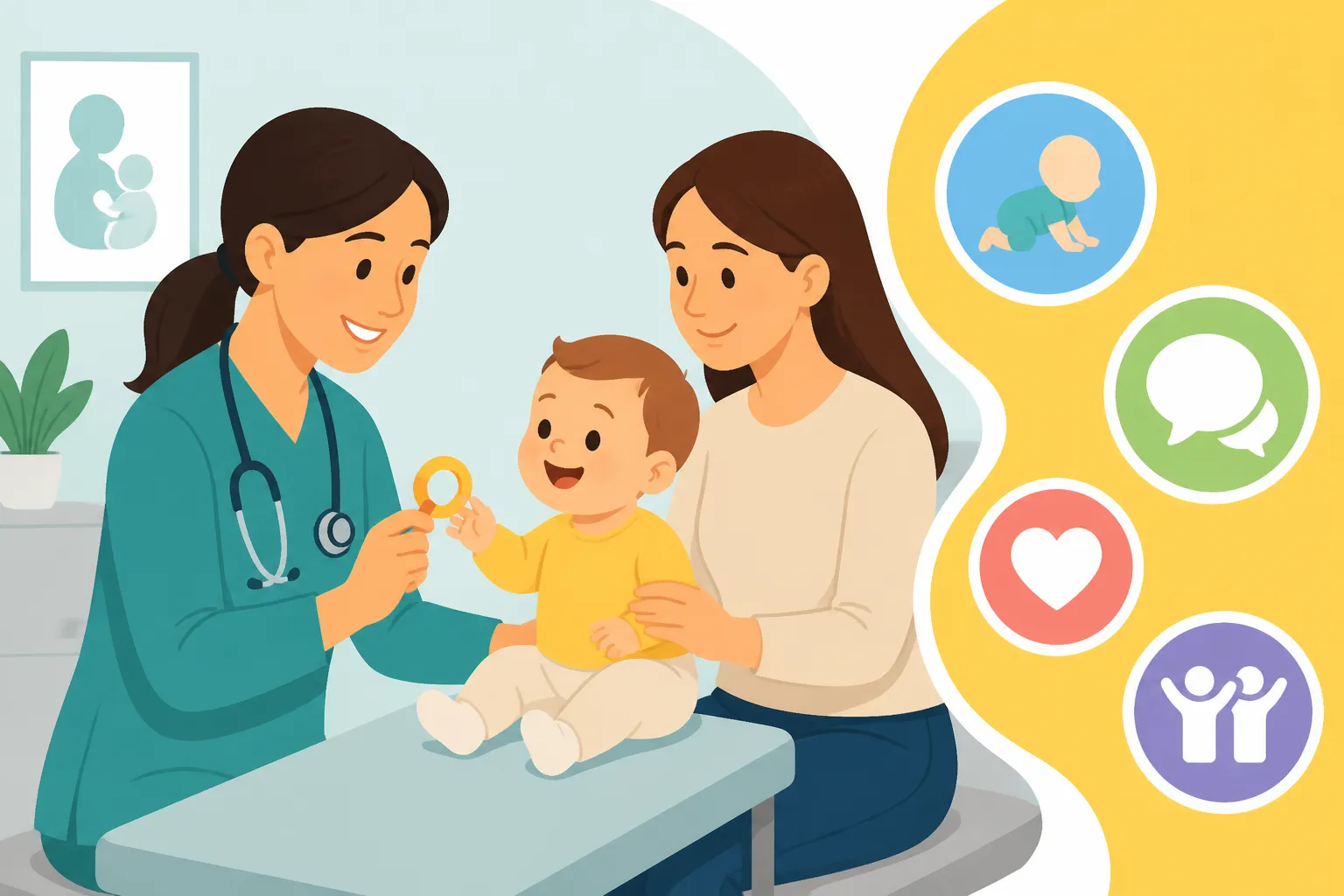
How Do I Get My Child’s Development Checks at BVC in Sweden?
Moving to a new country with a young child is an exercise in managed chaos, especially when you realize you have no idea where to go for a basic check-up. I vividly remember standing in my half-unpacked kitchen in Stockholm, looking at my daughter's vaccination card from home and feeling a wave of panic that I was already "behind" on the Swedish schedule. This guide will walk you through exactly how to navigate the Barnavårdscentralen (BVC) system so your child stays on track without you losing your mind.
Understanding the Role of the Barnavårdscentralen
In many countries, you take your child to a pediatrician for everything from a runny nose to a developmental milestone check. In Sweden, the system is segmented. The BVC, or Child Health Center, is a specialized branch of the primary healthcare system dedicated strictly to the wellness, growth, and development of children from birth until they start preschool class (around age six).
It is important to distinguish the BVC from a standard Registering with a Vårdcentral: Your Guide to Primary Care in Sweden visit. While the BVC is often physically located within or near a primary care clinic, its mission is preventive. You do not go to the BVC if your child has a high fever or an acute ear infection; for those issues, you contact your regular GP or a pediatric emergency room. The BVC is your "wellness hub." When you first arrive, you might feel the system is overly relaxed, but it is actually one of the most robust preventive health frameworks in the world.
The staff at a BVC consists primarily of specialist nurses (distriktssköterska or barnsjuksköterska) who have extensive training in child development. You will also see a physician at specific intervals—usually at the 4-week, 6-month, and 12-month marks—but your primary point of contact is your dedicated BVC nurse. This nurse becomes a vital resource for you, acting as a sounding board for everything from sleep regressions to dietary concerns. They are the gatekeepers of the Swedish childhood experience, and building a good relationship with them makes your life as an expat significantly easier.
How to Register Your Child and Get Started
If your child was born in Sweden, the process is remarkably automatic. The maternity ward sends a notification to the BVC in your local area, and a nurse will typically call you within a few days of coming home to schedule a "home visit." However, for those of us who moved here with toddlers or infants in tow, the burden of initiation is on the parents.
The first hurdle is often the lack of a personal identity number. You will quickly learn that Getting Your Personnummer: The Gateway to Swedish Healthcare is the key to almost everything in this country. If you already have your personnummer and your child’s number is registered, you can simply call the BVC closest to your home and ask to register. In many regions, you have "Vårdval," which means you can choose any BVC you like, though most people stick to the one in their neighborhood for convenience.
If you are in that stressful "limbo" period where your application is still pending at Skatteverket, do not wait. Your child is still entitled to healthcare. In these instances, the BVC can issue a "reserve number" (reservnummer) to track your child's records until the permanent number arrives. This is also where having comprehensive coverage like Cigna Global or SafetyWing can provide peace of mind during your first few months. While BVC services are free for residents, having private insurance can sometimes help if you need to access private pediatricians for second opinions or if you are still navigating the transition from your home country’s insurance requirements.
When you call to register, be prepared to provide your child's previous immunization records. It is highly recommended to have these translated into English or Swedish before you arrive. The nurse will need to map your child's previous vaccines against the Swedish schedule to see if any "catch-up" doses are required. This administrative step is crucial because it ensures your child can eventually enter the school system with all the necessary health clearances.
The Swedish Developmental Check-Up Schedule
The BVC follows a standardized national program known as the "Barnhälsovårdsprogrammet." This is a series of scheduled visits that occur frequently in the first year and then taper off as the child grows. Each visit has a specific focus, ranging from physical measurements to cognitive and social milestones.
In the beginning, you will be at the BVC almost every week or two. The nurse will weigh the baby, measure their length, and check their head circumference. These numbers are plotted on a growth chart that looks slightly different from the WHO charts used in other countries, which can sometimes cause unnecessary "growth-chart anxiety" for expat parents. Trust the nurse; they are looking at the trend, not just the single data point.
As your child moves into the toddler phase, the checks become more about "can they do X?" For example, at the 18-month check, the nurse will look at language development (can they say 8–10 words?) and motor skills (can they build a tower of bricks?). By the time they hit the 4-year check, the focus shifts to vision and hearing screenings, as well as more complex social interactions. These checks are designed to catch issues early, such as speech delays or vision impairments, so that The Vårdgaranti: Your Right to Timely Care in Sweden can kick in and get you a referral to a specialist if needed.
| Child's Age | Focus of the Visit | Key Milestone/Action |
|---|---|---|
| 1–2 Weeks | General health, weight | Newborn screening results review |
| 4 Weeks | Physical exam by a doctor | Focus on hips, heart, and reflexes |
| 3 Months | First major vaccinations | Discussion on sleep and feeding |
| 6 Months | Doctor visit, motor skills | Introduction to solid foods (smakisar) |
| 10–12 Months | Standing, pincer grasp | MMR (MPP) vaccine often discussed |
| 18 Months | Language and motor skills | Building with blocks, following instructions |
| 2.5–3 Years | Speech and social development | Language comprehension and vocabulary |
| 4 Years | Vision and hearing | Drawing circles, "school readiness" check |
For a more detailed look at the medical side, you should review Vaccinations in Sweden: The National Childhood Immunisation Schedule. Sweden takes its vaccination program very seriously, and while it is technically voluntary, the vast majority of the population participates. The vaccines are administered by the BVC nurse during your regular appointments, making it a "one-stop-shop" experience.
Navigating Cultural Nuances and Language at the BVC
One of the biggest shocks for new arrivals is the "Swedish way" of parenting advice given at the BVC. The nurses are generally very supportive of breastfeeding, but they also have a very pragmatic approach to life. You might be told to let your baby sleep outside in their stroller in sub-zero temperatures (perfectly normal here!) or be encouraged to give your six-month-old "välling" (a Swedish cereal drink).
If your Swedish is not yet up to par, do not worry. Most BVC nurses speak excellent English. However, if you feel more comfortable in your native tongue, you have a legal right to an interpreter. You must request this when you book the appointment. The interpreter is usually provided via speakerphone and is free of charge. I found that even though I could speak basic Swedish, having an interpreter for the "big" doctor visits was a lifesaver for understanding complex medical terminology.
Another thing to be aware of is the BVC's role in your own well-being. Sweden recognizes that a child's health is intrinsically linked to the parents' mental state. Around the 6-to-8-week mark, you will likely be asked to fill out an EPDS (Edinburgh Postnatal Depression Scale) screening. Don't be offended by this; it is a standard procedure to ensure you are coping with the transition to parenthood. If you are struggling, they can provide a referral for Mental Health Support in Sweden: Psychologists, Therapy, and Referrals. This holistic approach is one of the best parts of the system, but it can feel a bit intrusive if you aren't expecting it.
Practical Logistics: 1177 and Stroller Etiquette
As you settle in, you will need to learn How Do I Log Into 1177.se with BankID?. This portal is where you can see your child's upcoming appointments, send messages to your nurse, and even re-book times if your child wakes up with a cold. In the Swedish system, "Digital First" is the mantra. If you don't have BankID yet, you will have to do everything over the phone, which usually involves a "call-back" system where you leave your number and wait for them to ring you at a specific time.
When you actually show up for your appointment, there is a very specific "waiting room culture." First, you never take your stroller into the actual exam room. Most BVCs have a designated "vagnparkering" (stroller parking) area, often with heavy-duty locks. You will also be expected to take off your shoes at the entrance. Inside, there is almost always a "fika" corner or at least a place to sit and nurse.
If you are still waiting for your resident permit or are on a temporary contract, you might find that the public system feels a bit slow. This is where those contextual brands like SafetyWing or Cigna Global come back into the conversation. While they don't replace the BVC for these specific developmental checks, they can be a massive help if you need to see a private pediatrician quickly for something the BVC doesn't cover, or if you are traveling back and forth to your home country.
What to Do if You Are Not Happy with Your BVC
Not every nurse-parent pairing is a match made in heaven. If you feel that your BVC nurse isn't listening to your concerns or if there is a significant cultural gap that you can't bridge, you are not stuck. Under the "Vårdval" system, you can switch BVCs at any time. You don't even need to provide a reason to your current clinic. You simply find a new one, contact them, and they will request your child’s records from the old clinic.
This flexibility is important for expats because sometimes you just need a nurse who has experience working with international families. If you are living in a major city, you can often find "International BVCs" or clinics in neighborhoods with high expat populations where the staff are more accustomed to dealing with foreign vaccination records and the specific anxieties of moving countries.
Before you make a move, you might want to read How Do I Register at a Vårdcentral When I First Arrive in Sweden? to see how the broader registration system works. Often, the BVC is tied to the Vårdcentral, and switching one might mean switching the other, though not always. Taking the time to find a clinic where you feel "heard" will make the next five years of your child's life much smoother.
Long-term Follow-up and the Transition to School
Once your child reaches the age of four or five, the BVC visits become less frequent. The final "big" check is usually the 4-year or 5-year screening. After this, your child’s health records are typically transferred to the "Elevhälsa" (School Health) system once they begin "Förskoleklass" (the mandatory year before first grade).
This transition is usually seamless, but it is a good idea to ask your BVC nurse for a copy of your child's vaccination card before you "graduate" from the BVC. You will need this for travel, and it’s much easier to get a paper copy or a digital export while you are still an active patient. The BVC nurse will also ensure that any ongoing referrals for speech therapy or physical therapy are handed over to the school health team.
In the end, the BVC system is there to support you. It can feel bureaucratic at first, especially when you are trying to figure out 1177 Vårdguiden: Navigating Sweden's National Health Advice Line and Portal, but once you are in the system, it provides a safety net that is hard to beat. Take advantage of the free classes, the parental groups (föräldragrupper), and the wealth of knowledge your nurse has. It’s one of the few places in Sweden where you are encouraged to ask a million questions—so don't be shy.
Disclaimer
This guide is for informational purposes only and is based on personal experience and current administrative practices in Sweden as of 2026. Healthcare regulations and regional policies (Region Stockholm, Region Skåne, etc.) may vary. Always consult with a qualified medical professional or your local BVC nurse for specific health advice regarding your child. For official government information, please visit 1177.se or the Swedish Schools Inspectorate.