How Do Nordic Citizens Get Swedish Citizenship Faster?
Navigating the labyrinthine world of Swedish immigration can feel like an endless trek through dense forest, especially when it comes to something as significant as citizenship. For many, the path to becoming a Swedish citizen is a long, arduous journey filled with strict requirements and waiting periods. But if you hail from one of Sweden's Nordic neighbors, you're in for a pleasant surprise, as your journey can be significantly smoother and, yes, faster. This guide will walk you through exactly how Nordic citizens can tap into a more streamlined process for acquiring Swedish citizenship, cutting through the usual red tape and getting you to that Swedish passport sooner rather than later.
The Unique Situation for Nordic Citizens Regarding Swedish Citizenship
Let's be honest, for most folks moving to Sweden, the idea of getting citizenship feels like a distant dream, often requiring years of continuous residency, proving self-sufficiency, and sometimes even passing language tests. It's a journey I've seen countless expats grapple with, and it can be incredibly frustrating. However, if you're a citizen of Denmark, Finland, Iceland, or Norway, you're operating with a completely different set of rules. This isn't just a small perk; it's a fundamental difference rooted in deep historical ties and a commitment to Nordic cooperation.
Why Nordic Citizens Have an Advantage
The unique position of Nordic citizens stems from the Nordic Passport Union, established way back in the 1950s, which essentially eliminated passport controls between the Nordic countries and granted citizens the right to move and reside freely in any of them. This freedom goes far beyond what even EU/EEA citizens enjoy in terms of administrative ease. It fosters a shared sense of community and understanding among these nations, meaning that when a Dane, Finn, Icelander, or Norwegian decides to call Sweden home permanently, the process is viewed through a lens of existing integration rather than as a brand-new, complex migration case.
You see, for someone from, say, Canada or even Germany, every step of the immigration process in Sweden, from getting their initial residence permit to eventually applying for citizenship, involves proving their ties, their purpose, and their ability to integrate. This can mean mountains of paperwork, extensive interviews, and sometimes, feeling like you're constantly justifying your presence. For Nordic citizens, much of that foundational trust is already established. You’re not just another foreigner; you’re a neighbor. This understanding is what truly validates the specific frustrations other foreigners face – the Nordic path acknowledges a level of pre-existing integration that others simply don't have.
The "Faster" Path: Exemptions from Standard Requirements
When we talk about a "faster" path, we're not just talking about shorter processing times (though those can often be a pleasant side effect). We're talking about exemptions from some of the most stringent and time-consuming requirements that other applicants must meet. The most significant of these is the reduced residency period. While most applicants need to have resided in Sweden for a continuous period of at least five years (or four years if married to a Swedish citizen or meeting specific refugee criteria), Nordic citizens get a significant shortcut. This isn't a minor tweak; it's a huge leap forward on your citizenship journey.
Imagine the relief of knowing you don't need to spend half a decade meticulously documenting every month of your life in Sweden just to meet the basic residency requirement. For you, that five-year hurdle shrinks dramatically. Furthermore, the emphasis on proving your "right of residence" or a "maintenance requirement" that often weighs heavily on non-EU/EEA applicants, or even some EU/EEA citizens, is largely bypassed. Your existing rights as a Nordic citizen mean that Migrationsverket isn't questioning your fundamental right to be here; they're simply processing your desire to formalize your belonging as a Swedish citizen. This streamlined approach truly underscores the unique bond between the Nordic countries, making your transition to Swedish citizenship less of an uphill battle and more of a welcoming embrace. It’s a stark contrast to the often bewildering experience many face when navigating the general pathway to citizenship, where the path to Permanent Residence in Sweden: Rules and Timeline alone can feel like a lifetime.
Specific Requirements for Nordic Citizens Applying for Swedish Citizenship
So, what exactly does this "faster" track entail? While the general requirements for Swedish citizenship can be quite extensive, encompassing everything from uninterrupted residency to proficiency in Swedish and demonstration of a self-sufficient lifestyle, Nordic citizens benefit from some crucial relaxations. It's not a free pass, mind you, but it’s certainly a less demanding one.
The Reduced Residency Period
This is arguably the biggest game-changer. For most non-Nordic individuals, the standard requirement is five years of continuous residency in Sweden, or four if you’ve been married to, or a registered partner of, a Swedish citizen for at least two years. However, if you are a citizen of Denmark, Finland, Iceland, or Norway, this period is significantly reduced. You generally only need to have been resident in Sweden for two continuous years.
What does "resident" mean in this context? It means you've been registered in the Swedish Population Register (folkbokförd) with Skatteverket for at least two years. This is crucial. Simply living here isn't enough; your official registration with Skatteverket is the cornerstone of proving your residency. If you've just moved to Sweden, one of your very first steps should be to register your move (Flyttanmälan) with Skatteverket to ensure your clock starts ticking immediately for your two years. For more details on this, I'd highly recommend checking out our guide on Getting Registered in the Population Register Folkbokföring. If there have been any gaps in your folkbokföring, or if you've moved between Nordic countries during this period, it's wise to double-check with Migrationsverket, but generally, two continuous years of registered residency is the target.
Identity and Documentation
While the residency requirement is relaxed, proving your identity is still paramount, and the process here is quite straightforward. You will need a valid passport from your Nordic country of citizenship. This serves as your primary proof of identity and nationality.
It's absolutely essential that your documents are clear, legible, and up-to-date. If, for some reason, your passport has expired or is nearing expiry, make sure to renew it before applying. Migrationsverket needs to see valid identification. While most documents from Nordic countries are already in Swedish, Danish, Norwegian, or English, which are generally accepted, if you have any supporting documents in other languages (which is unlikely but always a possibility), they might need to be translated. In such cases, using a reputable translation service like RushTranslate or Translayte can ensure your documents are professionally translated and accepted by Swedish authorities, avoiding unnecessary delays. Don't underestimate the power of clear, perfect paperwork; it can make or break your application speed.
Conduct and Intent to Live in Sweden
Even with the expedited process, Sweden expects you to be a good citizen, both before and after you get your new passport. This means you must meet the "good conduct" requirement. Simply put, this means you should not have committed any serious crimes, nor should you have outstanding debts with the Swedish Enforcement Authority (Kronofogden).
Migrationsverket will conduct checks with various authorities, including the police and Kronofogden. A clean record significantly speeds up the process. If you have any history of criminal offenses, regardless of how minor you perceive them, or if you have a payment default (betalningsanmärkning) with Kronofogden, this could lead to delays or even a refusal of your application. While minor infractions from many years ago might be overlooked, recent or serious issues will definitely be a hurdle. It's always a good idea to ensure your financial house is in order; our guide on Dealing with Kronofogden: Debt Enforcement in Sweden might offer some useful context if you're concerned about past issues.
Regarding your intent to live in Sweden, for Nordic citizens, this is usually less of a formal hurdle than it is for others. Your established right to reside here and your decision to apply for citizenship already implicitly demonstrate your intention. Migrationsverket understands the fluid nature of life within the Nordic region, so you won't typically be asked to prove a long-term commitment in the same rigorous way a non-EU/EEA citizen might. The fact that you’ve been Registering with Försäkringskassan: When and Why You Need To and built a life here generally speaks for itself.
The Application Process: Step-by-Step for Nordic Citizens
Alright, you've met the criteria, you're a Nordic citizen, and you're ready to make it official. The application process itself is fairly straightforward, but like anything involving Migrationsverket, it requires meticulous attention to detail. Skipping steps or providing incomplete information will only prolong your wait, and believe me, nobody wants that.
Gathering Your Documents
Before you even think about logging onto Migrationsverket's online portal, gather all your necessary documents. This preparation is key to a smooth application. For Nordic citizens, the list is blessedly shorter than for other applicants, but each item is non-negotiable.
You will need:
- A valid national passport from Denmark, Finland, Iceland, or Norway. This is paramount for proving your identity and your current citizenship. Make sure it's current and hasn't expired, or won't expire during the processing period.
- Proof of your two years of continuous residency in Sweden. This is primarily demonstrated through your folkbokföring history. While you don't typically need to proactively provide an extract, Migrationsverket will check this with Skatteverket directly. However, it's always a good idea to personally ensure your folkbokföring records are accurate and up-to-date with Skatteverket before you apply. If you've had a previous Coordination Number Samordningsnummer Explained before your personnummer, ensure all your details transitioned correctly.
- Any other documents Migrationsverket specifically requests based on your individual situation (e.g., if you have minor children you wish to apply for citizenship alongside yourself, you'd need their birth certificates and consent forms).
Always double-check that every document is clearly legible. If you’re submitting scans, make sure they are high quality. Blurred images or cut-off information are common reasons for delays.
Applying Online via Migrationsverket
The most efficient way to apply for Swedish citizenship is online through the Migrationsverket website. It’s designed to be user-friendly, but it’s still crucial to take your time and read every instruction carefully.
- Log in to Migrationsverket's e-service: You'll typically need a Swedish BankID to log in, which is Sweden's essential digital identification system. If you don't have one yet, getting BankID: Sweden's Essential Digital Identity is a priority for almost all administrative tasks in Sweden.
- Select the correct application: On the portal, look for the application for Swedish citizenship. There will be different categories, so make sure you choose the one for Nordic citizens (often referred to as 'medborgarskap för nordisk medborgare'). This will ensure you're guided through the streamlined process relevant to you.
- Fill out the application form: This is where you input all your personal details, your residency history, and answer questions about your conduct. Be truthful and precise. Any inconsistencies could raise red flags.
- Upload your documents: Attach the scanned copies of your passport and any other required supporting documents. Remember the advice on clarity and legibility! If you have any documents not in Swedish, Danish, Norwegian, or English, ensure they are translated by a certified translator. Services like RushTranslate or Translayte are great for getting official translations that Migrationsverket will accept without question.
- Pay the application fee: There is a fee for applying for Swedish citizenship. The exact amount can change, so check Migrationsverket's website for the most current figure. You'll typically pay this online as part of the application process. Once paid, save your receipt.
- Submit your application: After reviewing everything one last time, hit that submit button. You’ll receive a confirmation that your application has been sent.
What Happens After You Apply
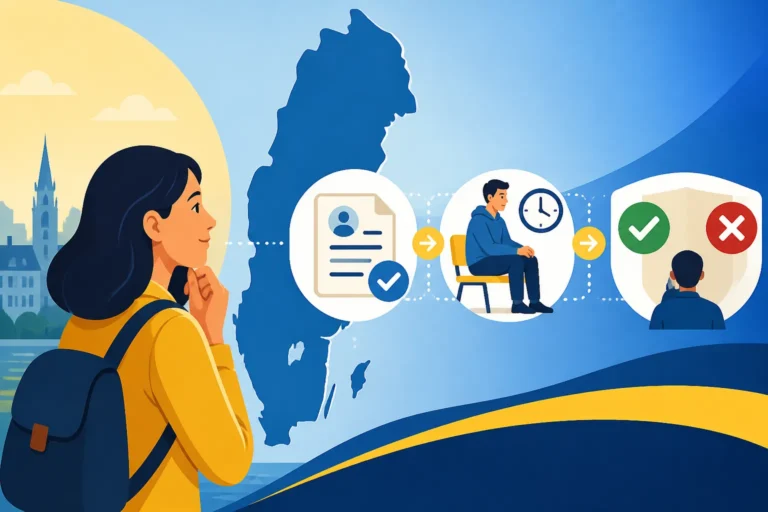
Once your application is submitted, you enter the waiting game. Migrationsverket will send you a confirmation that they've received your application. They will then conduct their internal checks, which include verifying your folkbokföring history with Skatteverket, checking your criminal record with the police, and looking into any debt issues with Kronofogden.
The processing times for Nordic citizens are generally much shorter than for standard citizenship applications. While general Understanding Migrationsverket Processing Times and Delays can be notoriously long, your application should be prioritized. However, "faster" is a relative term in government bureaucracy, so while it won't be five years, it's also not usually five days. You can often track your application status through your "My Page" on the Migrationsverket website.
In some cases, Migrationsverket might contact you for supplementary information or to clarify details. Respond promptly and comprehensively to any requests to avoid further delays. If all checks are positive and you meet all requirements, you will receive a decision – hopefully, a positive one! Once your citizenship is granted, you become a Swedish citizen. Congratulations! The final step is typically to apply for your Swedish passport and national ID card at the police station. This is a separate process from the citizenship application itself.
Common Pitfalls and Key Considerations
Even with the expedited path for Nordic citizens, there are still a few areas where things can go awry or where careful consideration is needed. Navigating the administrative landscape of Sweden, even with an advantage, requires diligence.
Ensuring Your Folkbokföring is Correct
This cannot be stressed enough: your folkbokföring (registration in the Swedish Population Register) is the absolute foundation of your residency status in Sweden. Migrationsverket relies heavily on these records to confirm your two years of continuous residency. Any inaccuracies or gaps in your folkbokföring can become a significant hurdle.
For instance, if you moved within Sweden and forgot to update your address with Skatteverket promptly, or if there was a period where you weren't registered due to a temporary move abroad, it could impact the calculation of your residency period. It’s always prudent to check your registered address and history with Skatteverket well in advance of applying. You can often do this via their e-services or by contacting them directly. This also applies to ensuring any minor children you want to include in your citizenship application are correctly folkbokförd with you. Make sure you understand the nuances of Folkbokföring: Your Legal Status in Sweden.
Maintaining Good Conduct
While Nordic citizens benefit from relaxed residency rules, the good conduct requirement is still strictly applied. Sweden takes a dim view of criminal activity and financial delinquency, and these will definitely impact your application.
- Criminal Record: Any criminal offenses, especially serious ones, will likely lead to a refusal. Even minor offenses, depending on their nature and how recently they occurred, can cause delays. Migrationsverket will obtain information from the police register.
- Debts with Kronofogden: Having unpaid debts that have gone to Kronofogden (the Swedish Enforcement Authority) is another common reason for citizenship applications to be refused. This indicates that you haven't fulfilled your responsibilities as a resident. Ensure that any such issues are resolved and cleared well before you apply. It's not just about the monetary value; it's about your financial conduct and responsibility.
The goal is to demonstrate that you are a responsible member of society. Keep your nose clean and your finances in order, and this aspect of your application should be smooth sailing.
Dual Citizenship Implications
One of the great things about becoming a Swedish citizen is that Sweden generally allows dual citizenship. This means that when you acquire Swedish citizenship, you typically do not have to renounce your original Nordic citizenship. This is a huge relief for many, allowing you to maintain ties and rights in both countries.
However, and this is a big "however," while Sweden allows dual citizenship, it's absolutely crucial that you also check the laws of your original Nordic country. While it's rare for Nordic countries to have strict rules against dual citizenship when acquiring another Nordic citizenship, laws can change, and specific situations might exist. For example, some countries might have rules about losing citizenship if you serve in a foreign military or certain government roles. Always, always verify with your home country's embassy or relevant authorities to ensure that acquiring Swedish citizenship won't inadvertently cause you to lose your Danish, Finnish, Icelandic, or Norwegian citizenship if that is something you wish to retain. Our comprehensive guide on Dual Citizenship in Sweden: What's Allowed provides even more in-depth information on this important topic. This small check can save you a lot of heartache down the road.
Remember, while the path is faster, it’s not without its administrative nuances. Being prepared and understanding these specific requirements will ensure your journey to becoming a Swedish citizen is as smooth and quick as possible.
Comparison: Standard vs. Nordic Citizen Citizenship Requirements
To really highlight the advantage Nordic citizens have, let's put it into a clear comparison. This table outlines the typical requirements for standard citizenship applications in Sweden versus those for citizens of other Nordic countries.
| Requirement | Standard Citizenship Application (Non-Nordic/EU/EEA) | Nordic Citizen Citizenship Application (Denmark, Finland, Iceland, Norway) |
|---|---|---|
| Residency Period | Generally 5 years of continuous legal residence (4 years for spouses of Swedes). | 2 years of continuous registered residence (folkbokförd). |
| Permanent Residence Status | Often required to have permanent residence status before applying for citizenship. | Not explicitly required; the right to reside from Nordic freedom of movement applies. |
| Self-Sufficiency Requirement | Often need to prove ability to support oneself and family, including income and housing. | Generally not a primary focus due to integrated Nordic labor markets. |
| Good Conduct | No serious criminal record, no outstanding debts with Kronofogden. | Same as standard: No serious criminal record, no outstanding debts. |
| Identity Proof | Valid passport or national ID, potentially birth certificates, previous residence permits. | Valid Nordic passport is usually sufficient. |
| Language & Civics Tests | Future requirement: expected to demonstrate Swedish language and civics knowledge. | Exempt from current and upcoming language and civics tests. |
| Renunciation of Previous Citizenship | Not required by Sweden (dual citizenship allowed), but check home country laws. | Not required by Sweden (dual citizenship allowed), but check home country laws. |
| Processing Time | Can be lengthy, often 1-2 years or more depending on complexity. | Generally shorter processing times, but still subject to Migrationsverket caseload. |
This table vividly illustrates the significant advantages you hold as a Nordic citizen. The reduced residency and exemption from many of the more bureaucratic hurdles mean your path is truly expedited.
Disclaimer
The information provided in this article is intended for general guidance only and does not constitute legal advice. While we strive to ensure accuracy, immigration laws and regulations in Sweden can change. Always consult the official websites of Migrationsverket, Skatteverket, and other relevant Swedish authorities, or seek advice from a qualified immigration lawyer, for the most current and specific information pertaining to your individual situation.