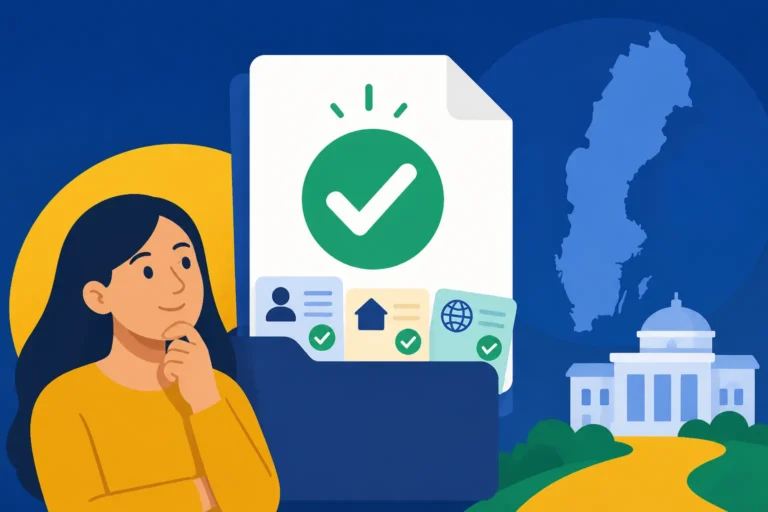
Can I Bring My Unmarried Partner (Sambo) to Sweden?
Ah, the longing to reunite with your beloved, your partner in crime, your other half – it’s one of the most powerful reasons for wanting to navigate the labyrinthine Swedish immigration system. Many of us expats have been there, living the dream in Sweden but feeling a gaping hole where our significant other should be. It’s not always straightforward, especially if you’re not married, but this guide will walk you through the precise steps and crucial details for bringing your unmarried partner, your sambo, to Sweden.
What "Sambo" Status Really Means for Swedish Immigration
So, you’ve heard the term "sambo" bandied about, and it sounds pretty convenient, right? It implies living together, and that's exactly what it is, but legally, in Sweden, it carries a very specific weight, especially when it comes to immigration. It's far more than just sharing a flat with a friend; it's about sharing a life, a household, and a future, just like a married couple, but without the official certificate.
The Swedish Migration Agency, Migrationsverket, doesn't just take your word for it when you say someone is your sambo. They look for concrete evidence of an established relationship where you have lived together in a marriage-like relationship. This is the core of it. You need to prove that you and your partner have shared a household, been in a romantic relationship, and intend to continue doing so permanently. Think of it this way: if you’ve been living together, sharing bills, cooking meals, going on holidays, and generally entwined your lives in a way that’s clearly more than platonic, then you're likely on the right track. This typically means you should have lived together for a significant period, usually at least six months, before applying.
The proof of this "shared household" is absolutely paramount. Migrationsverket will be scrutinizing everything to ensure your relationship is genuine and not just a convenient arrangement. They want to see tangible evidence that you have, in fact, been living at the same address, sharing responsibilities, and generally functioning as a domestic unit. This isn’t just about having the same address on paper; it's about demonstrating actual cohabitation. This means joint utility bills, shared bank accounts, lease agreements with both your names on them, and even evidence like mail addressed to both of you at the same address. The more documented proof you can provide of your intertwined lives, the stronger your case will be. It’s not enough to say you're a couple; you have to prove you're a couple in a very Swedish, administrative way.
Furthermore, there needs to be a clear, shared intention to live permanently together in Sweden. This isn't for short-term arrangements or someone who plans to move on in a year. Migrationsverket wants to see that you both envision a long-term future together in Sweden. This "intention" is often assessed through the questions you're asked during potential interviews, and by the overall narrative your application presents. Any signs of temporary intent or wavering commitment could raise red flags. This concept forms a critical basis for Residence Permits in Sweden: Types, Requirements, and How to Apply, and understanding it deeply will save you a lot of heartache.
Navigating the Residence Permit Application for Your Sambo
Once you understand the 'sambo' criteria, the next hurdle is the actual application process. For most people, this is done online through Migrationsverket's website, which is surprisingly user-friendly in its interface, but utterly demanding in its requirements. As the person already living in Sweden, you, the "referent" or "anchor person," will often initiate the process or at least be heavily involved in providing information and documentation. Your partner, the "applicant," will submit the main application.
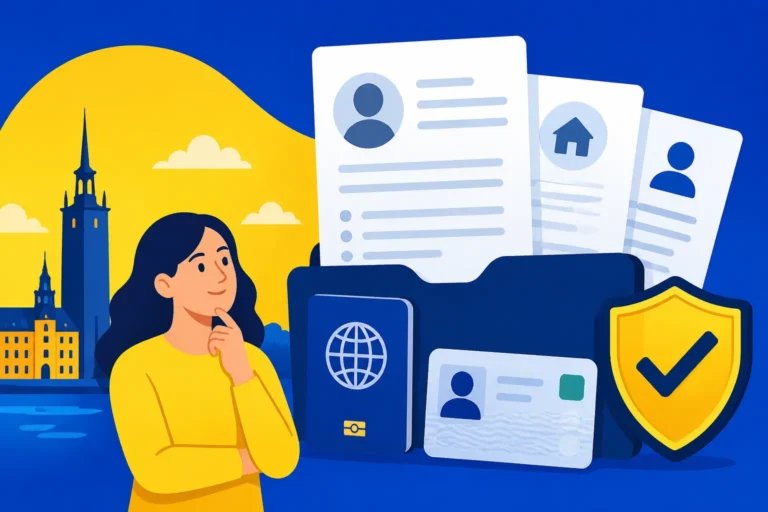
The list of required documents can feel exhaustive, and it often changes, so always check the latest requirements directly on Migrationsverket's official website. Generally, you'll both need valid passports. Your partner will need to provide their full birth certificate, and if either of you has been married before, divorce decrees or death certificates for previous spouses are also required. Crucially, you’ll need to submit extensive documentation proving your sambo relationship. This is where you pull out all those joint lease agreements, those utility bills showing both your names, photos of you together over time, travel itineraries from holidays you’ve shared, and even extensive communication logs (emails, chat histories) that demonstrate the length and nature of your relationship. Don't skimp on this; Migrationsverket wants to see a rich tapestry of your shared life. Every document that isn't in Swedish or English will need to be officially translated. This is where services like RushTranslate or Translayte can be incredibly helpful. Using a certified translator ensures that your documents are accepted without question, avoiding frustrating delays or even outright rejection due to linguistic ambiguities.
After submitting the application and all supporting documents, your partner will likely be invited to attend an interview at a Swedish embassy or consulate in their home country (or country of legal residence). You, as the anchor person in Sweden, might also be called for a separate interview. These interviews are critical; they are Migrationsverket’s way of verifying the genuineness of your relationship. They will ask detailed questions about your lives together: how you met, daily routines, shared memories, future plans, and even intimate details to ascertain the true nature of your bond. It's paramount that your stories are consistent and honest. Any major discrepancies can be a serious issue. For more on what to expect during this phase, consult our guide on Applying for a Swedish Residence Permit Online with Migrationsverket.
Following a successful interview (or sometimes before, depending on the embassy), your partner will need to provide their biometrics – fingerprints and a photograph – to get their residence permit card, known as the UT-kort. This typically happens at the same embassy or consulate where they had their interview. This card is their official proof of their right to reside in Sweden. You can learn more about this process in Biometrics and the Residence Permit Card UT-kort in Sweden.
The processing times for these applications can be notoriously long and vary wildly. It's a common source of frustration for many expats. Migrationsverket publishes estimated waiting times, but these are just estimates, and individual cases can take much longer. During this waiting period, your partner generally needs to remain outside of Sweden, unless they have a separate visa that allows them to visit. Trying to enter Sweden as a tourist while awaiting a residence permit decision can complicate matters significantly. For a more detailed look at these timelines, check out our piece on Understanding Migrationsverket Processing Times and Delays, and for general advice on how to handle the administrative side, see Dealing with Migrationsverket: Applications, Waiting, and Decisions.
Here's a quick rundown of some key documents you'll need:
| Document Type | Who Needs It? | Purpose | Important Notes |
|---|---|---|---|
| Valid Passports | Both | Proof of identity and nationality | Must be valid for the entire intended permit period. |
| Birth Certificates | Applicant | Basic personal identification | Original, translated into Swedish or English by a certified translator (e.g., RushTranslate). |
| Marriage/Divorce Certificates | Both (if applicable) | Legal status confirmation | Original, translated into Swedish or English. |
| Proof of Sambo Relationship | Both | Establish cohabitation and genuine romantic relationship | Joint lease, utility bills, bank statements, photos, communication logs. The more, the better! |
| Proof of Maintenance | Referent | Demonstrates financial capability to support applicant | Payslips, employment contract, bank statements, tax returns. |
| Proof of Housing | Referent | Confirms adequate housing for both | Rental contract or deed of ownership, clearly stating address and size. |
| Comprehensive Sickness Insurance | Applicant | Required for non-EU/EEA citizens applying from abroad | Must cover entire permit period, specific requirements apply. Crucial! |
| Power of Attorney (if applicable) | Referent/Applicant | Allows someone else to act on your behalf | Useful if one partner needs to manage parts of the application process. |
The Maintenance Requirement: Can You Afford to Bring Them?
This is often where many aspiring sambo reunification dreams hit a snag: the försörjningskravet, or the maintenance requirement. Sweden is incredibly generous with social welfare, but it’s also very keen on ensuring that new residents won't immediately become dependent on these systems. Therefore, if you are the one living in Sweden and your partner is applying to join you, you generally need to demonstrate that you can support both of you financially and provide adequate housing. This is a critical element, especially for non-EU/EEA citizens, and it's a hurdle that trips up a surprising number of applicants. This requirement is closely tied to the broader topic of Comprehensive Sickness Insurance and the Maintenance Requirement in Sweden, which you'll definitely want to read up on.
Migrationsverket has specific, annually adjusted thresholds for income that you, the referent, must meet. This isn't just about having some income; it's about having enough net income (after tax) left over each month, after paying for your housing costs, to support both of you according to a predefined standard. The exact figures change, but they are based on a "normal amount" that is deemed sufficient for basic living expenses. For example, as of recent years, if you’re a couple, the amount you need after housing costs will be higher than if you were single. This calculation is quite precise, and any shortfall can lead to a refusal. They aren't looking for you to be wealthy, but they are looking for financial stability.
Beyond income, you also need to prove that you have housing that is suitable for two people. This means a dwelling of an appropriate size and standard. A tiny studio apartment that might be fine for one person might not be considered adequate for two. Migrationsverket generally defines "adequate" as having at least two rooms and a kitchen, or one room and a kitchen if it's a particularly large one. You’ll need to provide documentation of your housing, such as your rental contract or proof of ownership, specifying the size and number of rooms. This requirement is just as important as the income part, and it's a common reason for applications being rejected. Understanding the Swedish housing market and its various challenges, as detailed in our comprehensive guide Housing and Living in Sweden: The Complete Newcomer's Guide 2026, will help you prepare.
So, what kind of income counts towards this requirement? Generally, it's income from employment, self-employment (if stable and proven), or certain pensions. What definitely doesn't count are things like student loans, housing benefits, or other social welfare payments. Migrationsverket wants to see that your income is stable and independent of social support. To prove your income, you'll need to submit things like payslips, employment contracts, and tax statements from Skatteverket. If you’re self-employed, the requirements are even stricter, demanding proof of consistent profitability. For a deeper dive into how income and taxes are handled in Sweden, our resource on The Swedish Tax System Explained: Rates, Returns, and Filing can be very insightful.
There are some limited exemptions to the maintenance requirement, primarily if you have children together, or if you meet specific criteria as a highly qualified worker under certain EU directives. However, these are exceptions rather than the rule, so it's always best to assume the maintenance requirement applies to your situation and prepare thoroughly.
Important Considerations and Common Pitfalls
Navigating the complexities of bringing your sambo to Sweden can feel like a full-time job, and there are definitely a few common tripwires you'll want to avoid. Being proactive and meticulously prepared can make all the difference.
First and foremost, if your partner is applying from outside the EU/EEA, comprehensive sickness insurance is non-negotiable. Until they are registered in the Swedish population register (and thus covered by the public healthcare system), they must have valid private health insurance that covers them for the entire period they are seeking a residence permit. This isn't a suggestion; it's a hard requirement. Migrationsverket will ask for proof of this insurance, and if it's not sufficient or doesn't cover the full period, your application will be rejected. This is explicitly covered in our article about Comprehensive Sickness Insurance and the Maintenance Requirement in Sweden and cannot be stressed enough.
Another common challenge is proving the "established relationship." Migrationsverket is looking for a long-term, stable relationship, not a whirlwind romance. If you've only been together a short time, or haven't had much time living together, it can be harder to convince them of the genuineness and stability of your bond. The longer you've lived together and the more evidence you have of shared life – shared bills, joint accounts, photos, travel history, extensive communication – the stronger your case. Don't be shy about compiling a thick file of evidence.
Truthfulness and consistency are also absolutely paramount. During interviews, both you and your partner will be asked detailed questions about your relationship. Any inconsistencies, no matter how minor they might seem to you, can raise suspicion with Migrationsverket and lead to a refusal. Be honest, be open, and make sure your stories align. Trying to embellish or fabricate details will almost certainly backfire.
It’s crucial to understand that in most cases, your partner must apply for the residence permit from outside Sweden. This means they should be in their home country or country of legal residence when they submit the application and, critically, when Migrationsverket makes a decision. Attempting to apply from within Sweden as a tourist can lead to immediate rejection, as it's typically considered an abuse of the visitor visa system. This is a fundamental rule for anyone Moving to Sweden from Outside the EU/EEA: What You Need to Know.
Given the high stakes and the often complex nature of these applications, sometimes it’s genuinely worth considering legal assistance. An immigration lawyer specializing in Swedish law can help you navigate the nuances, ensure all documentation is correct, and provide guidance for interviews. While it's an added expense, it can significantly improve your chances of a successful outcome and save you immense stress in the long run.
Finally, let's talk about what happens after approval. The moment that permit is granted, it's a huge relief! Your partner can then travel to Sweden, and upon arrival, the next crucial step is getting their Getting Your Personnummer: The Gateway to Swedish Healthcare. This ten-digit personal identity number is the key to almost everything in Sweden, from accessing healthcare to opening a bank account and much more. It also means they will be covered by the Swedish public healthcare system. This entire journey is a significant undertaking, but with patience and thorough preparation, you can definitely bring your beloved sambo to start their new life in Sweden with you.
Disclaimer
This article is for general informational purposes only and does not constitute professional advice. Laws, prices and regulations vary by location and change over time. Consult a qualified professional for guidance on your specific situation.