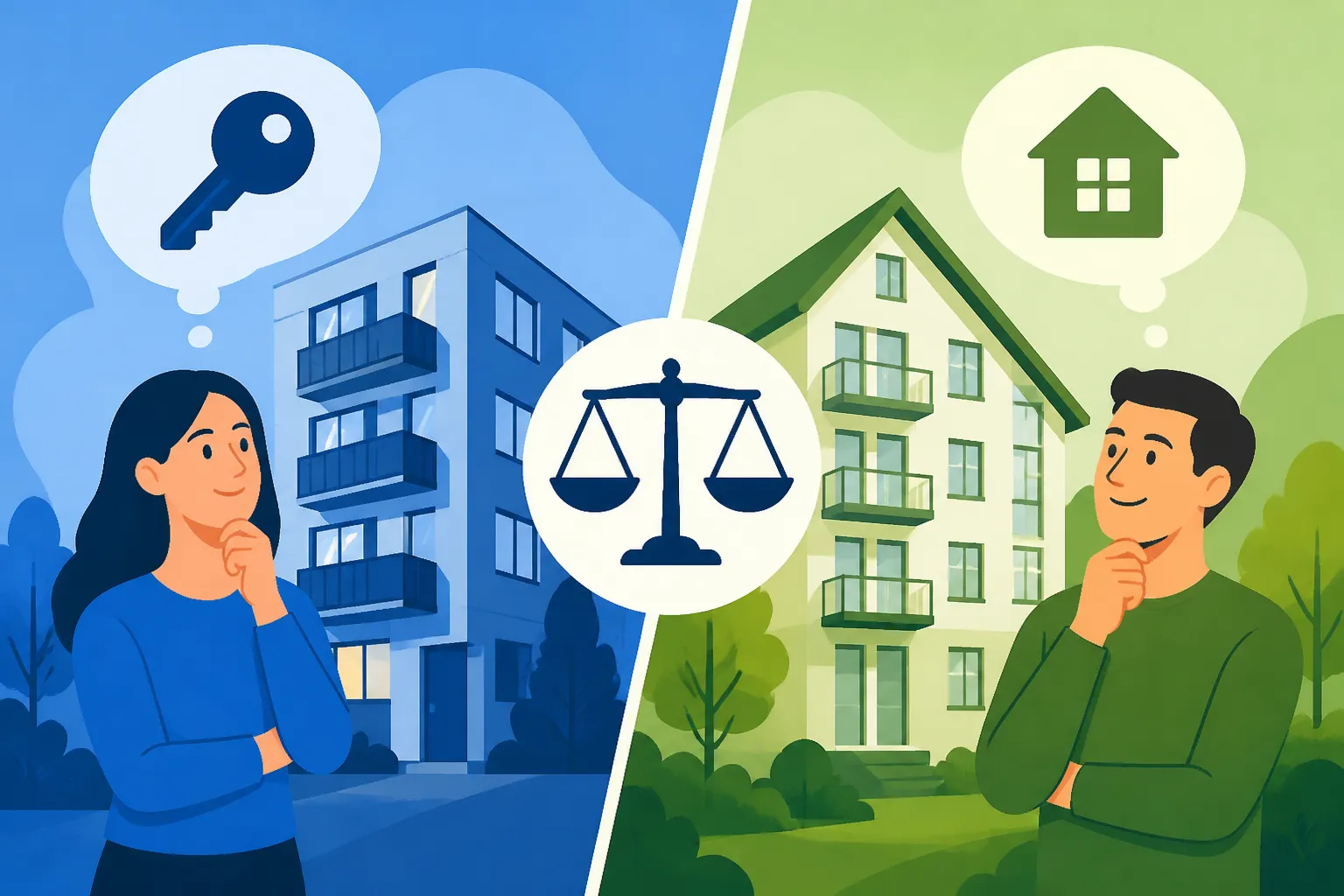
What Is the Difference Between Hyresrätt and Bostadsrätt?
Navigating the Swedish housing market as a newcomer can feel like trying to solve a Rubik's Cube while blindfolded and wearing oven mitts. It’s not just about finding an available apartment; it’s about understanding the very fabric of how homes are owned and rented here. One of the most fundamental — and often confusing — distinctions you'll encounter is between hyresrätt and bostadsrätt. Trust me, this isn't just semantics; it defines your rights, responsibilities, and how you experience living in Sweden. This guide is here to untangle those knots for you.
Unpacking the Basics: What Exactly Are We Talking About?
When you first land in Sweden, you'll quickly hear these terms thrown around, often with an air of "everyone knows this" that leaves you feeling utterly lost. But don't worry, you're not alone. Many expats find this distinction, so foundational to Swedish living, to be one of the trickiest to grasp. Let's break it down in plain language.
Hyresrätt: The Traditional Rental Apartment
At its core, a hyresrätt is what most people outside of Sweden would simply call a rental apartment. When you secure a hyresrätt, you are signing a direct contract with a landlord, who could be a municipal housing company (kommunalt bostadsbolag), a private landlord, or even another individual subletting their own apartment. You pay rent, and in return, you get the right to live in the apartment. Simple, right? Well, in theory.
The beauty of a hyresrätt lies in its simplicity and lower upfront financial commitment. You typically pay a deposit, which is often equivalent to one to three months' rent, and then your monthly rent. That’s generally it for the big payments. Your landlord is responsible for major maintenance, like fixing a leaky roof, repairing a broken fridge, or updating the plumbing. This means fewer unexpected financial shocks and less hassle for you when things inevitably go wrong. For many expats just starting out, or those on shorter contracts, this flexibility is a huge draw. It allows you to settle in, understand the local rhythm, and decide if Sweden is truly for you without sinking a massive amount of capital into a property.
However, the catch with hyresrätt is its accessibility, particularly in popular cities like Stockholm, Gothenburg, or Malmö. Obtaining a first-hand contract (a direct rental from a primary landlord) often means joining a housing queue, or bostadskö, that can take years, even decades, to accumulate enough "queue days" to be eligible for desirable apartments. This reality forces many newcomers into the second-hand market (andrahand), where you rent from someone who holds the first-hand contract or owns a bostadsrätt themselves. While platforms like Spotahome can make finding second-hand rentals a bit smoother, these contracts often come with less security, higher rents, and shorter terms, creating a constant low hum of anxiety about where you'll live next. It's a pragmatic stepping stone for many, but rarely a long-term solution. To learn more about how this system operates, delve into our guide on Renting a Home in Sweden: How the First- and Second-Hand System Works.
Bostadsrätt: The Housing Co-operative Membership
Now, this is where it gets a bit more uniquely Swedish and often causes the most head-scratching. When you "buy an apartment" in Sweden, what you're actually doing in the vast majority of cases is buying a bostadsrätt. This doesn't mean you own the physical bricks and mortar of the apartment itself, not in the way you might own a freehold property in other countries. Instead, you purchase a share in a housing cooperative, known as a bostadsrättsförening (BRF), and that share gives you the exclusive right to use a specific apartment for an indefinite period. Think of it as owning a permanent membership in a club that grants you access to a particular unit within the club's building.
This structure means you become a co-owner of the entire building along with all the other bostadsrätt holders. You have voting rights in the BRF's annual general meeting, influencing decisions about the building's finances, maintenance, and rules. This offers a much greater sense of stability and permanence than a hyresrätt. You can often renovate your apartment much more freely (within the BRF's rules, of course, especially for structural changes), and you have the potential for your property to increase in value, building equity over time. For many who plan to stay in Sweden long-term, this is the ultimate goal, a way to put down roots and invest in their future.
However, the entry barrier for a bostadsrätt is significantly higher. You'll need a substantial down payment, typically at least 15% of the purchase price, which can amount to hundreds of thousands of Swedish kronor in major cities. On top of your mortgage payments, you'll also pay a monthly fee, called an avgift, to the BRF. This avgift covers your share of the cooperative's running costs, such as heating, water, waste collection, building maintenance, and the BRF's mortgage payments. While you gain more control, you also take on more responsibility for the interior of your apartment and are tied to the financial health and decisions of the BRF. To truly get a handle on this model, check out our in-depth article on Understanding Bostadsrätt: Buying into a Swedish Housing Co-op.
Key Differences in Ownership, Cost, and Responsibility
Understanding the basic concepts is one thing, but truly grasping the implications for your daily life, your finances, and your long-term plans is another. The differences between hyresrätt and bostadsrätt are profound and touch almost every aspect of your housing experience in Sweden.
Ownership Structure and Rights
The legal rights you hold are perhaps the most significant differentiator. As a hyresrätt tenant, your rights are clearly defined by the Swedish Tenancy Act (Hyreslagen). You have what's called besittningsskydd, or security of tenure, which means your landlord cannot simply evict you without a valid reason, and there are strict rules about rent increases and contract termination. You are essentially paying for the right to use the apartment, and the landlord retains full ownership and responsibility for the property. While you have the right to a safe and functional home, you generally have very little say in how the building is managed or what renovations are carried out in common areas. For a deeper dive into your rights, read about Tenant Rights in Sweden: Contracts, Rent, and the Hyresnämnden.
With a bostadsrätt, your relationship is fundamentally different. You're not just a resident; you're a member and part-owner of the entire cooperative. This gives you voting rights at the BRF's annual general meeting, where decisions about the building's economy, major renovations (like roof repairs or façade improvements), and even internal rules are made. You also have the right to modify the interior of your apartment to a significant extent, though major structural changes (like moving a wall, altering pipes, or changing external appearance) will almost always require permission from the BRF board. This participatory aspect can be very empowering, offering a sense of community and control, but it also means you're financially tied to the collective decisions and potential issues of the entire building. Our guide on The Bostadsrättsförening BRF and Your Monthly Avgift Explained provides further insights into how this shared ownership works.
Financial Commitments and Costs
The financial implications are often the make-or-break factor for expats deciding between these two options.
For a hyresrätt, your primary ongoing cost is the monthly rent. This usually covers heating, water, and sometimes basic internet, but electricity is almost always separate. You'll also need to budget for home insurance, or hemförsäkring, which is absolutely essential in Sweden, even for renters. Beyond the deposit, there are no large upfront purchasing costs, making it more accessible if you don't have significant savings. The downside, financially, is that you're not building any equity; your rent payments are simply covering your living expenses, not contributing to an asset you own.
| Cost Type | Hyresrätt (Rental) | Bostadsrätt (Co-op Ownership) |
|---|---|---|
| Initial Costs | Deposit (1-3 months' rent) | Purchase price (significant capital), Conveyance fees, Stamp duty (lagfart), Real estate agent fees, Inspection costs |
| Ongoing Monthly | Rent, Electricity, Home Insurance, sometimes Internet | Mortgage payments, Monthly Avgift (to BRF), Electricity, Home Insurance, sometimes Internet, Interest costs, Amortization |
| Maintenance | Landlord's responsibility | Owner's responsibility for interior, BRF for common areas/structure |
| Equity Building | None | Potential for property value increase, mortgage pay-down |
| Major Repairs | Landlord | BRF (for building), Owner (for interior) |
When it comes to a bostadsrätt, the financial picture is more complex. Firstly, there's the significant purchase price of the share. You'll need to secure a mortgage, and banks typically require a down payment of at least 15% of the purchase price. Then there's the monthly avgift to the BRF, which can fluctuate based on the cooperative's finances, major renovations, or interest rate changes on the BRF's own loans. On top of this, you'll have your own mortgage interest payments and amortization (the repayment of the loan principal), electricity, and hemförsäkring. The financial commitment is far greater, but the potential benefit is that you're investing in an asset that could appreciate in value, and each mortgage payment you make builds your personal equity. Understanding How Mortgages Bolån and the Amortisation Requirement Work in Sweden is crucial here. Regardless of your housing type, you absolutely need proper Home Insurance Hemförsäkring Why It's Essential in Sweden.
Maintenance and Renovation Responsibilities
The division of labor when something breaks or when you want to make changes is another critical distinction.
For a hyresrätt, your landlord is generally responsible for all major maintenance and repairs. If the washing machine breaks, the fridge stops working, or there's an issue with the plumbing or heating, it's usually the landlord's problem to fix (unless you've caused the damage through negligence). As a tenant, your responsibility typically extends to routine cleaning, minor repairs (like changing lightbulbs), and ensuring you don't cause undue wear and tear. You can't just knock down a wall or repaint in a dramatically different colour without permission, and typically, major cosmetic changes aren't allowed.
In a bostadsrätt, your responsibilities are much broader. While the BRF, as the collective, is responsible for the building's exterior, roof, facade, and common areas (like laundry rooms, stairwells, and the building's main pipes and electrical systems), you, as the owner, are fully responsible for everything inside your apartment. This includes internal walls, flooring, fixtures, appliances (kitchen and bathroom, unless specified otherwise by the BRF), and all renovations. If your dishwasher breaks, that's on you. If you want to remodel your kitchen, you can usually do so, but for more significant changes that affect the building's structure, layout, or plumbing/electrical systems, you must get approval from the BRF board. This autonomy is fantastic but comes with the financial burden and logistical headache of coordinating repairs and renovations yourself.
Accessibility and the Swedish Housing Market Reality
For most newcomers to Sweden, the theory of hyresrätt versus bostadsrätt quickly bumps up against the very harsh reality of the Swedish housing market. It's notoriously difficult to navigate, particularly in the major urban areas, and expats often face additional hurdles.
The Housing Queue and Finding a Hyresrätt
The concept of the bostadskö, or housing queue, is central to finding a first-hand hyresrätt in Sweden. In cities like Stockholm, you can register for the municipal housing queue (e.g., Bostadsförmedlingen) and start accumulating "queue days." The longer you've been registered, the higher your chances of being offered a first-hand contract. However, these queues can be incredibly long – often 10, 15, or even 20+ years for desirable apartments in central locations. This means that for many expats, especially those on shorter assignments or just starting their lives in Sweden, a first-hand hyresrätt is simply not a realistic immediate option. To better understand this system, check out The Swedish Housing Queue Explained: Bostadskö and Queue Days.
This reality pushes a vast number of new arrivals into the second-hand market. Here, you rent from another private individual who holds a first-hand contract or owns a bostadsrätt. While this market offers faster access to housing, it comes with its own set of challenges. Rents are often higher than first-hand contracts, terms are usually shorter (often 6-12 months, sometimes with options for extension), and there's generally less security. It’s also crucial to ensure any second-hand rental is done legally and with the primary landlord's or BRF's permission to avoid potential scams or issues. Services like Spotahome have become popular for helping expats navigate this tricky landscape, offering vetted listings and a somewhat smoother process, but it still requires vigilance. This often feels like a temporary solution, leaving many feeling unsettled and constantly searching.
Entering the Bostadsrätt Market
While the hyresrätt market is tough due to supply and demand, the bostadsrätt market has financial barriers. As mentioned, the 15% down payment is significant. For an apartment costing, say, 3 million SEK (a relatively modest price in Stockholm), you'd need 450,000 SEK in cash just for the down payment. This requires substantial savings, something many newcomers haven't had time to build up. Additionally, Swedish banks will assess your creditworthiness, factoring in your income, employment history, and debt-to-income ratio. Your UC Credit Score: How It's Calculated and Why It Matters plays a huge role here. Building up a good credit history takes time in Sweden, often requiring a few years of stable employment and a personnummer.
The process of buying a bostadsrätt can also be intense, involving viewing properties, participating in bidding wars, and dealing with real estate agents (mäklare) who primarily speak Swedish. It’s a fast-paced environment where quick decisions are often necessary. Having access to reliable information and communication is key during this period; even having a robust eSIM from a provider like Airalo could be useful for staying connected and searching for listings on the go when you're house hunting. If you're considering buying, our comprehensive guide Buying Property in Sweden as a Foreigner: A Complete Guide is a must-read.
Which One is Right for You? Making the Choice as an Expat
Deciding between a hyresrätt and a bostadsrätt isn't just a financial decision; it's a lifestyle choice deeply intertwined with your long-term plans in Sweden. There’s no single right answer, only what’s right for you at this specific stage of your expat journey.
When Hyresrätt Makes Sense
For many newcomers, especially those fresh off the plane, a hyresrätt is not just an option, it's often the only realistic starting point. If you've just landed in Sweden, perhaps on a work contract for a couple of years, or you're still figuring out if this is where you want to build a life, the flexibility of renting is invaluable. You don't want to tie up a huge sum of money in a down payment, nor do you want the responsibilities of maintaining an apartment or being part of a BRF before you're even sure you'll be here next year.
The lower upfront costs and the fact that most major repairs fall to the landlord provide a much-needed sense of security when you're already juggling so many new things – learning the language, understanding the tax system, and simply finding your way around. Even if it means navigating the often frustrating second-hand market, a rental allows you to focus on settling into your job and social life without the added stress of a significant property investment. It's a stepping stone, a crucial part of the integration process for many, even with its inherent challenges regarding security of tenure and finding good, affordable options.
When Bostadsrätt Becomes an Option
As you become more established in Sweden, and if you envision a long-term future here, a bostadsrätt naturally becomes a far more attractive prospect. Perhaps you've been working for several years, built up a decent nest egg for a down payment, and gained a stable income that allows you to manage mortgage payments and the monthly avgift. By this point, you've likely navigated the complexities of Getting Your Personnummer: The Gateway to Swedish Healthcare and feel more integrated into Swedish society, perhaps even starting to grasp some Swedish.
The desire for stability and the ability to truly make a place your own often drives expats towards bostadsrätt. The potential for your investment to grow, the freedom to renovate (within limits), and the sense of community that comes with being part of a BRF can be incredibly rewarding. It means you're not just living in Sweden; you're actively building a life and a future here. It signifies a deeper commitment and offers the financial benefits of property ownership that are absent in a hyresrätt. It's a journey from temporary resident to an invested member of the Swedish fabric, but it demands patience, financial planning, and a deep dive into how the housing market truly operates.
| Feature | Hyresrätt (Rental Apartment) | Bostadsrätt (Co-operative Apartment) |
|---|---|---|
| Legal Status | Tenant, renting from a landlord | Member of a housing cooperative (BRF), with right to use apartment |
| Ownership | Landlord owns the property | BRF (the collective) owns the property, you own a share |
| Upfront Cost | Deposit (1-3 months' rent) | Large down payment (min. 15% of purchase price) |
| Monthly Costs | Rent (often includes heat/water), electricity, home insurance | Mortgage, Monthly Avgift (to BRF), electricity, home insurance |
| Maintenance | Landlord responsible for major repairs | BRF for building, owner for interior. Owner pays for interior repairs. |
| Flexibility | High (easier to move, no selling process) | Lower (buying/selling process, market fluctuations) |
| Security | Good for first-hand, less for second-hand (besittningsskydd) | High (permanent right of use, not easily evicted) |
| Equity Building | None | Yes, potential for property value increase |
| Decision Power | Limited | High (vote in BRF meetings, influence building decisions) |
| Accessibility | Difficult for first-hand (long queues), easier for second-hand | Requires significant capital and good credit history |
Ultimately, the path you take depends entirely on your personal circumstances, your financial readiness, and your vision for your life in Sweden. Both options have their merits and drawbacks, and understanding them deeply is the first step to making an informed decision in this often-challenging market.
Disclaimer
The information provided in this guide is intended for general informational purposes only and does not constitute legal, financial, or real estate advice. While we strive to keep the information up-to-date and accurate, the Swedish housing market, laws, and regulations can change. We recommend consulting with relevant Swedish authorities, legal professionals, or financial advisors for advice tailored to your specific situation.