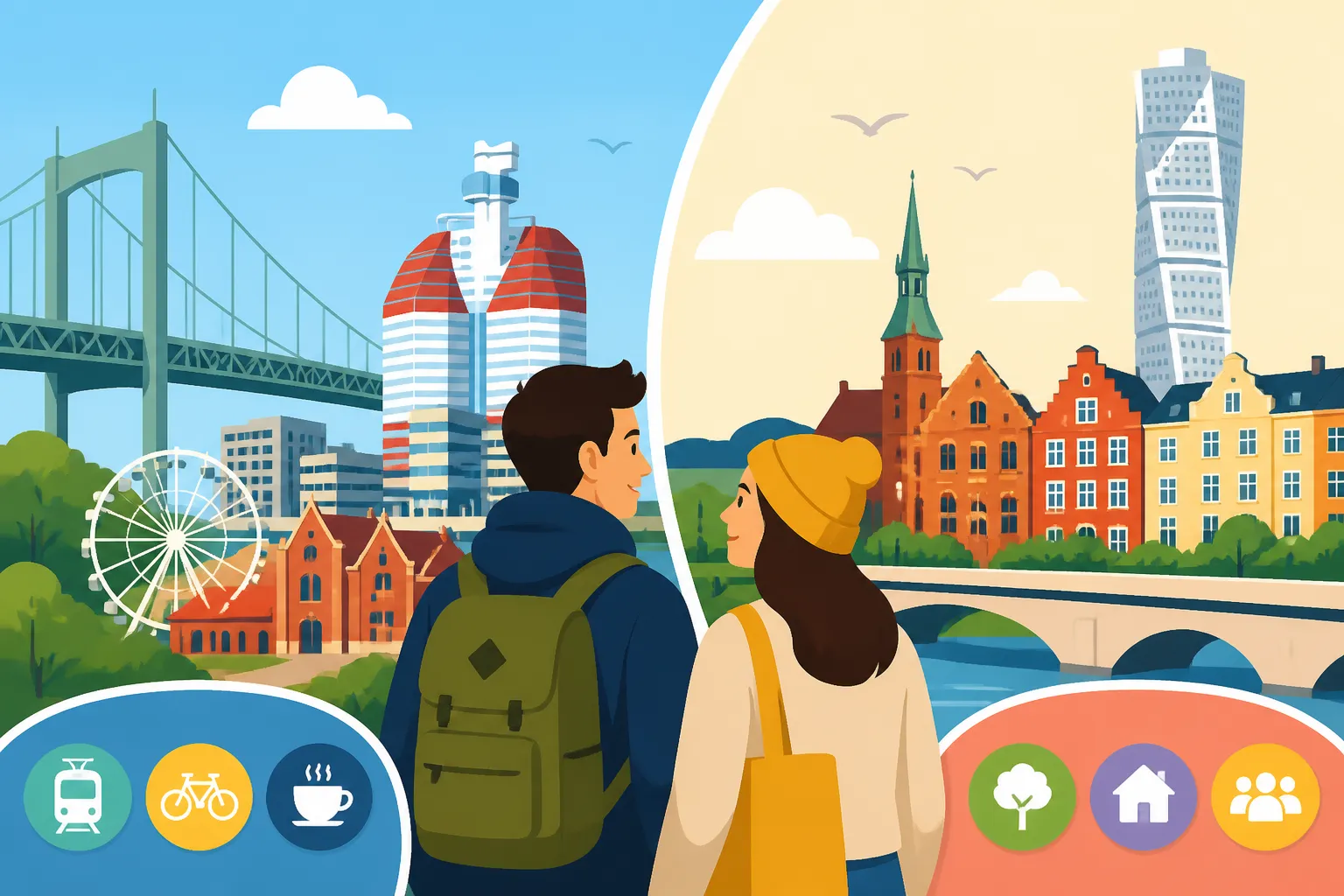
Living in Gothenburg and Malmö: What Newcomers Should Know
Deciding where to plant your roots in a new country can feel like navigating a labyrinth, especially when everyone only ever talks about one place. You hear endless chatter about Stockholm, almost as if Sweden ceases to exist beyond the capital's borders. But for those of us looking for a different pace, a more approachable vibe, or simply a wider array of opportunities, the thought of exploring other Swedish cities often crosses our minds. This guide is for you – the newcomer considering life beyond Stockholm, specifically delving into the unique worlds of Gothenburg and Malmö, two vibrant cities with their own distinct characters and challenges.
Gothenburg: The West Coast Charm
Ah, Göteborg! Sweden's beloved second city on the west coast. It's often described as Stockholm's more relaxed, industrial-chic cousin, and honestly, that's not far off the mark. If you're looking for a vibrant urban experience that still feels a bit more grounded and connected to nature, Gothenburg might just be your spot.
Vibe and Lifestyle in Sweden's Second City
Gothenburg has a character all its own, forged from its history as a major port and industrial hub. You’ll feel a blend of working-class grit and modern, sophisticated charm here. While it's a bustling city, it rarely feels as overwhelmingly busy or self-important as Stockholm can sometimes get. The atmosphere is generally more laid-back, and people are often described as being a bit more open and friendly – the famous "Göteborgshumor" (Gothenburg humor) is a real thing, a charmingly dry and often self-deprecating wit you'll encounter.
The city is beautifully intertwined with nature. You’re never far from the stunning archipelago, a short tram ride away, offering endless opportunities for sailing, kayaking, or simply enjoying the sea breeze. Inland, vast green spaces like Slottsskogen, a massive park that combines a zoo, natural history museum, and plenty of walking trails, are an integral part of daily life. It's a fantastic city for families, with excellent public services and a strong emphasis on outdoor activities, which is perhaps why you'll see so many parents pushing prams through its cobblestone streets and leafy avenues. The presence of major universities like Chalmers University of Technology and the University of Gothenburg also injects a youthful, dynamic energy, making it a lively student city.
Housing Market: Navigating Rentals and Buying
Like most major Swedish cities, Gothenburg's housing market can be challenging, but many newcomers find it slightly less cutthroat than Stockholm. Securing a first-hand rental contract (hyresrätt) through the official housing queue, such as Boplats Göteborg, requires a significant number of queue days – we're talking years, if not decades, for popular central areas. It's a long game, but worth signing up for the moment you get your Personnummer to start accumulating those precious days, as detailed in our guide on The Swedish Housing Queue Explained: Bostadskö and Queue Days.
For most newcomers, the second-hand market (andrahand) will be your immediate reality. This means subletting from someone who holds a first-hand contract or owns a bostadsrätt (housing cooperative apartment). While it's easier to find something quicker, you absolutely need to be vigilant to avoid scams and understand your rights. Websites like Blocket and Bovision are common, and platforms like Spotahome can offer a more secure route for finding fully furnished apartments for shorter-term stays, which can be a lifesaver when you first arrive and need a base. Always ensure any second-hand contract is approved by the primary landlord or the Bostadsrättsförening (BRF) to protect yourself. You can learn more about this in Renting a Home in Sweden: How the First- and Second-Hand System Works.
If you’re thinking about buying property, particularly a bostadsrätt, Gothenburg offers a range of options. Popular central neighbourhoods like Linnéstaden and Haga are incredibly charming but come with higher price tags. Majorna, known for its unique culture and older, picturesque buildings, is also a highly sought-after area. For slightly more affordable options, or larger homes suitable for families, you might look at areas further out from the city center but still well-connected by public transport, such as Frölunda, Hisingsbacka, or Partille. Just remember, buying property in Sweden involves its own set of rules and considerations, which we cover in Buying Property in Sweden as a Foreigner: A Complete Guide.
Work and Economy in Västra Götaland
Gothenburg is a powerhouse of Swedish industry and innovation, making its job market quite robust, particularly in certain sectors. The city is the birthplace and home of Volvo (both cars and trucks), which remains a huge employer. Beyond automotive, there's a strong presence in shipping and logistics, thanks to the port, which is the largest in Scandinavia. You’ll also find significant opportunities in biotech, life sciences, and information technology. Companies like AstraZeneca, Ericsson, and numerous smaller tech startups contribute to a dynamic professional landscape.
For expats, the availability of English-speaking roles is generally good, especially within international companies and the tech sector. Networking is, as ever, crucial. Attending industry events, joining professional groups on LinkedIn, and leveraging any contacts you have can make a big difference. While Sweden has a global reputation for work-life balance, Gothenburg's professional scene is still driven and ambitious. The city's strategic location also means it’s a central point for business in Scandinavia, with relatively easy access to markets in Norway and Denmark, which can influence job opportunities.
Malmö: The Southern Gateway
Venturing south, just across the Öresund Bridge from Copenhagen, lies Malmö. This city truly stands out in Sweden as a multicultural melting pot, offering a distinctly different flavour from its northern counterparts. If you're drawn to a more continental European feel and an incredibly diverse population, Malmö is worth serious consideration.
Southern Sweden's Multicultural Hub
Malmö often feels like Sweden's most international city, and for good reason. Its close proximity to Copenhagen means a constant flow of people, ideas, and influences across the Öresund Bridge, giving it a unique, bustling energy. This is reflected in its highly diverse population, with a significant number of residents having roots from outside Sweden. This multiculturalism enriches every aspect of life, from the incredible array of international cuisine available to the diverse cultural festivals and events throughout the year.
The city has a vibrant arts and culture scene, often seen as more edgy and experimental than Stockholm's. Malmö boasts beautiful green spaces like Pildammsparken, a tranquil oasis perfect for strolls, and the lively Folkets Park, which transforms into an open-air venue for concerts and events in summer. The culinary landscape is particularly exciting, reflecting its diverse population. You'll find everything from traditional falafel stands (Malmö is famous for them!) to high-end Nordic dining. It’s a city that embraces variety and offers a warm welcome to newcomers, often making it feel easier to integrate socially than in some other Swedish cities.
Finding Your Place: Malmö's Housing Landscape
Malmö's housing market is generally considered more accessible than Stockholm's or Gothenburg's, which is certainly a relief for new arrivals. However, "more accessible" in Sweden still means competitive, so don't expect to waltz into a first-hand contract overnight. Patience and persistence are key. The main housing queue for Malmö is handled by Boplats Syd, and you'll also find apartments managed by municipal housing companies like MKB, which also use a queue system. Again, it’s beneficial to register with these services as soon as you have your Personnummer.
For immediate housing, the second-hand market is your best bet, similar to Gothenburg. Websites like Blocket and Facebook groups are popular, but again, caution is paramount to avoid scams. Securing a temporary place through services like Spotahome can give you peace of mind while you're on the ground searching for something more permanent. Always ensure subletting is legitimate and approved.
When it comes to specific neighbourhoods, Malmö offers a range of atmospheres. Västra Hamnen is incredibly popular, known for its modern, sustainable architecture, proximity to the sea, and vibrant, young population. Möllevången, or Möllan, is the city’s true multicultural heart, famous for its bustling square, international food market, and lively nightlife – great for those who love an energetic urban environment. For a more suburban, family-friendly feel, areas like Limhamn offer charming houses and a quieter pace, while still being well-connected to the city center.
Employment Opportunities in the Öresund Region
Malmö's economy benefits significantly from its location within the Öresund Region, a cross-border economic powerhouse that includes Copenhagen. This creates a unique job market with strong opportunities in several key sectors. The Medicon Valley, a cluster of pharmaceutical and biotech companies, spans the region, making it a hotspot for those in life sciences and healthcare. The IT sector is also growing rapidly, with numerous tech companies and startups setting up shop in Malmö. Logistics and trade remain important due to the city's port and strategic location. The public sector, particularly within Region Skåne, also offers numerous roles.
A significant advantage of living in Malmö is the option to commute to Copenhagen for work. Many residents do this, taking advantage of the robust Danish job market, especially for English-speaking roles. However, it's vital to understand the cross-border tax implications and social security rules, which can be complex. Consulting a tax advisor is highly recommended if you consider this path. Furthermore, Malmö itself has a burgeoning startup scene, fostering innovation and creating new job opportunities, particularly for those with an entrepreneurial spirit. You might also find our guide on Working in Sweden as a Foreigner: The Complete Guide (2027) helpful in navigating the broader job market.
Cost of Living Comparison
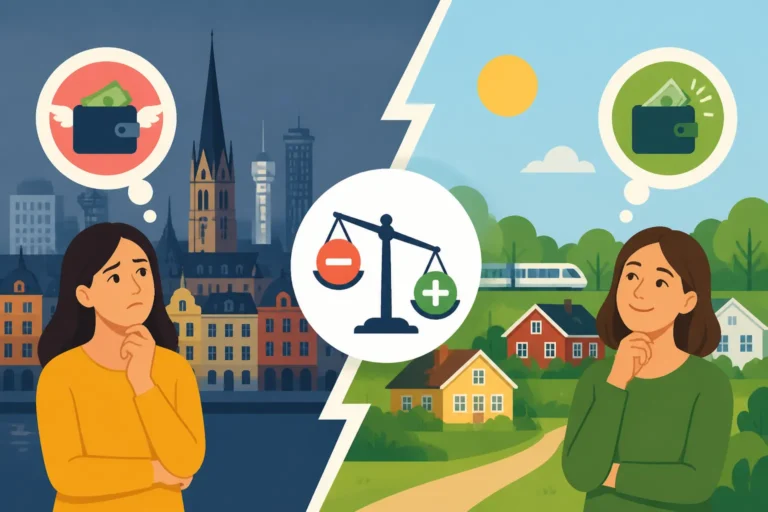
When you're planning a move to Sweden, the cost of living is always a huge consideration. While Sweden generally has a reputation for being expensive, especially compared to many other European countries, there are nuances between its major cities. Gothenburg and Malmö, while not 'cheap,' often present a more manageable financial landscape than Stockholm.
Everyday Expenses: Groceries, Transport, and Utilities
Let's talk about the daily grind. Groceries in both Gothenburg and Malmö are fairly similar in price, influenced by the major supermarket chains like ICA, Coop, and Willys. You might find a slight edge in Malmö due to its proximity to Denmark and Germany, where some residents might venture for larger, cheaper hauls, especially for specific items. But for your regular weekly shop, expect comparable prices in both cities.
Public transport is excellent in both cities, though managed by different regional bodies. In Gothenburg, it's Västtrafik, offering extensive tram and bus networks that make getting around incredibly easy. In Malmö, Skånetrafiken runs the buses and regional trains. Both systems rely heavily on digital ticketing via apps, which can be a bit of a scramble when you first arrive. Having reliable mobile network access is key for this, and an eSIM from providers like Airalo can ensure you're connected from the moment you land, letting you download the relevant public transport apps and navigate easily. You can find more details in Public Transport in Sweden: SL, Regional Cards, and Apps.
Utilities, including heating, electricity, and internet, follow similar pricing structures across Sweden, although individual consumption and contract choices will dictate your final bill. Expect electricity prices to spike during the colder winter months. Internet services are usually robust and reasonably priced, with numerous providers competing.
Housing Costs: Rent vs. Purchase
This is where the biggest differences often emerge when comparing cities. While both Gothenburg and Malmö are more affordable than Stockholm, Gothenburg generally sits in the middle, with Malmö offering the most approachable housing costs among the three.
Here's a rough comparison of average prices to give you an idea. Keep in mind these are averages and can vary wildly based on specific location, condition, and time of year.
| Category | Gothenburg (Central) | Gothenburg (Non-Central) | Malmö (Central) | Malmö (Non-Central) |
|---|---|---|---|---|
| 1-bedroom Rent | 10,000-15,000 SEK | 7,000-11,000 SEK | 9,000-13,000 SEK | 6,000-9,000 SEK |
| Bostadsrätt Price/sqm | 50,000-80,000 SEK | 35,000-55,000 SEK | 40,000-70,000 SEK | 30,000-45,000 SEK |
Note: Prices are approximate monthly rent in SEK for a 1-bedroom apartment and purchase price per square meter for a bostadsrätt. These figures are illustrative and subject to market fluctuations.
As you can see, both rental and purchase prices tend to be lower in Malmö, especially outside the most sought-after central districts. This can free up a significant portion of your budget for other aspects of life.
Leisure and Lifestyle Costs
Swedish lifestyle involves enjoying the outdoors, socializing, and the ubiquitous "fika." The cost of leisure activities in Gothenburg and Malmö is generally comparable, and often slightly less than in Stockholm. Eating out in a mid-range restaurant might cost you anywhere from 150-300 SEK for a main course. A coffee and a pastry for fika could set you back 60-100 SEK.
Entertainment, like cinema tickets or concert venues, will be similar. Gym memberships are also fairly standard across the country, typically ranging from 300-600 SEK per month depending on the facility and services offered. Both cities offer a fantastic range of free or low-cost cultural activities, from wandering through historical districts to enjoying public art or exploring parks, making a fulfilling lifestyle accessible even on a tighter budget.
Navigating Public Services and Integration
Moving to any new country is a bureaucratic journey, and Sweden is no exception. While the systems are generally efficient once you're in them, the initial setup can feel like a maze. Knowing what to expect in Gothenburg and Malmö can make a world of difference.
Getting Set Up: Personnummer, Banks, and ID Cards
Regardless of whether you choose Gothenburg or Malmö, your first and most crucial step in truly settling in is getting your Personnummer, the Swedish personal identity number. This nine- or ten-digit number is your gateway to almost everything in Sweden: healthcare, bank accounts, employment, and various public services. Without it, you’re essentially operating on the fringes, and it can be a source of immense frustration. You can read more about this in Getting Your Personnummer: The Gateway to Swedish Healthcare.
Once you have your Personnummer and a valid residence permit, opening a Swedish bank account becomes a much smoother process. While some banks might allow you to open a basic account with a coordination number or even just your passport initially, full access to essential digital services like BankID usually requires the Personnummer. Our guide Opening a Bank Account in Sweden: A Step-by-Step Guide walks you through it. With your Personnummer and bank account in place, you'll then want to apply for a Swedish ID card at Skatteverket, which serves as your primary form of identification for everyday transactions, online services, and pretty much everything else.
Healthcare Access in Each Region
Sweden's public healthcare system is regionally administered, meaning that while the overarching principles are the same, there can be slight variations in how services are managed and accessed between Västra Götaland Region (Gothenburg) and Region Skåne (Malmö).
Your first point of contact for non-emergency medical care in either city will be your local vårdcentral (health center). It’s crucial to register with one as soon as you have your Personnummer, as this is how you get a family doctor assigned to you. Both regions operate under the 1177 Vårdguiden system, which is your national portal for health advice, finding local clinics, and booking appointments online using your BankID. You can learn more about this in Registering with a Vårdcentral: Your Guide to Primary Care in Sweden.
While the care you receive will be of high quality in both regions, wait times for specialist appointments can vary. Familiarize yourself with the system, especially how the referral (remiss) process works if you need to see a specialist, as covered in How the Referral (Remiss) System Works for Seeing a Specialist in Sweden. Rest assured, emergency care is standardized across Sweden, accessible by calling 112, regardless of which city you call home.
Language and Social Integration
A common concern for newcomers is the language barrier. In both Gothenburg and Malmö, particularly within international companies and younger demographics, English proficiency is exceptionally high. You can absolutely get by in your day-to-day life using English. However, to truly integrate, understand the culture, and unlock more job opportunities, learning Swedish is highly recommended. Both cities offer free Swedish for Immigrants (SFI) courses, a fantastic resource to get you started, as outlined in Learning Swedish: SFI, Courses, and Language Paths for Newcomers.
Social integration can be a journey. Swedes are often perceived as reserved, and it can take time to break into established social circles. However, both Gothenburg and Malmö have active expat communities that organize meetups and events, providing a vital support network for newcomers. Joining clubs, sports teams, or interest groups (whether for hiking, board games, or knitting) is an excellent way to meet locals and fellow expats with shared interests. Embrace the fika culture – taking regular coffee breaks with colleagues or friends is a cornerstone of Swedish social life and a perfect way to build connections. While it might take a bit of effort, the open and welcoming nature of both cities, especially Malmö with its diverse population, often makes the integration process a rewarding one.
Disclaimer
The information provided in this guide is intended for general informational purposes only and does not constitute professional advice. While we strive to ensure accuracy, regulations and local practices in Sweden can change. Always consult official government sources, legal professionals, or relevant authorities for the most up-to-date and specific information pertaining to your individual situation.