Do I Need to Prove Income as an EU Citizen in Sweden?
Ah, the joys of moving to Sweden as an EU citizen! Many people assume that with the free movement of people, you can just waltz in, declare yourself a resident, and everything falls into place. While it's certainly easier than for non-EU citizens, it's not entirely without its hurdles, especially when it comes to proving you can support yourself. This guide will cut through the common misconceptions and clearly outline when and why your income or financial means might become a central topic during your move to Sweden.
The Foundation: Understanding Your Right of Residence as an EU Citizen
Let's clear the air right from the start. As an EU/EEA citizen, you generally have what's called a "right of residence" (or uppehållsrätt in Swedish) in Sweden. This means you don't need a specific residence permit in the same way someone from outside the EU would. For the first three months, you can simply be here, no questions asked. Think of it as an extended holiday or a job-seeking period.
However, if you plan to stay longer than three months, your right of residence needs to be based on one of several defined grounds. This is where your financial situation, or rather, your purpose for being in Sweden, becomes important. It's not about Migrationsverket (the Swedish Migration Agency) being nosy about your personal finances for the sake of it, but rather ensuring you won't become an unreasonable burden on the Swedish social welfare system. Sweden is generous, but it's not a free-for-all.
There are five main categories under which an EU/EEA citizen can claim a right of residence for longer than three months:
- Being employed: You work in Sweden.
- Being self-employed: You run your own business here.
- Being a student: You are enrolled in an accredited educational program.
- Having sufficient means: You can support yourself and any family members without needing social assistance.
- Being a family member of someone who meets one of the above criteria.
For most people, the first three categories are straightforward: you have a job, a business, or you're studying. It's the "sufficient means" part, and the broader implication of how Sweden assesses your long-term intentions, where the questions about income truly kick in.
The Nuance of Free Movement
While the principle of free movement is strong, it's not an unqualified right to settle anywhere and automatically access social benefits. The system is designed to facilitate cross-border movement for work, study, or genuine self-sufficiency, not "benefit tourism." This means that for your stay to be considered legal and for you to eventually get fully integrated into the Swedish system (like getting a personnummer), you need to demonstrate that you fit into one of these established categories.
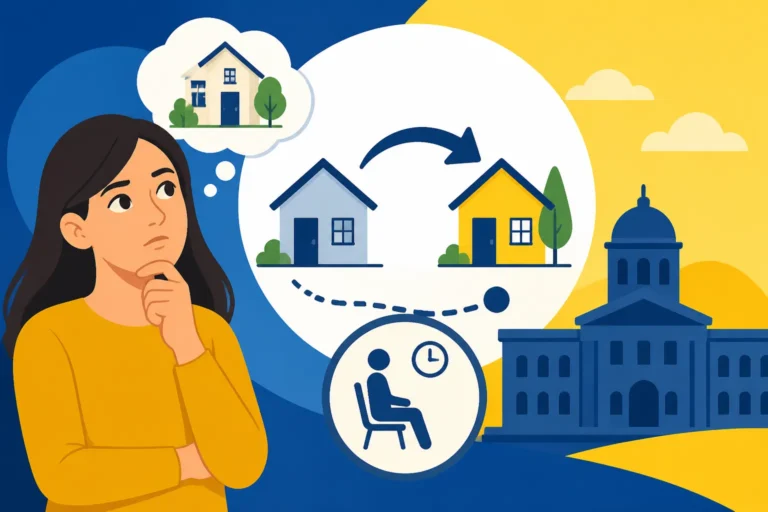
Let's say you've just arrived from Germany, full of dreams, and you're staying with a friend in Malmö. For the first three months, no problem. But after that, if you haven't found a job, aren't studying, and can't prove you have savings to live on, your right of residence could technically lapse. This doesn't mean you'll be deported immediately, but it can complicate your ability to access services, obtain a personnummer, and generally establish yourself here. It's about demonstrating a legitimate reason for your presence that aligns with EU directives.
Registering Your Right of Residence
Historically, EU citizens had to register their right of residence with Migrationsverket if staying longer than three months. However, as of May 1, 2014, this formal registration requirement was abolished. This is a crucial point that often confuses newcomers. You no longer apply to Migrationsverket for a uppehållsrätt. Instead, your right of residence arises automatically when you meet one of the criteria (working, studying, sufficient means, etc.).
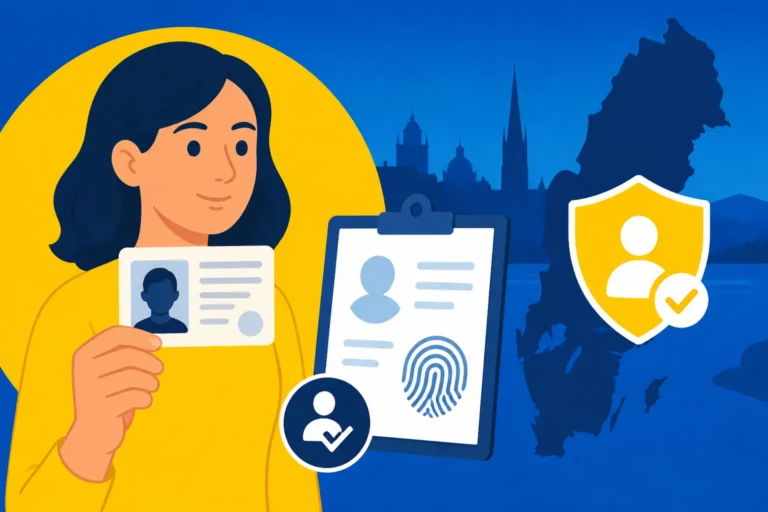
So, if you don't register with Migrationsverket, how does Sweden know you meet the criteria? This is where Skatteverket (the Swedish Tax Agency) comes in. When you apply for a personnummer – that all-important ten-digit personal identity number that unlocks pretty much everything in Sweden, from opening a bank account to accessing healthcare – Skatteverket will assess if you meet the conditions for right of residence. They act as the gatekeepers for your integration into the Swedish administrative system. This means that even if you don't fill out a specific form for Migrationsverket, your financial situation and purpose of stay will be scrutinised by Skatteverket when you try to get your personnummer. For a full breakdown, check out our guide on how EU/EEA Citizens Register Their Right of Residence in Sweden.
When Does Income Proof Come into Play? The "Sufficient Means" Standard
For many EU citizens, proving income or financial means becomes relevant primarily when their right of residence isn't based on employment or full-time study. This typically applies to those who are:
- Pensioners: Living on retirement income.
- Early retirees or those with significant savings: Not working, but financially independent.
- Job seekers (after the initial three months): While you have a right to seek work, if you haven't found it, you'll need to show you can support yourself.
- Family members of an EU citizen who doesn't have a job or student status (e.g., a spouse of a pensioner).
In these scenarios, Skatteverket needs assurance that you won't become a burden on the social welfare system. This is what's known as the "sufficient means" (or tillräckliga medel) requirement.
Defining "Sufficient Means"
The term "sufficient means" isn't an arbitrary number plucked from thin air. It's generally defined as income or assets that are above the level of social assistance (socialbidrag) that you would otherwise be entitled to. The exact amounts can change yearly and also depend on your household composition (single, couple, with children).
To give you a realistic idea, as of my last check, the Swedish National Board of Health and Welfare (Socialstyrelsen) sets norms for "reasonable living costs" (riksnormen) that are used as a benchmark for social assistance. For a single adult, this might be around SEK 5,000-6,000 per month after housing costs are paid. This means your income or assets need to comfortably exceed this to be considered "sufficient means." You'll also need to factor in your actual housing costs, which in cities like Stockholm or Gothenburg can be substantial.
What kind of income counts?
- Pension payments from your home country or Sweden.
- Rental income from properties.
- Investment income or dividends.
- Savings in bank accounts.
- A scholarship (if not a student permit, but demonstrating general self-sufficiency).
It's vital that these funds are readily accessible and stable. They don't want to see a one-time lump sum that you might burn through quickly.
| Category of EU Citizen | Income/Means Proof Required? | What to Provide (Examples) | Key Swedish Authority |
|---|---|---|---|
| Employed | Generally No | Employment contract, payslips (for personnummer) | Skatteverket |
| Self-Employed | Yes, for personnummer | Business registration, invoices, business plan, bank statements | Skatteverket |
| Student | Yes, for personnummer | Admission letter, proof of funds (e.g., bank statement, CSN approval, scholarship) | Skatteverket |
| Pensioner | Yes | Pension statements, bank statements showing regular pension income | Skatteverket, Försäkringskassan |
| Sufficient Means | Yes | Bank statements, investment portfolio statements, proof of assets/income (needs to be above social assistance level) | Skatteverket, Försäkringskassan |
| Family Member | Depends on primary EU citizen | Proof of relationship, primary EU citizen's status/means | Skatteverket |
Note: This table provides general guidance. Specific situations may vary, and Skatteverket makes the final assessment.
Proving Your Financial Independence
When you visit Skatteverket to apply for your personnummer, if you're not employed or studying, you'll need to bring documentation to prove your sufficient means. This usually includes:
- Bank statements: Showing a consistent balance and/or regular income transfers over a period (e.g., the last 3-6 months). They want to see that the funds aren't just a temporary deposit.
- Pension statements: Official documents from your pension provider in your home country confirming your regular pension payments.
- Investment portfolio statements: Demonstrating substantial assets that can be drawn upon.
- Proof of health insurance: This is a major point for anyone relying on "sufficient means" or for students. You must have comprehensive health insurance that covers you for at least a year, as you won't automatically be covered by Swedish public healthcare until you are registered with a personnummer and Försäkringskassan. If you don't have this, your application for folkbokföring (population registration, which leads to the personnummer) can be rejected.
Many of these documents, especially if from another EU country, will need to be in English or Swedish. If they're in another language, you might need to get them translated by a certified translator. Services like RushTranslate or Translayte can be lifesavers here, ensuring your official documents are correctly understood by the Swedish authorities. Don't underestimate the importance of clear, certified translations; a misunderstanding can lead to significant delays.
Navigating the Bureaucracy: Skatteverket, Försäkringskassan, and Your Financial Status
Even if your right of residence is clear-cut (you have a job!), your financial situation indirectly comes into play when dealing with Skatteverket and Försäkringskassan. These agencies are crucial for integrating into Swedish society.
The Skatteverket Assessment: More Than Just Taxes
When you move to Sweden and intend to live here for a year or more, you must register your move with Skatteverket. This is the application for folkbokföring, which ultimately leads to your personnummer. It's during this process that Skatteverket assesses whether you meet the conditions for right of residence.
If you arrive with an employment contract, proving your income is generally straightforward. Your contract should clearly state your salary, and Skatteverket will use this as evidence of your ability to support yourself. They also want to see that your employment is actual and ongoing, not just a promise. For details on getting this vital number, see our guide on Getting Your Personnummer: The Gateway to Swedish Healthcare.
For students, an acceptance letter from a Swedish university and proof of financial support (e.g., a student loan, scholarship, or bank statement showing sufficient funds for your studies and living costs) will be required. The amount required for students is typically set by Migrationsverket guidelines and should be publicly available on their website – make sure to check the latest figures!
What often trips people up is the interpretation of "intent to reside for a year or more." Even if you have a one-year work contract, Skatteverket generally accepts this as intent for long-term residence. However, if your contract is shorter, or if you're a job seeker without a firm offer, the sufficient means requirement becomes more pronounced.
Försäkringskassan: Social Security and Your Income
Once you have your personnummer, your next stop is often Försäkringskassan, the Swedish Social Insurance Agency. This is where you register for social security benefits, including public healthcare and other family benefits. For more information, check out Registering with Försäkringskassan: When and Why You Need To.
Försäkringskassan also assesses your right to social insurance. Your income status is incredibly important here because many benefits are income-based, or you need to be considered "insured" through work or residence. For EU citizens, simply having a personnummer doesn't automatically mean you're covered for all benefits; your primary status (worker, student, self-sufficient) will determine the extent of your coverage. For instance, if you're a worker, your right to sickness benefits (sjukpenning) and parental leave (föräldrapenning) is typically based on your employment and earnings. If you're here on "sufficient means" and fall ill, your private health insurance is your first line of defense, not necessarily immediate public coverage for everything. This is why comprehensive sickness insurance is a non-negotiable for those not working or studying.
The Interplay of Agencies
The Swedish system is interconnected. Skatteverket validates your right of residence and issues your personnummer. This then allows you to register with Försäkringskassan, which determines your access to social insurance. Your financial situation, whether through employment income, study grants, or private funds, underpins your ability to navigate both. It's not just about proving you have enough money, but about proving you have a legitimate reason to be in Sweden long-term, which is often tied directly to your financial self-sufficiency.
Remember, if you have documents from your home country, such as employment records, pension statements, or educational certificates, and they are not in English or Swedish, using a professional translation service like RushTranslate or Translayte can smooth your application process with both Skatteverket and Försäkringskassan. It shows professionalism and ensures there's no ambiguity about your situation.
What Happens If You Don't Meet the Income Requirements?
This is where reality can sometimes bite for EU citizens who arrive in Sweden without a clear plan or sufficient financial backing. While the EU principle of free movement is strong, it's not a blanket guarantee of welfare support in another member state.
Delays in Obtaining a Personnummer
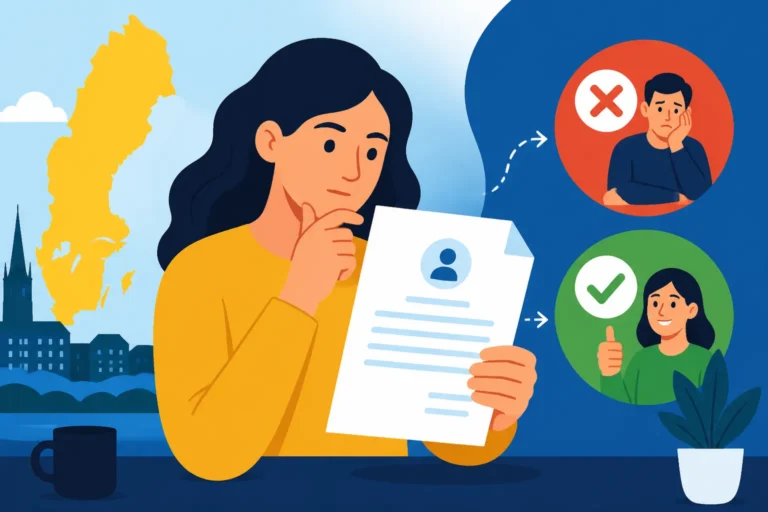
The most immediate consequence of not being able to prove sufficient means, a job, or student status is that Skatteverket can refuse your application for a personnummer. This is a significant hurdle because, as I've mentioned before, the personnummer is your key to almost everything. Without it, you'll struggle to:
- Open a full Swedish bank account (though some options exist for initial setup). You might be able to open a basic payment account, but it won't give you BankID, which is essential for digital living in Sweden.
- Access public healthcare at the standard, subsidised rates. You might still be entitled to urgent care with your EHIC if you haven't transferred your social security rights, but routine care will be complicated and expensive.
- Get a mobile phone contract.
- Sign up for utilities like electricity or internet in your own name.
- Get a Swedish ID card.
- Receive any social benefits, even if you eventually find work.
In short, without a personnummer, your life in Sweden will be perpetually stuck in administrative limbo, making it incredibly difficult to settle.
Health Insurance: A Critical Gap
This is perhaps the most overlooked and potentially catastrophic issue. If you are not working or studying, and cannot demonstrate "sufficient means" to Skatteverket, a key part of your application for a personnummer is often proof of comprehensive private health insurance covering healthcare costs in Sweden.
If you rely solely on your European Health Insurance Card (EHIC), remember it only covers medically necessary care during a temporary stay. Once you express an intention to reside in Sweden for over a year (by applying for a personnummer), your stay is no longer considered temporary. If you can't prove sufficient means and you don't have private comprehensive health insurance, Skatteverket will likely reject your folkbokföring application. This leaves you in a very vulnerable position, without easy access to either Swedish public healthcare or your EHIC for anything beyond emergency care. This is a topic thoroughly covered in our detailed guide on Healthcare in Sweden for Foreign Residents: The Complete System Guide (2027).
No Access to Welfare or Benefits
If you can't establish a right of residence, you won't be able to access social welfare benefits from Försäkringskassan or municipal social assistance. This is the core reason for the "sufficient means" requirement – to prevent individuals from immediately becoming reliant on the host country's social safety net without contributing or having planned for self-sufficiency. You will also find it very hard to access things like Housing Allowance (Bostadsbidrag) for Families and Young Adults in Sweden, or Child Allowance (Barnbidrag) and the Large-Family Supplement in Sweden.
The "No Right of Residence" Scenario
In extreme cases, if an EU citizen fails to establish a right of residence after the initial three months, and cannot demonstrate any of the required grounds for longer-term stay, they can technically be asked to leave the country. While this is rare and not a common outcome for most EU citizens who are actively trying to integrate, it underscores the importance of understanding and meeting the basic requirements. Sweden upholds the principle of free movement but expects individuals to be self-sufficient or contribute to society in one of the defined ways.
The best advice is always to prepare thoroughly. If you're an EU citizen moving to Sweden, make sure you have a clear purpose for your stay – whether it's a job, studies, or demonstrable financial independence. Gather all your necessary documents, get them translated if needed by reputable services like RushTranslate or Translayte, and be ready to present a comprehensive picture of your situation to Skatteverket. Doing so will make your transition infinitely smoother.
Disclaimer
This article is for general informational purposes only and does not constitute professional advice. Laws, prices and regulations vary by location and change over time. Consult a qualified professional for guidance on your specific situation.