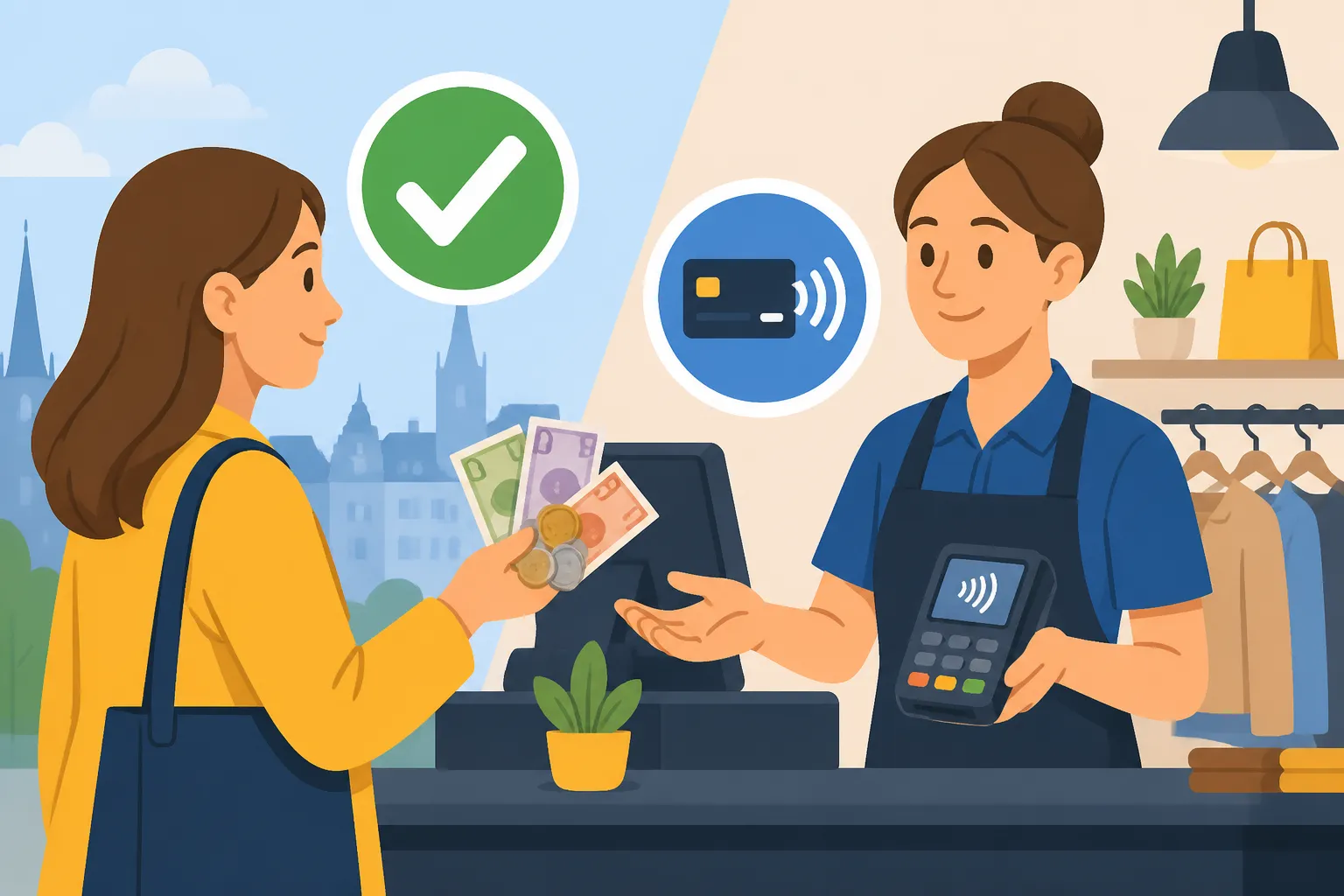
Do Shops in Sweden Still Accept Cash?
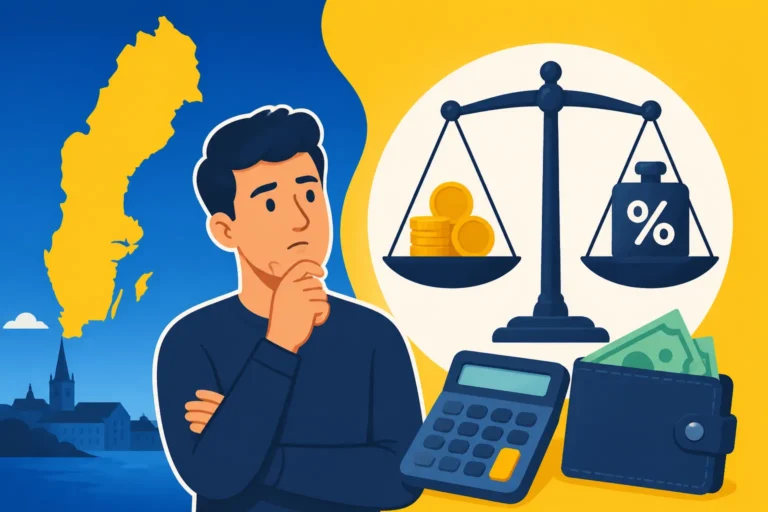
Imagine landing at Arlanda Airport with a pocket full of crisp Swedish Krona notes, only to realize that the very first coffee shop you visit displays a blunt sign stating "Kontantfri" (Cash-free). This guide is designed to solve the immediate confusion and logistical panic that many newcomers feel when they realize their physical money is virtually useless in most urban settings. I will walk you through the practicalities of surviving and thriving in the world's most cashless society.
The Legal Reality of Cash in Sweden
One of the biggest shocks for expats is the discovery that Swedish law actually allows shopkeepers to refuse cash. In many countries, "legal tender" implies a mandatory acceptance of physical currency for all debts and transactions. However, in Sweden, the principle of freedom of contract takes precedence. When a shop displays a sign saying they do not accept cash, they are essentially setting the terms of the contract before you enter into a transaction. If you choose to shop there, you are agreeing to those terms. This is a hurdle that requires a shift in mindset. You are no longer carrying "guaranteed value" in your wallet; you are carrying a nostalgic relic that many modern Swedish point-of-sale systems aren't even equipped to handle anymore.
For those of us who moved here a decade ago, the transition was gradual, but for a new arrival, the wall is high. You might find that even the most basic interactions, such as buying a single apple at a high-end grocery store or paying for a public restroom, require a digital interface. This is why understanding Currency, Cash, and the Krona: Practical Money Tips for Sweden is vital before you even board your flight. The Riksbank (Sweden's Central Bank) still issues physical notes and coins, and technically they are legal tender, but the retail sector has largely won the battle for digital-only environments.
The frustration is real. Imagine standing at a "Pressbyrån" (a common convenience store) trying to buy a bottle of water during a summer heatwave, only to have your 100 SEK note rejected because the clerk doesn't have a till with a cash drawer. It feels exclusionary, and it is. The system assumes you have a bank account and a digital ID. For the veteran expat, the advice is always the same: do not rely on cash for anything other than absolute emergencies or very specific niche markets.
Where Cash Still Has a Tiny Footprint
While the "Card Only" signs are ubiquitous in Stockholm, Gothenburg, and Malmö, cash hasn't vanished entirely from the Swedish landscape. There are still pockets of the economy where physical money is accepted, though these are shrinking every year. Small, independent "Loppis" (flea markets) in the countryside might still take cash, although even these have largely transitioned to Swish. If you are traveling through rural areas in Dalarna or Norrland, you might find an older shopkeeper who appreciates the sight of a 20-krona note.
In the cities, some major grocery chains like ICA or Coop still maintain at least one or two "cash-friendly" checkout lanes. However, these are often automated machines where you feed your notes into a slot rather than handing them to a person. It is a slow, clunky process that usually results in a long line of impatient Swedes behind you. If you find yourself in this situation, it is worth looking into Budgeting for the Real Cost of Living in Sweden to understand how to manage your digital funds more effectively so you can avoid these manual hurdles.
Another area where cash survives is the "Pant" system. When you recycle bottles and cans at a supermarket, the machine gives you a voucher. You can take this voucher to the checkout to get a discount on your groceries, or you can sometimes ask for the value in cash. This is one of the few ways people still interact with physical coins in a meaningful way. Beyond this, you might find that some very traditional barbershops or extremely small "hole-in-the-wall" kiosks still operate with cash, but they are the exception that proves the rule.
The Digital Infrastructure You Actually Need
To survive in Sweden, you don't need a thicker wallet; you need a more robust digital setup. The holy trinity of Swedish life consists of a Personnummer, a BankID, and Swish. Without these, you are effectively locked out of the modern economy. Getting BankID: Sweden's Essential Digital Identity is the most important administrative task you will undertake. Once you have it, you can use Swish, which is the peer-to-peer payment system used by everyone from large retailers to teenagers selling lemonade on the street.
Before you get your local bank account sorted, you will need a bridge. Using a service like Wise is often the smartest move for new arrivals. Wise allows you to hold SEK and spend it using a physical or digital card that is accepted everywhere in Sweden. It saves you from the predatory exchange rates of traditional banks and ensures you aren't stuck at a "Kortbetalning Endast" (Card Payment Only) restaurant with nothing but a 500 SEK note. This helps you bridge the gap during the months it takes to navigate Opening a Bank Account in Sweden: A Step-by-Step Guide.
| Venue Type | Cash Acceptance Level | Recommended Payment Method |
|---|---|---|
| Public Transport (SL, Västtrafik) | Zero / Not Accepted | App or Contactless Card |
| Major Supermarkets (ICA, Coop) | Moderate (Selective Lanes) | Debit Card / Apple Pay |
| Restaurants and Bars | Very Low | Card / Swish |
| Small Boutiques / Cafes | Very Low | Card / Swish |
| Street Markets / Loppis | Low | Swish |
| Governmental Offices | Zero | Invoice or Digital Payment |
The Barriers for New Arrivals and Tourists
The most empathetic perspective we can offer is to acknowledge that the cashless system is incredibly difficult for those who haven't yet received their Swedish personal identity number. If you are waiting on the bureaucracy, you are in a "financial limbo." You cannot get Swish without a bank account, and you often cannot get a full bank account without a Personnummer. This is a major pain point that we veteran expats frequently complain about. It creates a temporary class of residents who are forced to use expensive international cards for every single transaction.
In this phase, you must be strategic. If you are still figuring out How Long It Take to Get a Personnummer After Moving to Sweden, you should rely on international fintech cards. Wise is a lifesaver here because it functions like a local card even if you don't have your Swedish residency fully finalized yet. It avoids the embarrassment of a card being "declined" because the Swedish terminal doesn't like your home country's magnetic stripe or specific security protocol.
Furthermore, tourists often make the mistake of withdrawing thousands of Krona at the airport ATM. This is a costly error. Not only will the exchange rate be poor, but you will spend the rest of your trip trying to find places to spend it. Most museums, like the Vasa Museum or Skansen, have moved to card-only or online booking only. If you do have cash, your best bet is to spend it at larger supermarkets or save it for your next trip to a country that still values paper money.
Understanding the "Avtalsfrihet" Principle
The reason shops can get away with this is the Swedish principle of "Avtalsfrihet" or freedom of contract. In essence, the law says that two parties (the shop and the customer) are free to enter into a contract on whatever terms they like, provided they aren't illegal. By putting a sign on the door that says "No Cash," the shop is making a "take it or leave it" offer. If you walk in and order a coffee, you have implicitly accepted their terms.
This has been challenged in court, particularly regarding essential services. There has been a debate about whether pharmacies or certain government-mandated services should be forced to accept cash to protect the elderly or the technologically marginalized. While there have been some minor wins for cash advocates in the "essential services" sector, the retail and hospitality industries remain firmly digital. When you are deep into Money and Finance in Sweden: A Complete Guide for Foreigners (2027), you begin to see that the cost for a business to handle cash—security, transport, insurance, and manual counting—is simply too high for most Swedish entrepreneurs to justify.
For an expat, this means your relationship with money becomes entirely abstract. You see numbers on a screen rather than bills in a hand. While this is convenient, it can lead to overspending. Without the physical weight of cash, it is easy to lose track of those 45 SEK oat milk lattes. This is why we recommend keeping a close eye on your transactions through your banking app daily.
Practical Tips for Your First Month
During your first few weeks, you will likely be spending a lot of money on furniture, household goods, and initial groceries. If you brought cash from your home country, try to use it up at large "Stormarknad" (hypermarkets) like Willy:s or larger ICA Maxis. These locations are the most likely to still have cash-handling machines. However, do not expect to use cash for your monthly SL (Stockholm Public Transport) pass. You must buy those via the app or a contactless card.
If you are a freelancer or moving for work, you will also need to start thinking about the long-term tax implications of your spending and income. While you are navigating the cashless world, you might also be wondering about The Swedish Tax System Explained: Rates, Returns, and Filing. Services like Taxes for Expats can be incredibly helpful for Americans or other nationals who have complex dual-filing requirements. They understand the nuance of living in a digital economy where every transaction is tracked and how that interacts with your home country's tax obligations.
Another tip: always have a backup card. Because Sweden is so reliant on digital payments, if your primary card has a chip error or if the bank's network goes down, you are essentially stranded. Some people have been unable to buy a train ticket home because their one and only card failed. Carry a backup, perhaps a Wise card and a traditional bank card, to ensure you are never caught out. Also, make sure your phone is always charged. Since your tickets, payments, and ID (BankID) all live on your phone, a dead battery is a much bigger crisis in Sweden than in many other countries.
The Social Stigma of Cash
There is a subtle social dimension to using cash in Sweden that many newcomers don't expect. If you pull out a large 500 SEK note to pay for a small item, you might get a look of suspicion or genuine confusion from a younger cashier. Cash has become associated with two things in the Swedish public consciousness: the elderly and the "black market" (under-the-table work). By using cash, you are inadvertently signaling that you are either a tourist or someone who isn't fully integrated into the digital social contract.
This is Why You Need a Personnummer for Almost Every Financial Service in Sweden is such a recurring topic in expat circles. Integration in Sweden is digital. The faster you can move away from cash, the more "Swedish" your daily life will feel. You will stop being the person holding up the line and start being the person who taps their watch or phone and walks away in seconds. It feels cold at first, but the efficiency is undeniable once you get used to it.
Even "Tipping" is digital. In restaurants, the card terminal will prompt you to enter the total amount or a percentage. There is no "leaving a few coins on the table" culture here. If you want to tip, you do it via the keypad. This transparency is a hallmark of Swedish society. Everything is tracked, everything is documented, and for most residents, that brings a sense of security and trust in the system.
Comparison of Payment Systems for Newcomers
If you are deciding how to set up your finances, consider the following options for your first 90 days:
- International Bank Card: High fees, but works in most terminals. Use only as a last resort.
- Fintech Cards (Wise/Revolut): Excellent for the transition period. Lower fees and better exchange rates for SEK.
- Local Swedish Bank Card: The gold standard. Required for Swish and BankID.
- Cash: Best kept in a drawer for a literal "the power is out" emergency, though even then, many shops wouldn't be able to open their electronic doors or registers.
As you settle in, you will likely find that your physical wallet becomes a place for your Swedish ID card and perhaps a spare gym membership card, while your actual "money" exists entirely within the encrypted confines of your smartphone. It is a brave new world, but once you stop fighting the lack of cash and embrace the digital flow, you’ll find it’s one less thing to worry about in your new Swedish life.
Important Financial Disclaimer
The information provided in this guide is for informational purposes only and does not constitute professional financial, legal, or tax advice. While we strive to keep the data up-to-date, Swedish regulations and banking policies can change rapidly. Always consult with a qualified professional, such as Taxes for Expats, for specific advice regarding your individual financial situation and tax liabilities when moving abroad. Be aware that the acceptance of cash is at the discretion of individual businesses under Swedish contract law.