Is There a Digital Nomad or Remote-Work Visa for Sweden?
I hear you. The dream of setting up your laptop in a cozy Swedish cafe, surrounded by design and nature, seems almost too perfect, doesn't it? Many of us expats, myself included, have pictured that exact scenario. However, the reality of getting legally settled in Sweden as a digital nomad isn't quite as straightforward as it is in some other European countries. This guide will walk you through the current situation regarding remote work visas in Sweden and explore the legitimate paths available for those dreaming of a long-term stay.
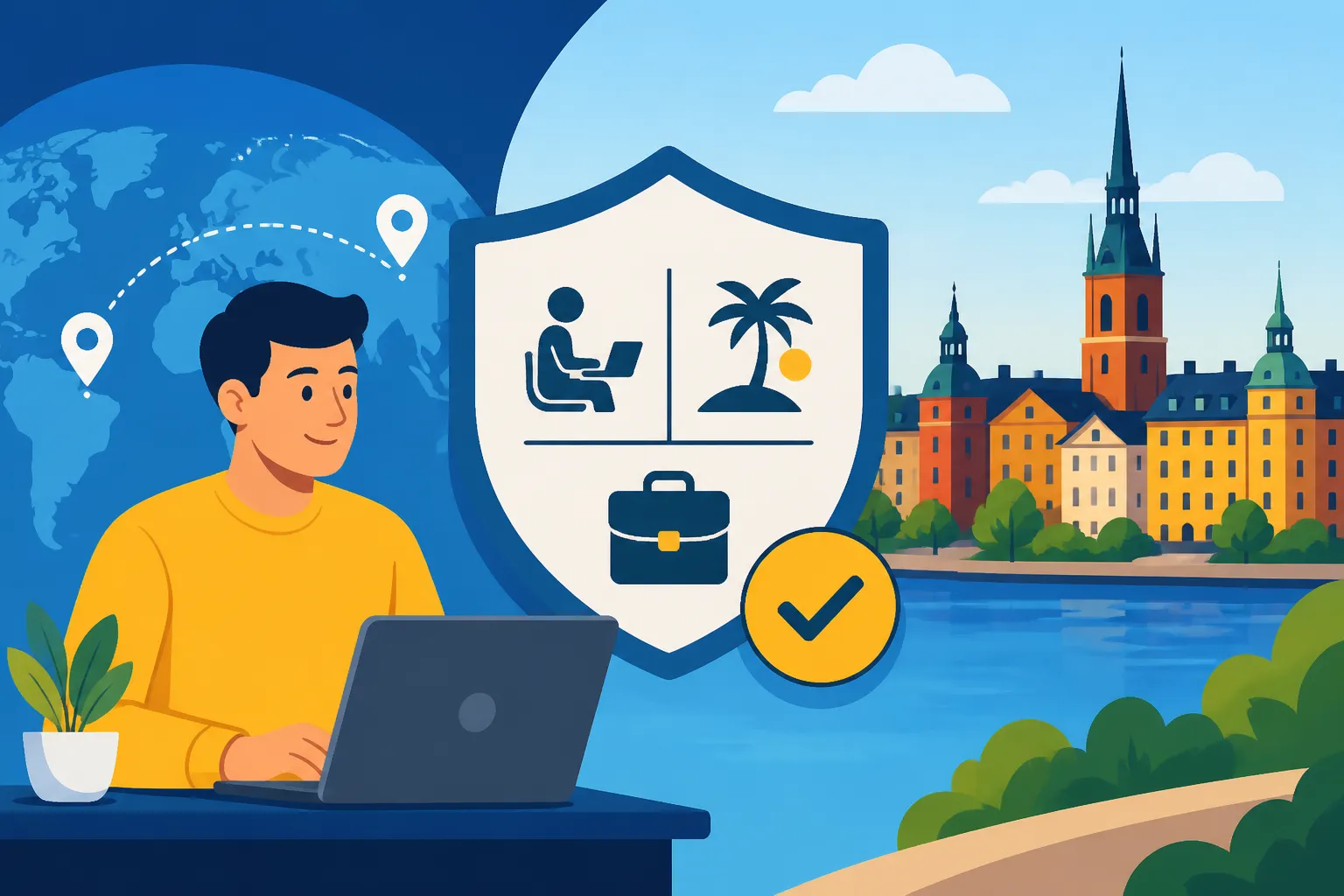
The Reality: No Dedicated Digital Nomad Visa (Yet!) in Sweden
Let's cut right to it, because it's better to know upfront: as of early 2026, Sweden does not have a specific, dedicated digital nomad or remote-work visa. I know, it's a bit of a bummer, especially when you see countries like Portugal, Spain, or even Estonia actively courting remote workers with tailored visa programs. Sweden, with its progressive social systems and high quality of life, seems like a natural fit for the digital nomad lifestyle, so this often comes as a surprise and a source of considerable frustration for many.
Sweden's immigration policies have historically been geared towards clear-cut categories: those coming to work for a specific Swedish employer, those studying at a university, those reuniting with family, or those establishing a genuine business with a clear local connection. The idea of someone living in Sweden long-term while solely working for a foreign company, without paying Swedish income taxes or contributing to the social system in the traditional sense from the start, simply doesn't align with their established framework for residency. This isn't to say it's impossible to work remotely from Sweden, but rather that you need to qualify for one of the existing residence permit categories first. It's a key distinction that can trip up many aspiring expats.
Why Sweden Lacks a Specific Remote Work Visa
The primary reason Sweden hasn't jumped on the digital nomad visa bandwagon largely boils down to its well-established and, frankly, quite rigid immigration philosophy. The Swedish system is deeply rooted in the concept of social welfare and collective contribution. When you become a resident, the expectation is that you integrate into society and contribute to the tax-funded systems that everyone benefits from – be it healthcare, education, or infrastructure.
Traditionally, this contribution has been clearly defined through employment by a Swedish company, self-employment generating revenue within Sweden, or full-time study. A digital nomad working for a company based entirely outside of Sweden, particularly if they were to pay taxes only to their home country, doesn't easily fit into this model. There's no clear mechanism for how their economic presence would directly benefit the Swedish system in a way that warrants a long-term residence permit based solely on remote work for a foreign entity.
Moreover, Sweden's immigration agency, Migrationsverket, operates on very specific legal grounds. Creating a new visa category requires legislative changes, which can be a slow and complex process. While the government might be aware of the rise of remote work, adapting the entire legal framework to accommodate this relatively new way of living and working isn't something that happens overnight in a country known for its methodical approach to policy. So, while the landscape might change in the future, for now, we operate within the existing rules, and that means finding an alternative route.
Common Misconceptions and What Doesn't Work
Before we dive into the possible solutions, let's clear up some common misunderstandings that can lead to disappointment or, worse, legal trouble. Far too many people arrive with good intentions, only to find themselves in a bind because they didn't fully grasp Sweden's immigration rules.
The Schengen Tourist Visa and Remote Work
This is probably the biggest misconception out there. Many non-EU citizens can enter Sweden (and the rest of the Schengen Area) without a visa for up to 90 days within any 180-day period for tourism. The thought process often goes: "If I'm just sitting at my laptop, not interacting with the Swedish economy beyond buying groceries, isn't that just an extended holiday?"
The simple, clear answer is: No, it is not. Engaging in any form of work, even remote work for a foreign employer, while on a Schengen tourist visa or under the visa-waiver program, is generally not permitted. The purpose of a tourist visa is strictly for tourism, visiting family, or short business meetings (not performing work). If you are working and earning income, you are engaging in economic activity, which requires a residence permit.
Let me give you a hypothetical. Imagine you arrive in Stockholm, loving the city. You set up your workstation, happily coding or writing for your US-based company. You might think you're flying under the radar. But what if, for some reason, you need to extend your stay, or you're randomly questioned at the border on a future trip, and they discover you were working? You could face serious consequences, including future entry bans to the Schengen Area. It's simply not worth the risk. If you intend to work and live in Sweden for more than 90 days, you must apply for a residence permit from outside the country (in most cases) and have it approved before you arrive.
Misunderstanding "Working from Anywhere"
The phrase "working from anywhere" is fantastic for companies that embrace remote work, offering their employees flexibility. However, it's crucial to understand that "anywhere" refers to your employer's policy and technical capabilities, not your immigration and tax obligations in a foreign country.
Your company might allow you to work from Bali, Berlin, or Buenos Aires, but each country has its own set of laws regarding who can reside and work within its borders. Just because your boss says it's fine for you to work remotely doesn't mean the Swedish government agrees to host you as a resident if you don't fit into one of their existing permit categories. You, as the individual, are responsible for ensuring you have the legal right to live and work in the country you choose. This often involves navigating complex tax residency rules and social security agreements between countries, which can be a headache even for those with legitimate permits.
Alternative Paths for Remote Workers and Digital Nomads in Sweden
Okay, so there's no magic "digital nomad" visa. But don't despair entirely! Many remote workers do successfully move to Sweden, just not via a direct digital nomad route. They typically leverage existing residence permit categories. Here are the most realistic pathways, often requiring some strategic planning.
Work Permit Through a Swedish Employer
This is, by far, the most common and straightforward path for non-EU citizens to live and work in Sweden, even if that work ends up being remote within Sweden. The core requirement here is that you need a job offer from a Swedish-based company.
How it works:
- Secure a Job Offer: You apply for and get a job offer from an employer registered in Sweden. This employer will be your sponsor for the work permit. Many companies, especially in tech hubs like Stockholm, Gothenburg, and Malmö, are used to hiring international talent and sponsoring permits. You can find many of these roles advertised on platforms like LinkedIn or through the official job board of Arbetsförmedlingen. Finding a job in Sweden: Where to Look and How to Apply can provide more insights here.
- Employer Initiates Application: Your future employer initiates the work permit application through Migrationsverket's online portal. They provide details of your employment, salary, and terms.
- Union Consultation: In many cases, a relevant Swedish trade union must be consulted to ensure your terms of employment meet Swedish collective agreements.
- Your Role in the Application: You, as the applicant, then log in to complete your part, uploading necessary documents like passport copies, educational qualifications, and sometimes even proof of previous work experience. You’ll need to apply for a Swedish Residence Permit from Abroad and often attend a biometrics appointment at a Swedish embassy or consulate in your home country.
- Remote Work Within Sweden: Once you have your work permit and arrive in Sweden, if your job is one that can be performed remotely, then you are legally allowed to do so from within Sweden. The key is that your employer is Swedish, and you are contributing to the Swedish tax system.
The requirements for a work permit are quite strict, including a specific salary threshold that must be met (and this threshold has been updated recently, so make sure to check the latest figures for 2026). You can find more comprehensive details on the requirements in this guide: Work Permits in Sweden: Categories, Salary Rules, and How to Apply. While this isn't a "digital nomad" visa in the purist sense (where you work for any foreign company), it's the most reliable way for a skilled remote worker to gain legal residency in Sweden.
Self-Employment / Entrepreneur Visa
This route is probably the closest Sweden gets to a "digital nomad" concept, but it's specifically for those who intend to start and run a business in Sweden. It's not for "just working on your laptop for a foreign client" without establishing a presence here. Migrationsverket is very particular about this.
To qualify for a self-employment residence permit, you need to prove several things:
- Solid Business Plan: You must have a credible business plan that demonstrates a viable business concept, showing how your business will contribute to the Swedish economy. This often means providing market analysis, financial projections, and details of how you will operate.
- Relevant Experience: You need to show that you have significant and relevant experience in your field and as an entrepreneur. This includes documentation of your past business ventures, education, and any professional qualifications.
- Financial Viability: This is critical. You must be able to demonstrate that you have sufficient funds to support yourself and any accompanying family members for at least two years. This is usually around SEK 200,000 for yourself, plus additional funds for each family member. You also need to show how your business will generate enough income to sustain you in the long term.
- Clear Value to Sweden: Your business should have a clear benefit for Sweden, either through creating jobs, bringing new technology, or filling a market gap.
This permit is often challenging to get because the bar is high. It's not just about being able to work remotely; it's about being an entrepreneur who is actively building a business in Sweden. Migrationsverket wants to see that your business has a genuine chance of success and will not be a drain on public resources. For a deep dive into this path, check out Self-Employment in Sweden: Starting a Business and Getting F-skatt.
When preparing your application, especially your business plan, you'll likely need to get various documents officially translated into Swedish or English. Things like company registrations from your home country, financial statements, or even educational certificates might require certified translation. Services like RushTranslate or Translayte can be invaluable here, ensuring your documents are accurately and professionally translated to meet Migrationsverket's strict requirements.
Student Visa (Combined with Studies)
While not a direct remote work permit, a student visa offers a legitimate pathway to reside in Sweden for an extended period, during which you are generally allowed to work part-time. If your remote work is flexible and doesn't require full-time hours, this could be an option if you're also genuinely interested in pursuing higher education in Sweden.
Key points:
- Enrollment: You must be accepted into a full-time university program in Sweden.
- Financial Means: You need to prove you can support yourself financially throughout your studies.
- Work Allowance: International students on a residence permit for studies are permitted to work without restriction on hours (there used to be a limit, but this has been removed). This means you could potentially continue your remote work for a foreign employer, as long as it doesn't interfere with your studies and you declare your income correctly to Skatteverket.
This route works best for those who genuinely want to study and view their remote work as a way to supplement their income, rather than their sole purpose for being in Sweden. You can learn more about this in Studying in Sweden: A Complete Guide for International Students (2027) and Working While Studying in Sweden: What International Students Can Do.
Family Reunification
This is another indirect route, but a very common one. If you have a spouse, registered partner (sambo), or close family member who is a Swedish citizen or has a permanent residence permit in Sweden, you can apply for a residence permit based on family ties.
Once you have this permit and are registered in the Swedish population register (folkbokförd), you will generally have the right to work in Sweden, and this includes working remotely for a foreign company. The main focus of this application is the relationship itself and the ability of your family member in Sweden to support you.
You can dive deeper into the requirements for this path in Family Reunification in Sweden: Bringing Your Loved Ones and Moving to Sweden as a Sambo or Spouse: The Rules. This is a robust pathway for many, but obviously, it requires a pre-existing connection to someone already living legally in Sweden.
Important Considerations Once You Have a Permit
So, let's say you've successfully navigated one of the above paths and secured a residence permit. Congratulations! But your journey doesn't end there. Living and working remotely from Sweden, even with a valid permit, brings a new set of administrative and financial considerations that you absolutely need to understand.
Tax Residency and Social Security
This is where things can get complex, and it's vital to get it right. Once you move to Sweden with a residence permit and are registered in the population register (folkbokförd), you generally become a Swedish tax resident. This means that Sweden has the right to tax your worldwide income, regardless of where your employer is based.
- Income Tax: Even if your remote employer is paying you in another currency into an overseas account, you will likely need to declare this income to the Swedish Tax Agency (Skatteverket) and pay Swedish income tax on it. Sweden has a progressive tax system, with municipal and sometimes state taxes. For a detailed breakdown, see The Swedish Tax System Explained: Rates, Returns, and Filing.
- Social Security Contributions: As a tax resident, you'll also typically be subject to Swedish social security contributions. These cover things like public healthcare, pensions, and parental benefits. If your foreign employer doesn't have a Swedish presence, managing these contributions (e.g., paying self-employment contributions or arranging a "simplified employer" registration if possible) can be a bit of a bureaucratic hurdle.
- Personnummer: Getting your Personnummer: The Gateway to Swedish Healthcare and other essential services is paramount. Without it, you're essentially invisible to the system. You’ll need it for opening a bank account, setting up utilities, and accessing most public services.
- Double Taxation Agreements: Sweden has double taxation agreements with many countries. These agreements are designed to prevent you from being taxed twice on the same income (once in your home country, once in Sweden). However, how these agreements apply to remote work for a foreign company can be nuanced and might require consultation with a tax professional experienced in international taxation.
Healthcare and Insurance
Once you are registered in the Swedish population register (folkbokförd) and have a Personnummer, you generally gain access to Sweden's public healthcare system, which is largely tax-funded. This is a huge benefit, providing comprehensive medical care at a very low cost. However, there can be a waiting period before you are fully integrated, and specific permit types might have initial health insurance requirements.
- Public Healthcare Access: You'll register with a local vårdcentral (health centre) and pay standard patient fees, which are subject to the högkostnadsskydd (high-cost ceiling). You can find more details in Healthcare in Sweden for Foreign Residents: The Complete System Guide (2027).
- Initial Insurance Needs: For some residence permits, especially if you're awaiting your Personnummer or if your permit is for a shorter duration (like some student permits), you might need to show proof of comprehensive private health insurance. Even if not strictly required, many expats opt for private health insurance in Sweden: When Sjukvårdsförsäkring Is Worth It, for peace of mind or faster access to certain specialist care.
Document Translation for Applications
Throughout any application process with Migrationsverket, Skatteverket, or other Swedish authorities, you'll inevitably encounter situations where your original documents are not in Swedish or English. This is where certified translations become indispensable.
For example, if you're applying for a self-employment permit, your university degree, professional licenses, or bank statements from your home country might need to be translated. Similarly, for family reunification, birth certificates, marriage certificates, or divorce decrees often require translation. It's not enough to just translate them yourself or use an online tool; they usually need to be "certified" translations, meaning they've been done by a professional translator whose qualifications are recognized by the authorities. This is a crucial step to ensure your application isn't delayed or rejected. Reputable services like RushTranslate or Translayte specialize in certified translations and can handle a wide range of documents, giving you peace of mind that your papers meet the official standards.
Here's a quick comparison of the realistic pathways for remote workers:
| Permit Type | Primary Purpose | Remote Work for Foreign Employer? | Requirements Highlight | Key Benefit | Downside |
|---|---|---|---|---|---|
| Work Permit | Employment with Swedish company | Yes, if the Swedish employer allows remote work. | Swedish job offer, salary threshold, union approval. | Most straightforward for employment. | Requires finding a Swedish employer. |
| Self-Employment Permit | Starting a business in Sweden | Yes, if your business generates income in Sweden. | Solid business plan, proven experience, financial means. | Full entrepreneurial freedom. | High bar for approval, not for "casual" remote work. |
| Student Residence Permit | Full-time study in Sweden | Yes, part-time allowed alongside studies. | University acceptance, financial proof for studies. | Gain education, part-time work rights. | Must be genuinely enrolled in full-time studies. |
| Family Reunification Permit | Joining family member in Sweden | Yes, full work rights once granted. | Proof of relationship, sponsor's financial/housing. | Gain full residency rights through family. | Requires a qualifying family member in Sweden. |
| Schengen Tourist Visa | Tourism, short visits | NO – STRICTLY NOT ALLOWED. | Passport, travel itinerary. | Short-term travel flexibility. | Illegal for work, high risk of future entry bans. |
Looking Ahead: Could Sweden Introduce a Digital Nomad Visa?
Given the global trend and the clear interest from many remote workers, it's not entirely out of the question that Sweden could eventually introduce a dedicated digital nomad visa. Countries across Europe and beyond are recognizing the economic benefits that remote workers can bring, from stimulating local economies to diversifying talent pools.
However, as discussed, Sweden tends to be methodical and careful with its legislative changes. Any new visa category would likely involve extensive debate, careful consideration of its impact on the social welfare system, and how it would integrate with existing tax and social security frameworks. It's not just about letting people in, but about how they fit into the comprehensive Swedish model.
So, while there's no official talk or imminent plans for such a visa as of now, the landscape of work and migration is constantly evolving. Keep an eye on official channels like Migrationsverket's website and government announcements. But for the immediate future, relying on existing, proven pathways is your most secure bet.
Final Thoughts and Navigating the Swedish System
Moving to Sweden, regardless of your visa pathway, requires patience, meticulous preparation, and a thick skin for bureaucracy. It's a country that values order and adherence to rules, and that's reflected in its immigration system. While the absence of a dedicated digital nomad visa might initially feel like a roadblock, don't let it completely deter you if your heart is set on Sweden.
By understanding the existing options, being realistic about the requirements, and diligently preparing your application, you can absolutely make Sweden your remote work base. It might mean a more traditional approach – finding a job with a Swedish company, or truly committing to starting a business here – but the rewards of living in such a beautiful, well-functioning, and family-friendly country are immense. Do your homework, get your documents in order (and translated professionally!), and approach the process with a pragmatic mindset. Lycka till!
Disclaimer
The information provided in this guide is intended for general informational purposes only and does not constitute legal or immigration advice. Immigration laws and policies in Sweden are subject to change. It is crucial to consult with the official government sources, such as Migrationsverket (Swedish Migration Agency) and Skatteverket (Swedish Tax Agency), or seek professional legal advice for your specific situation. We cannot be held responsible for any decisions made based on this information.