How Long Do Appeals Take at the Migration Court in Sweden?
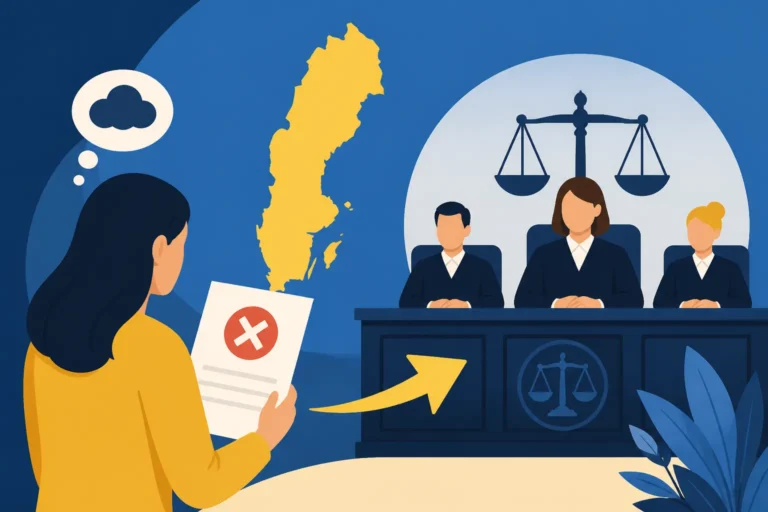
Alright, let's talk about something that can bring even the most stoic expat to their knees: the immigration appeal process in Sweden. Getting a negative decision from Migrationsverket is a punch to the gut, and the thought of appealing to a court often brings on a whole new wave of anxiety. You're left wondering, "How long will this take? Will I ever get a clear answer?" It's a valid and deeply frustrating question, and believe me, you're not alone in feeling utterly lost. This guide is here to help you understand the realities of how long appeals take at the Migration Court in Sweden, what factors influence these timelines, and how you can best prepare for the journey ahead.
Understanding the Appeal Process in Sweden's Migration Court System
When Migrationsverket, the Swedish Migration Agency, makes a decision that doesn't go your way, it can feel like the end of the road. But in many cases, it's not. You have a legal right to appeal certain decisions, which means your case can be reviewed by an independent court. This is where the Migration Courts come into play, forming a vital part of the Swedish legal system for foreigners.
The Initial Refusal and Your Right to Appeal
So, you've received that dreaded letter – the one stating your application for a residence permit, work permit, or even citizenship has been refused. It's a heavy blow, no doubt about it. The first thing you need to do is not panic, but to carefully read the decision. It will explicitly state your right to appeal, the deadline for doing so, and which court you need to address your appeal to. Typically, this will be one of the four Migration Courts (Migrationsdomstolen) in Sweden, which are district courts with specialisation in migration cases. These are usually located in Stockholm, Gothenburg, Malmö, or Umeå, and which one handles your case depends on where your initial application was processed or your last registered address.
This initial refusal often comes with a detailed reasoning for why your application was denied. It's crucial to understand these reasons because your appeal will need to directly address them, providing new information, clarifications, or legal arguments. If you're feeling overwhelmed at this stage, remember that many people have walked this path before you. Getting your head around the initial refusal is the first step towards a successful appeal.
Filing Your Appeal: How and Where
Once you’ve decided to appeal, you need to act within the specified timeframe, usually three weeks from the day you received the decision. The appeal itself isn't sent directly to the Migration Court. Instead, you submit your written appeal to Migrationsverket first. Yes, the very agency that just denied you! This is because Migrationsverket has a chance to reconsider its decision. If they find reason to change it, great! Your appeal stops there. However, this rarely happens, and in most cases, they will forward your appeal to the appropriate Migration Court for review.
Your appeal document should be comprehensive. It needs to clearly state which decision you are appealing, why you believe it should be changed, and any new evidence or arguments you want to present. Crucially, all documents that are not in Swedish or English often need to be translated. This is where professional services like RushTranslate or Translayte become invaluable, as the court requires official, certified translations to ensure clarity and accuracy in your submission. Providing poorly translated or untranslated documents can severely hamper your case and lead to unnecessary delays.
The Role of the Migration Court
Once Migrationsverket forwards your appeal, it lands on the desk of a Migration Court. These courts are essentially the first judicial instance for migration cases. They are independent of Migrationsverket and will conduct a full review of your case, considering all the evidence and arguments presented by both you and Migrationsverket. A judge, sometimes assisted by lay assessors, will examine whether the agency followed the law correctly, whether all relevant circumstances were considered, and if their decision was justified.
It's not just a rubber stamp; the court can overturn Migrationsverket’s decision, send the case back for re-evaluation, or uphold the original decision. The court process is typically written, meaning most communication happens via documents. However, in some cases, particularly complex ones or those involving issues of credibility, the court might call you for an oral hearing. This is a formal proceeding, and if it happens, it's a significant step. For a deeper dive into the overall process, you might find "Appealing an Immigration Decision in Sweden: The Migration Courts" particularly useful.
Factors Influencing Appeal Processing Times
The burning question, of course, is "how long?" And here's the honest, sometimes frustrating, truth: it varies significantly. There's no fixed timeline. However, several factors play a huge role in determining how quickly (or slowly) your appeal moves through the system.
Case Complexity and Evidence
One of the biggest drivers of delay is the complexity of your case. A straightforward appeal contesting a minor procedural error might be processed faster than an appeal involving intricate family reunification details, complex work permit criteria, or asylum claims with multiple layers of evidence. The more issues to unravel, the more documents to review, and the more legal interpretations required, the longer it will naturally take.
Think about it: if your appeal requires an assessment of your genuine relationship, for instance, the court needs to pore over extensive documentation, and perhaps even consider an oral hearing. If you've submitted a mountain of evidence, ensuring it's all properly organised, translated (again, think about using reliable services like RushTranslate for critical documents!), and clearly referenced can actually help speed things up by making the court's job easier. Conversely, a disorganized submission or one lacking crucial evidence will lead to requests for supplementation, pushing back your timeline.
Migrationsverket's Response Time
Before your appeal even gets a proper hearing at the Migration Court, Migrationsverket has to review it and formally submit their comments to the court. While there are guidelines for how quickly they should do this, they are an agency under immense pressure, often dealing with a high volume of cases. Delays here are unfortunately common and can add weeks, if not months, to the overall process. It's a point of frequent frustration for many expats, as you’re essentially waiting for one arm of the state to process a challenge to its own decision before another arm can even begin its work. Understanding "Understanding Migrationsverket Processing Times and Delays" can shed light on these institutional challenges.
Court Workload and Resources
Just like any other public service, the Migration Courts operate with finite resources. The number of active cases, the availability of judges, and general administrative workload all impact how quickly they can pick up and process your file. There are multiple Migration Courts across Sweden, and their individual caseloads can differ. Sometimes, a court in one region might have a longer backlog than another. You also have to consider peak seasons, holiday periods, or sudden influxes of new applications, which can all cause ripple effects throughout the system. It's a bottleneck many feel, and it's largely out of your control.
Your Location and Court Jurisdiction
As mentioned, Sweden has several Migration Courts. The specific court assigned to your case depends on your official address or the location of the Migrationsverket unit that made the initial decision. While all courts adhere to the same laws, there can be slight variations in their internal processing times due to differing workloads and local administrative practices. It's not usually a drastic difference, but it's another variable in the complex equation of waiting times. This is why when people ask, "How long will my appeal take?", the answer is always, "It depends on so many things!"
Typical Timelines and What to Expect (Realistically)
Now, for the numbers. While exact figures are elusive and subject to constant change based on the factors above, we can give you a realistic idea of what to expect based on current trends and the experiences of countless expats.
From Filing to First Review
Once Migrationsverket has forwarded your appeal to the Migration Court, it enters the court's system. The initial administrative steps—registering the case, assigning a case number, and perhaps a preliminary review by a legal clerk—can take a few weeks to a couple of months. During this period, you might not hear anything, which can be agonizing.
Then, the court needs to officially notify you and Migrationsverket that they have received the appeal and are taking on the case. This formal notification usually includes a request for any further comments or evidence from both parties. This initial phase, from when you submit your appeal to Migrationsverket until the Migration Court formally begins its substantive review, can easily stretch to 2-4 months. Sometimes longer, especially if Migrationsverket is slow in forwarding the case or if there’s a holiday period.
The Full Journey: From Decision to Final Verdict
The entire journey, from receiving the initial negative decision from Migrationsverket to getting a final verdict from the Migration Court (and potentially the Migration Court of Appeal), is a marathon, not a sprint. For a typical residence permit or work permit appeal, once the Migration Court officially begins reviewing your case, a decision can take anywhere from 6 months to 1.5 years, or even more in complex scenarios.
It's a long time to live in limbo, and it's completely normal to feel drained by the uncertainty. During this period, you might be asked to provide additional information, or a hearing might be scheduled. Each of these steps adds time.
Here’s a general overview, but please treat these as estimates and not guarantees:
| Stage of Appeal Process | Estimated Timeframe (from submission to Migration Court) | Potential Contributing Factors to Delay |
|---|---|---|
| Migrationsverket's Internal Review | 1-3 months | Backlog, complexity, missing documents |
| Migration Court Registration & Initial Review | 1-2 months | Court workload, resource availability |
| Substantive Case Review & Decision | 6-18 months | Case complexity, evidence volume, need for oral hearing |
| Total (excluding Migration Court of Appeal) | 8 months to 2 years+ | All factors combined, individual case specifics, holidays |
What Happens If You Win (or Lose) the First Appeal
If the Migration Court rules in your favour, congratulations! Your case will typically be sent back to Migrationsverket, usually with instructions to grant the permit or reconsider specific aspects according to the court's judgment. While this is a huge win, it's worth noting that even after a favourable court decision, Migrationsverket still needs time to process the new instructions and issue the final positive decision. This can take several more weeks or months.
However, if the Migration Court upholds Migrationsverket's original negative decision, your journey might not be over. You usually have the option to appeal this decision to the Migration Court of Appeal (Migrationsöverdomstolen). This is a higher court, and they are much pickier about which cases they take on. You need "leave to appeal" (prövningstillstånd), which is only granted if the case has precedent-setting value or if there's a reason to believe the lower court made a significant error. Applying for leave to appeal, and waiting for that decision, adds another layer of time, often several months. You can learn more about this in "What Is the Migration Court of Appeal in Sweden?".
Practical Tips for Navigating the Appeal Wait
Living with the uncertainty of an ongoing appeal is incredibly tough. But there are practical steps you can take to manage the process and your own well-being.
Staying Informed and Proactive
It's natural to want constant updates, but bombarding the courts or Migrationsverket with calls won't speed things up and might actually slow them down. Both agencies have online portals or phone lines for status inquiries. For Migrationsverket, you can often track your application on "Migrationsverket's My Page". For court cases, you usually need to call the specific court handling your appeal and provide your case number.
When you do contact them, be polite, succinct, and have all your details ready. Ask for specific information rather than vague questions. Keep a meticulously organized file of all correspondence, documents, and dates. This is invaluable. Should you be asked for additional information, respond promptly and completely. Delays in your response will only cause further delays in your case.
Legal Representation: The Benefits of a Lawyer
While you can appeal a decision yourself, the Swedish legal system, especially concerning migration law, is complex. Engaging a legal representative—an advokat or jurist specializing in migration law—can significantly improve your chances and streamline the process. They understand the nuances of the law, know what arguments hold weight, and can communicate effectively with the courts. They can also chase updates more effectively and ensure all documents are properly prepared, including the crucial task of ensuring all necessary documents are accurately translated.
Many expats I know have found this investment worthwhile simply for the peace of mind it offers. They can guide you on what "a complete application" means in the eyes of the court and help you navigate the often-intimidating legal language. You can explore this further in "Can I Get Legal Help to Appeal an Immigration Decision in Sweden?".
Dealing with Documents and Translations
We've touched on this before, but it bears repeating: documentation is everything. Every piece of evidence you submit needs to be clear, legible, and, if not originally in Swedish or English, accompanied by a certified translation. This is not an area to cut corners. A slight mistranslation or a document that cannot be fully understood by the court can lead to requests for clarification, causing delays, or worse, a negative decision.
Imagine a critical marriage certificate or employment contract being misunderstood because of a poor translation – it could be disastrous. Using professional, certified translation services like Translayte or RushTranslate is crucial here. They understand the legal requirements for translations in Sweden and can provide the quality and certification needed by the courts. Always double-check with your legal representative or the court's guidelines for specific translation requirements.
Preparing for the Migration Court of Appeal
If your appeal to the Migration Court is denied, and you decide to pursue the matter further, you'll be appealing to the Migration Court of Appeal (Migrationsöverdomstolen). As mentioned, getting leave to appeal here is much harder. This court primarily focuses on developing legal precedents, meaning they only take cases that can clarify how a particular law should be applied in general, not just in your individual situation.
If you are considering this step, legal representation becomes almost mandatory. Your lawyer will need to formulate a compelling argument for why your case is worthy of review by the highest migration court, beyond simply stating that you believe the previous decision was wrong. The waiting times here are also substantial, and the process is even more stringent. It's a significant undertaking, and it's important to understand the high bar for entry.
Disclaimer
The information provided in this article is intended for general guidance and informational purposes only, and does not constitute legal advice. Immigration laws and procedures in Sweden are subject to change, and individual circumstances can vary greatly. While we strive to provide accurate and up-to-date information, we strongly recommend consulting with a qualified immigration lawyer or the Swedish Migration Agency (Migrationsverket) for advice tailored to your specific situation.