What Happens If My Swedish Permit Expires Before Renewal?
One of the most anxiety-inducing moments for any expat in Sweden is that sinking feeling when your residence permit is nearing its expiration date, and you still haven't heard back from Migrationsverket about your renewal application. The Swedish immigration system, while structured, can move at a pace that feels glacial, leaving many of us in a legal limbo that’s incredibly stressful. This guide will walk you through exactly what happens when your Swedish permit expires before a renewal decision is made, what your rights and obligations are, and crucially, what steps you need to take to protect your status.
The Labyrinth of Swedish Permit Renewals: Why Timing is Everything
Navigating the renewal process for a Swedish residence permit can feel like walking through a fog, especially when you're caught in the inevitable waiting game. You've diligently submitted your application, perhaps months in advance, only to see that expiry date on your permit card looming closer with no decision in sight. This isn't just an administrative hiccup; it can have significant consequences for your daily life, from your right to work to your ability to travel. It's a common stressor for many, and it's essential to understand the nuances of this "grey zone."
The Ideal Scenario vs. Reality: Why Delays Happen
In a perfect world, you’d apply for your permit renewal a few months before expiry, and Migrationsverket would swiftly process it, sending you a new shiny card well in advance. Ah, if only! The reality for many expats is far from this ideal. Migrationsverket, the Swedish Migration Agency, handles an immense volume of applications, and processing times can vary wildly depending on the type of permit, the completeness of your application, and current caseloads. For example, some work permit renewals can be processed relatively quickly if they are straightforward and from a certified employer, while others, particularly those requiring more documentation or a change in circumstances, can drag on for many months.
Common reasons for these frustrating delays include incomplete applications (even small missing details can send you back to square one), a high volume of applications from certain sectors or nationalities, or internal administrative bottlenecks at Migrationsverket. It’s also not uncommon for them to request supplementary documents after your initial submission, which adds more time to the already lengthy process. While they strive for efficiency, the sheer scale of their work means that delays are, unfortunately, a standard part of the expat experience here in Sweden. This is why the advice is always to apply as early as possible – ideally at least three months, but realistically even six months, before your current permit runs out.
The Critical Date: Your Permit's Expiry
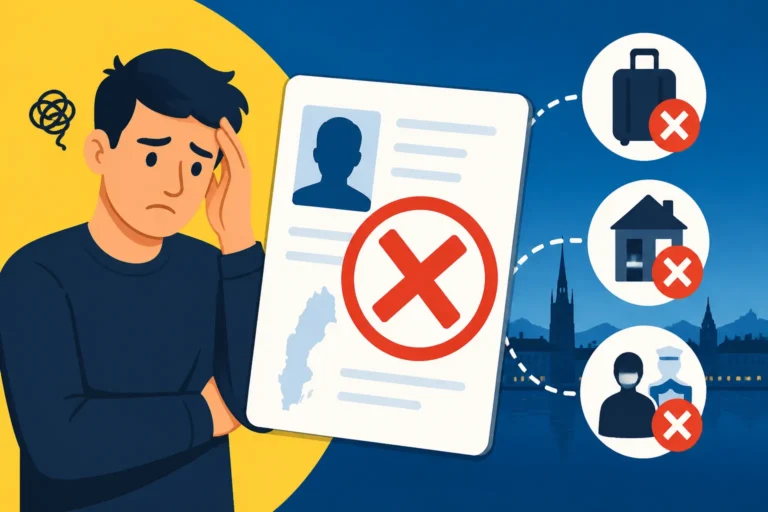
So, what exactly happens on that fateful day your residence permit expires? First, let’s be crystal clear: if you submitted your renewal application before your current permit expired, you are generally covered by something called "maintained status" or "rätt att vistas i Sverige under väntetiden" (right to stay in Sweden during the waiting period). This is a crucial distinction. It means that even though your physical permit card no longer shows a valid date, your legal right to reside in Sweden is maintained while Migrationsverket processes your renewal. This provision is designed to prevent people from becoming illegal residents through no fault of their own while waiting for a decision.
However, if your permit expires and you have not submitted a renewal application, or if you submitted it after your permit expired, the situation changes dramatically. In this scenario, you are officially in Sweden without a valid permit, which means you are technically residing illegally. This is a very serious situation with significant consequences, including the potential for expulsion. It's not just a matter of having an invalid card; it's about the legal basis of your presence in the country. Understanding this critical difference is the first step to navigating any post-expiry situation.
Navigating the Grey Zone: Your Status While Waiting for a Decision
The period between your permit's expiry date and Migrationsverket's decision can feel incredibly unsettling. You're physically in Sweden, maybe still working, living your life, but that little plastic card in your wallet is now just that – an expired piece of plastic. This "grey zone" is where many expats find themselves, and understanding your rights and limitations is paramount to avoiding further complications.
The "Wait-and-See" Period: Maintained Status
If you've done your part and submitted your renewal application before your current permit's expiry date, breathe a sigh of relief – at least for your right to stay in Sweden. This is the concept of "maintained status" (or in Swedish, uppehållstillstånd under väntetiden). According to Swedish law, specifically the Aliens Ordinance, if you apply for an extension of your permit while your current one is still valid, your right to stay in Sweden generally continues until Migrationsverket makes a decision on your renewal.
What does this mean in practice? Primarily, it means you can continue to live and, crucially, work in Sweden under the same conditions as your previous permit. So, if you were on a work permit, you can keep working. If you were on a student permit, you can continue your studies. It’s important to understand that while your status is maintained within Sweden, your ability to travel outside of Sweden is severely restricted. If you leave the Schengen area, you risk not being allowed back in because your expired permit card, coupled with the lack of a new decision, means you don't have a valid travel document or visa for re-entry. Even within the Schengen zone, you might face issues. This can be a huge problem for those with family abroad or work that requires international travel. For example, if you planned to visit family in your home country over Christmas, but your permit expires in November and you're still waiting, that trip is likely off the table unless you get a decision in time. This is a common pain point for many and a good reason to always check the official advice on Travelling While Your Swedish Permit Application Is Pending.
Moreover, while your right to stay is maintained, other aspects of your life might hit a snag. Some administrative tasks, like getting a new BankID or even proving your identity for certain services, might become more complicated without a currently valid residence permit card. Even though your personnummer remains valid, the lack of an up-to-date ID document can cause headaches.
The Peril of Expired Status: When You Applied Too Late (or Not at All)
Now, let's address the less fortunate scenario: your permit expired, and you either didn't apply for renewal, or you submitted your application after the expiry date. This is a much more precarious position. In this case, you are considered to be in Sweden without legal grounds, which is a serious breach of immigration law.
The immediate consequence is that you no longer have the legal right to reside, work, or study in Sweden. Every day you remain in the country without a valid permit puts you at risk of being identified as an illegal resident. This can lead to an investigation by Migrationsverket, potentially resulting in an expulsion order (utvisning). An expulsion order usually comes with a re-entry ban, meaning you would not be allowed to return to Sweden, or even the wider Schengen area, for a certain period, typically one to five years. The stress and fear associated with this situation are immense, and it’s a reality many wish to avoid at all costs.
If you find yourself in this situation, it’s imperative to act immediately. While applying late is not ideal, it is still better than not applying at all. You will need to provide strong reasons for the delay in your application, and Migrationsverket will assess your circumstances. They will consider factors such as the length of the overstay, the reasons for it, and any compelling humanitarian grounds. However, the burden of proof is much higher, and the risk of refusal is significantly increased. This situation is genuinely tough, and it’s important not to bury your head in the sand.
Practical Steps and Potential Consequences
Facing an expired permit, whether with a pending application or not, demands a proactive approach. The consequences can range from minor inconveniences to severe legal repercussions, so knowing exactly what to do and when is key.
What to Do If Your Permit Nears Expiry with No Decision
If your permit expiry date is approaching fast and you haven't received a decision, the first step is to check the status of your application on Migrationsverket's "My Page" portal. This platform is typically the most up-to-date source of information. You might also find estimated processing times on their website for your specific permit type, though these are often optimistic.
If you're really cutting it close, or if the estimated processing time has long passed, you can try contacting Migrationsverket directly. This can be done via phone or by visiting one of their service centres. Be prepared for potentially long wait times and the possibility that they may not be able to give you a definitive answer or "fast-track" your case. Their standard response is often "applications are processed in order," but sometimes, a quick check can reveal if they're missing a document or if there's a minor administrative hold-up.
It is crucial to document every interaction. Keep records of when you submitted your application, any confirmation numbers, and details of any communication with Migrationsverket. If you submitted additional documents, keep copies and dates. This paper trail can be invaluable if you ever need to prove your diligent efforts. In some cases, Migrationsverket might request updated documents, such as new employment contracts or recent salary slips, especially if your application has been pending for an extended period. If these documents are not in Swedish or English, you'll need certified translations. Services like RushTranslate or Translayte can be helpful here to ensure your documents are professionally translated and accepted by the agency. This attention to detail can help avoid further delays.
Work, Travel, and Other Rights During the Waiting Period
Let's reiterate the critical points regarding your rights during the "maintained status" period:
- Work: If you applied for your renewal before your current permit expired, you generally have the right to continue working under the same conditions as your previous permit. Your employer should be aware of this rule, but it’s wise to keep them informed and provide them with proof of your submitted renewal application. This status is often called "D-UTR," which indicates that you have a pending application for a residence permit. Your employer needs to ensure that your continued employment is legally sound, so having a copy of your application confirmation is important.
- Travel: This is where things get tricky. While you can technically stay in Sweden, leaving the country, especially the Schengen area, is highly risky. Without a valid residence permit card or a new permit decision, you lack a proper travel document for re-entry. Airlines might refuse you boarding, or border control officers might deny you entry back into Sweden. Even if you hold a passport from a country that normally doesn't require a visa for Schengen short stays, once you've had a long-term permit, your status changes, and you're expected to have valid documentation for your long-term stay. Therefore, it's generally advised to avoid all international travel until you receive your new permit card.
- Other Services: While your personnummer remains valid, some services might be difficult to access without a current physical ID card showing a valid residence permit. Getting or renewing a BankID might be challenging, and some banks or public services might be hesitant to proceed with certain transactions if they cannot verify your current legal status through a valid permit card. For most everyday interactions, your Swedish ID card (if you have one and it’s still valid) or passport might suffice, but for things strictly linked to your residence permit status, you might face hurdles.
The table below summarises the key differences in status:
| Scenario | Right to Stay in Sweden | Right to Work in Sweden | Right to Travel Internationally | Risk of Expulsion |
|---|---|---|---|---|
| Applied BEFORE expiry, waiting for decision | Yes (maintained status) | Yes (under previous conditions) | No (high risk of re-entry issues) | Low |
| Permit expired, NO application submitted | No (illegal resident) | No | No (illegal resident) | High |
| Permit expired, application submitted AFTER expiry | No (illegal resident, pending review) | No | No (illegal resident) | Medium to High |
If Your Permit Has Already Expired and You Haven't Applied
If you find yourself in the unfortunate position where your permit has expired and you haven't submitted a renewal application, or if you submitted it after the expiry date, you need to act immediately and understand the severity of the situation. As mentioned, you are technically in Sweden without legal status.
Your immediate action should be to submit a complete application for a new residence permit urgently. You will need to provide a very strong explanation for why your application was late. Be honest and comprehensive. Did you miss the date due to a severe illness, a family emergency, or perhaps a misunderstanding of the rules? Whatever the reason, you must articulate it clearly and provide any supporting evidence. Migrationsverket will scrutinise such applications much more closely. The risk of refusal is considerably higher in this scenario, as you are asking them to overlook a period of illegal residence.
It’s an incredibly stressful situation, and the emotional toll can be significant. Don't hesitate to seek advice, perhaps from legal professionals specializing in immigration law, especially if your circumstances are complex. While Sweden's system is generally fair, being out of status is a serious matter, and professional guidance can be invaluable. Remember, while the situation is grave, taking immediate action is always better than doing nothing.
The Long-Term Fallout: From Expulsion to Future Applications
The consequences of an expired permit, particularly if you've found yourself without maintained status, extend far beyond the immediate stress. It can affect your future in Sweden, from potential expulsion to significant hurdles in obtaining future residence permits or even citizenship.
The Risk of Expulsion (Utvisning)
If Migrationsverket determines that you no longer have a legal right to stay in Sweden and have been residing illegally, they can issue an expulsion order (utvisning). This decision is not taken lightly, but it is a real possibility if you have overstayed your permit without a valid renewal application pending.
The process usually involves an investigation by Migrationsverket, where they assess your case and give you an opportunity to explain your situation. If they decide on expulsion, they will issue a decision, which you usually have the right to appeal to the Migration Court (Appealing an Immigration Decision in Sweden: The Migration Courts). However, an appeal does not automatically grant you the right to stay in Sweden during the appeal process, especially if you are considered to have no legal grounds for residence.
An expulsion order almost always comes with a re-entry ban, meaning you are prohibited from returning to Sweden and often the entire Schengen area for a specified period, typically between one and five years. This ban is registered in the Schengen Information System, making it very difficult to travel to any Schengen country. This is a life-altering consequence and underscores the importance of diligently managing your permit status.
Future Implications for Residence and Citizenship
Even if you avoid expulsion, having an expired permit or a period of illegal residence can have lasting negative impacts on your immigration record in Sweden.
- Future Permit Applications: Any future applications for residence permits, whether for work, family, or study, will likely be scrutinized with far greater intensity. Migrationsverket will have a record of your previous overstay or lack of valid status, which could be a significant factor in their decision-making. You will need to demonstrate that you have addressed the issues that led to the previous situation and that you meet all current requirements without question.
- Permanent Residence: The path to The Path to Permanent Residence in Sweden: Rules and Timeline requires a continuous period of legal residence, typically four years. A significant gap in your legal status, or an overstay, can break this continuity. This means that any time accumulated towards permanent residence might be reset, and you would need to start counting your years anew once you obtain a new, valid permit. It prolongs your journey significantly and adds another layer of complexity.
- Citizenship: Eventually, if you wish to become a Swedish citizen, you need to meet requirements regarding continuous legal residence and good conduct. A history of overstaying or issues with your residence permits can negatively affect your application for Becoming a Swedish Citizen: Requirements and the Application Process, making it harder to prove that you are a suitable candidate for citizenship. Migrationsverket considers past compliance with immigration laws when assessing citizenship applications.
In essence, maintaining a clean immigration record is paramount for your long-term plans in Sweden. The administrative hurdles and emotional toll of dealing with an expired permit without a pending renewal are immense, and the potential long-term consequences can derail your dreams of a life here. Always be proactive, always seek clarification, and always keep impeccable records of your interactions with Migrationsverket. It might seem like a lot of hassle, but it's vital for your peace of mind and your future in Sweden.
Disclaimer
The information provided in this guide is for general informational purposes only and does not constitute legal advice. Immigration laws and regulations in Sweden are complex and can change. While every effort has been made to ensure accuracy, the author is not a legal professional. It is highly recommended to consult directly with Migrationsverket or a qualified immigration lawyer for advice pertaining to your specific situation.