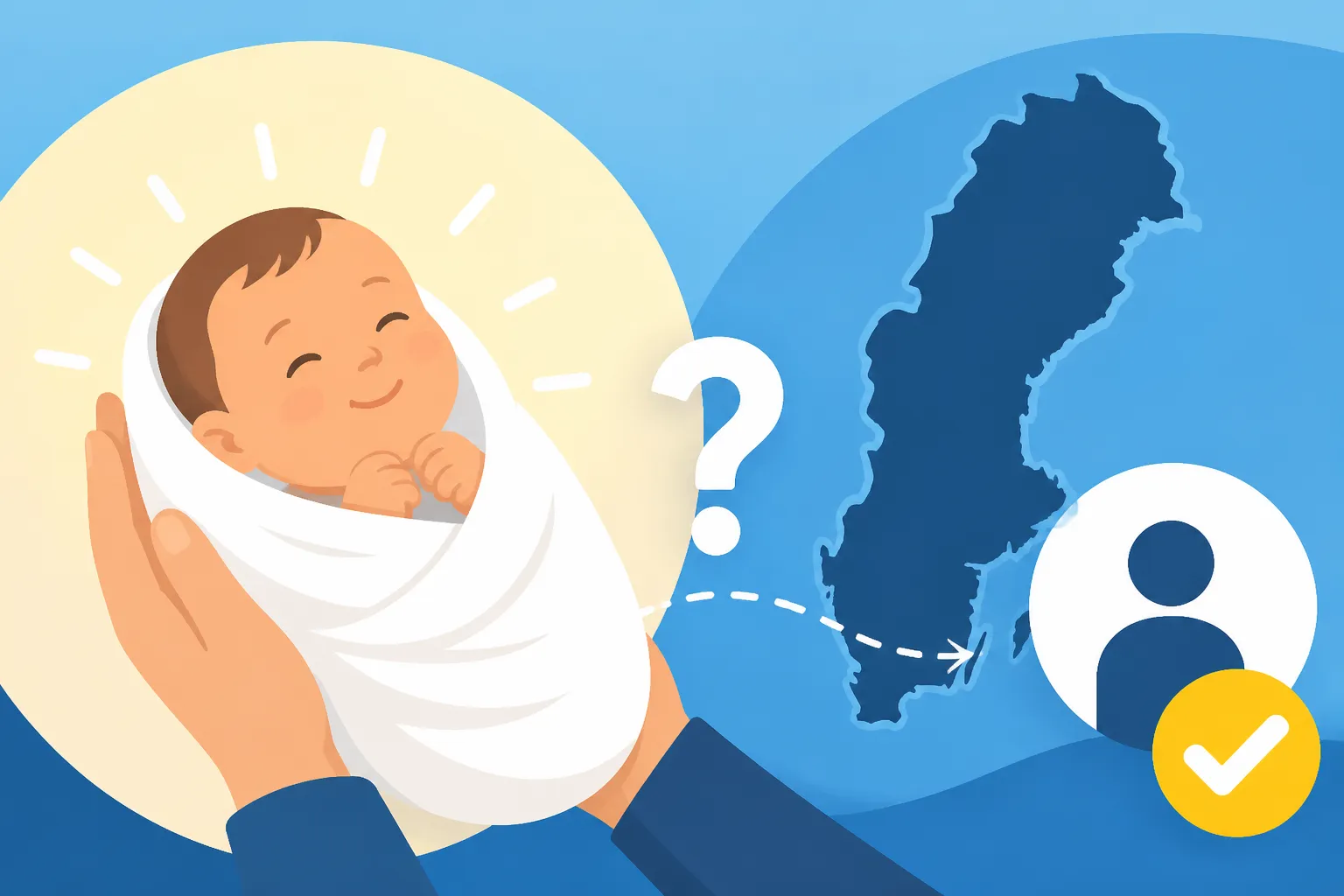
Is a Child Born in Sweden Automatically a Citizen?
It's a common question that pops up in expat forums and coffee meet-ups here in Sweden, often laced with a mix of hope and confusion: "If my child is born on Swedish soil, do they automatically become a Swedish citizen?" Many of us come from countries where birthright citizenship is the norm, so it’s natural to assume the same applies here. However, Sweden operates on a different principle, and understanding this is crucial for every new parent navigating life in the Nordics. This guide will meticulously break down the rules, clear up the misconceptions, and walk you through what your child's citizenship status truly means in Sweden.
The Core Question: Is Birthright Citizenship a Thing in Sweden?
When you’re preparing for a new arrival, or perhaps have just welcomed a little one in a Swedish hospital, the question of citizenship often arises. It’s a huge deal, impacting everything from passports to healthcare. But the answer to the core question – is a child born in Sweden automatically a citizen? – is usually a resounding "no" for foreign parents. It can be a bit of a shock, especially if you come from a country with jus soli laws, but Sweden follows a different path.
Understanding Jus Sanguinis vs. Jus Soli in Sweden
Let's talk a bit about the legal lingo, not to bore you, but because it really clarifies things. In many countries, particularly in the Americas, the principle of jus soli (Latin for "right of soil") dictates citizenship. This means that if you are born within the territorial borders of that country, you are automatically a citizen, regardless of your parents' nationality. Think of the United States, Canada, or Brazil; if your baby arrives there, they're a citizen. Simple as that.
Sweden, however, adheres to the principle of jus sanguinis (Latin for "right of blood"). This means a child's citizenship is primarily determined by the citizenship of their parents, not by the physical location of their birth. So, while your precious newborn might be taking their first breaths in a sparkling clean Swedish hospital, surrounded by friendly barnmorskor (midwives) and the unique smell of local coffee, their nationality isn't automatically Swedish just because they were born in Stockholm, Gothenburg, or Malmö. This can feel counter-intuitive and often leads to a fair bit of head-scratching among new expat parents. It's a fundamental difference that many of us, myself included, have had to come to grips with.
When a Child Automatically Becomes a Swedish Citizen
While jus sanguinis is the guiding principle, there are specific scenarios where a child born in Sweden will automatically become a Swedish citizen. These are pretty clear-cut, so let's walk through them:
-
One or Both Parents Are Swedish Citizens: This is the most straightforward case. If your child is born and at least one of their legal parents is a Swedish citizen at the time of birth, the child automatically acquires Swedish citizenship. It doesn't matter where in the world the child is born – be it in Sweden, your home country, or on a tiny island in the Pacific – if a parent is Swedish, the child is Swedish. This also applies if a parent who has died was a Swedish citizen at the time of their death, and the child was born after that. For example, if a Swedish father passes away, and his partner (who isn't Swedish) gives birth to their child a few months later, the child will still automatically be considered a Swedish citizen.
-
Parents Are Married and One Is Swedish: If a child is born in Sweden to married parents, and one parent is a Swedish citizen, the child automatically becomes Swedish. This scenario reinforces the jus sanguinis rule, linking citizenship directly to parental lineage.
What this all means is that simply being born within Sweden's geographical boundaries does not grant automatic citizenship to children of foreign parents. The umbilical cord of citizenship, in Sweden, is tied to the parents, not the delivery room.
Scenarios for Children Born to Foreign Parents in Sweden
Now that we've cleared up the basic principles, let's dive into the specifics that most foreign parents will face. Your child's citizenship status will largely depend on your own nationality and residency status in Sweden.
Both Parents Are Non-Swedish Citizens (EU/EEA or Third-Country)
This is the most common situation for expat families. If both you and your partner are not Swedish citizens, then your child will typically acquire the citizenship of one or both of your home countries.
-
For EU/EEA Citizens: If both parents are citizens of an EU/EEA country, your child will generally acquire the citizenship of one or both of those countries. For instance, if you're both German, your child born in Sweden will be a German citizen. The good news here is that as an EU/EEA citizen, your child will automatically have a "right of residence" in Sweden, meaning they don't typically need a separate residence permit from Migrationsverket to live here. They are covered by EU free movement rules. However, you will still need to register them with Skatteverket for a Personnummer, which is absolutely essential for accessing healthcare and other public services. It’s a good idea to look into the process for How EU/EEA Citizens Register Their Right of Residence in Sweden for your child as well.
-
For Third-Country Nationals (Non-EU/EEA): This is where it gets a bit more complex. If both parents are from a country outside the EU/EEA, your child will acquire your citizenship(s). For example, if you are both from India, your child born in Sweden will be an Indian citizen. The critical difference here is that your child will also need a residence permit to live in Sweden, just like you did. They generally receive the same type of residence permit as their parents. This means you’ll need to apply to Migrationsverket for their permit, often as a "family member joining a resident in Sweden." This process can feel a bit daunting right after welcoming a new baby, but it's a necessary step. The child's permit validity will usually be tied to the parents' permits. It's a common misconception that a child born here automatically gets some form of special status that exempts them from permit requirements; they don't. Their initial status is largely a reflection of their parents' immigration status.
It's vital to apply for your child's residence permit fairly soon after they receive their Personnummer, as they need to be legally residing here. You'll generally follow the same application process as described in guides like Applying for a Swedish Residence Permit Online with Migrationsverket, but for a minor.
One Parent is Swedish, the Other is Foreign
In these situations, the path is much simpler, as we touched on earlier. If one parent is a Swedish citizen, the child automatically becomes a Swedish citizen at birth, regardless of the other parent's nationality. This holds true whether the parents are married or not. The focus here is on lineage.
For example, if a Swedish mother gives birth to a child with a non-Swedish father, that child is a Swedish citizen from day one. There's no separate application process to Migrationsverket for citizenship; it's an automatic right based on the Swedish parent. You'll still need to register the birth with Skatteverket to get the child their Personnummer and enter them into the population register, but that's a registration of fact, not an application for status. This process ensures the child can immediately access all the benefits and rights that come with Swedish citizenship, including healthcare and education.
| Parent 1 Citizenship | Parent 2 Citizenship | Child's Citizenship at Birth | Residence Permit Needed for Child? |
|---|---|---|---|
| Swedish | Swedish | Swedish | No |
| Swedish | EU/EEA | Swedish | No |
| Swedish | Non-EU/EEA | Swedish | No |
| EU/EEA | EU/EEA | Parents' (e.g., German) | No (Right of Residence) |
| Non-EU/EEA | Non-EU/EEA | Parents' (e.g., Indian) | Yes (Derivative Permit) |
| EU/EEA | Non-EU/EEA | Parents' (mixed) | Possibly (based on specific rules) |
Note: The "mixed" scenario (EU/EEA + Non-EU/EEA parents) is complex and depends heavily on the laws of both parents' home countries regarding transmission of citizenship, and sometimes whether the parents are married. It is best to check with the embassies of both countries involved.
The Path to Swedish Citizenship for Non-Automatically Qualified Children
So, your child isn't automatically a Swedish citizen. Does that mean they can never be? Absolutely not! Sweden offers pathways for children born here to non-Swedish parents to acquire citizenship, though it usually involves an application process and meeting certain conditions over time. This isn't just about their birth; it's about their established connection to Sweden.
Applying for Citizenship by Notification or Application
For children born in Sweden to non-Swedish parents, the journey to Swedish citizenship typically involves either a "notification" (anmälan) or a formal "application" (ansökan) to Migrationsverket. The specific route depends largely on the parents' citizenship and the child's age and residency duration.
-
For Children with Nordic Citizen Parents: If both parents are citizens of another Nordic country (Denmark, Finland, Iceland, Norway), the process for their child to become Swedish is considerably simpler. After a certain period of continuous residence in Sweden, the parents can often make a "notification" to Migrationsverket that the child wishes to become a Swedish citizen. This is generally a less intensive process than a full application.
-
For Children with Non-Nordic or Non-EU/EEA Parents: For most other foreign families, if the child does not automatically become Swedish at birth, they can later apply for Swedish citizenship by application. The main conditions usually involve:
- Continuous Residence: The child must have lived in Sweden for a specified period (typically three years if both parents are permanent residents, or five years if the child applies independently as an adult). This period starts from the date they registered in the population register.
- Permanent Residence Permit: At least one of the child's parents, or the child themselves if applying as an adult, must hold a permanent residence permit in Sweden. This is a critical prerequisite; temporary permits generally don't suffice for citizenship applications. More on The Path to Permanent Residence in Sweden: Rules and Timeline can be found here.
- Good Conduct: For older children and adults, there are also requirements regarding good conduct, meaning no serious criminal offenses or persistent debts to the state.
The application itself involves submitting a form to Migrationsverket, along with various supporting documents. This might include the child's birth certificate, passports, the parents' residence permits, and proof of the child's continuous residence in Sweden. If any of these documents are not in Swedish or English, you'll need certified translations. This is where services like RushTranslate or Translayte can be incredibly helpful. They specialize in official translations that are accepted by authorities like Migrationsverket, ensuring your application doesn't get delayed due to incorrect paperwork. Always remember to check Migrationsverket's specific requirements for certified translators to avoid issues.
The application fee for citizenship can be quite substantial, so be prepared for that expense. The processing times can also vary significantly, so it’s wise to keep an eye on the Migrationsverket website for their current estimates and manage your expectations accordingly. You can learn more about Becoming a Swedish Citizen: Requirements and the Application Process in a dedicated guide.
The Critical Role of Personnummer and Folkbokföring
Whether your child is automatically Swedish or needs to apply later, one administrative step is universally critical: obtaining a Personnummer and being registered in the Swedish Population Register (Folkbokföring). This isn't just about statistics; it's the very foundation of social life in Sweden.
Even if your child is born to non-Swedish parents and holds a foreign citizenship, they must be registered with Skatteverket (the Swedish Tax Agency) as soon as possible after birth. This is because Skatteverket is responsible for the population register. Once your child is registered and meets the criteria for living in Sweden (e.g., has a valid residence permit or right of residence), they will be assigned a Personnummer.
Why is this so vital?
- Healthcare: Without a Personnummer, your child cannot be properly registered with a vårdcentral (primary healthcare clinic) and access the full public healthcare system, including child health centres (BVCs). Even though emergency care is always provided, routine check-ups and follow-ups become incredibly complicated without this ID. For more details, see Child Health in Sweden: How Barnavårdscentralen (BVC) Supports Families or even the overarching Healthcare in Sweden for Foreign Residents: The Complete System Guide (2027).
- Parental Benefits: Eligibility for crucial benefits like barnbidrag (child allowance) from Försäkringskassan depends entirely on your child having a Personnummer and being registered in the population register. These benefits are a lifeline for many families, so getting this sorted quickly is paramount.
- Education: As they grow, their Personnummer will be necessary for enrolling them in förskola (preschool) and later grundskola (compulsory school).
- Identity: Essentially, the Personnummer serves as their unique identifier within Swedish society. It's how they'll exist in the system, how they'll be tracked, and how they'll access almost everything.
The process for Getting Registered in the Population Register (Folkbokföring) for your child is similar to your own, requiring birth certificates, parental identification, and proof of your legal right to reside in Sweden. Don't underestimate the importance of this step – it's often the first and most critical piece of administration you'll tackle for your newborn.
Essential Next Steps and Important Considerations
Bringing a new life into the world is overwhelming enough without adding complex administrative hurdles. But trust me, getting these things in order early will save you a world of headaches down the line. It's about setting your child up for a smooth life in Sweden, no matter their passport.
Registering Your Child with Skatteverket
As touched upon, your very first official port of call after the birth of your child in Sweden is Skatteverket, the Swedish Tax Agency. Even if your child isn't automatically a Swedish citizen, they must be registered in the Swedish Population Register (Folkbokföringsregistret) if you, as the parents, are registered there and plan for your child to live in Sweden. This registration is what leads to them being assigned a Personnummer.
Here's why this is absolutely non-negotiable and what you generally need:
- Birth Notification: The hospital where your child is born will typically send a notification of birth to Skatteverket. However, this is just a notification; it doesn't automatically register your child in the population register or give them a Personnummer.
- Parental Application: You, as the parents, need to proactively contact Skatteverket to apply for your child's registration. You'll usually need to bring:
- The child's birth certificate (often issued by the hospital).
- Your own passports/ID cards.
- Your residence permits (if applicable) or proof of your right of residence (for EU/EEA citizens).
- Proof of your marital status (if applicable), which can sometimes be tricky if you were married abroad and Skatteverket doesn't have it registered.
- Sometimes, an appointment is required, especially in larger cities like Stockholm or Gothenburg.
- Parental Benefits and Healthcare Access: Once your child has their Personnummer, you can then apply for barnbidrag through Försäkringskassan, and crucially, register them with a vårdcentral. This step is fundamental for your child to receive regular health checks at the Barnavårdscentralen (BVC), vaccinations, and access to all other public services. Don't delay this, as waiting times for Personnummer assignment can vary.
Obtaining a Passport for Your Child
Since your child likely won't automatically be a Swedish citizen (unless one parent is Swedish), their initial citizenship will be that of their parents' country or countries. This means one of your next critical tasks is to obtain a passport for your child from your country's embassy or consulate in Sweden.
- Contact Your Embassy: Reach out to your embassy or consulate as soon as possible after the birth. They will have specific procedures and requirements for registering the birth and issuing a passport. This often involves providing your child's Swedish birth certificate (issued by Skatteverket, once registered), your own passports, marriage certificates (if applicable), and sometimes even a local police report of the birth.
- Travel and Identity: A foreign passport is essential for your child's international travel. If you plan to visit your home country or any other destination, they will need their own valid travel document. It also serves as their primary official identification alongside their Personnummer, especially for international matters.
- Residence Permit Necessity: If you are non-EU/EEA citizens, your child's residence permit will eventually be affixed to their foreign passport or issued as a separate residence permit card (UT-kort). Without a passport, it can be difficult to finalize their permit application with Migrationsverket. So, prioritize this.
Future Pathways to Citizenship
The journey to Swedish citizenship isn't necessarily a closed door for children born in Sweden to foreign parents. It's a journey that often unfolds over years, marked by continuous residence and integration into Swedish society.
- Residency Time: The most common path for a child to become a Swedish citizen, if not automatically at birth, is through extended residence. As mentioned earlier, once a child has lived in Sweden for a certain period (e.g., three years if they hold a permanent residence permit and at least one parent also has a permanent residence permit), they can become eligible to apply for citizenship. This process is generally less stringent for children than for adults, particularly regarding the good conduct requirement.
- Parents' Status Matters: If you, as the parents, eventually obtain permanent residence and then Swedish citizenship, your child’s path can become much simpler, sometimes even allowing for citizenship by notification if they are still minors living with you.
- Evolving Requirements: Sweden, like many countries, periodically reviews and updates its citizenship laws. While your child's eligibility might be based on current laws, it's always wise to stay informed about any potential future changes, such as new requirements for language proficiency or knowledge of Swedish society for adults, which could eventually apply to them if they apply for citizenship later in life. Keep an eye on Migrationsverket's official communications for the most up-to-date information. They are the ultimate authority for these matters, and consulting their website or directly Dealing with Migrationsverket: Applications, Waiting, and Decisions is always the best approach.
The key takeaway is this: While Sweden doesn't grant automatic citizenship by birthright, it does offer clear, albeit time-bound, routes for children to become Swedish citizens if they grow up and establish their lives here. It requires patience, careful administration, and a clear understanding of the rules.
Disclaimer
The information provided in this guide is intended for general informational purposes only and does not constitute legal advice. Immigration and citizenship laws are complex and subject to change. Always consult with the Swedish Migration Agency (Migrationsverket), Skatteverket, or a qualified legal professional for advice pertaining to your specific situation. While efforts have been made to ensure accuracy, we cannot guarantee that the information is always up-to-date or applicable to every individual circumstance.