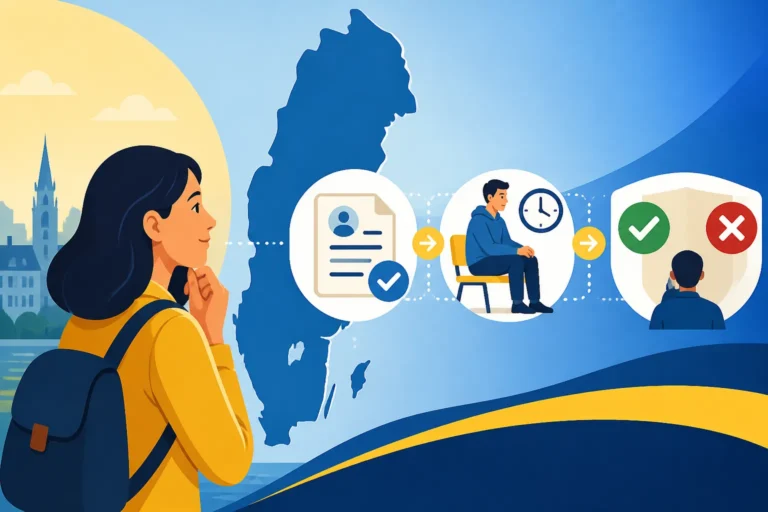
Switching Permit Types While Living in Sweden
It's a familiar feeling, isn't it? You've landed in Sweden, perhaps on the back of a university acceptance letter or a permit to join your beloved sambo, and you've started to build a life here. Then, a new opportunity arises – a job offer that's too good to pass up, or a change in your relationship status. Suddenly, you're faced with the gnawing question: can I transition to a new permit type without uprooting my entire life and leaving Sweden? This guide is here to walk you through the often-confusing and sometimes frustrating process of switching your residence permit category while already living in Sweden, offering realistic advice and a big dose of empathy.
Understanding the Landscape: The Migrationsverket's Stance on Permit Switches
Navigating the Swedish migration system can feel like trying to solve a Rubik's Cube blindfolded, especially when your circumstances change. The general "main rule" that Migrationsverket often emphasizes is that you should apply for a residence permit from outside Sweden, in your country of origin or legal residence. This rule is designed to ensure proper checks and balances, and to prevent people from trying to bypass standard entry procedures.
The "Main Rule" and Crucial Exceptions
The principle of applying from outside Sweden is a foundational one. Imagine if everyone could just show up in Sweden on a tourist visa and then apply for a work permit on a whim; the system would be overwhelmed, and it would undermine the integrity of the permit process. However, Sweden, like many countries, understands that life happens. There are specific, crucial exceptions carved out for people who already have a valid residence permit in Sweden. These exceptions generally apply if you are applying for an extension of your current permit, or if you are applying for a new type of permit from within Sweden, provided certain conditions are met. These conditions are typically designed to ensure that you have established genuine ties to Sweden, or that the change in circumstances is significant and legitimate.
For instance, if you're here on a student permit and you secure a job that meets the requirements for a work permit, Migrationsverket generally allows you to apply for that new work permit without having to pack your bags and go home first. The key phrase here is "generally allows," because each case is unique, and discretion can play a role. It’s a relief, for sure, but don't let that fool you into thinking it's always straightforward. The burden of proof is always on you to demonstrate that you meet the criteria for the new permit and are eligible for the exception to the main rule.
The Unwavering Importance of a Valid Permit
Perhaps the single most critical piece of advice when considering a permit switch is this: never let your current permit expire. Seriously, I cannot stress this enough. If your current permit expires before you've submitted an application for a new one, you could find yourself in a precarious situation, potentially losing your right to reside in Sweden, and even facing a requirement to leave the country. Think of your permit as your lifeline to legal residence here. If that line snaps, you're adrift.
Migrationsverket has something called a "right to remain" (or uppehållsrätt for EU/EEA citizens, or a specific provision for non-EU/EEA in certain scenarios). If you have submitted a complete application for a new residence permit before your current one expires, you generally have the right to remain in Sweden while your application is being processed. This is a huge comfort, as processing times can, let's be honest, feel interminable. However, this "right to remain" only kicks in if your application is submitted on time. Don't gamble with deadlines; set reminders, mark your calendar, and aim to submit your new application well in advance of your current permit's expiry. A small administrative oversight can lead to immense stress and legal complications, turning your Swedish dream into a bureaucratic nightmare.
The Nuance of "Strong Ties" to Sweden
While not always explicitly stated, the concept of having "strong ties" to Sweden can implicitly influence Migrationsverket's assessment, especially in more complex or borderline cases. If you've lived here for a significant period, built a life, integrated into society, and consistently maintained valid permits, your application for a permit switch might be viewed differently than someone who has just arrived and is quickly trying to change their status without a clear, legitimate reason.
These "ties" aren't just about the duration of your stay; they encompass things like employment history, tax contributions, family connections, property ownership (if applicable), and active participation in society. Essentially, it's about demonstrating that Sweden is genuinely your home, not just a temporary stopover. While Migrationsverket applies strict legal criteria, showing a long-term commitment and established life here can sometimes add a subtle layer of positive context to your application, even if the primary decision rests on meeting the explicit legal requirements of the new permit category.
Common Scenarios for Permit Switches While Living in Sweden
Life is dynamic, and your reason for being in Sweden might evolve. Thankfully, Migrationsverket does account for some of the most common life transitions, allowing for permit switches without requiring you to leave the country. These scenarios are often the ones expats find themselves in.
From Student Permit to Work Permit: The Post-Graduation Leap
This is probably one of the most common and often hoped-for transitions. You’ve come to Sweden, worked hard, and earned your degree. Now, you’ve landed a fantastic job offer, perhaps even before you've officially graduated! The good news is, in many cases, you can switch from a student residence permit to a work permit while still in Sweden. However, it's crucial to understand that this isn't an automatic right, and the requirements for a work permit are quite stringent.
First and foremost, you need a legitimate job offer from a Swedish employer. This isn't just any job offer; it must meet the specific criteria set by Migrationsverket for work permits. This includes a salary that is on par with Swedish collective agreements or what is standard for the industry and profession, and a salary that meets the minimum income threshold (which, by the way, is regularly updated, so always check the latest figures on Migrationsverket’s website – for example, the salary threshold in 2026 is expected to be quite high). The job must also be advertised in Sweden and the EU/EEA for at least ten days, in most cases, to demonstrate that no suitable candidates could be found within the union. Your employer will usually initiate this process, providing necessary documentation about the job role, salary, and company.
You'll need to demonstrate that you can financially support yourself, even if the job offer takes care of that. And critically, you must submit your application before your student permit expires. If your student permit includes time to seek employment after graduation, that window is precisely what you need to leverage for your new work permit application. Many students feel a rush of anxiety during this period, and rightly so. It's a race against the clock, balancing job interviews with understanding complex permit rules.
You can find more detailed information on specific requirements in guides like Work Permits in Sweden: Categories, Salary Rules, and How to Apply and How the New 2026 Salary Threshold Affects Swedish Work Permits.
From Dependent/Family Permit to Independent Work Permit: Stepping Out on Your Own
Another very common scenario is when you’ve moved to Sweden to join a spouse, sambo, or parent on a dependent or family reunification permit. While these permits often grant you the right to work, you might want to establish your own independent permit status, especially if your relationship ends or you simply want more autonomy. This is absolutely possible, but again, it requires meeting the criteria for the new permit type.
If you are on a dependent permit and secure a job offer, you can apply for your own work permit. The process will be largely identical to someone applying for a work permit from a student permit: a valid job offer meeting salary and industry standards, and a complete application submitted on time. The biggest difference here is often psychological – the shift from being financially dependent (even if you were working) to having your own, independently secured permit. This can be a huge step towards true integration and independence in Sweden.
However, if your relationship with the main permit holder ends, things can become more complicated. If your permit was solely tied to that relationship, and you no longer meet the criteria for family reunification, you may need to apply for a work permit or other permit type very quickly to maintain your legal status. Migrationsverket will assess your application based on its own merits. This is a highly stressful situation for many, as the personal upheaval is compounded by administrative uncertainty. It's crucial to seek advice and act swiftly in such circumstances.
You can learn more about how family members are tied to main applicants in Residence Permits for Family Members Joining You in Sweden.
From Visitor/Schengen Visa to Residence Permit: Rare and Highly Restricted
This is where the "main rule" about applying from outside Sweden really comes into play, and exceptions are extremely rare. Generally, you cannot come to Sweden on a visitor visa (e.g., a Schengen visa) or as a visa-free tourist and then apply for a residence permit from within the country. The intention of a visitor visa is for short-term stays, not for establishing permanent residence.
However, there are a handful of very specific and limited exceptions. These usually involve highly exceptional humanitarian grounds, or situations where applying from your home country would be genuinely impossible or pose a severe risk. For example, if you enter Sweden on a visa and then, during your stay, face an acute need for protection (e.g., asylum), or an immediate and serious medical emergency arises where you cannot return home for treatment, then exceptions might apply. These are not avenues for routine permit changes; they are for extraordinary circumstances. Attempting to circumvent the normal process by arriving on a visitor visa and then trying to switch to a work or student permit is highly likely to result in rejection and could negatively impact future applications. Don't try to game the system here; Migrationsverket is very clear on this point.
Essential Requirements and Documentation for a Successful Switch
Regardless of the specific permit type you're aiming for, there are universal truths when dealing with Migrationsverket: meticulous documentation and meeting strict criteria are paramount. Missing a single document or failing to meet a seemingly minor requirement can delay or even derail your application.
The Indispensable Personnummer and BankID
If you've been living in Sweden for any length of time with a residence permit, you've likely already gone through the often-arduous process of getting your personnummer (personal identity number). This nine or ten-digit number is your golden ticket to virtually everything in Sweden – from opening a bank account to accessing healthcare and, yes, navigating permit applications. For most permit switches from within Sweden, having a personnummer will significantly streamline your application.
Hand-in-hand with the personnummer is BankID, Sweden’s ubiquitous electronic identification system. If you haven't already, getting BankID from a Swedish bank (which typically requires a personnummer) will transform your interaction with Migrationsverket. Most applications are now handled digitally, and BankID allows you to log in securely to Migrationsverket's online portal, fill out forms, upload documents, and track your application progress. It makes the entire process faster, more transparent, and less prone to postal delays. Without it, you're looking at paper applications and potentially much longer processing times. If you're still waiting for yours, you can read more about Getting Your Personnummer: The Gateway to Swedish Healthcare and Getting BankID: Sweden's Essential Digital Identity.
Proving Financial Maintenance and Accommodation
For almost every residence permit type in Sweden, you will need to demonstrate that you can support yourself financially and have suitable accommodation. Migrationsverket wants to ensure that you won't become a burden on the Swedish welfare system and that you have a stable living situation.
Financial Maintenance: This usually means proving a regular, sufficient income. If you're switching to a work permit, your job offer and employment contract will be central to this. Ensure the salary specified meets or exceeds the current minimum thresholds. If you're switching to another permit type where employment isn't the direct basis, you might need to show bank statements, scholarship awards, or other verifiable sources of income. The exact amount required varies depending on the permit type and your family situation, so always check Migrationsverket's up-to-date figures. This isn't just a formality; it's a hard requirement. If your income isn't deemed sufficient, your application will likely be rejected.
Accommodation: You'll also need to prove that you have suitable housing. This could be a rental contract (first-hand or second-hand), proof of ownership, or an agreement for accommodation. The size and standard of the accommodation must be reasonable for the number of people living there. Migrationsverket has specific guidelines on what constitutes "suitable accommodation," which means enough rooms and space for the household. While finding accommodation in Sweden, especially in big cities like Stockholm or Gothenburg, is notoriously difficult, you cannot gloss over this requirement. A vague promise of future housing won't cut it.
These requirements often go hand-in-hand with concepts like "maintenance requirements" which are also critical for family permits. Understanding these is key, so checking Comprehensive Sickness Insurance and the Maintenance Requirement in Sweden can provide further context.
Translating Foreign Documents: The Certification Maze
Oh, the joy of foreign documents! When you're switching permits, you might need to submit documents from your home country – birth certificates, marriage certificates, previous degree certificates, etc. These documents must be translated into Swedish or English by an authorized translator. This isn't a task for your bilingual friend or Google Translate; Migrationsverket is very strict about certified translations.
You’ll often need to find a translator who is authorized by Kammarkollegiet (the Legal, Financial and Administrative Services Agency) in Sweden, or a similar official body in your home country or another EU member state. The translator's stamp and signature are what make the translation "official." The process of finding such a translator, getting quotes, and waiting for the certified documents can be time-consuming and expensive. This is where services like RushTranslate or Translayte can be incredibly helpful for expats. They specialize in certified translations and can often provide quick turnaround times for documents that need to be officially translated for immigration purposes. I've heard countless stories of people scrambling to get a document translated at the last minute, only to find out it needed to be officially certified, causing unnecessary stress and delays. Don't make that mistake; plan ahead for translations, and make sure they meet the strict requirements. Sometimes, depending on the document's origin, you might also need an apostille or legalization from the issuing authority to verify its authenticity, so always check with Migrationsverket if this applies to your specific documents.
| Document Type | Required for Permit Switches? | Translation Needed (if not English/Swedish)? | Additional Certification (e.g., Apostille)? |
|---|---|---|---|
| Passport/ID Card | Always | No (usually) | No (original usually sufficient) |
| Job Offer/Contract | Work Permits | Yes (if in other language) | No (employer signature sufficient) |
| University Diploma | Some cases (e.g., for certain qualifications) | Yes | Potentially (depending on issuing country) |
| Marriage Certificate | Family Permits | Yes | Often Required |
| Birth Certificate | Family Permits | Yes | Often Required |
| Bank Statements | Proof of Maintenance | No (if in English, otherwise yes) | No (bank stamp sufficient) |
| Accommodation Contract | All Residence Permits | Yes (if in other language) | No (landlord signature sufficient) |
The Application Process: Navigating Migrationsverket When Switching
Once you’ve gathered all your documents and understood the requirements, the actual application process with Migrationsverket begins. For those who've done this before, it's a familiar (if not always welcome) journey. For newcomers, it can be intimidating.
The Online Application Portal and Your "My Page"
In this digital age, most applications to Migrationsverket are done online via their e-service portal. If you have a personnummer and BankID, this is by far the most efficient way to apply. You log in to your personal "My Page" (Mina sidor), where you can select the type of permit you're applying for. The online forms are typically comprehensive, guiding you through each section. You'll upload all your supporting documents digitally.
The benefit of the online portal is that it often gives you immediate feedback if you've missed a mandatory field. You can also save your application and come back to it later, which is a lifesaver when you're gathering complex documentation. Once submitted, your "My Page" becomes your central hub for communication with Migrationsverket. You'll receive messages, requests for additional information, and eventually, the decision, all through this portal. It’s far more transparent than waiting for letters in the post. Ensuring you upload clear, legible scans of all documents is crucial; a blurry photo of your passport will only lead to delays.
For more hands-on guidance, check out Applying for a Swedish Residence Permit Online with Migrationsverket.
Booking Biometrics and Waiting for the Decision
After you submit your online application, you might need to book an appointment to provide your biometrics – fingerprints and a photograph – if you haven't done so recently or if your current permit card is nearing expiry. This is done at one of Migrationsverket’s service centres in Sweden. You typically book these appointments online, and availability can sometimes be tight, especially in larger cities, so don't delay. The biometrics are essential for creating your new residence permit card (UT-kort), which is your physical proof of legal residence.
Once your biometrics are taken (if needed), then begins the infamous waiting game. You've done all you can do, and now your application sits in the queue at Migrationsverket. This period can be incredibly stressful, filled with uncertainty. You might find yourself checking your "My Page" multiple times a day, hoping for an update. Migrationsverket's processing times are publicly available on their website, but these are often estimates and can fluctuate wildly depending on the volume of applications and the complexity of your case. Patience, unfortunately, is a virtue you'll need in spades.
Understanding Processing Times and Managing Expectations
Ah, processing times. The bane of every expat's existence when dealing with immigration. Migrationsverket publishes estimated waiting times for different permit types and application categories on their website. For switching permits while in Sweden, these times can vary significantly. Sometimes, it can be a few weeks; other times, it stretches into many months, or even over a year for more complex cases.
It’s absolutely vital to manage your expectations. Do not plan your life around the shortest estimated processing time. Always assume it will take longer. This foresight can save you immense frustration and stress. During this period, you often cannot leave Sweden without risking your application, and certainly not if your current permit has expired and you are relying solely on your "right to remain" while your new application is pending. The lack of control during this wait is maddening, but it's part of the process.
You can often see general trends in processing times for various types of permits by checking Understanding Migrationsverket Processing Times and Delays. Remember, these are national averages and your individual case might differ.
Potential Challenges and Pitfalls to Avoid
Even with the best intentions and meticulous preparation, the permit switch process can throw curveballs. Being aware of common pitfalls can help you navigate these challenges more effectively.
Gaps in Permit Validity: The Cliff Edge
As mentioned earlier, letting your current permit expire before submitting a new application is perhaps the most significant pitfall. It creates a "gap in validity" that can severely jeopardize your legal status. If you find yourself in this situation, you might lose your right to reside and work in Sweden. In some cases, Migrationsverket might instruct you to leave the country and apply from abroad, which defeats the purpose of switching permits from within Sweden.
Sometimes, despite your best efforts, delays on Migrationsverket's side can push you close to the wire. This is why aiming to submit your application well in advance of your current permit’s expiry is non-negotiable. If you're cutting it close, gather all your documents, submit what you have, and be prepared to respond immediately to any requests for additional information. It’s a stressful tightrope walk, and one that many expats have unfortunately experienced.
Incomplete Applications and Migrationsverket's Demands
Migrationsverket receives thousands of applications, and they are notoriously strict about completeness. An incomplete application is the quickest way to delay your decision or even get a rejection. Forgetting a signature, omitting a required document, or providing unclear scans will almost certainly lead to a "request for supplementary information" (begäran om komplettering). While this gives you a chance to rectify the mistake, it adds weeks, if not months, to your processing time.
When Migrationsverket sends a request for supplementation, they usually give you a strict deadline to respond. You must meet this deadline without fail. If you struggle with Swedish, consider having the request translated professionally (again, services like Translayte or RushTranslate can be invaluable here for quick and accurate translation of official letters) to ensure you understand exactly what they are asking for. Respond precisely to their request; don't provide unnecessary information, but ensure everything they asked for is included. Think of it as a detailed checklist – if you miss a single item, you risk further delays.
The Impact of Changing Circumstances During Processing
Life doesn't stop just because your permit application is pending. What happens if your circumstances change after you've submitted your application but before a decision is made? This can be incredibly complex.
- Job Offer Rescinded: If you applied for a work permit based on a job offer, and that offer is withdrawn while your application is pending, you must inform Migrationsverket immediately. Your application is based on specific circumstances, and if those change, the basis for your permit might be gone. This would likely lead to a rejection unless you can secure a new, valid job offer very quickly and provide updated documentation.
- Relationship Ends: If you applied for a dependent permit, or your current permit is tied to a relationship that ends during the processing of a new, independent permit, you also need to inform Migrationsverket. Your marital or relationship status is a core factor for many permits, and changes can significantly impact your eligibility.
- Other Significant Changes: Any change that impacts the core requirements of your permit (e.g., severe illness, significant change in financial situation) should be considered for notification.
While it might feel counterintuitive to report negative changes, withholding information is never a good idea. Transparency, even with difficult news, is often the best policy, as Migrationsverket might view a failure to disclose as an attempt to mislead. This is a very stressful scenario, and seeking legal advice from an immigration lawyer can be highly beneficial if you find yourself in this predicament.
Life During the Waiting Period: What You Can and Cannot Do
The waiting period for a permit decision can feel like a limbo state. You're in Sweden, but your future feels suspended. Knowing your rights and limitations during this time is crucial to avoid inadvertently jeopardizing your application or legal status.
Rights to Work and Study While Your Application is Pending
This is a critical point that brings relief to many. If you apply for an extension of your current permit, or for a new permit type that allows work or study (e.g., switching from a student permit to a work permit), and you submit your complete application before your current permit expires, you generally have the right to continue working or studying while Migrationsverket processes your application. This is often referred to as the "right to remain" in status.
For example, if you're on a student permit that allows you to work, and you apply for a work permit, you can continue working while your new application is pending, provided your student permit hadn't expired when you submitted the work permit application. Similarly, if you're changing from one work permit to another (e.g., changing employers), you can usually continue working for your current employer while the application for the new employer is pending.
However, be very clear on this: this right to continue working or studying only applies if your previous permit allowed it, and if you submitted the new application on time. If your old permit didn't allow work, a pending application for a work permit typically does not grant you the right to start working before a decision is made. Always check the specific wording on your previous permit and Migrationsverket's current guidelines for your particular situation. Confusion here can lead to serious legal issues for both you and your employer.
Travel Restrictions During the Application Process
This is another major source of anxiety for expats. Generally, while your permit application is pending, especially if it's a switch to a new type or if your previous permit has already expired, it is highly risky to leave Sweden.
If you leave Sweden without a valid permit card (UT-kort) or a valid visa in your passport that grants re-entry, you might not be allowed back into the country. Your pending application, even with a "right to remain" within Sweden, does not automatically grant you the right to re-enter the Schengen area. The border control authorities might deny you entry.
If your permit application is for a new type, and you are waiting for the first residence permit card of that type, leaving Sweden almost always means you cannot come back until the card is issued and you have it in hand. I've known several people who had urgent family matters abroad, took the risk, and were subsequently stuck outside Sweden for months, unable to return until their permit was processed and sent to an embassy for collection. It's a heartbreaking situation that can often be avoided by being aware of the risks. If you absolutely must travel, contact Migrationsverket beforehand, explain your situation, and get their explicit advice, preferably in writing. But honestly, the safest bet is to stay put.
If you are an EU/EEA citizen, your right of residence is different, and generally, you can travel freely, but non-EU/EEA citizens face these restrictions. You can dive deeper into this topic by reading Travelling While Your Swedish Permit Application Is Pending.
Maintaining Your Current Status Until a Decision
The overarching principle during the entire switch process is to maintain your legal status in Sweden. This means always ensuring you have a valid permit, or that your new application was submitted in time to grant you the right to remain.
It also means continuing to meet any conditions of your current permit. For example, if you're on a student permit, continue your studies diligently until your new permit is granted. If you're on a dependent permit, maintain the circumstances of that dependency (e.g., the relationship continues). Any changes that might invalidate your current status, even while you await a decision on a new one, can complicate matters.
The Swedish immigration system, while robust, can be slow and feel impersonal. But understanding the rules, being meticulously prepared, and acting proactively are your best tools for a successful permit switch. It’s a marathon, not a sprint, but with careful planning, you can navigate these transitions and continue building your life in Sweden.
| Permit Switch Scenario | Main Requirement for New Permit | Right to Work/Study During Processing (if applied on time) | Recommended Travel During Processing? |
|---|---|---|---|
| Student to Work | Valid job offer meeting salary/collective agreement | Yes (if student permit allowed work) | High Risk / Not Recommended |
| Dependent to Work | Valid job offer meeting salary/collective agreement | Yes (if dependent permit allowed work) | High Risk / Not Recommended |
| Work (Employer A) to Work (Employer B) | Valid job offer from new employer meeting requirements | Yes (for Employer A) | High Risk / Not Recommended |
| Work to Permanent Residence | 4 years of continuous work, good conduct, maintenance | Yes (for current work) | Generally OK, but inform Migrationsverket for long trips |
| Asylum to Work/Other | Highly specific legal conditions, often complex | Depends on initial permit/status | Very High Risk / Strongly Not Recommended |
For those looking ahead to long-term residency, understanding the foundational requirements is key. You can explore The Path to Permanent Residence in Sweden: Rules and Timeline once you have established a more stable permit status.
Disclaimer
This article is for general informational purposes only and does not constitute professional advice. Laws, prices and regulations vary by location and change over time. Consult a qualified professional for guidance on your specific situation.