How Do I Heat My Swedish Apartment Efficiently?
Ah, Swedish winters! The sheer thought of those long, dark, and often bitterly cold months can send a shiver down even the most seasoned expat's spine. And then, once you're safely indoors, the worry often shifts to how on earth you're going to keep warm without your electricity bill spiralling into the stratosphere. It's a common dilemma, trust me – many of us have faced that first shockingly high utility bill and wondered if we were doing something terribly wrong. This guide is here to demystify how heating works in Swedish apartments and offer some practical, empathetic advice on keeping warm and efficient.
Understanding Sweden's Heating Systems and the Swedish Mindset
When you first arrive in Sweden, one of the many things that might surprise you is the indoor temperature in homes. Coming from warmer climates, or even just countries with different heating philosophies, you might expect tropical warmth inside when it’s -10°C outside. But Sweden operates a little differently, both in terms of technology and cultural norms.
Central Heating vs. Individual Electric Heating
Most modern Swedish apartments, especially those in larger complexes or cities, benefit from district heating (fjärrvärme). This is a highly efficient system where heat is generated centrally – often from waste incineration, biomass, or industrial excess heat – and then distributed through a network of underground pipes to buildings. Inside your apartment, this heat circulates through radiators, which typically have individual thermostats. If you live in an apartment where heating is included in your rent or is part of your monthly 'avgift' (fee to the bostadsrättsförening), it’s almost certainly district heating. This system is generally very reliable and often, though not always, more cost-effective for the consumer than individual electric heating because the large-scale production is efficient and often uses sustainable sources.
However, it's not the only system. Many older buildings, detached houses (villas), and even some bostadsrätter might rely on individual electric heating. This means each apartment or house uses electricity to power its radiators or underfloor heating. While modern electric heating systems can be efficient, electricity prices in Sweden can fluctuate significantly, especially during peak winter months when demand is high. This is where those eye-watering bills can come from. Understanding which system you have is the first critical step; if your heating is electric, you’ll need to be much more vigilant about consumption. For a broader overview of how your home is set up, you might find our guide on Setting Up Your Home in Sweden: Utilities, Internet, and Insurance very useful.
The Role of Insulation and Building Standards
Sweden is a country that knows cold, so it's no surprise that building standards here are incredibly high when it comes to insulation. You'll find that most windows are double or even triple glazed, walls are thick, and roofs are well insulated. This is a massive advantage when it comes to keeping your home warm and your heating costs down. A well-insulated apartment means that once you've heated it, the heat tends to stay put, reducing the need for constant energy input.
However, "most" doesn't mean "all." If you're living in a beautiful, historic building in central Stockholm or Gothenburg, for example, the insulation might not be quite as robust as in a newly built apartment block. You might notice more draughts around older windows or doors. It’s also worth noting that the standard indoor temperature in Sweden is often a touch lower than what many foreigners are used to. While you might be accustomed to a cozy 24°C, Swedish apartments are typically designed for around 20-22°C. This isn't just a preference; it’s a design principle based on energy efficiency and cost. It's an important part of the Swedish mindset: rather than cranking up the heat, you layer up with a warm jumper and thick socks. It’s all part of the mysigt (cozy) experience!
Practical Tips for Efficient Heating and Cost Saving
Once you understand the basics of your heating system, you can start implementing strategies to make it more efficient. This isn't just about saving money (though that's a huge bonus!); it's also about creating a comfortable and healthy living environment.
Smart Use of Thermostats and Ventilation
This is where many newcomers get it wrong, and it’s completely understandable! Your radiators in Sweden are likely equipped with thermostats. The common misconception is to treat them like an on/off switch. You might be tempted to turn them off completely when you leave for work or go to bed, thinking you're saving energy. However, it's actually more efficient to set your thermostats to a consistent, comfortable temperature and leave them there. When you completely shut off a radiator, the room temperature drops significantly. When you turn it back on, the heating system has to work much harder and consume more energy to bring the temperature back up to your desired level. Think of it like a car constantly accelerating and braking versus maintaining a steady speed. A steady, lower temperature is usually better for both comfort and efficiency.
Equally important, and often overlooked, is your apartment’s ventilation system (ventilationssystem). Swedish buildings are designed with advanced mechanical ventilation to ensure good air quality and prevent dampness. These systems often include heat recovery, meaning that outgoing air warms incoming fresh air, making them quite efficient. The crucial thing is never to block ventilation vents, which are typically found in bathrooms, kitchens, and sometimes other rooms. Blocking them disrupts the airflow, leading to stale air, potential moisture issues, and can even make your heating system less efficient as it struggles to maintain temperature in an improperly ventilated space. If you need to air out a room, the Swedish way is called "vädring" – open windows fully for 5-10 minutes to create a quick draft, then close them. This exchanges air quickly without cooling down the entire building structure. Leaving a window slightly ajar all day is highly inefficient and will literally let your money fly out the window!
Managing Draughts and Optimising Heat Retention
Even in a well-insulated Swedish apartment, small draughts can significantly impact your heating efficiency. It's amazing how much cold air can sneak in through tiny gaps, making your heating system work harder. Take some time to inspect your windows and doors. Are the seals intact? Can you feel a cold breeze coming in? You can often buy simple self-adhesive draught excluders (tätlister) from hardware stores like Clas Ohlson or Jula to seal up these gaps. These are inexpensive and can make a noticeable difference, especially on older windows. Heavy curtains are another excellent tool for heat retention. Drawing them at dusk acts as an extra layer of insulation, trapping heat inside your rooms. Just make sure they don't cover your radiators during the day, as this would block the heat from circulating effectively.
Strategic furniture placement also plays a role. Avoid placing large furniture, like sofas or bookshelves, directly in front of radiators. This creates a barrier, preventing the heat from circulating freely into the room. Instead, arrange your furniture so that radiators have clear space around them to disperse warmth. Another simple trick: consider placing rugs or carpets on hard floors. They add an extra layer of insulation, making floors feel warmer and preventing heat loss downwards. This is particularly noticeable in apartments with concrete floors, which can otherwise feel perpetually chilly.
Understanding Your Bills and Contract
If you're in an apartment with individual electric heating, knowing your electricity bill (elräkning) inside and out is paramount. These bills can seem like a cryptic puzzle at first glance, but they usually break down into a few key components. You'll typically pay for the amount of electricity you use (measured in kWh, often with varying prices depending on the time of day or season) and a fixed monthly fee. The unit price for electricity (elpris) can vary wildly based on your contract type.
You usually have a choice of electricity contracts (elavtal) from various electricity providers (elbolag). The two main types are:
- Rörligt pris (variable price): The price per kWh fluctuates with the market. This can be cheaper when prices are low but exposes you to high spikes during cold snaps or periods of high demand.
- Fast pris (fixed price): You pay a set price per kWh for a specific period (e.g., 1 or 2 years). This offers predictability and protection against spikes but might be more expensive than the variable price if market prices drop.
It's absolutely worth your time to research and compare different providers and contract types. Websites like Elskling.se or Compricer.se allow you to compare prices and find the best deals for your consumption patterns. Many people assume they're stuck with their building's default provider, but often you have a choice. This choice can lead to significant savings on your heating costs. Being informed about What Is the Cost of Electricity in Sweden in Winter? can help you budget better.
Table: Common Heating Efficiency Myths vs. Realities in Swedish Apartments
| Myth | Reality in Sweden |
|---|---|
| Turning radiators off when leaving saves the most energy. | False. It's more efficient to maintain a lower, consistent temperature. Turning them off completely means the system has to work harder to reheat a cold space, using more energy overall. |
| Keeping windows slightly ajar provides good, gentle ventilation. | False. This is highly inefficient. It allows heat to escape slowly but continuously, forcing your heating system to constantly compensate. Practice "vädring" instead: open windows wide for 5-10 minutes, then close them completely. |
| I should crank my heating up to feel really warm, especially when cold. | Generally inefficient. Swedish buildings are designed for 20-22°C. Setting it much higher typically leads to wasted energy and can even make the air feel dry. Layering clothes is the cultural and efficient solution. |
| Blocking ventilation vents keeps heat in. | False. Blocking vents disrupts proper airflow, leading to stale air, potential moisture issues (condensation, mould), and can make your heating system less effective as it struggles in an improperly ventilated environment. |
| All electricity providers offer the same rates, so it doesn't matter who I choose. | False. Electricity prices can vary significantly between providers and contract types (variable vs. fixed). It's crucial to compare different elbolag and elavtal through comparison websites to find the most cost-effective option for your usage. |
Lifestyle Adjustments and When to Seek Help
Living in Sweden means embracing certain lifestyle adjustments, and indoor heating is definitely one of them. It's not just about turning a knob; it's about understanding the climate and the local way of doing things.
Embracing the Swedish Approach to Indoor Temperature
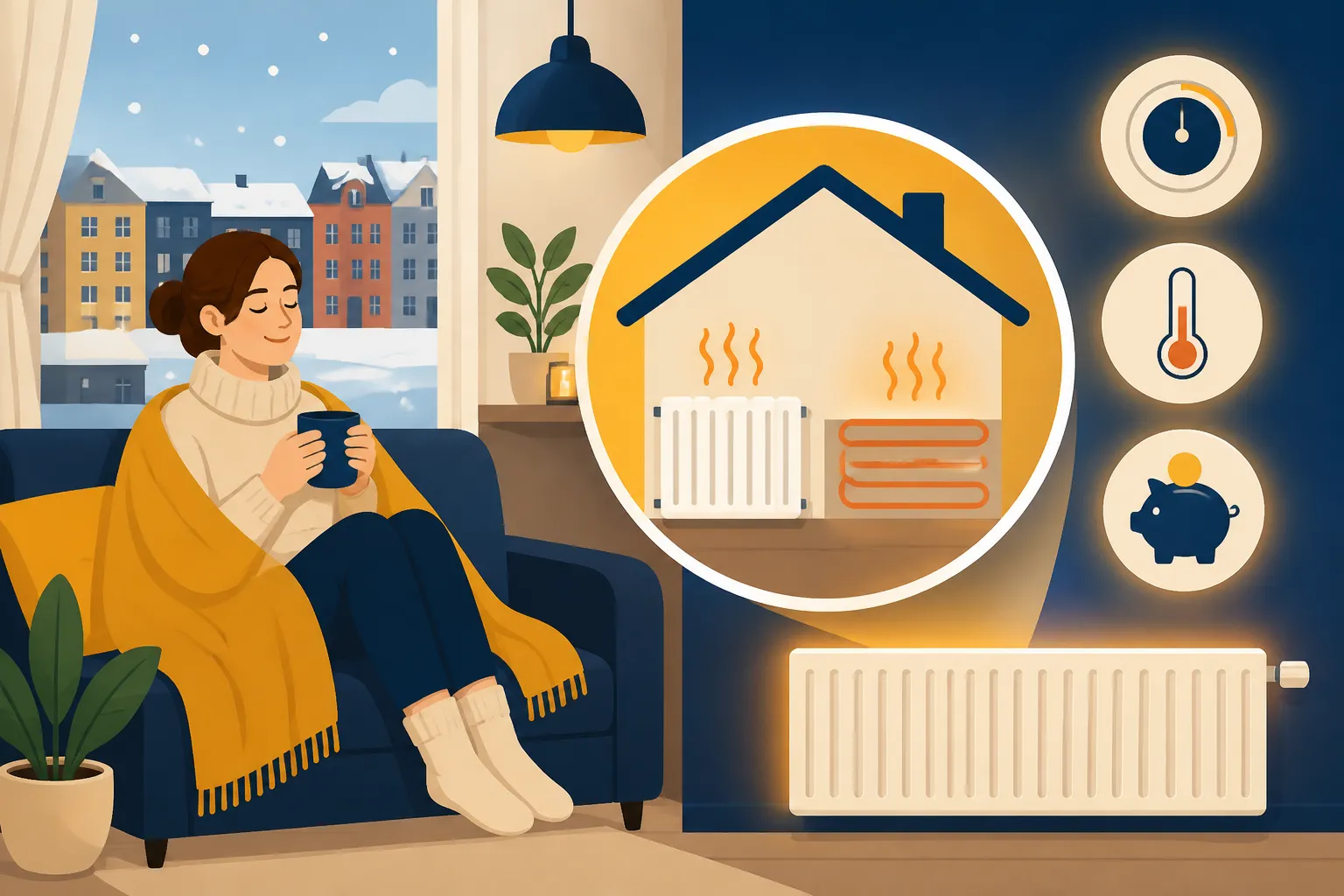
As mentioned, the prevailing indoor temperature in Sweden is often between 20-22°C. For many, this might feel a bit chilly at first, especially if you're used to warmer homes. Instead of fighting the system by constantly trying to blast the heat, the Swedish approach is to adapt. This means layering up, even indoors! Think cozy sweaters, warm socks, and perhaps a blanket on the sofa for those dark winter evenings. It's a significant cultural shift that many expats struggle with initially, but it's essential for both comfort and managing your utility bills.
Embracing this also ties into the concept of mysigt – coziness. It’s not about high temperatures, but about warm lighting, soft textiles, hot drinks (hello, fika!), and a general feeling of comfort despite the cold outside. Don't be surprised if your Swedish friends arrive at your apartment and comment if it feels "too warm" (för varmt). It's a common cultural observation. This also affects how you budget for living costs; understanding the true cost of living in Sweden often means factoring in higher heating bills if you insist on a very warm home.
When to Contact Your Landlord or BRF
While many heating issues can be managed with the tips above, there are times when you need professional help. Knowing when to contact your landlord (värd/värdinna) or your bostadsrättsförening (BRF) is crucial.
Here’s when you should definitely reach out:
- Consistently Cold Radiators: If one or more of your radiators remain cold even when turned up and the room temperature is below 20°C, there might be an issue with the heating system itself. It could be air in the system, a faulty valve, or a larger problem with the building’s central heating.
- Persistent Draughts You Can’t Fix: If you have significant draughts from windows or doors that can't be fixed with simple weatherstripping, the seals might need replacing, which is the landlord's responsibility.
- Unusual Cold Spots: If one room is significantly colder than others despite your best efforts, it might indicate poor insulation in that particular area or a problem with the heating distribution.
- Excessive Condensation or Dampness: While ventilation is key, if you're constantly battling excessive condensation on windows or damp patches on walls, it could point to a ventilation system malfunction or insufficient heating to dry the air properly.
When you report an issue, be clear and factual. Note down the dates and times you’ve observed the problem, and if possible, take temperature readings. If you're renting, your landlord is responsible for ensuring the apartment is habitable and adequately heated. If you own a bostadsrätt, the BRF is responsible for the building's overall heating system. Being aware of your Tenant Rights in Sweden: Contracts, Rent, and the Hyresnämnden can also be empowering if you encounter uncooperative responses to legitimate heating concerns.
Navigating the nuances of heating your Swedish apartment efficiently requires a blend of practical adjustments, a little local knowledge, and an understanding of the country's climate-conscious approach. Embrace the layers, learn your system, and don't hesitate to seek help when needed. You'll soon find your rhythm and enjoy a cozy, efficient Swedish winter!
Disclaimer
The information provided in this guide is for general informational purposes only and does not constitute professional advice. While we strive to offer accurate and up-to-date information, rules, regulations, and costs in Sweden can change. Always consult official sources, your landlord, bostadsrättsförening, or relevant authorities for the most current and specific guidance pertaining to your situation. We assume no responsibility for any actions taken based on the information contained herein.