How Do I Get Broadband Installed in My Swedish Home?
Stepping into your new home in Sweden is an exciting milestone, but that initial buzz can quickly turn into a minor panic when you realize how dependent this digital-first nation is on a solid internet connection – and how elusive that can feel when you're fresh off the plane. Many of us have been there, fumbling with obscure Swedish terms and wondering why getting online isn't as simple as plugging in a router. This guide is here to walk you through the often-baffling process of getting broadband installed in your Swedish home, from understanding the local infrastructure to choosing a provider and finally getting connected.
Understanding Sweden's Broadband Infrastructure and Connectivity
Before you even think about picking up the phone to an internet provider, it’s crucial to wrap your head around how broadband typically works here in Sweden. It’s probably quite different from what you're used to, and knowing the basics will save you a lot of headaches and confusion down the line. Sweden has invested heavily in its digital infrastructure, which is fantastic for speed and reliability, but it also comes with a unique system.
The Landscape: Fiber, Cable, and the Ubiquitous Open Network
When you move into an apartment or house in Sweden, the internet connection often isn't a free-for-all where you just call up any big-name provider and they lay down new cables. Instead, Sweden predominantly operates on a model of "open networks" (or öppet nät). What this means is that there's often a single physical fiber-optic cable connection or a cable TV connection coming into your building, owned by a local network operator (sometimes the municipality, sometimes a large company like Telia's Skanova, or a smaller regional player).
This network owner then allows various internet service providers (ISPs) to use their infrastructure. So, you don't choose the company that owns the wires; you choose a company that sells services over those wires. Think of it like a highway: one company built the road, but many different bus companies can use it to offer their services. This system is great for competition and choice, but it means you first need to identify which "highway" your home is on and which "bus companies" are allowed to operate there.
While fiber is king, some older apartments might still have traditional cable connections (often from Tele2, previously Com Hem) or, very rarely now, ADSL over old telephone lines. However, the vast majority of urban and even many rural homes are now connected via fiber, offering blazing fast speeds.
Fiber-Optic Dominance: Why It's the Standard
Sweden has been at the forefront of fiber-optic deployment for years, making it one of the most connected countries in the world. This means you’re likely to encounter fiber-to-the-home (FTTH) or fiber-to-the-building (FTTB) connections almost everywhere you go. The benefits are clear: incredibly fast download and upload speeds, low latency, and rock-solid reliability, which are essential for everything from streaming 4K video to remote work and online gaming.
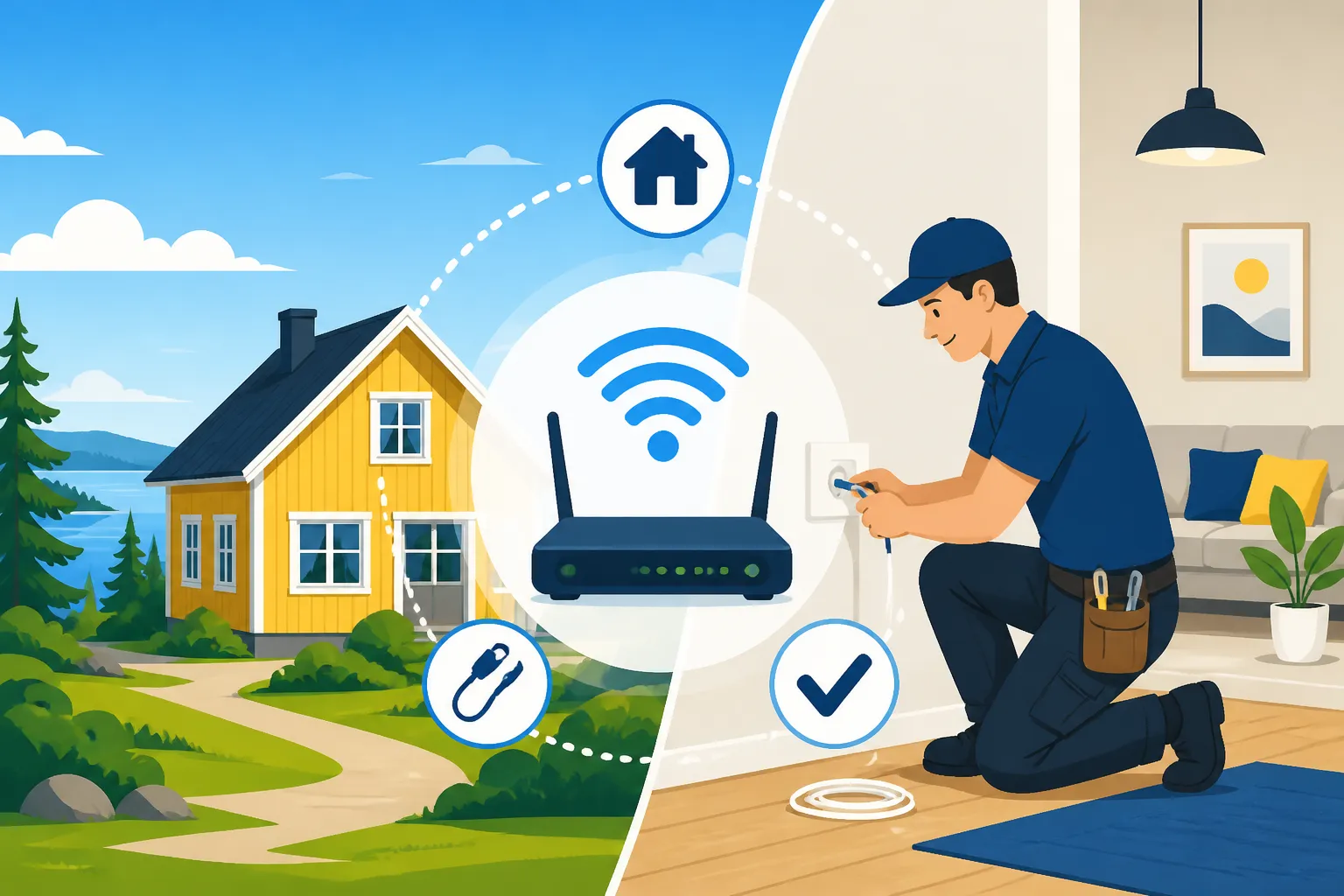
For expats, this is generally excellent news because it means a high-quality internet experience. However, it also dictates the process of getting connected. You're almost certainly going to be signing up for a fiber internet service. The good news is that for most apartments, the fiber cable is already installed right to your apartment's media converter or router point. It’s usually just a matter of connecting a pre-existing wall socket or a small media box, which makes "installation" more of a plug-and-play affair than an actual technician visit. This is a common aspect of everyday living in Sweden, where technology integration is high.
Step-by-Step: Getting Your Home Connected
Now that we've demystified the infrastructure a bit, let's get down to the practical steps of actually getting that glorious fiber-optic connection up and running in your new Swedish digs. It might seem like a lot, but taking it one step at a time will make it much less daunting.
Checking Your Building's Options
This is arguably the most crucial first step. You absolutely must find out what kind of internet connection is available in your specific apartment or house. Don't assume anything based on the building next door or even other units in your building.
Here’s how to do it:
- Ask Your Landlord or Bostadsrättsförening (BRF): If you're renting, your landlord is your first point of contact. They should know exactly what kind of connection the apartment has (fiber, cable, etc.) and, more importantly, which network operator owns the infrastructure. If you've bought a bostadsrätt (a co-op apartment), your BRF (the housing association) will have all this information. They often have a standard internet package included in the avgift (monthly fee) or a preferred list of providers for the "open network." This is a key part of understanding how renting a home in Sweden works, as the building's management plays a significant role.
- Check the Apartment's Documentation: Sometimes, your rental agreement or the bostadsrätt transfer documents will specify the internet setup. Look for terms like "fiberanslutning" (fiber connection), "bredband" (broadband), or "kabel-tv-nät" (cable TV network).
- Use Online Portals: Many network operators have online tools where you can enter your address and see which services are available. For example, if your building is connected to an open fiber network like Zitius, OpenNet, or Stokab (common in Stockholm), their websites will show you a list of ISPs you can choose from. If it’s a Tele2/formerly Com Hem cable network, you’ll typically go directly to Tele2’s website.
Once you know the network type and, ideally, the network operator, you’re ready to move on.
Choosing Your Internet Service Provider (ISP)
With the infrastructure identified, you can now pick your ISP. This is where the concept of the "open network" really comes into play. You'll likely have a choice of several providers, all offering services over the same physical fiber or cable connection.
Common ISPs in Sweden include:
- Bahnhof: Known for its strong stance on privacy and competitive speeds.
- Telenor: A major telecommunications company, often offering bundled services.
- Telia: The former state monopoly, still a dominant player with extensive infrastructure.
- Bredband2: Often a good value option, especially for high speeds.
- Tele2: The primary provider for cable networks, also offering fiber in many areas.
When choosing, consider these factors:
- Speed: What download and upload speeds do you need? 100/100 Mbps is a common entry point for fiber, more than enough for most households. Gamers or heavy users might opt for 250/250 Mbps or even 1000/1000 Mbps.
- Price: Compare the monthly fees. Be wary of introductory offers that jump significantly after a few months.
- Contract Length: Many providers offer 0-month contracts, but 12 or 24-month contracts often come with slightly lower prices or waived setup fees. Weigh the flexibility against the potential savings.
- Customer Service: As an expat, reliable English-speaking customer service can be a godsend. Look for providers known for good support.
When setting up your home in Sweden: Utilities, Internet, and Insurance are all things you'll tackle, and choosing an ISP is a big piece of that puzzle. Take your time to compare and read reviews.
The Ordering and Installation Process
Once you’ve made your choice, the ordering process is usually straightforward. Most ISPs allow you to order online or via phone. You’ll need your Swedish address, your personnummer (or sometimes a samordningsnummer if your personnummer isn't ready yet, but this is less common for fixed contracts), and bank details for direct debit. This highlights the importance of getting your Personnummer, as it truly is the gateway to Swedish healthcare and virtually every other administrative service.
Here’s what generally happens:
- Order Placement: You select your desired speed, contract length, and provide your personal details.
- Confirmation and Equipment: The ISP will confirm your order and usually send you a router or media converter. For fiber, this is often a small box that plugs into your fiber wall socket. For cable, it's a modem/router.
- Activation: In most cases, if your home already has the fiber or cable connection active, "installation" is literally plug-and-play. You connect the equipment according to the instructions, and it should light up and connect. The service might be activated on a specific date provided by the ISP.
- Technician Visit (Rare for existing connections): If your apartment has never had a fiber connection before, or if there's an issue with the wiring, a technician might need to visit. This is less common in established buildings but can happen with brand new constructions or if there's a fault. If a visit is needed, the ISP will coordinate it, but expect a potential waiting time.
Typically, if all the infrastructure is in place, you can be up and running within a few days of ordering, sometimes even faster.
Common Challenges and Solutions for Newcomers
Navigating the Swedish administrative landscape can feel like an obstacle course, and getting connected to the internet is no exception. Many expats face similar hurdles.
The Personnummer Predicament
Ah, the infamous personnummer. It’s often the first thing you need for anything official in Sweden, and signing a broadband contract is high on that list. Many Swedish ISPs require a personnummer (your unique ten-digit personal identity number) to sign a long-term contract because it allows them to perform credit checks and easily identify you for billing.
This is a massive pain point for newcomers, as getting your personnummer can take weeks or even months after you register your move with Skatteverket.
Solutions and Workarounds:
- Temporary Mobile Broadband: This is often the most practical solution. While you’re waiting for your personnummer, a mobile broadband router (MiFi) or even an unlimited data plan on your phone can provide internet access. You might be able to get a prepaid SIM card or an eSIM from providers like Airalo (which is great for immediate connectivity upon arrival, especially if you're traveling a lot) without a personnummer, though top-ups for larger data packages might still require some form of ID. This can bridge the gap for a few weeks or months.
- Providers Accepting Other IDs: A few smaller or more expat-friendly providers might accept a samordningsnummer (coordination number) or even just your passport in some rare cases, but this is less common for fixed broadband contracts. It's definitely worth asking. The coordination number is another important identifier, and understanding what is a samordningsnummer and can I get care with one also applies to other services.
- Ask a Friend/Colleague: In a pinch, if you have a trusted Swedish friend or colleague, they might be willing to sign the contract for you. Be aware this puts them on the hook legally for the payments, so it’s not a step to be taken lightly.
- Check Employer Assistance: Some employers, especially those that frequently hire international talent, might have arrangements with ISPs or provide temporary solutions to help new employees get connected.
Navigating Contract Terms and Customer Service
Once you do get a contract, make sure you understand the terms. Most contracts have a standard 12 or 24-month lock-in period, though 0-month contracts are becoming more common. Be clear on the notice period for cancellation if you decide to switch providers or move away.
Customer service can also be a challenge if your Swedish isn't up to par yet. While many larger companies do offer English support, it’s not always guaranteed, and waiting times can be long. Always ask if they have English-speaking staff when you call.
Here’s a quick overview of some common Swedish ISPs:
| ISP Name | Typical Speeds (Mbps) | Average Monthly Cost (SEK) | Contract Length | English Support |
|---|---|---|---|---|
| Bahnhof | 100/100, 250/250, 1000/1000 | 250 – 500 | 0-24 months | Yes / Limited |
| Telenor | 100/100, 250/250, 1000/1000 | 280 – 550 | 12-24 months | Yes |
| Telia | 100/100, 250/250, 1000/1000 | 300 – 600 | 12-24 months | Yes |
| Bredband2 | 100/100, 250/250, 1000/1000 | 220 – 480 | 0-12 months | Limited |
| Tele2 (Cable) | 100/10, 250/50, 1200/100 | 299 – 699 | 12-24 months | Yes |
Note: Speeds and prices are approximate and can vary based on location, promotions, and network infrastructure.
Temporary Solutions and Bridging the Gap
While you're waiting for your personnummer or the fixed line to be activated, mobile broadband is your best friend. Most major operators like Telia, Telenor, Tele2, and Tre offer mobile broadband subscriptions, sometimes even with unlimited data, that come with a dedicated MiFi router. These devices connect to the cellular network and broadcast a Wi-Fi signal in your home. They don't require any installation and can be activated relatively quickly.
Another common solution, especially for immediate connectivity when you land, is a prepaid SIM card for your phone. Providers like Comviq, Hallon, and Vimla offer competitive rates, and while they might not have the raw speed of fiber, they'll keep you connected for essential tasks. As mentioned, an eSIM from global providers like Airalo can get you online the moment your plane touches down, which is perfect for navigating to your new home or making urgent calls. When searching for apartments, whether through mainstream real estate sites or platforms like Spotahome, it’s always a good idea to inquire about the existing internet setup to anticipate these temporary needs.
Once you have your personnummer, applying for a Swedish phone plan is much easier, as covered in this guide: Can I Get a Swedish Phone Plan Without a Personnummer?. For other vital administrative steps, like obtaining your digital identity, check out Getting BankID: Sweden's Essential Digital Identity.
Beyond Basic Broadband: Enhancing Your Digital Home
Getting the basic connection sorted is a huge relief, but your digital journey in Sweden doesn't have to stop there. There are ways to optimize your home network and integrate it with other services that truly make your Swedish house a digital home.
Routers and Wi-Fi: Getting the Most Out of Your Connection
Most ISPs will provide you with a basic router when you sign up. For many, this is perfectly adequate. However, if you have a larger home, thick walls, or a lot of devices, you might find that the standard router struggles to provide consistent Wi-Fi coverage throughout your entire space.
Upgrading to a more powerful router or, even better, investing in a mesh Wi-Fi system can significantly improve your home network's performance and reach. Mesh systems use multiple access points to create a seamless Wi-Fi network that covers every corner of your home, eliminating dead spots. Good placement of your router (central, elevated, away from obstructions) also makes a big difference. Don't forget to secure your network with a strong, unique password to protect your privacy and bandwidth.
Bundled Services and Smart Home Integration
Many Swedish telecommunication companies offer bundled packages that combine internet, TV services, and sometimes even mobile phone plans into one convenient (and often cheaper) monthly bill. If you're planning on getting a TV subscription, it's worth exploring these options with your chosen ISP. Providers like Telia and Tele2 are particularly strong in this area.
Sweden's high internet penetration and digitally forward culture also make it an excellent place for smart home integration. With a reliable broadband connection, you can easily connect smart lighting, thermostats, security cameras, and voice assistants, turning your home into a truly intelligent living space. The robust fiber infrastructure ensures that all your smart devices can communicate efficiently without lag or dropouts, contributing to a seamless and efficient home environment that fits well with the general ethos of efficiency you'll find in Everyday Living in Sweden: Groceries, Recycling, and Local Customs.
Ultimately, while the initial hurdle of getting broadband in Sweden can feel a bit like a maze, understanding the system, being prepared for the personnummer requirement, and knowing your options will smooth the path to a fully connected life in your new home. Don't forget to also ensure you are properly registered in the population register by completing your Registering Your Move (Flyttanmälan) with Skatteverket.
Disclaimer
The information provided in this guide is intended for general informational purposes only and does not constitute professional advice. While we strive to keep the information accurate and up-to-date, administrative processes, regulations, and market offerings in Sweden can change. Always verify information with official sources, relevant service providers, or legal professionals before making any decisions.